• Home
  • About Us
  • Toolkit
  • Archives
  • Advertise
  • Privacy Policy

Kids Ain't Cheap

But They Sure Are Worth It

  • Parenting
    • Baby Stuff
    • Books and Reading
      • Aesops Fables
      • Comic Books
    • Education
    • Family Time
    • Green Living
    • Growing Up
    • Healthy Living & Eating
    • Holidays
    • Parenting
    • Random Musings
    • Shopping
    • Stuff to Do
  • Money
  • Product Reviews
    • Books and Magazines
    • Discount Sites
    • Furniture
    • House Keeping
    • Reviews News
    • Toys and Games
  • Contact Us
  • Our Editorial Commitment
  • Search

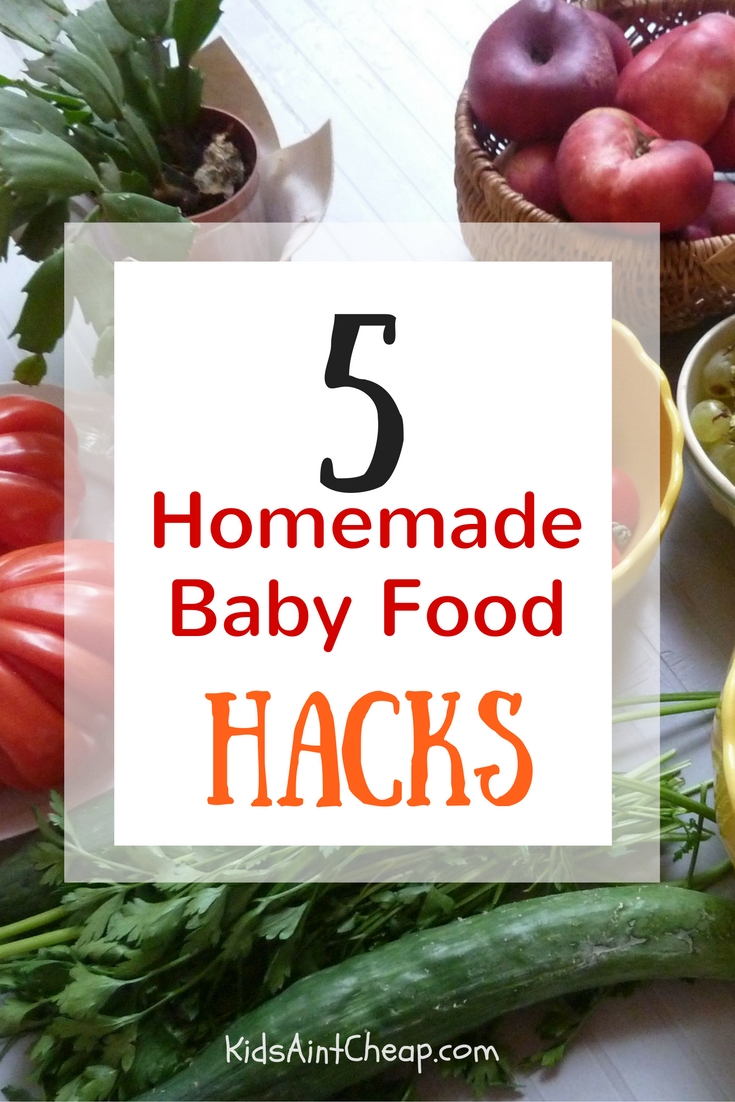
5 Homemade Baby Food Hacks

December 19, 2016 | Leave a Comment

If you're just getting started in the world of DIY baby food, here are some homemade baby food hacks that will help you get started.I once saw a hilarious depiction of the five types of moms you meet: The PTA mom, Parenting Expert, Crunchy Mom, Hipster Mom, and (my favorite) Hot Mess Mom (see the video below). Despite my best efforts, I identify with the Hot Mess Mom racing to the meeting with stains on her shirt and yesterday’s hairdo going in every direction – which is why you need to know these homemade baby food hacks I’m going to share AREN’T just for the uber-crunchy, hipster, always-put-together moms.

You and me, on our worst days, can pull these DIY hacks off, mama. I guarantee it.

[youtube https://www.youtube.com/watch?v=tOQViEZOwGk]

5 Homemade Baby Food Hacks

When my daughter was born in 2013, we were slightly broke. We let go of my full-time income and benefits after my transition to a part-time position, and our health insurance plan went through the roof.

My husband supported us while I supplemented our income doing childcare, consignment sales, and eventually, launched a career from home as a freelance writer. Throughout that journey, frugal living became a mandate in our home. When I began researching ways to cut costs with an infant, I realized even a “Hot Mess Mom” like me (which, I’m convinced we’re all a hot mess on any given day – which makes us fabulous) could start doing DIY hacks in my home.

Baby food was a huge win. Besides breastfeeding for a full year, making homemade baby food was probably the largest money saver we unearthed (cloth diapers are also a great way to save money – but we rented our home and didn’t want to ruin the landlord’s washing machine…).

Here are five ways you can hack your way into the homemade baby food scene:

1. Don’t rush.

I’m no pediatrician, so please don’t assume this will be the case for you, but when the doctor says to start feeding your child solids when she’s six months old, you may do well to wait. Babies have their own timeline, and as long as they’re receiving full meals via breast milk or formula, they have the nutrients they need before their first birthday. “Food before one is just for fun,” as they say.

You could save tons of money by simply following your baby’s lead instead of forcing her to eat solids too early. When my son spit out every morsel of baby food I offered at six months, I got the hint to chill out. He was in the 98th percentile for height and weight entirely from consuming breast milk and refused solids until he was 11 months old.

The doctor’s only concern after I explained my son’s lack of interest was that he continue learning his motor movements with a spoon or fork. So I gave him plastic ware to tinker with in his high chair during our meals, and he loved it.

Every baby is different, though. When my daughter turned six months old, she watched my plate of food like a shark. I introduced her to solids shortly after that and she devoured them, happily.

Don’t feel the pressure to force your baby to eat solids if he’s not digging it, yet.

2. Start with an easy “superfood.”

Making homemade baby food feels like a huge undertaking at first with cooking, pureeing, freezing, and labeling everything. It can, however, begin more simply.

Try some superfoods that are basically ready to eat, like a banana, avocado, or peach. You don’t have to start with peeling, gutting, and broiling a gigantic butternut squash (although, once you’ve gotten your feet wet, it’s extremely healthy for your baby and not as harrowing as it sounds!).

3. Introduce one new food at a time.

To avoid the risk of allergies, it’s wisest to only introduce your baby to one new food at a time. You may think Tiger needs more variety and that you aren’t being kind by feeding him any other solids except softened carrots, but he’s doing fine.

Babies’ taste buds are developing and each new flavor, no matter how bland, is a vibrant experience to them.

4. You don’t have to use the fancy, expensive equipment.

Sure, companies have produced the perfect gizmos for homemade baby food hacks, but you don’t have to have them. Go ahead and register for a brand new Ninja or Magic Bullet, as well as baby food freezer trays that come with a lid.

If, however, you don’t receive them or don’t have the money to buy them right now, your existing blender, some ice cube trays, tin foil and a Sharpie did the trick for me.

5. DIY when it makes sense.

I started to get pretty good at making all sorts of baby food, but I finally reached my limit when it came to snack pouches. If you browse your grocery store’s baby food aisle, you’ll find a huge selection of pouches that are often organic with two to four healthy ingredients in puree form. The pouch is designed to be mess-free, can be stored anywhere before it’s opened, and exposes children to healthy foods they might not otherwise eat. All for $1 to $2 each. With coupons, I can easily get each pouch for less

The pouch is designed to be mess-free, can be stored anywhere before it’s opened, and exposes children to healthy foods they might not otherwise eat. All for $1 to $2 each. With coupons, I can easily get each pouch for less then $1.50.

The thing is, you can do all of that from home if you want. You can buy reusable pouches that look extremely challenging to clean, as well as those unique ingredients like organic purple carrot or amaranth.

Then, you can cook and puree each one individually and fill your snack pouches with any combination you want.

I need a nap just from typing all of that. For a $1, it’s worth it for me to simply buy the snack pouch (sorry, environment).

Do the DIY thing when it makes sense. Don’t beat yourself up if your friend serves her family home-grown, organic rutabaga, kale and goat cheese for every meal. Start where you can and remember: Fed is best. Simple as that.

What are some homemade baby food hacks you’d like to share? Tell us in the comments below!

Image Credit: thesuccess (MorgueFile)
Filed Under: Baby Stuff, Healthy Living & Eating, Money and Finances, Parenting Tagged With: Baby Shower, DIY baby food, homemade baby food hacks, how to make baby food, super baby food

How to Empower Your Child to Avoid the Burden of Debt

December 5, 2016 | Leave a Comment

How to empower your kids to avoid the burden of debt when they grow up!How many twentysomethings do you know starting their post-collegiate lives with six figures in student loan debt? How many times have you seen the burden of debt harm relationships, set back dreams, and perpetuate a lifestyle of “just getting by?”

Has that ever described you?

I’ve experienced student loan debt, overspending my budget, racking up credit card debt, living paycheck to paycheck with no savings accounts, and fear about tomorrow because of debt.

Our culture isn’t so hot at teaching kids how dangerous debt can be, only how to accumulate it. I’m part of the blame because it was once my job to sell credit cards and car loans when I worked at a bank.

In 2012, my husband I paid off our last non-mortgage debt and couldn’t believe the freedom it afforded us. Having a taste for that made us decide to raise our children with that same debt-free mentality.

How to Empower Your Child to Avoid the Burden of Debt

Lead by example.

How did your parents handle money? If asked, could you list a few specific memories you have of their financial habits (good, bad, or ugly)?

If I had to guess, I’d say you remember quite a bit. Your kids will, too.

What you do with your finances, how you behave under stress, and how you treat others is all under frequent observation if you’re a parent.

It’s not all scary, though. If you choose to lean into this process, to do the best you can to lead a good example for your kids, the benefits are two-fold:

  1. Your financial habits will improve the more intentional you become. Your debt load will decrease and your future outlook with your family will look brighter.
  2. You will make a long-lasting impression on your kids of what healthy financial habits look like. As I stated early, they’re bound to remember a great deal of it.

Don’t put it off.

I once interviewed a father of seven who took the time each year to teach his kids about taxes. His reason?

I think one of the best things you can do for your children is to teach them about independence. Independent people earn a living and don’t come back to borrow money from mom and dad when they are in their thirties.

We try to prepare the children for the reality of adulthood by creating a culture that emulates the real world.

This father created jobs for each of the children to do around the house that would earn them a paycheck. He also implemented what he called the “Dad Tax.” Before each paycheck was distributed, he took out a 25% Dad Tax that went straight into the child’s savings account. Around tax time, he gave each child the option to have that money back as a “tax return” just like they would in the real world.

I didn’t know a thing about taxes until I was 20. How cool is it that this dad took on such a grown up topic and implemented it into his home while his children were young?

What’s the takeaway?

  • Start the conversation. It’s never too early to talk to your children about debt and the huge impact it can have in their lives.
  • Your kids are already watching. Be mindful of your actions and try your best to lead by example with your own day-to-day financial decisions.

Bonus Reading: “Money-Saving Tips for First-Year College Students”

What’s one lesson you’d like your children to learn that will help them avoid the burden of debt?

Image Credit: Xochi Romero (UnSplash)

Filed Under: Growing Up, Home and Living, Money and Finances, Parenting Tagged With: burden of debt, how to avoid debt, kids and money, student loan debt, teach your kids about money

My #1 Brand of Choice for Long-Lasting Toys for Toddlers

November 28, 2016 | Leave a Comment

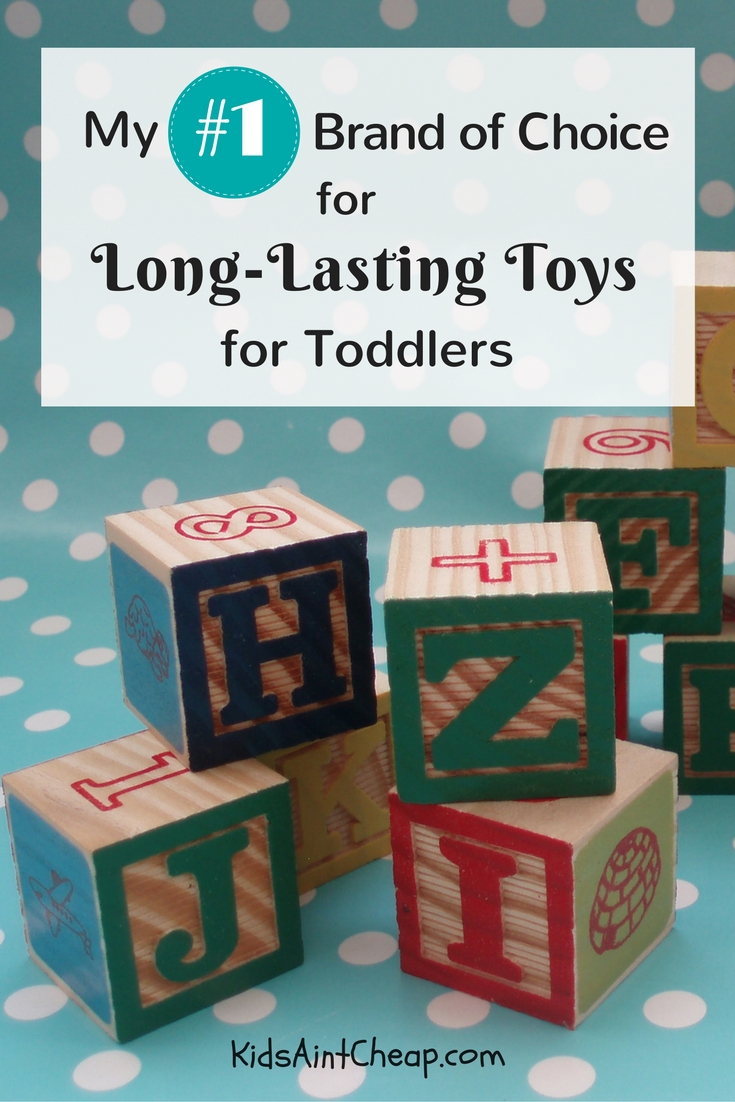
My #1 brand of choice for long-lasting toys for toddlersWhat do toddlers love? Getting into EVERYTHING. That’s why I want my money to go toward products that will inspire my curious kids, entertain them, and last longer than three days. Therefore, here is my all-time favorite brand of long-lasting toys for toddlers.

My #1 Brand of Choice for Long-Lasting Toys for Toddlers

When my kids receive an invite to a birthday party (especially if they’re toddlers), I head straight toward one particular section in the toy department first:

Melissa & Doug.

Why I Recommend Melissa & Doug Toys Above the Competition

I can’t help it; their products win me over time and time again. Here is a breakdown of my top reasons why:

  • They’re well made. The durable craftsmanship of each toy and the use of wood and metal instead of plastic ensures that these are long-lasting toys for toddlers and older.
  • They teach a skill. Each toy or activity I’ve come across in the Melissa & Doug line inspire the child to use her imagination, explore her problem-solving skills, or improve hand-eye coordination.
  • They’re better for the environment. With the longer lifespan of each toy and the use of natural products instead of plastic, the carbon signature is greatly reduced.
  • They help kids focus. My go-to toys for road trips, waiting rooms, or long lines at the grocery store are Melissa & Doug. With their colorful and creative designs, they hold children’s attention spans. That drew me since I know how important it is to teach children to focus at a young age.
  • They help kids have fun without using a screen. No technology. No flashing lights. No batteries. I love that my kids can enjoy toys like these for hours each day without seeing any of the side effects of too much screen time.

If you’ve never shopped for Melissa & Doug toys before, here a few great toys to try first. I’ve seen positive results with each of my children, and even their friends when they come over to play. Whether they’re in the car, playing right beside me, or alone in quiet time, these toys are a continual source of fun in our home.

Long-Lasting Toys for Toddlers – Ages 1 to 2 Years

  1. Chunky Puzzles. The great thing about these early learning puzzles is that little fingers can grasp the pieces easily and figure out where they go. Both of my children learned the art of puzzling first from a Melissa & Doug 8-piece Chunky Puzzle (and they still play with it).
  2. Activity Boards. Like puzzles, these sturdy and colorful activity boards offer toddlers a chance to buckle, bolt, snap, lock, and latch as fast as their tiny hands can manage it. This is an exceptional activity to promote hand-eye coordination and, if you’re like me, you’ll find yourself tempted to put the activity board together, too, when no one’s watching. ::cough:: So that’s just me, then?…

Long-Lasting Toys for Toddlers – Ages 2 to 3 Years

  1. No-Mess Painting Craft. Did I mention how much I love taking Melissa & Doug products on road trips? The kids love painting with these Melissa & Doug On the Go Water Activity Books. They simply use a brush with water inside and the colors appear on the pages. After a few minutes, the colors fade and the children can paint on them again. This has been great for my 3-year-old who can write her alphabet and numbers, largely in thanks to the ABC and 123 Water Activity Books we own.
  2. “Make-Believe Play” Toys. My niece recently received a Melissa & Doug Christmas Cookie set. I watched throughout the rest of the night as she walked around the room offering each family member a wooden Christmas cookie with a huge grin on her face. It’s so fun to make believe and to do so with such adorable toys. For example, if you’re a coffee drinker, your child might like to become a little barista with this Melissa & Doug Wooden Brew & Serve Coffee Set.

These are only a few options of things your children might enjoy. I shared them because they are the ones my own children have enjoyed. Now, I encourage you to browse around and try one out for your own toddler. I bet he or she will have a lot of fun with it for a long time.

What long-lasting toys for toddlers have you found? Share them in the comments below!

Image Credit: Tiffany Terry (Creative Commons)

This post contains affiliate links.

Filed Under: Family Time, Green Living, Parenting, Product Reviews for Parents, Shopping, Toys and Games Tagged With: long-lasting toys for toddlers, Melissa & Doug, puzzles, toys for 2-year-olds, wooden toys

If I Let My Baby Run the Budget

November 21, 2016 | Leave a Comment

If I let my baby run the budget...things would definitely work differently...If I let my baby run the budget, things would work a little differently. Have you ever given such a funny thing a thought?

Let’s see…

If I Let My Baby Run the Budget

We’d buy the grocery store’s entire milk supply, I’m quite sure, skipping all the other aisles.

Sleepwear would replace our normal attire. We’d quadruple our sock supply.

If I let my baby run the budget, diapers would line the walls (in infant and adult sizes…). Enough for five to seven changes a day, right?

Pillows and blankets would also see an uptick. There would most likely be a fresh set in every room (and vehicle). After all, she’d be budgeting for all of us to take one to three naps every day (not bad at all).

What Wouldn’t Show Up On the Budget

As I thought about all the things my baby would buy if it were up to her, I realized something. The list was far shorter and simpler than mine.

If I let my baby run the budget, there wouldn’t be a column for snacks, caffeine, or Hostess cupcakes. It’s sad, but true. There would eventually be an interest in fresh produce, namely bananas, avocados, and sweet potatoes. I’m thinking a juicer would show up on the scene with some pretty rad smoothie cups for each of us.

No cable bill or RedBox late fees would pop up on our statement. Collectors wouldn’t rag us about our debts because we wouldn’t have credit cards. There wouldn’t be stacks of fast food receipts or empty Starbucks cups because we’d eat every meal at home.

In fact, very little would be spent on organized recreation at all. A baby’s favorite place to be is in the arms of the one she loves, after all.

We’d save a fortune on toys and gizmos, too, if I had to guess. Her favorite pastimes are chewing on table legs, plastic spoons, wooden blocks, and mommy’s fingers, so there wouldn’t be much need for anything else.

What gas we did buy for the car would be used for those milk runs I was telling you about and trips to her happiest home away from home: Grandma and Grandpa’s house. Lucky for her, grandparents love traveling to see their grandkids, so a barter agreement worked very well in her favor to save on gas.

If I let my baby run the budget, I bet I’d learn a thing or two about life through the eyes of my child. I bet I’d realize how expensive my expectations are for the type of life I think she should have. Contentment would stop eluding me. We would shut off our devices and look at each other, again.

If I let my baby run the budget, it could be the best thing that ever happened to us.

The only problem would come if we ever decided to have another baby…I’m guessing she wouldn’t be too keen on changing her spending habits to move over for baby brother…

If you let your child run the budget, how different do you think your finances would look?

Filed Under: Family Time, Home and Living, Money and Finances, Parenting, Parenting Blog at KidsAintCheap, Uncategorized Tagged With: Baby, baby budget, baby food, Diapers, run the budget

7 Screen-Free Activities for Preschoolers

November 14, 2016 | Leave a Comment

Here are several screen-free activities for preschoolers!The last thing you’ll ever hear me say is that I’ll never let my kids use technology. Part of their world will always be tied to it. However, I don’t want them to become overstimulated and addicted. To put up healthy boundaries, here are several screen-free activities for preschoolers – since both of my children are that age.

These activities have worked in my family. Now it’s my turn to hand them over to you.

I notice subtle changes in my children’s behavior when they’re in front of a screen for too long. After doing some research, I now understand better what those changes are.

Or more importantly, what they could become.

What does the research say?

Preschoolers don’t reflect the more serious side effects of too much technology, but the average child eight years and older is spending 8 to 11 hours per day looking at a screen, according to the NY Times. What suffers as a result?

Emotional connect. Reasoning skills. Coping mechanisms. The ability to process thoughts, anxieties, and problems.

All those developmental skills are under attack when screens dominate a child’s day, according to this report from NPR.

The earlier we create boundaries for our children’s time with technology, the better their transition into adulthood will be.

7 Screen-Free Activities for Preschoolers

Read books.

The more that you read, the more things you will know. The more that you learn, the more places you’ll go.  ― Dr. Seuss, I Can Read With My Eyes Shut!

Establishing a daily reading habit with your child is a great way to advance his development away from screens. To change things up, try attending a reading time at your local library or purchase some nonfiction books (i.e. a picture dictionary or a book all about what your child loves most).

We keep a basket in between the children’s car seats so they can pick out a book to read on their own while I drive.

Listen to audio books.

One my kids’ favorite activities is listening to audio books. We pull up “reading chairs” so they know it’s time to sit and listen (you could also cut out cardboard circles with their names on them or set out folded blankets).

The library offers lots of variety when it comes to audio stories for kids. Turn the pages for the children until they get the hang of it and can follow along by themselves.

This activity promotes sitting still, listening, learning by spoken word, and early reading along.

Make believe a favorite character.

During an episode of Daniel Tiger’s Neighborhood, my children watched the characters try on several different costumes and parade around the play room. Once we shut the TV off, my kids instantly wanted to be like those characters, so we grabbed some play clothes and made it happen.

This activity helps kids develop their imagination, and helps them understand that not all fun happens on the other side of a screen.

Bring mess-free travel crafts.

Screen-free activities for toddlers especially come in handy in the car. Have a basket of mess-free crafts, book or toys can help them learn to occupy themselves without DVDs or iPads.

One of my go-to examples is the Melissa and Doug Paint with Water book. These last a long time, help your children learn hand-eye coordination, and never leave a mess behind.

They also make great birthday presents for other children. Find them here.

Build something.

Whether it’s a fort made from couch cushions or a castle made from LEGOs, building something is immensely beneficial to your preschooler. It’s like you can see the smoke rising from the wheels turning in their brain as they problem solve each piece of the puzzle or tower.

My favorite toy that helps my children develop these skills is the Mega Bloks Big Building Bag.
It’s an 80-piece set of easy-to-use building blocks that can be added to over time and at any age.

Getting outside.

Staying active is next to impossible while a child is hooked up to a screen. Just like you can create a reading time every day, try to take the kids outside each day. You can take them to the park, for a walk, to the zoo, the pool, on a field trip, or just out to the driveway with some sidewalk chalk.

Study the world together.

Last Christmas, my husband and I gave our children a globe. Over the last year, we’ve looked at it together and studied the numerous intricacies of our world. Yes, you can download Google Earth for free, but studying a 3D globe in a group is different. The children can feel the earth. They feel the mountain ranges, spin the planet on its axis, and wrap their arms around its round shape.

Being able to study that together creates a discussion format that wouldn’t likely happen through an app.

For more ways to keep your kids busy without putting them in front of a  screen check out these articles.

8 Simple Rainy Day Activities For Kids
Three Inexpensive Spring Break Ideas
How to Save Money On Kids Toys


What screen-free activities for preschoolers does your family enjoy?

Image Credit: Frank McKenna (UnSplash)

This post may contain affiliate links.

Filed Under: Books and Reading, Education, Family Time, Growing Up, Healthy Living & Eating, Home and Living, Parenting, Uncategorized Tagged With: kids and technology, mess free for kids, screen-free activities for preschoolers, Social Media

6 Must-Haves for Working Moms Who Breastfeed

October 31, 2016 | Leave a Comment

If you're one of the thousands of working moms who breastfeed, or will be soon, take a look at some of these.These days, more and more mothers are working outside the home. Toward the end of pregnancy, there is a swarm of decisions that must be made, from what car seat to purchase to what birth plan to use. One of those decisions is whether or not to breastfeed. If you plan on becoming one of the working moms who breastfeed, then here is a list of must-haves to help your transition.

6 Must-Haves for Working Moms who Breastfeed

I worked full-time when my first child was born. After maternity leave, I asked that my hours decrease, but I was still there long enough to require pumping.

Leaving your baby with a sitter and pumping at work is hard. Pumping at work instead of the comfort of your own home isn’t that fantastic at first, either.

After a while, though, I did discover several must-haves I was so grateful to use. Here they are.

A top of the line, dual breast pump

I’m a bit of a cheapskate, but I’m so glad someone talked me into buying a Medela Advanced Breast Pump. My transition into joining the working moms who breastfeed was so much easier than it could have been because of that breast pump.

For more information on quality baby items like the Medela, read here.

A full water bottle

The minute I began pumping, I got thirsty. It would drive me mad not to have water nearby. Keep a quality water bottle freshly stocked at all times – especially when you pump.

A breastfeeding cover

Even if you have total privacy when you pump – and you should – having a breastfeeding cover like this one is a must-have at all times. It’s like have a spare diaper and some wipes on hand. You just never know where you’ll end up when you need them.

Besides, if you’re tense when you pump, you produce less milk and the process takes longer. That can be incredibly frustrating. Invest in something that will help you feel at ease.

Something to do

Pumping at work takes time, and you just sit there. Even though your hands are somewhat tied up, be sure to bring something along to entertain yourself. You could listen to music, an audio book, or a podcast. Or you could read (it can be done).

Or you could count ceiling tiles when you forget to bring something. ::sigh:: I’ve been there.

Storage bags

Breast milk storage bags were also crucial to my success as one of the working moms who breastfeed. They’re designed to hold enough for a single serving and hold up well in a freezer. You’re able to write the date on each one which makes sure your baby gets milk before it expires.

These storage bags were my favorite because they could be attached directly to my Medela breast pump – with the correct accessory. That saved SO much time with a lot less clean up.

A firm understanding of your rights

The biggest thing I’d want working moms who breastfeed to understand is their rights in the working place. They are legally permitted to take breaks to pump as often as necessary. Employers are required to provide a private room, other than a bathroom, during these break times.

Obviously, harassment from co-workers or their unwillingness to comply with regulations is illegal.

Breastfeeding is a wonderful gift you can give your baby. Know your rights. Click here for more information.

Would you add any must-haves for working moms who breastfeed to this list?

Image Credit: William Iven (UnSplash)

This post contains affiliate links.

Filed Under: Baby Stuff, Growing Up, Parenting, Product Reviews for Parents, Shopping Tagged With: Breastfeeding, nursing mothers, pumping breast milk, working moms who breastfeed

How to Use a Magic Eraser to Clean Your Home

October 24, 2016 | Leave a Comment

I finally figured out how to use a Magic Eraser, first hand. Definitely different than normal sponges.During the first week in our recently purchased house, every retailer within a 10-mile radius sent us a flier. “Come buy our house paint!” “Here’s a coupon for decor!” It went on and on. My highlight during that entire debacle was the box of freebie house supplies that showed up one day. In it was a Swiffer duster, a Febreeze-scented Glad trash bag, and a Mr. Clean Extra Durable Magic Eraser. I had no idea how to use a Magic Eraser properly, so I got to work on figuring it out.

As a result, I became a scientist in my own home. Each room was my lab. If you’ve never used a Mr. Clean Magic Eraser, click here for a rundown and to see the product.

The basic idea behind the product is to wipe away hard to erase stains, marks, and smudges. You simply apply water and get scrubbing.

How to Use a Magic Eraser in Your Home

Here is a quick list of my findings when I used the extra durable Magic Eraser. To set the scene, this was a house that had been empty for a long period of time and was now filled with a family with toddlers.

How It Worked

Below are the following scenarios in which my Magic Eraser performed successfully.

It:

  1. Easily removed dried marker on an old marker board.
  2. Thoroughly removed fingerprints and dirt marks around door handles.
  3. Removed pencil markings off walls (I can’t blame this one on the kids. I was marking an area where I wished to hang some decor. The eraser I used to remove the light pencil marks turned them dark and cloudy. I nearly swallowed my own tongue until I remembered my Magic Eraser. Poof. They were gone.
  4. Polished my car’s headlights.
  5. Removed black shoe marks from the side of my oven (high traffic area).
  6. Easily wiped away grime from light switches.
  7. Brightened up our dirty laundry hamper. This is a white, plastic hamper that has endured years of handling and tossing around – and looked it. I was pretty surprised how easy it shined back up for me once I used my Magic Eraser.
  8. Removed paint from wood laminate flooring. Again, I can’t blame my kids. I was painting our trim and needed to remove some paint drips that escaped past our drop cloth. The Magic Eraser did the trick.
  9. Erased my kids’ crayon artwork all over the refrigerator, kitchen floor, and walls.

How It Didn’t Work

There were a few times I experimented with how to use a Magic Eraser and showed negative results.

  1. Polishing glass or mirrors. When I used my Magic Eraser, it left pretty solid streaks on both.
  2. Cleaning stainless steel. My kids leave their tiny fingerprints on our stainless steel dishwasher when they’re playing in the kitchen. I tried wiping it down with my Magic Eraser before anything else and it just made the smudges worse.
  3. Scrubbing ink out of a couch. This is ink that settled and dried into the fabric weeks ago, but I thought I’d try to remove it this time with my Magic Eraser. No such luck.
  4. Removing water spots from faucets and the tea kettle. Again, no dice.

What if I don’t like the chemicals used in a Magic Eraser?

Some concerns have been risen about the chemicals used in developing the Magic Eraser, namely formaldehyde. This was deemed safe once it fused with the melamine, much like sodium by itself is explosive, but sodium chloride is salt.

If, however, you do want a natural remedy, I highly recommend checking out a Norwex microfiber cloth. I have one that replaces so many of the chemicals I previously used and believe it’s totally worth the investment.

Hopefully this article helped you understand how to use a Magic Eraser.. I’m sure my findings aren’t conclusive for every hearth and home, but if my experiments and findings help you get a jump start, then I’m glad.

For other Kids Ain’t Cheap product reviews, click here.

For more help cleaning things around the house check out these great articles.

Cleaning Poop and Other Jobs Your Kid Can Do This Summer to Earn Money
How To Effectivly Clean Your House In an Hour
Making Spring Cleaning Kid Safe by Making Your Own Cleaning Supplies


What’s your go-to cleaning routine for tough stains? Share in the comments below!

This post contains affiliate links.

Image Credit: Gracey (MorgueFile)

Filed Under: Home and Living, House Keeping, Parenting, Product Reviews for Parents Tagged With: fight tough stains, house cleaning, how to use a Magic Eraser, Mr. Clean Magic Eraser, removed crayons from wall

5 Quality Baby Items That Are Worth the Investment

October 17, 2016 | 2 Comments

If you want to know what quality baby items are worth the money, I definitely recommend this list!In 2014, my husband and I had two in two years. We also lived on less than $2,000 per month. Having a lot of baby things simply wasn’t an option during that season of life. However, we did save up for a number of quality baby items, and I’m glad we did.

We may not have had new living room furniture or all new kitchen appliances, but if there was something costly that got its money’s worth for our kids, then it was money well spent.

5 Quality Baby Items Worth the Investment

Hear me out. One thing we did not do is go into debt to purchase these items. Nor did we dip into our emergency fund. Either option would have been so much easier. Instead, we opened a checking account with no minimum balance required and labeled it our “Baby” account.

Each month, we’d budget an allotted amount into the account. Having it separate from our primary checking helped protect that money from being mishandled.

We saved up, used coupons, used gift cards, or we said no to the purchase.

There are so many different brands of these products, but here are the ones we chose and that I recommend.

1. Fisher-Price Rock ‘n Play Sleeper

We kept our babies in this Rock N’ Play throughout their entire newborn stage. It was so nice to have them right next to our bed at night, elevated so they could probably breathe when congested. Another perk was how lightweight the product was. After I had an unexpected c-section with my second child, I had a major weight restriction during the first several weeks. The Rock N’ Play was easy to fold and transfer from room to room.

2. Medela Advanced Breast Pump

I made the choice before my first child was born to breastfeed. I was still employed at my banking job during that time, so have a reliable and efficient breast pump was crucial. Since that time, the government has made it much easier to obtain breast pumps for free or to receive reimbursement on a purchase. Definitely look into that. If you can’t get one (a QUALITY one) for free, then I highly recommend this product. It hasn’t given me any problems and I was able to breastfeed both of my children for at least 12 months.

3. Aden + Anaias Swaddle Blankets

The features I love most about these swaddling blankets is that they’re sheer which reduces the risk of suffocation, and they’re large enough to do a full swaddle on a baby throughout the first six months to a year. My 2-year-old son still chooses his Aden and Anaias blankets to sleep with over any other bedding.

4. Braun Ear Thermometer

If you’re up at 2:30 AM with a screaming, feverish baby, you need a reliable thermometer that will tell you exactly what’s going on, every time. I tried the cheap route at first, using a knock-off thermometer under the baby’s armpit (try getting a fussy baby to keep his arm down long enough to get a consistent reading). Finally, I realized it wasn’t worth the risk of misdiagnosing. High fevers can spike at any time. I’ve caught each of them in time with my Braun ear thermometer.

5. Wooden Toys

What I love about wooden toys is that they’re made well. My parents grew up in the era of wooden or metal toys. I was raised throughout the dawn of plastic. To see the difference in toys like Melissa & Doug and many others is very refreshing. I head straight to that aisle every time I buy a gift for a baby shower or child’s birthday party.

What quality baby items are you grateful you purchased? Share in the comments below!

This post contains affiliate links.

Image Credit: Gaelle Marcel (UnSplash)

Filed Under: Baby Stuff, Home and Living, Money and Finances, Parenting, Safety Tagged With: baby gifts, Breast Feeding, newborn baby essentials, quality baby items, Toys

5 Ways to Save Money on Diapers Using Amazon

October 10, 2016 | Leave a Comment

If you're already a fan of online shopping, then here are some great ways to save money on diapers using Amazon.Every parent knows having a child drastically changes your finances. One of the largest expenses to enter the picture is diapers. It’s a fixed expense for the first three years of a child’s life, right? So, how can we save money on diapers?

The list is long. I wrote a post about this earlier called “How to Save Money on Diapers.” That would be a good place to head once you’re done here.

Since there was more to say after writing that first article, I decided to write a follow-up post specifically talking about Amazon.

5 Ways to Save Money on Diapers Using Amazon

I’m not saying you should only shop at Amazon for your diapers. I actually buy mostly off brand diapers in bulk at places like Target or Costco. That’s just how I do my shopping.

If you’re a pretty active online shopper looking to save money on diapers, then give these tips a try.

1. Subscribe & Save

No Prime membership required. All you do is sign up for Amazon’s Subscribe & Save program and choose from their selection of products. If there is something you need regularly, like paper towels or diapers, then subscribe. They’ll show up on your doorstep on the selected date saving you up to 15% off each time.

2. CamelCamelCamel.com

Want to know when diapers are at their lowest market price? Head over to CamelCamelCamel.com to find out. Enter the name of the product and look at its track record of the last year. That’ll help you determine when it’s best to shop next.

3. Price Tracker App

Do you prefer shopping on your mobile device? Save money on diapers by using the Price Tracker App. If you have Amazon’s store app already on your phone, then you have the Price Check feature within that app. That is a second method you could use to save money on your phone.

4. SnagShout.com

Find deep discounts on Amazon products on SnagShout.com. I first described SnagShout as a great resource when you’re searching for frugal Christmas gifts (read the full article here). But SnagShout can also be great for everyday items that aren’t quite as exciting but cost just as much green stuff in your wallet.

A.K.A. diapers.

Up until October 2016, SnagShout users were required to leave a review on Amazon in exchange for receiving the deep discounts on products. However, the policy was revised to reflect Amazon’s choice to make it illegal to require anyone to leave a review.

So, now you simply need to check out SnagShout’s merchandise, find the kids & baby section and see if there are any cloth diapers or nursing covers or other gems up for grabs.

5. Register for an Amazon baby registry.

If you’re having a baby shower, then consider registering on Amazon. Some perks include: free 90-day returns, millions of products from which to choose, 15% off Completion Discount on eligible items for Prime members.

Plus, people have the option of giving Amazon gift cards. Combine those with the 15% off through Subscribe & Save and you’ll get a bunch of diapers for not a bunch of money.

Have you ever tried to save money on diapers online? What’s one thing that worked for you?

Image Credit: Janko Ferlic (UnSplash)

Filed Under: Baby Stuff, Discount Sites, Home and Living, Money and Finances, Parenting, Shopping Tagged With: Amazon, baby registry, Baby Shower, save money on diapers, SnagShout

How to Save Money On Diapers

September 19, 2016 | Leave a Comment

Looking to save money on diapers? Here's how.After having two children under two years, I “get” diapers. We lived on a tight, single-income budget, so I’ve also done my share of deal hunting. It turns out, you can save money on diapers every time, if you know where to look.

Whether you’re raising a family, pregnant with your first child, or shopping for a baby shower, deals are constantly out there. They come in all shapes in sizes. I want you to leave this article with enough information to never pay full price for diapers again.

5 Ways to Save Money on Diapers

Crunch some numbers.

The best way to figure out how to save money on diapers is to start calculating the price per diaper every time you shop. Diapers come in so many different sizes, quantities, specialties, and brands, that it can be confusing to find the least expensive option.

You can calculate the price per diaper manually or by reading the store label for a “price per unit.”
This step is the foundation in educating yourself about how much money you’re actually saving.

BONUS TIP: Try writing the price per diaper on a piece of masking tape and placing it on your diaper box when you bring it home. That way, you can compare each purchase to see where you find the best deals.

Buy the largest quantity available.

When you calculate the price per diaper in any super market, you’ll usually spend more on fewer diapers. Do your best to buy the largest quantity available.

The only exception to this rule is if you have a coupon for a fixed amount like “$1.00 Off Any Pampers Diapers 52 Ct. Or More.” If you buy a smaller box of diapers, then that $1.00 will impact the price per diapers greater and may save you the most money.

Stores like Costco or Sam’s Club are great for buying larger quantities of diapers. Costco also has a terrific return policy. Pretty much anything you buy from them you can return in 90 days with few questions asked.

Recommended Reading: “Why a Costco Membership is Beneficial for Our Family”

Collect coupons or codes.

If you tear open a box of name brand diapers, like Pampers or Huggies, you’ll notice a rewards code on one of the diaper packs. If you enter those into the rewards site, you can eventually earn a discount on your next purchase. Coupons, whether in-store or via manufacturers, also add value to your savings.

Buy new diapers secondhand.

A new diaper is a new diaper. Even if you buy from a yard sale, a consignment sale, or on a Facebook garage sale, it’s still (HOPEFULLY) unused. The only time I’d ever consider buying a used diaper is if it’s cloth. They’re washable, reusable, much less expensive in the long run, and much friendlier to earth.

Stock up during a great deal.

One of my favorite ways to save money on diapers is at Target. Their Up & Up brand of diapers is consistently less expensive than the name brand competitors. Also, they routinely offer a $5, $10, and sometimes $20 gift card back to you for purchasing two large boxes. If you know your little one’s size and can afford stocking up on multiple purchases, you could earn some serious Target cash right at the register.

BONUS TIP: Don’t forget to use store apps to get the latest deals. Target’s Cartwheel is a great example.

How do you save money on diapers? Tell us in the comments below!

Image Credit: Juan Galafa (UnSplash)

Filed Under: Baby Stuff, Home and Living, Money and Finances, Parenting Tagged With: Baby, Costco, Pregnancy, save money on diapers, Target

5 Chores That Teach Work Ethic Principles to Toddlers

September 12, 2016 | Leave a Comment

Here are five chores that teach work ethic principles to toddlers.

“Chore” is a curse word for some kids. Perhaps you dreaded them, too, in your youth. What your parents, grandparents, and teachers were really doing was instilling work ethic principles in you as you learned what it means to grow up.

Now it’s your turn to pass it on.

Why start when your children are just toddlers, you ask? Isn’t it a bit young? They may be a little too young for learning how to file taxes, but they’re absolutely not too young to learn about helping out. Chores for 2- and 3-year-olds teach work ethic principles in the following ways:

  • Kids learn to be part of a team.
  • They learn responsibility.
  • They form good habits.
  • They learn listening skills.
  • They learn that they’re not entitled to “all play and no work.”

5 Chores That Teach Work Ethic Principles to Toddlers

Each of these chores is simple enough for a toddler to do, even though some may require a parent’s help. Supervise each task. Focus on your child’s obedience in doing the task more than how “well” he or she actually did it. Then, celebrate the completion immediately and enthusiastically. If you pay for chores, then pay your toddler right away.

Clean up toys.

Setting a brief time at the end of each day to pick up toys can help children learn a new habit. I typically choose one area of the house and assign my 3-year-old and 2-year-old to specific items. For example, I’ll ask them to just pick up all the books or all the trains or all the puzzle pieces. That helps them hunt for exactly what they need to pick up.

Bring dishes to the counter after meals.

One day, I was sitting at the lunch table, surrounded by bits of food and dirty dishes. The kids were racing around the house, energized by their meal. I realized that the only way for me to get some help clearing the table was to teach my kids to do it, too. So we implemented a new rule that each family member should carry his or her own dish to the counter. I shadow my youngest to make sure he doesn’t drop something on his foot, but the kids took to it right away.

Make the bed.

Can we all agree that this is an awesome, lifelong habit every kid should learn? Consistency is key in all work ethic principles, but there’s something universal about starting the day with a made bed. Plus, for whatever reason, my 3-year-old gets so excited to enter her room at bedtime and find her bed all nice and neat, waiting for her.

Put away shoes.

Do you have a designated place for shoes in your house? We have a coat closet. The moment the kids walk through the door, the oldest knows to take off her shoes and place them in the closet. The youngest can’t usually take off his shoes by himself, but he knows how to put them in the closet – which counts as a win in my book.

Dust the furniture.

You know what my kids love? Dusting the house with one of those Swiffer Dusters. It’s the kind with the handle and the fluffy guy on the end that looks like a Sesame Street character.

Not only does it dust much better than my previous duster – a rag made from an old tee shirt – but the kids get a kick out of it. It’s light-weight, is easy for toddlers to use, and pretty much gets the job done.

You can even make it talk while your toddler works, if you’re feeling especially ridiculous.

(I highly recommend any toddler activity with “ridiculous” in the description.)

Find it here for $23 at Amazon. You get a 3-foot extendable handle and 12 extra duster refills.

work ethic principles
Amazon

How old were you when you started doing chores?

Share in the comments below!

Image Credit: Ben White (UnSplash)

This post may contain affiliate links. If you make a purchase, Kids Ain’t Cheap will receive a commission, but we only recommend products that we know and love. Thank you for your business!

Filed Under: Growing Up, Home and Living, Money and Finances, Parenting Tagged With: chores, kids and money, Swiffer, toddlers, work ethic principles

3 Principles for Teaching Children Gratitude Lessons

September 7, 2016 | Leave a Comment

Image for teaching children gratitude lessonsWhether your income is $25,000 or $250,000, you have the same tremendous opportunity with your children. You get to help them shape their worldview as they wrestle with topics like entitlement, gratefulness, greed, and contentment. It’s not always easy, but gratitude lessons can sprout up from everyday moments, as we’ll see in today’s article.

Little conversations about money, life, and more can become common place on car rides, around the dinner table, or before lights out at night.

Getting started is the hardest part.

So here are a few conversation starters for you and your child.

3 Principles for Teaching Children Gratitude Lessons

1. Show them what they have.

One powerful way to help your children understand how much work goes into the things they own is to show them.

For example, pay for your groceries in cash the next time you’re all at the grocery store. Let them see the 50’s or 100’s you hand over to the cashier in exchange for your next week or two of meals.

Show them how you choose a product (i.e. whether it’s on sale, you have a coupon for it, etc.). Talk about why you don’t spend a great deal on certain products or why you’ve cut back on others.

Encourage your children to ask questions on the drive home. If they’re old enough to understand, talk about how many hours it took you or your significant other to work in order to pay for a month’s worth of food.

2. Be consistent with your “No” and explain why it can be a good thing.

Not all negative experiences for your children are bad. One of the greatest and most challenging gifts we can offer our kids is our healthy use of the word “No.”

For example, I recently won a large container of Tootsie Rolls in a guessing game at a family reunion. My 2-year-old knows they’re in the house, so he drew a simple conclucsion: Chocolate candy for breakfast. Every morning.

Did I say “Yes” to his requests? No. Did he ask again and wail when I turned him down? Yes. It would feel better to make him happy, but I kept saying “no candy for breakfast” because:

  1. I love my son.
  2. The Buddy the Elf diet isn’t going to cut it.

It’s the same with saying no to other things in your kids’ lives. Sticking with your answer – however difficult – will give them a healthy dose of boundaries if you also take the necessary time to explain your reasons.

Bonus Tip:

Sometimes, you can offer a positive alternative without giving in. If they want candy for breakfast, my answer could be “No, but if you finish your breakfast, you may have one later as a snack.” If my daughter is fixated on a new toy she can’t have, that gives us the chance to talk the cost of toys. We can discuss bringing some of her own money next time – or doing chores to earn enough for that item.
OR just stick with your answer. You don’t owe your kids a Disney experience at the store or the breakfast table.

Gratitude lessons can feel harsh, but, like I said, they can produce some terrific discussion opportunities between you and your child.

3. Show them how others live with less.

One way to really generate discussions about gratitude versus entitlement is to take your kids to a homeless shelter or soup kitchen. Hunger and poverty are so prevalent around the world. Children in stable living conditions don’t grow up understanding how other children suffer each day – unless someone shows them.

For example, Audra Rogers from Real Honest Mom did a brave thing for her 8-year-old son. After noticing a few cases of what she called “affluenza” in her son (acting entitled or ungrateful for having a lot of things), she loaded him into the car and spent the day serving in a homeless shelter.

Their experience was so powerful that Disney’s parenting blog, Babble, picked up Audra’s story and published it for other families to see.

Recommended Reading: “What Happened When I Took My Spoiled Kid to a Homeless Shelter” 

You can teach your kids about gratitude through experiences, conversation, books, and the like. I believe, however, the most effective gratitude lessons are simply taught by example. Easier said than done, I know, but the struggle yields a tremendous return: Children who love and appreciate the world in which they live.

When did you begin to understand gratitude as a child? Share an example in the comments below.

Filed Under: Money and Finances, Parenting, Parenting Blog at KidsAintCheap Tagged With: entitlement, gratitude lessons, kids and money, teaching children gratitude

« Previous Page
Next Page »
  • Facebook
  • Pinterest
  • RSS
  • Twitter
Best Parenting Blogs

Most Popular

Baby Girl

12 “Grandma” Baby Names That Are Suddenly Cool Again

Evan Morgan
Baby

9 Baby Names That Sound Rare Without Being Hard to Spell

Evan Morgan
Target Store

Choking Incident Prompts Recall of 49,000 Target Gigglescape “Under the Sea” Popping Toys

Evan Morgan
Frustrated Girl

Why Some Students on the Spectrum Are Labeled With ODD

Evan Morgan
Coke Bottles

12 Things Kids Took to School in the ’70s That Would Never Be Allowed Today

Evan Morgan

All content on Kids Ain’t Cheap is for entertainment purposes only. By reading this blog, you agree that Kids Ain’t Cheap is not responsible for any actions taken after reading this blog. For the full disclaimer, see our privacy policy.

Please note that Kids Ain’t Cheap has financial relationships with some of the merchants mentioned here. Kids Ain’t Cheap is funded by banner advertising, commission sales and search optimization consulting.

Copyright © 2006–2026 | District Media | All Rights Reserved | Privacy Policy

Copyright © 2026 Runway Pro Theme by Viva la Violette