• Home
  • About Us
  • Toolkit
  • Archives
  • Advertise
  • Privacy Policy

Kids Ain't Cheap

But They Sure Are Worth It

  • Parenting
    • Baby Stuff
    • Books and Reading
      • Aesops Fables
      • Comic Books
    • Education
    • Family Time
    • Green Living
    • Growing Up
    • Healthy Living & Eating
    • Holidays
    • Parenting
    • Random Musings
    • Shopping
    • Stuff to Do
  • Money
  • Product Reviews
    • Books and Magazines
    • Discount Sites
    • Furniture
    • House Keeping
    • Reviews News
    • Toys and Games
  • Contact Us
  • Our Editorial Commitment
  • Search

A $10 Toy Can Become a Serious Hazard — 5 Things Parents Should Check Before Buying Online

September 29, 2026 | Leave a Comment

Child Playing With Toys
A low price and positive reviews do not guarantee a toy is safe. Parents should check sellers, small parts, battery compartments, powerful magnets, and safety information before giving an online purchase to a child. (Pexels).

A $10 toy can look like an easy win when you are shopping online, especially when thousands of positive reviews and colorful photos make it seem harmless. But online toy safety deserves more attention than the price tag, star rating, or “bestseller” badge. Recent independent testing has found problems ranging from accessible button batteries and choking hazards to dangerously strong magnets in toys sold through major online marketplaces. In 2025, Toy Industries of Europe tested 70 toys from non-EU sellers and found 86% had serious safety issues, showing why unfamiliar sellers deserve extra scrutiny. A few minutes of checking before clicking “buy” can help parents separate a genuine bargain from a product that may not belong in a child’s hands.

1. Check Who Actually Makes And Sells The Toy

One of the most overlooked online toy safety steps is identifying the company behind the listing, because the marketplace hosting a product may not be its actual seller. The Toy Association recommends researching unfamiliar sellers, looking for an official company website, and treating missing manufacturer information, poor-quality images, and obvious grammatical errors as warning signs. A generic brand name with no meaningful web presence or customer-service information should make you investigate further rather than assume the marketplace has independently vetted the product. Be especially cautious when several sellers offer what appears to be the identical unbranded toy under different names, because tracing the manufacturer or obtaining help after a safety problem may be difficult. Before ordering, ask a simple question: “If this toy breaks tomorrow, can I identify and contact the company responsible for it?”

2. Look Beyond The Recommended Age

An “ages 3+” label should not automatically convince you that a toy is appropriate for your child, particularly when small pieces can detach during normal play. In 2025 testing, CHOICE examined 22 toys purchased through online marketplaces and found six with significant safety failures, including small or unsecured parts that could present choking hazards. Parents should study listing photos for detachable wheels, beads, eyes, caps, balls, or other pieces a younger sibling might put in their mouth. The American Academy of Pediatrics’ HealthyChildren.org also advises parents to read warning labels and watch specifically for small batteries, powerful magnets, and small objects. Good online toy safety therefore means considering how the toy is built and who else can reach it, not simply accepting the age recommendation printed in the listing.

3. Treat Button Batteries As A Major Warning Sign

Light-up toys, talking gadgets, miniature electronics, and inexpensive party favors can hide a particularly serious hazard: button or coin batteries. Consumer Reports evaluated 31 button-battery products purchased online and found 10 had dangerously accessible batteries, while 16 had no warning label at all. Button batteries can damage internal tissue in as little as two hours if swallowed, making a flimsy battery door much more than a minor design flaw. When evaluating online toy safety, zoom in on product photos and look for a battery compartment secured with a screw or another mechanism a young child cannot easily open. If a $10 electronic toy saves you $8 compared with a recognizable alternative but provides no clear battery-compartment photos, manufacturer information, or warnings, that $8 savings is not worth gambling on an unknown design.

4. Be Extremely Careful With Small Powerful Magnets

Tiny high-powered magnets can look harmless, yet swallowing more than one can allow them to attract each other through intestinal tissue and cause devastating injuries. This risk remains current: safety authorities warned in March 2026 about magnetic stick-figure sets containing detachable magnets that had been sold online for about $9, demonstrating how closely a real-world example can match the supposedly harmless $10 impulse purchase. In 2025, Toy Industries of Europe reported that 86% of the 70 toys it tested from non-EU online sellers had serious safety issues, including powerful magnets, accessible batteries, and choking hazards. Parents should avoid assuming that a magnetic desk toy becomes safe simply because a listing describes it as a novelty, sensory product, or item for older children when younger kids live in the home. For better online toy safety, inspect magnetic toys regularly and immediately remove anything with loose, cracked, or detachable magnetic pieces.

5. Search For Safety Problems Before You Pay

Reviews can tell you whether a toy arrived late or broke quickly, but they are not a substitute for checking documented safety concerns. The British Toy & Hobby Association reported in June 2026 that 90% of 89 toys it purchased from third-party sellers across seven online marketplaces failed UK toy safety requirements, illustrating why parents should investigate unfamiliar products rather than rely on ratings alone. Search the exact brand, model number, manufacturer, and words such as “recall,” “warning,” or “safety” before buying, and repeat that check for toys already sitting in your home. Save the order confirmation and photograph the packaging and model information before throwing the box away, since those details can help determine whether a later warning applies to your purchase. Spending two extra minutes on online toy safety is particularly worthwhile for cheap impulse buys, where an unfamiliar seller and limited product information can otherwise disappear from your radar as soon as the package arrives.

The Cheapest Toy Is Not Always The Best Bargain

Parents do not need to assume that every inexpensive toy or every product sold through an online marketplace is dangerous. Instead, the lesson from recent testing is that price, attractive photos, marketplace popularity, and glowing reviews cannot independently establish that a toy is safe. Make online toy safety part of the purchase itself by checking the seller, age suitability, small parts, batteries, magnets, and available safety information before handing over your money. A legitimate bargain still looks like a bargain after those checks, while a questionable $10 toy becomes much easier to leave in the shopping cart.

What safety detail do you check first when buying toys online, and has an online purchase ever arrived looking less safe than its listing suggested? Share your experience in the comments.

What to Read Next

Bought Kids’ Toys From SHEIN or Amazon? Check These New Recalls Before Playtime

Choking Incident Prompts Recall of 49,000 Target Gigglescape “Under the Sea” Popping Toys

6 Toy Store Layout Tricks That Manipulate Your Wallet

Evan Morgan

Evan Morgan has been a full-time freelance writer and editor for 10+ years. When not working, he enjoys catching the latest true crime documentary or getting lost in a good book.

Filed Under: Parenting Tagged With: button batteries, child safety, choking hazards, magnetic toys, online marketplaces, online shopping, online toy safety, Parenting, product safety, toy safety

ER Doctors Warn: The Tubby Tots Bath Foam Set Recalled for Explosive Impact Risk

March 30, 2026 | Leave a Comment

Tubby Tots bath foam set
Image source: Pexels.com

Bath time should be the safest part of your child’s nightly routine. You expect the toys you buy to offer comfort and fun rather than a trip to the emergency room. Unfortunately, many families are discovering that a popular bathroom staple carries a hidden mechanical defect. A widespread Tubby Tots bath foam set recalled recently highlights how manufacturing shortcuts can jeopardize your family’s safety. Pressure build-up within the canisters can lead to sudden bursts that cause serious facial and eye injuries. The system of consumer protection often reacts after the damage is done, leaving you to manage the aftermath alone.

The Mechanics of the Explosive Risk

Engineers have identified a catastrophic flaw in the pressurized valve system of these specific foam dispensers. Chemical reactions within the aerosol mixture can cause the interior pressure to exceed safe operating limits during normal storage. Surprisingly, even a slight change in bathroom temperature can trigger a sudden rupture of the metal container. This Tubby Tots bath foam set recalled warning serves as a reminder that children’s products are not always tested for long-term shelf stability. Families report hearing a loud crack before the plastic cap becomes a high-velocity projectile. You can track official CPSC recall notices to stay updated on hazardous household items. On the other hand, the physical impact of these failures can lead to permanent scarring or vision loss in young children.

Why Regulators Often Move Slowly

Federal agencies usually rely on a specific number of injury reports before they issue a mandatory stop-sale. This means your household could be harboring a dangerous product while the paperwork slowly moves through a bureaucratic maze. The Tubby Tots bath foam set recalled status only came after several high-profile incidents involving toddlers in the bathtub. Most parents assume that if a product is on a major retailer’s shelf, it must be inherently safe to use. Consequently, the burden of safety falls on the consumer to stay vigilant against these overlooked manufacturing errors. Detailed medical guidelines on pediatric injury prevention offer more context on household hazards. Furthermore, these recalls often happen months after the initial manufacturing batch hits the market.

Protecting Your Family from Bath Hazards

Taking immediate action to remove the Tubby Tots bath foam set recalled from your home is the only way to eliminate the risk. Do not wait for a formal letter from the retailer to protect your children from a potential explosive impact. You have every right to feel angry that a simple bath toy could turn into a dangerous weapon in your home. Staying informed about these hidden defects helps you fight back against a system that prioritizes profit over pediatric safety.

Prioritizing Household Safety

Your home should be a sanctuary, especially the spaces where your children play and grow. Taking a moment to audit your bathroom cabinets for recalled items is a proactive step toward preventing a completely avoidable tragedy. Your vigilance is the best defense against manufacturing oversights that slip through the cracks of federal regulation. Have you already checked your bathroom cabinets for this specific foam set to ensure your kids are safe tonight? Please leave a comment and let me know if you have found any other products that seem suspicious or poorly made.

What to Read Next…

  • Beyond The Recall: 6 Baby Gear Recalls You Missed Putting Your Child At Risk
  • 6 Kid-Friendly Foods That Were Quietly Recalled This Month
  • 10 Children’s Medications That Were Recently Recalled
Latrice Perez

Latrice is a dedicated professional with a rich background in social work, complemented by an Associate Degree in the field. Her journey has been uniquely shaped by the rewarding experience of being a stay-at-home mom to her two children, aged 13 and 5. This role has not only been a testament to her commitment to family but has also provided her with invaluable life lessons and insights.  As a mother, Latrice has embraced the opportunity to educate her children on essential life skills, with a special focus on financial literacy.

Filed Under: Parenting Tagged With: bath foam recall, bathroom hazards, child safety, CPSC recall, exploding toys, parenting alerts, product safety, Tubby Tots recall

8 Toys That Were Approved—Then Quietly Recalled

October 27, 2025 | Leave a Comment

8 Toys That Were Approved—Then Quietly Recalled
Image source: shutterstock.com

Every parent assumes that toys on store shelves have passed every safety test imaginable. Yet history shows that even toys that were approved by regulators can later be pulled from the market when hidden dangers come to light. Some were recalled after tragic injuries, while others vanished with barely a press release. Learning which products were quietly recalled helps families stay vigilant about what’s really safe for their children. Here are eight examples of toys that were approved but eventually recalled once their risks became impossible to ignore.

1. Aqua Dots and the Dangerous Chemical Discovery

One of the most infamous toys that were approved and later recalled was Aqua Dots, a popular craft kit sold in the 2000s. The toy’s colorful beads bonded together with water, creating fun designs—but they also contained a chemical that metabolized into a powerful sedative if swallowed. Dozens of children fell ill before the recall, forcing the manufacturer to pull millions of units worldwide. Initially marketed as harmless and educational, Aqua Dots proved how easily a seemingly safe toy could slip through regulatory cracks. The case remains a textbook example of the limits of pre-market testing.

2. Polly Pocket’s Magnetic Peril

Another of the toys that were approved and later recalled was Mattel’s Polly Pocket line, beloved for its tiny accessories and colorful playsets. In 2006, the brand faced a massive recall after children accidentally swallowed small magnets that detached from the toys. When multiple magnets were ingested, they could attract inside the body, causing life-threatening intestinal injuries. What made this case alarming was that the magnets were within approved safety size limits—until real-world use revealed the dangers. The recall prompted sweeping reforms in toy magnet standards.

3. Easy-Bake Ovens That Burned More Than Brownies

Hasbro’s Easy-Bake Oven seemed like an innocent throwback to simpler times, yet it became one of the more surprising toys that were approved before being recalled. In 2007, over one million units were pulled after reports of severe burns when children’s fingers got trapped inside the oven’s heating chamber. Despite meeting temperature regulations, the design allowed small hands to reach inside while the toy was in use. The company redesigned the oven with a closed-door model to eliminate access to heating elements—a hard-learned lesson in balancing fun with safety.

4. Snacktime Cabbage Patch Dolls That “Ate” Too Well

One of the strangest toys that were approved and later recalled was the 1996 Cabbage Patch Snacktime Kid. This doll could “chew” on plastic snacks that disappeared into its backpack—but the motorized mouth didn’t know when to stop. It pulled in fingers and hair with alarming force, and there was no off switch. Though no deaths were reported, the injuries and panic among parents led to a voluntary recall. The incident highlighted how mechanical design flaws could slip through approval when toys were tested under unrealistic lab conditions.

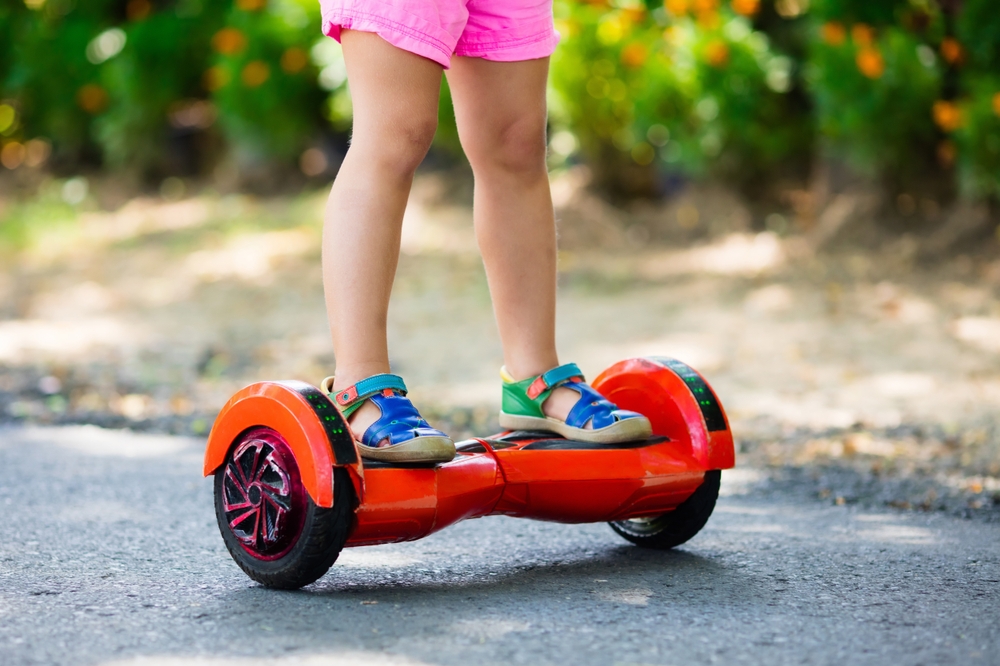
5. Hoverboards That Went Up in Flames

The hoverboard craze of the mid-2010s turned into a safety nightmare almost overnight. Many of these toys that were approved and sold through major retailers were later found to have defective lithium-ion batteries that caught fire while charging or in use. Despite certifications claiming compliance with safety standards, the mass recall of several models revealed inconsistencies in global testing practices. The U.S. Consumer Product Safety Commission intervened, forcing updated standards and stricter import oversight. What began as a tech marvel ended as a cautionary tale about fast-tracked gadgets for kids.

6. Fisher-Price Rock ‘n Play Sleeper and Hidden Suffocation Risks

The Fisher-Price Rock ‘n Play Sleeper wasn’t a traditional toy—but it was marketed for playtime and naps, making it a staple in many homes. It was among the most shocking toys that were approved before being quietly recalled in 2019. After reports of more than 30 infant deaths linked to suffocation, the recall exposed how misleading labeling and poor testing can have deadly consequences. Despite meeting voluntary safety standards, the product’s inclined design was inherently unsafe for unsupervised sleep. The case reshaped how infant “soothing” products are regulated.

7. Sky Dancers’ Unpredictable Flights

In the 1990s, Sky Dancers captured kids’ imaginations with their spinning, flying dolls launched by pull-string bases. Unfortunately, their unpredictable flight paths led to numerous injuries, including eye damage and broken teeth. These toys that were approved under then-current mechanical safety standards ultimately proved too dangerous in practice. More than eight million units were recalled in 2000 after hundreds of complaints. The recall underscored how motion-based toys often behave differently in real-world play than in controlled testing environments.

8. Fidget Spinners with Toxic Paint and Choking Hazards

Fidget spinners exploded in popularity in 2017, marketed as stress relievers for all ages. But many imported versions of these toys that were approved for sale later tested positive for lead-based paint and small detachable parts that violated U.S. safety laws. Several recalls followed, though not all were widely publicized. The episode illustrated how rapidly trending products can bypass scrutiny when demand outpaces regulation. Even something as simple as a spinner can carry hidden risks when manufacturers cut corners.

What These Silent Recalls Teach Parents About Safety

The stories of these toys that were approved before being recalled remind us that safety approval isn’t always a permanent guarantee. As products age, components loosen, materials degrade, and new data reveals unforeseen hazards. Parents can protect their families by regularly checking recall lists from the Consumer Product Safety Commission and avoiding secondhand toys without updated safety labels. Staying informed is the best safeguard against risks that testing can’t always predict. When it comes to children’s products, even approved doesn’t always mean safe.

Which of these toy recalls surprised you most? Share your thoughts—or your own memories of recalled toys—in the comments below.

What to Read Next…

10 Children’s Medications That Were Recently Recalled

7 Popular Lunch Snacks That Were Quietly Recalled

Beyond The Recall: 6 Baby Gear Recalls You Missed Putting Your Child At Risk

6 Baby Products Pulled from Shelves But Still in Homes

10 Popular Diaper Brands That Have Faced Consumer Complaints

Catherine Reed
Catherine Reed

Catherine is a tech-savvy writer who has focused on the personal finance space for more than eight years. She has a Bachelor’s in Information Technology and enjoys showcasing how tech can simplify everyday personal finance tasks like budgeting, spending tracking, and planning for the future. Additionally, she’s explored the ins and outs of the world of side hustles and loves to share what she’s learned along the way. When she’s not working, you can find her relaxing at home in the Pacific Northwest with her two cats or enjoying a cup of coffee at her neighborhood cafe.

Filed Under: Safety Tagged With: child safety, consumer safety, dangerous toys, parenting tips, product safety, toy industry, toy recalls

  • Facebook
  • Pinterest
  • RSS
  • Twitter

Basic Principles Of Good Parenting

Here some basic principles for good parenting:

  1. What You Do Matters: Your kids are watching you. So, be purposeful about what you want to accomplish.
  2. You Can’t be Too Loving: Don’t replace love with material possessions, lowered expectations or leniency.
  3. Be Involved Your Kids Life: Arrange your priorities to focus on what your kid’s needs. Be there mentally and physically.
  4. Adapt Your Parenting: Children grow quickly, so keep pace with your child’s development.
  5. Establish and Set Rules: The rules you set for children will establish the rules they set for themselves later.  Avoid harsh discipline and be consistent.
  6. Explain Your Decisions: What is obvious to you may not be evident to your child. They don’t have the experience you do.
  7. Be Respectful To Your Child: How you treat your child is how they will treat others.  Be polite, respectful and make an effort to pay attention.
Best Parenting Blogs

Most Popular

Baby

9 Unusual Baby Names That Sound Like They Belong to Future CEOs

Evan Morgan
Baby

10 Baby Names That Were Once Considered “Grandparent Names” but Feel Cool Again

Evan Morgan
Target Store

Choking Incident Prompts Recall of 49,000 Target Gigglescape “Under the Sea” Popping Toys

Evan Morgan
Frustrated Girl

Why Some Students on the Spectrum Are Labeled With ODD

Evan Morgan
Coke Bottles

12 Things Kids Took to School in the ’70s That Would Never Be Allowed Today

Evan Morgan

All content on Kids Ain’t Cheap is for entertainment purposes only. By reading this blog, you agree that Kids Ain’t Cheap is not responsible for any actions taken after reading this blog. For the full disclaimer, see our privacy policy.

Please note that Kids Ain’t Cheap has financial relationships with some of the merchants mentioned here. Kids Ain’t Cheap is funded by banner advertising, commission sales and search optimization consulting.

Copyright © 2006–2026 | District Media | All Rights Reserved | Privacy Policy

Copyright © 2026 Runway Pro Theme by Viva la Violette