• Home
  • About Us
  • Toolkit
  • Archives
  • Advertise
  • Privacy Policy

Kids Ain't Cheap

But They Sure Are Worth It

  • Parenting
    • Baby Stuff
    • Books and Reading
      • Aesops Fables
      • Comic Books
    • Education
    • Family Time
    • Green Living
    • Growing Up
    • Healthy Living & Eating
    • Holidays
    • Parenting
    • Random Musings
    • Shopping
    • Stuff to Do
  • Money
  • Product Reviews
    • Books and Magazines
    • Discount Sites
    • Furniture
    • House Keeping
    • Reviews News
    • Toys and Games
  • Contact Us
  • Our Editorial Commitment
  • Search

Florida Special Ed Funding Changes: What Families Should Expect

July 14, 2026 | Leave a Comment

Boy In School
Parents should review an IEP with school staff while discussing Florida special education funding changes and how they may affect student services. Staying informed helps families confidently advocate for the support their children need. (Pexels).

More than 400,000 Florida students receive Exceptional Student Education services each year, making Florida one of the nation’s largest special education systems. Lawmakers have been making adjustments to school funding formulas, scholarship programs, and Exceptional Student Education (ESE) allocations. For families, these updates can sound overwhelming, especially when headlines focus on budgets rather than on how children will be affected in the classroom. The good news is that changes to funding do not automatically reduce a student’s legal right to receive services outlined in an Individualized Education Program (IEP). Understanding what is changing—and what remains protected—can help parents make informed decisions and confidently advocate for their children.

Florida Special Education Funding Is Becoming More Targeted

For the 2025-26 school year, Florida continued funding Exceptional Student Education (ESE) through the Florida Education Finance Program (FEFP), including the ESE Guaranteed Allocation for many students with disabilities and additional funding for students with the highest support needs through the state’s service matrix system.

Florida special education funding is distributed through several funding streams, including the FEFP and the state’s Exceptional Student Education Guaranteed Allocation. Students with the most intensive support needs continue to generate additional funding through service matrices that measure the level of services required under their IEPs. Recent state budgets have maintained funding formulas while updating annual funding amounts and weighted cost factors for students with higher support needs.

The Florida Department of Education reminds districts that services for students with disabilities must continue to comply with the federal Individuals with Disabilities Education Act (IDEA), regardless of annual budget discussions.

Your Child’s IEP Still Determines Services

One of the biggest misconceptions is that schools can reduce services simply because funding changes. Federal law under the Individuals with Disabilities Education Act (IDEA) still requires districts to provide every service documented in a student’s IEP. For example, if a child receives speech therapy twice a week, the district cannot eliminate those sessions solely because of local financial pressures. Funding helps schools pay for services, but it does not replace the legal protections built into an IEP.

Schools may propose IEP changes if a student’s educational needs change, but they cannot reduce services simply because of budget constraints. Any proposed changes must be discussed through the IEP process, with parents participating as equal members of the team.

Scholarship Growth May Influence School Budgets

Florida has continued expanding scholarship opportunities for eligible students with disabilities, including programs that help families access private educational services. Scholarship availability has increased alongside exceptional student enrollment, giving more qualifying families additional educational choices. While many parents appreciate having more options, increased scholarship participation may also contribute to enrollment shifts that affect district budgets.

Families considering a scholarship-funded private placement should understand that many private schools accepting scholarship students are not required to provide the full range of IDEA procedural protections that public schools must offer. It is important to carefully compare available services before changing educational settings because private schools do not always provide the same protections guaranteed under IDEA as public schools.

Families Should Watch for Staffing and Service Delivery Changes

Even when student services remain protected, funding adjustments can influence how districts deliver those services. Some schools may experience therapist shortages, larger caseloads, or longer timelines for filling vacant special education positions. Imagine a district struggling to hire occupational therapists; students may still receive required therapy, but scheduling could become more challenging until staffing improves.

If required services are missed repeatedly, parents can ask the district whether compensatory services are appropriate to help make up for lost instructional time, depending on the circumstances and the student’s needs.

Maintaining open communication with teachers, therapists, and case managers throughout the school year will go a long way. Documenting missed sessions and requesting makeup services when appropriate can also strengthen ongoing collaboration.

Staying Informed Is Your Best Advocacy Tool

Florida special education funding will likely continue evolving as lawmakers approve new state budgets each year. Parents do not need to become finance experts, but understanding how funding works makes conversations with schools far more productive. Attend IEP meetings prepared with questions about staffing, services, and any proposed changes affecting your child. Keeping organized records of evaluations, progress reports, and communications can make resolving concerns much easier if disagreements arise. The more informed families are, the better positioned they are to ensure their children receive the support they deserve.

Questions Parents Should Ask At Your Next IEP Meeting

  • Will my child’s services change this year?
  • Has staffing changed?
  • How will missed therapy sessions be made up?
  • Who should I contact if services aren’t delivered?
  • Are there vacancies affecting special education staff?

What Matters Most for Florida Families Moving Forward

Florida special education funding will continue changing as education priorities evolve, but the foundation of special education remains the same. Students with disabilities still have legally protected rights to individualized services that meet their educational needs. Parents who stay informed, participate actively in IEP meetings, and communicate regularly with school staff are often the strongest advocates for their children. Budget headlines may change from year to year, but informed families are better equipped to navigate those changes with confidence.

What questions do you still have about Florida’s special education funding, and how do you think these changes could affect your family? Share your thoughts and experiences in the comments below.

What to Read Next

Florida Families Report Longer Delays for School-Based Autism Services

Florida Families Say Social Security Delays Are Disrupting Autism Therapy Access

The SEED Act Victory: What Parents Should Know About the New 2026 Child Care Funding

Evan Morgan

Evan Morgan has been a full-time freelance writer and editor for 10+ years. When not working, he enjoys catching the latest true crime documentary or getting lost in a good book.
Filed Under: Education Tagged With: disabilities, education funding, Florida ESE, Florida special education funding, IDEA, IEP, Parents, school choice, special education

North Carolina Schools: 5 Policy Shifts Affecting Special Needs Families

July 9, 2026 | Leave a Comment

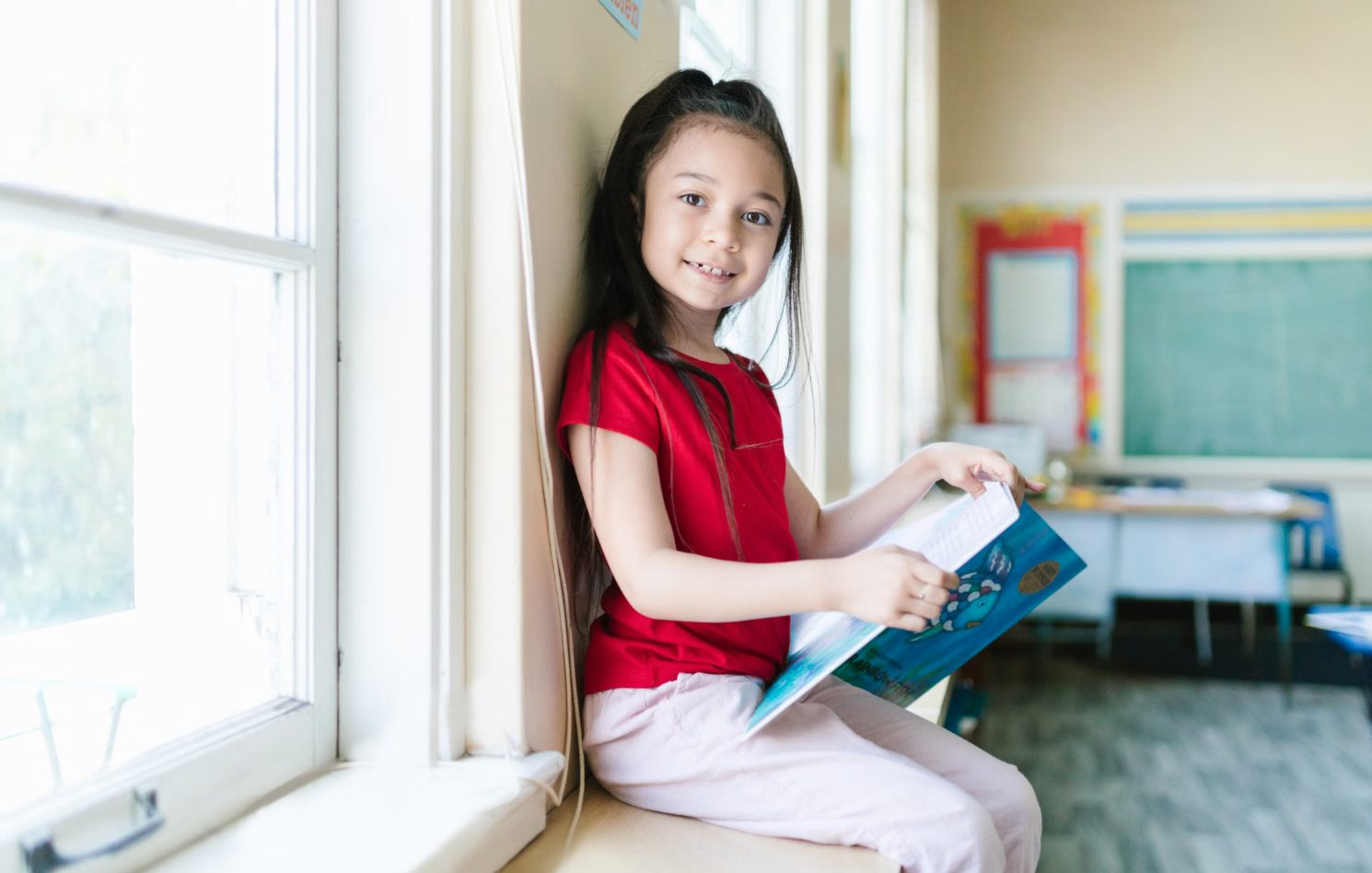
Girl In Class
North Carolina parents should meet with educators during an IEP conference, highlighting how recent policy changes are giving families a greater role in educational decisions for students with disabilities. (Pexels).

Parents of children with disabilities often juggle school meetings, therapy appointments, transportation challenges, and medical paperwork all at once. In North Carolina, special education policy is changing in ways that could affect how families plan for the school year. Some updates may give parents more choices, while others raise new questions about services, accountability, and access. Here are five North Carolina special education shifts families should watch closely.

1. Parents May Have More Input on School Nursing Services

For students who need medical support during the school day, nursing services can be the difference between attending class safely and missing learning time. North Carolina has moved toward giving some parents more say in who provides required IEP-related nursing care, which matters for children with seizures, feeding tubes, diabetes, or complex medication schedules.

The new law doesn’t give parents unlimited authority to select any nurse they choose. Instead, it allows a local school district to assign a parent’s preferred nurse if specific conditions are met, including that the nurse already provided care to the child, works through a qualified nursing agency, and the agency agrees to contract with the district under the same terms as other providers. The law took effect beginning with the 2025–26 school year.

A realistic example is a student who already works with a private duty nurse at home and may benefit from that same trusted professional supporting them at school. Families should still expect districts to review credentials, documentation, and service requirements before approving any arrangement.

2. Private School Choice Is Expanding, but Services Can Vary

North Carolina’s school choice conversation continues to grow, especially around Opportunity Scholarships and support for students with disabilities. Some families see private schools as a chance for smaller classes, a calmer environment, or a specialized teaching approach that better fits their child. However, parents should not assume a private school must provide the same special education services a public school would provide under an IEP.

Before switching schools, ask whether the school offers speech therapy, occupational therapy, behavior supports, assistive technology, testing accommodations, and trained special education staff. For North Carolina special education planning, the safest move is to compare services side by side before giving up a public-school placement.

Even as state policies evolve, students who qualify for special education remain protected under the federal Individuals with Disabilities Education Act (IDEA). Schools must continue providing a Free Appropriate Public Education (FAPE) through an individualized education program (IEP), regardless of local staffing or administrative challenges.

3. Literacy Instruction Is Becoming More Structured

Reading policy remains one of the most important issues for children with dyslexia, language-based learning disabilities, and delayed reading development. North Carolina’s continued focus on the science of reading practices means more classrooms are emphasizing phonics, decoding, vocabulary, fluency, and comprehension in a structured way. That can help many struggling readers, but families should still ask whether interventions are targeted to the child’s documented needs.

Parents can ask whether their child’s reading intervention uses evidence-based structured literacy practices and how often progress is measured. Requesting copies of progress-monitoring data makes it easier to determine whether interventions are working or whether additional evaluation may be appropriate.

For example, a third grader who guesses words from pictures may need explicit decoding instruction, not just more independent reading time. In North Carolina special education meetings, parents can request progress-monitoring data and ask how often reading growth is being measured.

4. Funding Pressures Remain a Serious Concern

Even strong policies can fall short when schools do not have enough staff, specialists, or classroom support. Advocacy groups have long raised concerns that special education funding limits can leave districts serving more students with disabilities than state formulas fully recognize. For families, that may show up as delayed evaluations, larger caseloads for therapists, or fewer available paraprofessionals. A child may have an excellent IEP on paper but still struggle if services are missed or staff turnover is high. North Carolina special education parents should track service minutes, save communication with the school, and speak up quickly when services are not delivered as written.

5. Health Care Coordination Is Becoming More Important

Many students with disabilities depend on both school-based services and health care supports outside the classroom. Changes in Medicaid programs, provider networks, or managed care coordination can affect therapy schedules, medical documentation, and the services families can access after school. If a child receives speech therapy privately and at school, parents may need to help both teams understand the same goals without assuming they communicate automatically. Keeping updated evaluations, medical orders, and therapy notes in one folder can make IEP meetings more productive. For North Carolina special education families, better coordination can prevent gaps that affect safety, learning, and daily routines.

What Families Should Do Before the Next IEP Meeting

The best preparation starts before a problem becomes urgent. Parents should review the current IEP, highlight services that are unclear, and write down questions about nursing care, reading support, transportation, behavior plans, or therapy minutes. Bring real examples, such as missed services, homework frustration, regression after breaks, or a child avoiding school because support is inconsistent. It is also wise to ask for data instead of relying only on general statements like “your child is doing fine.” When families approach North Carolina special education meetings with records, questions, and a calm but firm tone, they are better positioned to advocate effectively.

Which policy shift do you think will affect North Carolina special education families the most? Share your experience in the comments so other parents can learn from it.

What to Read Next

7 New North Carolina School Policies Special Needs Parents Should Watch in 2026

North Carolina Autism Services: Therapy Access Improves in Rural Areas

7 New North Carolina School Rules Taking Effect for the 2026-2027 Academic Year

Evan Morgan

Evan Morgan has been a full-time freelance writer and editor for 10+ years. When not working, he enjoys catching the latest true crime documentary or getting lost in a good book.

Filed Under: Education Tagged With: disability education, education policy, IEP, literacy instruction, Medicaid, North Carolina schools, North Carolina special education, parental rights, school choice, special needs families

What Families Lose When Moving From Public School IEPs to Private Voucher Schools

July 2, 2026 | Leave a Comment

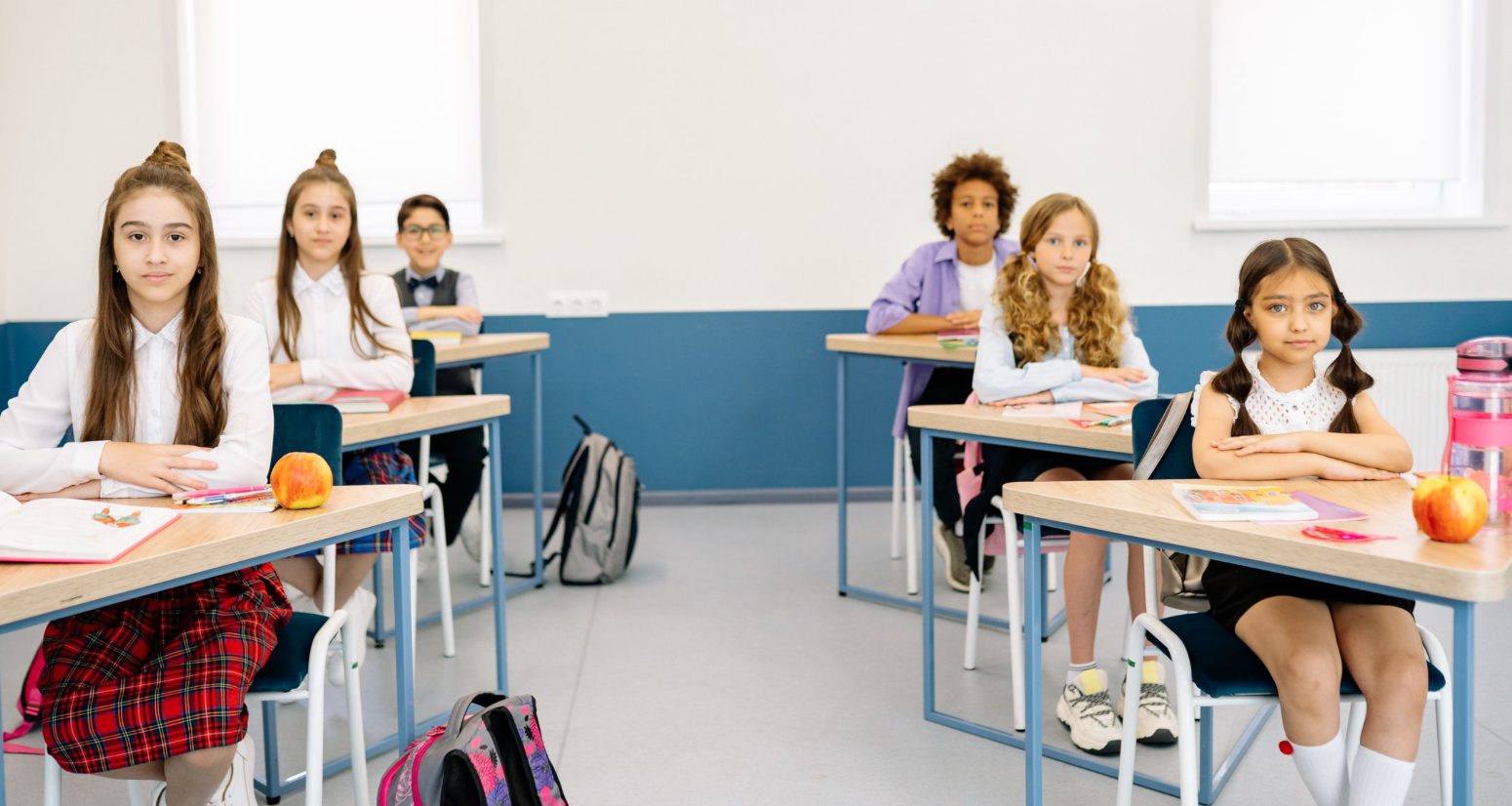
Kids In Class
Families should review school records while comparing public school IEP protections with services offered through a private voucher school. Understanding the differences before enrolling can help parents make informed decisions for their child’s education. (Pexels).

For many families, school voucher programs offer the promise of greater educational choice and a learning environment that better fits their child’s needs. That promise can be appealing, especially for parents of children with disabilities who are searching for smaller class sizes or specialized programs. However, one important detail is often overlooked before making the switch from a public school to a private voucher school. In many cases, families give up significant legal protections and services that come with an Individualized Education Program (IEP), making it essential to understand the tradeoffs before enrolling.

Public School IEP Protections Do Not Always Follow Students

An IEP is a legally enforceable document under the Individuals with Disabilities Education Act (IDEA), guaranteeing eligible students specialized instruction and related services in public schools. When parents voluntarily enroll their child in a private school using a voucher or scholarship, that individual entitlement typically changes. Instead of receiving the full range of services outlined in an IEP, students may only qualify for limited “equitable services,” which are determined through consultation rather than guaranteed by the child’s individual needs. That distinction surprises many families because the child’s disability has not changed, but their legal rights often have.

As the U.S. Department of Education explains, children whose parents voluntarily place them in private schools “do not have an individual entitlement to the special education and related services they would receive if they were enrolled in a public school.”

Services May Become More Limited Than Parents Expect

Many parents assume speech therapy, occupational therapy, classroom accommodations, and specialized instruction will continue without interruption after transferring to a private voucher school. Unfortunately, that is not always the case, since private schools participating in voucher programs are generally not required to implement public school IEPs in the same way. Depending on the state and the school’s policies, available services may be fewer, offered less frequently, or unavailable altogether. Some schools provide excellent support through their own resources, while others have limited special education staff. Asking detailed questions before enrollment is one of the most important steps families can take.

Parents May Lose Important Legal Safeguards

Public school families have extensive procedural protections if disagreements arise about services, evaluations, or educational placement. Those safeguards include formal dispute resolution options, due process hearings, and enforceable timelines designed to protect students with disabilities. Once a student voluntarily enrolls in many private voucher schools, those legal remedies may no longer apply in the same way. If promised services are reduced or discontinued, parents often have fewer legal options for resolving disputes. Knowing these differences can help families weigh educational preferences against long-term protections.

Every Private School Offers a Different Level of Support

Private schools are not all alike, and some provide outstanding programs for students with disabilities despite having different legal obligations. A school may employ experienced intervention specialists, maintain small classrooms, and offer individualized attention that benefits certain students. Another private school may have limited staffing and expect parents to arrange outside therapies independently. For example, a child with dyslexia might thrive in a structured reading program at one private school but struggle in another that lacks specialized instruction. Visiting campuses, reviewing support services, and speaking with current families can provide valuable insight before making a decision.

Making an Informed Choice Protects Your Child’s Future

Choosing between a public school IEP and a private voucher school is rarely a simple decision because every child’s needs are unique. Families should request written explanations of available services, ask whether existing accommodations will continue, and understand how evaluations and progress monitoring will be handled. Education experts consistently encourage parents to compare both educational quality and legal protections rather than focusing on school choice alone. A beautiful campus or a smaller classroom does not automatically replace guaranteed special education services. Make sure you are asking questions like:

  • Will my child’s current accommodations continue?
  • Who pays for speech, OT, or PT?
  • Who writes the service plan?
  • What happens if my child’s needs change?
  • Is there a formal dispute process?

Understanding the Tradeoffs Before Making the Switch

Voucher programs can open valuable educational opportunities for some students, particularly when a private school offers specialized instruction that better fits a child’s needs. At the same time, families should recognize that changing schools may also change the legal framework governing special education services. Asking detailed questions, requesting written information, and understanding how services will be delivered can help parents make informed decisions before giving up the protections that accompany a public school IEP. The best choice is the one that matches both a child’s educational needs and the family’s expectations for long-term support.

Have you or someone you know faced the decision between keeping a public school IEP or choosing a private voucher school? Share your experience or perspective in the comments to help other families navigate this important choice.

What to Read Next

All-Gender Restrooms Are Now Required in K-12 Schools – What Parents Should Know

The Code Words Schools Use When Denying Services

How Autism Diagnoses Are Sometimes Downplayed in Schools

Evan Morgan

Evan Morgan has been a full-time freelance writer and editor for 10+ years. When not working, he enjoys catching the latest true crime documentary or getting lost in a good book.

Filed Under: Education Tagged With: disability rights, education policy, IDEA, IEP services, Parents, private schools, public school IEP, school choice, School Vouchers, special education

Why Some Parents Are Leaving Their Jobs to Support Their Child’s Education

June 6, 2026 | Leave a Comment

Mom And Son
A growing number of parents are leaving the workforce to provide direct educational support for their children, driven by academic concerns, homeschooling growth, and the desire for more personalized learning experiences. Pexels.

In recent years, more families have made a decision that once seemed unthinkable: one parent leaving the workforce to focus on their child’s education. While financial pressures often push households toward dual incomes, some parents believe the benefits of increased parental involvement in education outweigh the loss of a paycheck. This trend is being fueled by concerns about academic performance, learning gaps, homeschooling opportunities, and the growing need for individualized support. For many families, the choice is not simply about academics but about creating a learning environment that better matches their child’s unique needs.

Rising Concerns About Academic Success

Many parents say they first considered stepping away from work after noticing their child struggling academically or emotionally at school. Some children need extra help with reading, math, or learning differences that can be difficult to address in crowded classrooms. Others face challenges such as anxiety, bullying, or difficulty adapting to traditional learning environments. Parents often find themselves spending hours after work helping with homework, tutoring, and educational planning. Over time, some decide that increased parental involvement in education requires more time than their work schedule allows.

The Growth of Homeschooling and Alternative Learning

The rise of homeschooling has played a major role in this shift. According to the National Home Education Research Institute, an estimated 3.4 million students were homeschooled during the 2024-2025 school year, reflecting continued growth in alternative education choices. Many parents who homeschool find that managing lessons, activities, and assessments can be a full-time responsibility. As a result, one parent may leave their job to provide consistent instruction and supervision. This growing interest in alternative education has made parental involvement in education a central priority for many households.

Financial Trade-Offs Families Carefully Consider

Leaving a job is rarely an easy decision, especially with rising living expenses. Families often calculate whether childcare, tutoring, transportation, and after-school programs consume a significant portion of one parent’s income. Surveys have found that many households spend 20% or more of their annual income on childcare, forcing difficult financial choices. In some cases, parents determine that staying home to support education and caregiving provides greater overall value than continuing to work. However, experts recommend creating a detailed budget and emergency savings plan before making such a major lifestyle change.

Benefits Parents Hope to Achieve

Parents who leave their jobs often report benefits that extend beyond improved grades. More one-on-one instruction allows children to learn at their own pace and receive immediate feedback. Families frequently describe stronger relationships, reduced stress, and increased confidence in their children’s academic progress. A parent who is fully engaged in daily learning can quickly identify struggles before they become larger problems. These outcomes reinforce the belief that parental involvement in education can have a meaningful impact on a child’s long-term development.

Challenges That Come With the Decision

Despite the potential advantages, this choice comes with significant challenges. Families may face reduced retirement contributions, slower career advancement, and the loss of employer-provided benefits. Parents who step away from their careers sometimes struggle with professional identity or worry about reentering the workforce later. There can also be emotional pressure when one parent becomes primarily responsible for educational outcomes. Understanding these risks helps families make informed decisions rather than assuming the transition will automatically lead to positive results.

What Experts Recommend Before Making the Leap

Education and financial experts encourage parents to evaluate all available options before leaving a job. Flexible work arrangements, remote employment, tutoring programs, hybrid schooling, and part-time schedules may provide a balance between career and educational support. Families should assess their child’s specific needs and determine whether full-time parental involvement in education is truly necessary. Speaking with teachers, counselors, and financial planners can provide valuable insight into the potential benefits and drawbacks. Taking a measured approach can help parents avoid costly decisions based solely on short-term frustrations.

The decision to leave a job for a child’s education is deeply personal and often involves significant sacrifices. For some families, the benefits of increased parental involvement in education outweigh the financial challenges that come with reduced income. Others may find alternative solutions that allow them to remain employed while still supporting their child’s academic growth. There is no universal answer, but understanding the realities behind this trend can help families make informed choices.

What would you do if your child needed more educational support than your current schedule allowed? Share your thoughts and experiences in the comments below—we’d love to hear your perspective.

What to Read Next

School Boards Are Quietly Cutting These Special Education Services First

California Parents Push Back Against Proposed Special Ed Budget Reductions

Texas Parents Say Special Education Staffing Shortages Are Getting Worse

Evan Morgan

Evan Morgan has been a full-time freelance writer and editor for 10+ years. When not working, he enjoys catching the latest true crime documentary or getting lost in a good book.

Filed Under: Parenting Tagged With: academic success, child development, education, family finances, homeschooling, learning support, parental involvement in education, Parenting, school choice, work-life balance

Texas Education Freedom Accounts: 6 Income Limits for the 2026 Lottery

March 31, 2026 | Leave a Comment

Texas Education Freedom Accounts
Image source: shutterstock.com

Watching your child struggle in a school that doesn’t fit their needs is a heartbreaking experience for any parent. You want the best for their future, but the cost of private education often feels like an impossible hurdle. Fortunately, the state has introduced a new way to level the playing field for families across the Lone Star State. The Texas Education Freedom Accounts (TEFA) offer a lifeline to those who need financial assistance to choose the right learning environment. However, the system uses a strict lottery and specific income brackets that you must navigate perfectly to succeed. Understanding the priority tiers for the 2026 lottery is the first step toward reclaiming your child’s education.

1. High-Priority Students with Disabilities

The highest priority in the program is reserved for students with documented disabilities who require specialized support. For these families, the income cap is much more generous, allowing households earning up to 500% of the Federal Poverty Level (FPL) to apply in this top tier. This translates to $165,000 for a family of four, ensuring that middle-class families with high therapy costs aren’t excluded. Surprisingly, these students are eligible for up to $30,000 in funding to cover specialized services and tuition. You can find the full list of qualifying disabilities and documentation requirements in the official 2026 Parent Application Guide. Furthermore, these accounts can be used for therapies and technology that public schools may not always provide.

2. Low-Income Households and Automatic Support

The second priority tier focuses on families who are currently struggling the most with rising living costs. To qualify for this high-priority group, your household income must fall at or below 200% of the Federal Poverty Level. For a family of four, this threshold is $66,000, a limit that includes many working-class Texans across the state. Families already receiving benefits like SNAP or TANF are often prioritized within this specific bracket. Most people assume the lottery is entirely random, but these tiers ensure that those with the least financial flexibility get the first available spots. Consequently, thousands of families are finally seeing a path toward accredited private schools that were once out of reach.

3. Mid-Tier Applicants and Lottery Competition

Families earning between 200% and 500% of the federal poverty level represent the third priority group in the 2026 cycle. This middle bracket is where the lottery system becomes most competitive, especially for suburban households earning between $66,000 and $165,000 for a family of four. While you are not in the top two tiers, your chances remain significant because the program was launched with $1 billion in total funding. You should refer to the EdChoice Texas program breakdown to see how the state handles waitlists for this specific group. On the other hand, the sheer volume of applications means that submitting your paperwork during the official window is essential for any chance of success.

4. Universal Access for Higher Earners

The final tiers of the program include families earning above 500% of the FPL, though their participation is restricted by state law. No more than 20% of the total program funds can be directed to households in this highest income bracket. Within this group, the state further prioritizes students who are currently switching from a public or charter school over those already in private education. This “switch-seed” priority is designed to encourage movement into the program from the traditional public system. Actually, the goal is to prove that educational choice is a universal right rather than a luxury for the wealthy. Most parents find that even a standard scholarship of $10,474 makes a massive difference in their ability to choose a better environment.

5. Standard Funding and Award Amounts

The amount of money your family receives depends entirely on the educational setting you choose for your child. Private school students generally receive a standard award of $10,474, while students with disabilities can access the full $30,000 for specialized instruction. Homeschooled participants are eligible for a smaller $2,000 award to cover curriculum and approved instructional materials. This tiered funding structure acknowledges that different learning environments come with different financial burdens. You can use these funds for everything from uniforms and textbooks to transportation and required assessments. Refer to the official Texas Education Freedom Accounts portal for the most up-to-date award estimates.

6. Important Deadlines and Notifications

The application window for the 2026-2027 school year is strictly enforced to allow for proper lottery processing. For the current cycle, all applications must be submitted through the state portal by 11:59 p.m. on March 31, 2026. Notifications regarding your funding status are expected to be sent to parents beginning in April 2026. This timeline allows families to confirm their private school enrollment well before the fall semester begins. Staying organized with your proof of residency and tax records will help you avoid last-minute delays that could jeopardize your spot. Actually, the state has streamlined the digital process to make it as accessible as possible for busy parents.

Securing Your Child’s Educational Future

The opportunity to move your child into a better school shouldn’t be a luxury reserved for a few. Navigating the Texas Education Freedom Accounts process is a powerful way to take back control of your family’s destiny. By understanding the lottery system and where your household fits into these income brackets, you can maximize your chances of success. The state has set the first year of this program to be a turning point for parental rights in education. Have you calculated your household income lately to see which priority tier you fall into for the 2026 lottery? Please leave a comment and let me know if you have questions about the application process.

What To Read Next….

  • The 5 Educational Apps That Teachers Say Are Actually Hurting Grades
  • 8 Budget Cuts in Education That Directly Impact Your Kids
  • Here’s What Your Education Says About Your Parenting Style
Latrice Perez

Latrice is a dedicated professional with a rich background in social work, complemented by an Associate Degree in the field. Her journey has been uniquely shaped by the rewarding experience of being a stay-at-home mom to her two children, aged 13 and 5. This role has not only been a testament to her commitment to family but has also provided her with invaluable life lessons and insights.  As a mother, Latrice has embraced the opportunity to educate her children on essential life skills, with a special focus on financial literacy.

Filed Under: Education Tagged With: education freedom accounts, education grants, income limits, private school funding, school choice, Texas education, Texas lottery 2026, Texas parents

Texas Vouchers vs. IEPs: The Hidden Legal Rights You Lose When You Switch Schools

March 29, 2026 | Leave a Comment

Texas vouchers vs. IEPs
Image source: shutterstock.com

School choice sounds like a dream for parents of children with special needs. You might feel ignored by the public system. People tell you that a private school voucher provides the funds for a specialized education. Most parents believe their child’s Individualized Education Program (IEP) follows them into the private sector.

However, the legal reality in Texas changes your child’s protections the moment you leave the district. The system markets choice while it quietly strips away federal safeguards. You are not being difficult for wanting to keep your child’s legal standing intact. Understanding the hidden cost of Texas vouchers is essential for your child’s future.

The Loss of FAPE and Federal Safeguards

In a public school, your child holds a right to a Free Appropriate Public Education (FAPE). This right exists under the Individuals with Disabilities Education Act (IDEA). Surprisingly, private schools that accept vouchers do not follow these same federal IDEA requirements.

They do not have to provide the specific accommodations or therapies in your child’s IEP. On the other hand, the public school must meet a strict legal standard. You can even sue the district for a lack of progress. Once you accept a voucher, you often waive your right to due process. You can review these federal guidelines at the official IDEA website. Your child’s rights should not be the price of admission.

Admission and Retention Discretion

Public schools must serve every child within their boundaries. This rule applies regardless of the severity of a disability or behavioral needs. Furthermore, private schools in Texas have the legal right to deny admission based on a child’s profile. They can also expel a student if their needs become too costly.

Consequently, this creates a revolving door for children with high needs. Schools often send these students back to the public system after spending the voucher funds. This conflict often leaves parents stranded in the middle of a school year. The voucher system does not guarantee a seat for your child. Instead, it only guarantees a check that may not cover specialized care.

The Financial Gap in Specialized Services

Voucher amounts are often significantly lower than the actual cost of high-quality private programs. Therefore, you may pay thousands of dollars out of pocket for speech therapy or aides. Additionally, the public school district stops providing these itinerant services once you opt-out. This financial burden falls directly on families who expected a free alternative.

Taking the voucher can inadvertently bankrupt a family. It may provide fewer services than the local public school was legally mandated to give. You deserve to know the full price tag before you sign away federal protections. Detailed reports on these impacts are available via Disability Rights Texas.

The Disappearance of Legal Due Process

Public school parents can challenge a school’s decision through a formal legal hearing. This process ensures that the school stays accountable for your child’s learning goals. However, private schools operate under different contracts that often exclude these legal protections.

If a private school fails to follow your child’s plan, you have very little recourse. Furthermore, you lose the ability to resolve disputes through the state education agency. This shift moves the power from the parent to the private institution. Staying in the public system allows you to fight for every service with the law behind you.

Staffing Standards and Specialized Training

Public schools must hire certified special education teachers who meet state standards. Surprisingly, private schools often have more flexibility regarding teacher certifications and training. This means the person working with your child might not have a background in special education. On the other hand, public educators must participate in ongoing professional development for various disabilities.

Choosing a voucher might mean trading an expert for a generalist. We must ensure that our children receive instruction from qualified professionals who understand their unique needs. Knowledge remains the only way to ensure your child receives the education they were promised.

Curricular Freedom vs. Measured Progress

Private schools often celebrate their freedom from state-mandated testing and curriculum. While this sounds liberating, it also means the school has less accountability for academic growth. Public schools must track and report your child’s progress toward specific IEP goals.

If the student does not meet those goals, the team must adjust the plan. Furthermore, private institutions do not have to share this data with the state. This lack of transparency makes it difficult to judge if the school actually helps your child. Consistency in advocacy is the key to your child’s success in any environment.

Protecting Your Child’s Educational Rights

The debate over Texas vouchers is about more than just school location. It is about who holds the power over your child’s education. You are not at fault for wanting a better environment for your child. It is the responsibility of the state to be honest about legal trade-offs.

By keeping your child in the public system, you maintain strong legal leverage. We must value the civil rights of our students over the convenience of a voucher. Protecting their future means guarding the laws designed to keep them from being excluded.

Are you prepared to lose your legal right to a due process hearing? Please leave a comment below and share your thoughts on the voucher system.

What to Read Next…

  • 7 Surprising Parenting Methods That Are Outperforming Old-School Rules
  • 8 Legal Battles That Begin When a Minor Child Breaks the Law
  • Texas School Vouchers 2026: The $10,500 ‘Freedom Account’ Rule Parents Should Know
Latrice Perez

Latrice is a dedicated professional with a rich background in social work, complemented by an Associate Degree in the field. Her journey has been uniquely shaped by the rewarding experience of being a stay-at-home mom to her two children, aged 13 and 5. This role has not only been a testament to her commitment to family but has also provided her with invaluable life lessons and insights.  As a mother, Latrice has embraced the opportunity to educate her children on essential life skills, with a special focus on financial literacy.

Filed Under: Legal Tagged With: Education Law, IDEA law, IEP rights, Parenting, school choice, special education, Texas schools, Texas vouchers

Why Private School Tuitions Are driving Families into Debt in 2026

March 3, 2026 | Leave a Comment

private school tuitions
Image source: shutterstock.com

Imagine paying more for your child’s kindergarten than you would for an Ivy League university. For thousands of American families, this unthinkable milestone has become a daily financial reality. As of 2026, the average private school tuition in the United States is closing in on 50,000 dollars a year for day schools. This isn’t just a hurdle for the ultra-wealthy; it is a systemic crisis that is driving even upper-middle-class households into deep, long-term debt. Today, we are pulling back the curtain on the hidden arms race that is inflating costs and why your family’s future might be at risk.

The Hidden Arms Race of Campus Facilities

Honestly, the primary driver behind these skyrocketing costs is a relentless competition for a shrinking pool of students. To stay relevant, private schools are investing millions into upgraded athletic complexes, STEM centers, and wellness facilities. Surprisingly, tuition now covers roughly 73% of a school’s operating budget, meaning you are directly funding these massive capital improvements. This ‘amenity inflation’ forces schools to hike rates by 4% to 5% every single year, far outpacing the standard Consumer Price Index. The latest financial reports show that boarding schools have reached even more staggering heights, often exceeding 75,000 dollars annually.

Furthermore, the cost of attendance extends far beyond the headline tuition figure. Many schools are now adding mandatory technology assessments that range from 300 to 800 dollars per student. Capital improvement fees can easily add another 2,500 dollars to your annual bill. On the other hand, the cost of transportation and specialized academic support often remains hidden until after you’ve signed the contract. These ‘add-ons’ can increase the total cost of attendance by 20% to 35% above the published rate. Here’s the truth: the system is designed to lock you into a lifestyle that your base salary can no longer support.

The Psychology of the ‘Education Debt Trap’

Many parents feel a crushing sense of social pressure to provide a ‘premium’ education, regardless of the financial toll. In 2026, nearly 55% of private school parents report high levels of stress regarding affordability. However, only about 12% of these parents are currently using formal loans for tuition. The real debt is hiding in home equity lines of credit and credit card balances that are being used to cover daily living expenses. Consequently, families are sacrificing their own retirement security to pay for their children’s secondary schooling. This shift creates a ‘generational wealth gap’ that will haunt these households for decades.

To avoid this trap, you must scrutinize the financial aid transparency of any institution you consider. Only nine out of ten parents use financial aid as their primary funding source, yet many are afraid to ask for it. Surprisingly, some states like Florida and Arizona now offer ‘School Choice’ vouchers or Education Savings Accounts that can provide a few thousand dollars in relief. However, these programs rarely cover the full gap for the most expensive schools. You need to look past the branding and evaluate whether the ‘specialized instruction’ is worth the risk of a zero-balance retirement account.

Redefining Value in Education

Providing the best for your child is a noble goal, but it should not come at the expense of your financial survival. By understanding the forces driving tuition hikes, you can make a more balanced decision for your family’s future. Do not let the allure of elite facilities blind you to the long-term debt that accompanies them. Instead, consider whether a high-quality public option supplemented by enrichment might be a more sustainable path. You have the power to define what a ‘good education’ looks like without sacrificing your peace of mind. Stay focused on your long-term goals and remember that your financial stability is the greatest gift you can give your child.

Are you feeling the pinch of private school tuition this year, or have you found a way to make it more affordable? Leave a comment below and share your budgeting secrets.

What to Read Next…

  • Before You Sign Up: 6 “Free” School Programs That Aren’t Actually Free
  • Parents Are Stunned by the New Homework Shift Showing Up in Elementary Schools
  • 7 Things Teachers Wish Parents Would Stop Buying for School Parties
Latrice Perez

Latrice is a dedicated professional with a rich background in social work, complemented by an Associate Degree in the field. Her journey has been uniquely shaped by the rewarding experience of being a stay-at-home mom to her two children, aged 13 and 5. This role has not only been a testament to her commitment to family but has also provided her with invaluable life lessons and insights.  As a mother, Latrice has embraced the opportunity to educate her children on essential life skills, with a special focus on financial literacy.

Filed Under: Money and Finances Tagged With: Education Costs 2026, Education Debt, Family Finance, financial planning, parenting stress, Private School Tuition, Private vs Public School, school choice, School Vouchers, Tuition Hikes

7 Reasons You Shouldn’t Waste Money on Private Schools

April 22, 2025 | Leave a Comment

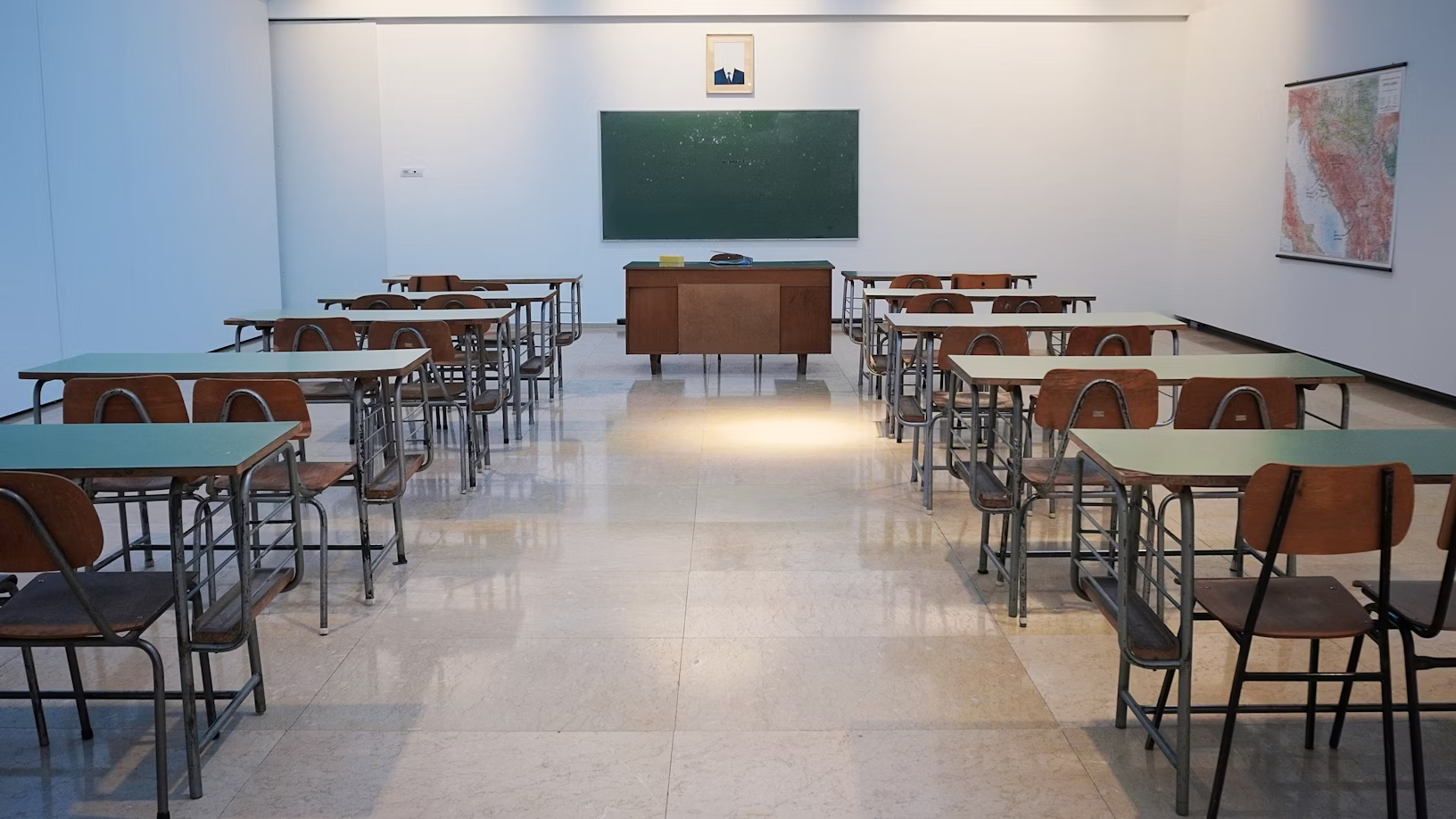
Empty classroom with rows of desks facing a chalkboard.
Image Source: Unsplash

Many parents assume a hefty tuition bill guarantees a superior education. Yet rising tuition and widening equity gaps raise a crucial question: is private school really the smart investment? Below are seven evidence‑based reasons you might want to keep that money in your pocket.

1. The Cost Is Sky‑High—And Often Unjustified

The Cost Is Sky‑High—And Often Unjustified

Annual tuition at a private K‑12 school can top $20,000—and that figure rarely accounts for required uniforms, technology fees, mandatory fundraising, or the travel costs tied to sports and debate tournaments.

When analysts control for factors such as parental income, educational attainment, and neighborhood resources, the difference in long‑term earnings between private‑ and public‑school graduates largely disappears. In other words, the premium you pay up front doesn’t necessarily translate into higher wages down the line.

Consider what else $20,000 per year could do: build a robust college fund, finance tutoring in a child’s weakest subject, or underwrite family experiences that nurture curiosity outside the classroom.

2. Limited Diversity Restricts Growth

Many private schools draw from a narrower socioeconomic bracket, meaning students often see fewer cultural perspectives in day‑to‑day interactions. A more homogeneous environment can unintentionally limit empathy, stifle problem‑solving skills, and reduce the ability to collaborate across cultural lines—abilities that modern employers prize.

By contrast, most public schools reflect their surrounding communities, exposing students to a richer tapestry of languages, traditions, and viewpoints. That daily immersion in difference fosters open‑mindedness, resilience, and the social agility necessary in a global economy.

Data summarized by Education Week shows public‑school students interact with a more diverse peer group, boosting social skills employers increasingly value.

3. Social Circles Can Be Restrictive

Tuition‑driven communities sometimes foster cliques around status or wealth, leaving kids less prepared to relate beyond their immediate bubble. In contrast, public‑school students navigate a wider range of personalities—experience that translates into stronger adaptability in college and the workplace.

4. Public Schools Suffer When Families Opt Out

When involved families leave, districts lose both funding and engaged volunteers. Over time, that siphons resources from neighborhood schools and widens opportunity gaps. Choosing public education is a vote of support for your entire community.

5. Inequality Gets Even Worse

Smaller classes and cutting‑edge labs at private schools aren’t universally accessible. When some families can “buy” advantages, the achievement gap widens. Sociologists warn that such disparities erode social cohesion and perpetuate cycles of privilege.

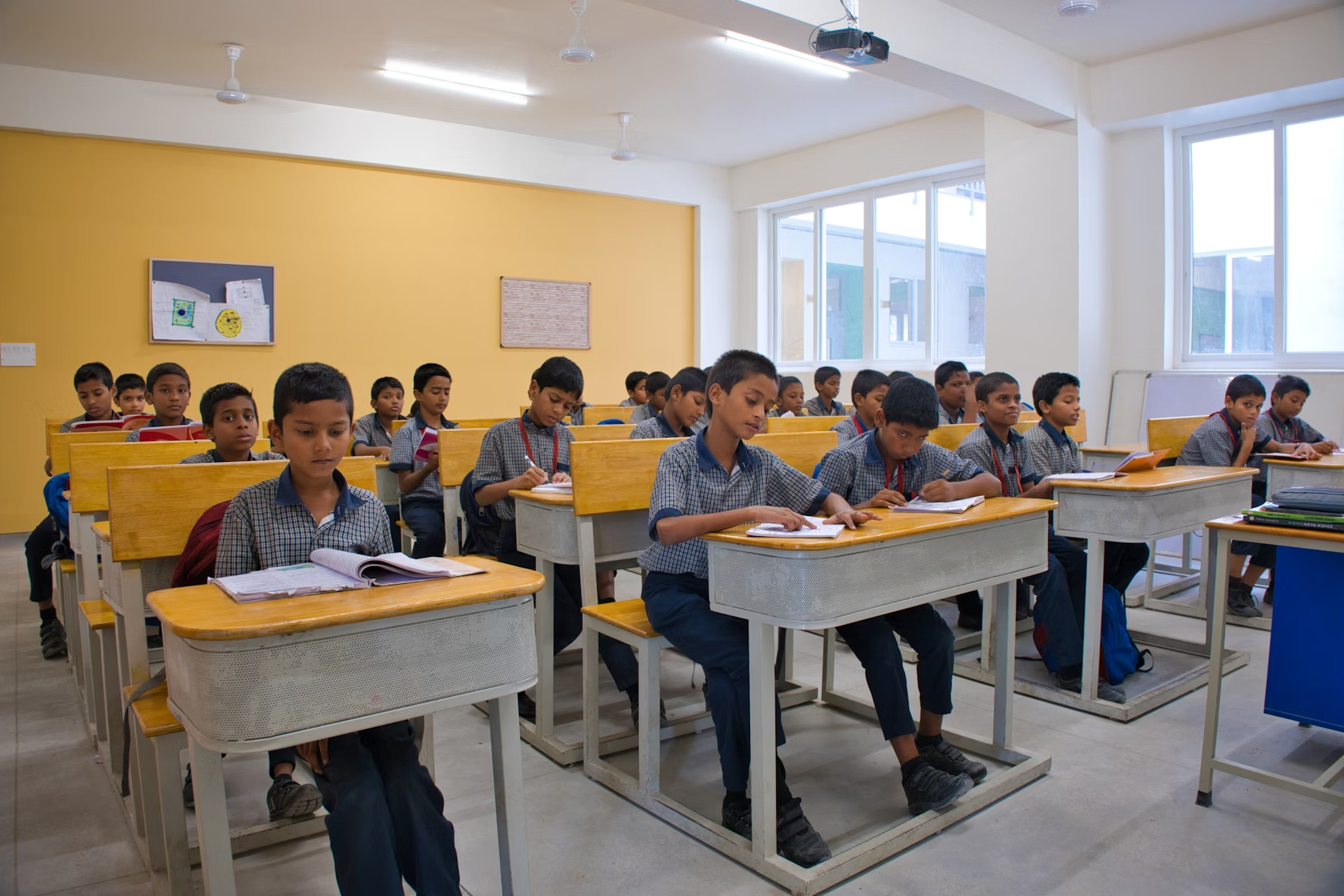
Students in uniform seated at desks, focused on writing in a classroom.
Image Source: Unsplash

6. Enrollment Isn’t Guaranteed—Stress Isn’t Cheap

Private schools cap class sizes and maintain waitlists, turning admission into a competitive, stressful process. Even after acceptance, families face ongoing performance pressure to justify the investment—pressure that can drain emotional and financial reserves alike.

7. Public Schools Offer Surprising Advantages

Gifted programs, Advanced Placement courses, and free extracurriculars abound in many districts. Studies tracking college outcomes find that motivated public‑school students often earn scholarships and thrive at top universities—proof that success hinges more on support at home than on a pricey campus.

What Your Child Really Needs Is You

No single school model fits every family. But stretching finances for prestige can introduce its own set of stresses—without guaranteeing better results. Classroom resources matter, yet the biggest driver of student success is still engaged, encouraging caregivers. Before committing to a sky‑high private school cost, consider whether your child might gain just as much—in academics and in perspective—within your local public system.

Choosing between public and private? Share your thoughts below; other parents will appreciate your insight.

Read More

  • Year-round Money Saving and Fun Activites for Parents and Kids
  • Saving Money on Big Family Events
Samantha Warren
Samantha

Samantha Warren is a holistic marketing strategist with 8+ years of experience partnering with startups, Fortune 500 companies, and everything in between. With an entrepreneurial mindset, she excels at shaping brand narratives through data-driven, creative content. When she’s not working, Samantha loves to travel and draws inspiration from her trips to Thailand, Spain, Costa Rica, and beyond.

Filed Under: Parenting Tagged With: child education, education, family budgeting | Parenting, parenting advice, private school cost, public vs. private school, school choice

  • Facebook
  • Pinterest
  • RSS
  • Twitter

Basic Principles Of Good Parenting

Here some basic principles for good parenting:

  1. What You Do Matters: Your kids are watching you. So, be purposeful about what you want to accomplish.
  2. You Can’t be Too Loving: Don’t replace love with material possessions, lowered expectations or leniency.
  3. Be Involved Your Kids Life: Arrange your priorities to focus on what your kid’s needs. Be there mentally and physically.
  4. Adapt Your Parenting: Children grow quickly, so keep pace with your child’s development.
  5. Establish and Set Rules: The rules you set for children will establish the rules they set for themselves later.  Avoid harsh discipline and be consistent.
  6. Explain Your Decisions: What is obvious to you may not be evident to your child. They don’t have the experience you do.
  7. Be Respectful To Your Child: How you treat your child is how they will treat others.  Be polite, respectful and make an effort to pay attention.
Best Parenting Blogs

Most Popular

Baby

9 Unusual Baby Names That Sound Like They Belong to Future CEOs

Evan Morgan
Baby

10 Baby Names That Were Once Considered “Grandparent Names” but Feel Cool Again

Evan Morgan
Target Store

Choking Incident Prompts Recall of 49,000 Target Gigglescape “Under the Sea” Popping Toys

Evan Morgan
Frustrated Girl

Why Some Students on the Spectrum Are Labeled With ODD

Evan Morgan
Coke Bottles

12 Things Kids Took to School in the ’70s That Would Never Be Allowed Today

Evan Morgan

All content on Kids Ain’t Cheap is for entertainment purposes only. By reading this blog, you agree that Kids Ain’t Cheap is not responsible for any actions taken after reading this blog. For the full disclaimer, see our privacy policy.

Please note that Kids Ain’t Cheap has financial relationships with some of the merchants mentioned here. Kids Ain’t Cheap is funded by banner advertising, commission sales and search optimization consulting.

Copyright © 2006–2026 | District Media | All Rights Reserved | Privacy Policy

Copyright © 2026 Runway Pro Theme by Viva la Violette