• Home
  • About Us
  • Toolkit
  • Archives
  • Advertise
  • Privacy Policy

Kids Ain't Cheap

But They Sure Are Worth It

  • Parenting
    • Baby Stuff
    • Books and Reading
      • Aesops Fables
      • Comic Books
    • Education
    • Family Time
    • Green Living
    • Growing Up
    • Healthy Living & Eating
    • Holidays
    • Parenting
    • Random Musings
    • Shopping
    • Stuff to Do
  • Money
  • Product Reviews
    • Books and Magazines
    • Discount Sites
    • Furniture
    • House Keeping
    • Reviews News
    • Toys and Games
  • Contact Us
  • Our Editorial Commitment
  • Search

Best Tips To Teach Your Child How To Meditate

June 28, 2019 | Leave a Comment

Studies are showing that when children learn how to meditate, they learn how to handle their emotions better and are capable of self-soothing when situations arise. No matter how old your children are, it’s never too late or too early to teach them a few practices. Teaching them also ensures that you are also taking some time out to do a bit of meditative practice. Here are some of the best tips I can give you on teaching your children this invaluable skill.


[Read more…]

Filed Under: Growing Up, Parenting, Parenting Blog at KidsAintCheap Tagged With: Kids, Parenting

9 Important Values to Teach Children

July 10, 2017 | Leave a Comment

important values to teach childrenParents have the greatest privilege in the universe. We have the opportunity to raise kids – to construct important values to teach children and witness the result. At the end of the day, they are individuals – separate from us – who have their own minds, hearts, hands, feet, wishes, and skills. Even so, seeing my kids become the people they were meant to be is a delight.

I love seeing my young daughter spin around in our living room as a ballerina. Then I see my son carefully line up his trains or the way he tends to his stuffed animals when one of them gets “hurt” and needs a bandage.

From a young age, our children show us so many beautiful values they explore. However, kids enter the world with a free will, which means that “Me First” mentality kicks in pretty early. It is our job as parents to start conversations about right living – about healthy values.

Here are a few topics for you to begin the conversation with your child:

9 Important Values to Teach Children

“Making the decision to have a child – it is momentous. It is to decide forever to have your heart go walking around outside your body. ”
― Elizabeth Stone

Work Ethic

Understanding that money comes from labor is a fundamental lesson that will stay with your child through adulthood. You can employ him or her to do chores around the house, bring up topics to discuss, or simply lead by example in your own field of work.

Giving

Kids are such natural givers. Somewhere along the way, we figure out it’s really fun to just keep what we have and use it on ourselves. Tapping into their young minds and encouraging things like gratitude, contentment, and giving can also stay with your child for life. It may mean letting her see you tip extra for the server or give to a charity or hand

Kindness

This world is full of cruelty, especially on the internet. Our kids are among the first generation growing where this level of connection and advancement in technology is simply a way of life. Learning to offer a kind word or do something nice at a young age will help your children counteract the ever-rampant negativity out there today.

Prioritizing Family

It’s so easy to take one’s family for granted. As children grow, it’s vital for parents to help them understand the value of keeping family first. There will be a thousand things that will try to take its place – especially when your children reach adulthood.

Integrity

As kids age, they have more and more responsibility placed on their shoulders. Therefore, they have more opportunities to do things when others aren’t hovering over their shoulders. Whether they’re male or female, what they decide in those moments matters so much more than they realize.

For example, Ellen recently tested her audience members by placing hidden cameras at the free gift booth. Before the show, each member was told she could select one free item from the table. One woman was caught on camera taking multiple items and returning to the booth two more times for more! Ellen not only showed the tape to the millions of viewers of her show, but she then called out this audience member and made her sit on a stool in “Ellen Jail” right in front of everyone.

Sure it’s a light-hearted example, but the message runs deep. Check out Ellen’s reaction to the woman who robbed her booth here:

https://youtu.be/Cn3AgNC2TSk

Capacity to Apologize

My kids’ favorite movie is “Moana.” They love the music and love racing around the house pretending to be the demigod Maui shouting “Chee-hoooo!”

One of my favorite parts of the film is actually toward the end when Maui comes face to face with someone he robbed. At first, he tries to laugh it off until he sees the hurt look in the other character’s eyes. I love what happens next. He looks her in the eye and says, “What I did was wrong. I have no excuse. I’m sorry.”

What a great example for kids to see the power of owning up to their actions. To be held responsible for those choices. It’s another life lesson that would likely stay with them for life.

Try Your Best

Could we please dissolve the old adage “Practice makes perfect”? Talk about setting unrealistic expectations for kids. Now hear me out – I’m not a big fan of participation ribbons or removing competition altogether. It’s important to learn how to win AND lose with dignity and respect; however, walking up to the plate with perfection as the goal isn’t going to fly.

Remind your kids to try their best, and then remind them again. And again. Just keep that flag flying!

Money Management

So many 18-year-olds graduate with almost no money management skills. Then, they fill out paperwork for colleges and make the largest financial decision they’ve ever made which typically lands them in debt up to their eyebrows. Being equipped with the head knowledge and habits of handling money while they’re under your roof will make their entire adult life completely different.

Caring for the Environment

Your kids may not grow up wanting to major in environmental studies, but educating them about how to be less wasteful should start in the home. Think about your own habits, like not littering and sorting out recyclables. Your kids will see how you treat the world around you. Taking time to talk through those things or initiate something unique like planting a garden or using compost will help them learn skills to better protect their environment.

Final Thoughts

There are so many more values we could cover. In fact, it may seem overwhelming some days. Just remember these happen one day and one conversation at a time.

What’s on your list of important values to teach children? Is it on this list? Let us know in the comments below.

Filed Under: Family Time, Growing Up, Healthy Living & Eating, Parenting Tagged With: Generosity, important values to teach children, life values for kids, teach your children, work ethic

How to Launch a 52-Week Money Challenge for Kids

April 10, 2017 | Leave a Comment

52-week money challenge for kidsAs you set your goals each year, it’s fun to include your children in the process. Involvement helps them learn to set goals of their own. In the interest of helping them develop strong savings habits, why not have them participate in a 52-week money challenge for kids?

Similar to the well-known 52-week money challenge for adults, the kids’ challenge helps kids to save more money by determining a set amount of cash to put into a savings account, and then increasing that amount each and every week.

How to Personalize Your Child’s 52-Week Money Challenge for Kids

Based on your child’s age and his or her ability to access money, you can pick the weekly money amount that works best for their particular situation.

Even with the smallest weekly contribution, the savings will add up. If your child is younger, you can start with a small amount – for example, a nickel – each week. Here’s how the challenge works:

  • $0.05 contribution – WEEK 1
  • $0.10 contribution – WEEK 2
  • $0.15 contribution – WEEK 3

And so on. If you choose to use a nickel for the challenge, your child simply increases each weekly savings contribution by one nickel. By the end of the 52 weeks, your child will have saved $68.90.

Here is a breakdown of other coin values and potential savings amounts:

  • Dime = Save $137.80 by the end of the 52 weeks.
  • Quarter = Save $344.50 by the end of the 52 weeks.
  • Dollar = Save $1,378 by the end of the 52 weeks.

Why Teaching Kids to Save is Important

We’re living in a time where it’s easy to not save money. Clever marketing and social pressures encourage kids to spend rather than save. Therefore, they start to believe they can have the latest and greatest of everything on the market – without the hard work of earning it.

Saving money is becoming less and less important to people as generations go by. America’s declining savings rate proves it. In May of 1975, the personal savings rate in the United States reached a high of 17%. At the end of 2016, it was 5.4%.

By teaching our children to develop a habit of saving money, we give them a head start on the road to financial responsibility.

Other Ways to Teach Kids to Save

Besides using a 52-week money challenge for kids, there are other ways you can teach your children to make saving money a consistent habit.

  • Require your kids to save a percentage of all money they earn or receive as a gift
  • Boost your child’s enthusiasm for saving by committing to match what they put into savings dollar for dollar
  • Create a savings contest between you and your child (or between your children) to see who can save the biggest percentage of their income for the year

The 52-week money challenge for kids is a great way to encourage children not just to save money, but to challenge themselves to save more than they initially thought was possible. So, give your kids the gift of making savings a habit starting today.

Bonus Reading: “6 Fun Money Games for Kids”

Would you ever do a 52-week money challenge with your child? Have ever done one on your own? Let us know in the comments below!

Image Credit: Nathaniel_U (Creative Commons)

Are you a stay-at-home mom? Make sure you bookmark or pin some of these resources for later!

  • 10 Steps to a Successful Stay-at-Home Mom Budget
  • How to Afford Your Dream of Becoming a Stay-at-Home Mom
  • 14 Online Jobs for Stay-at-Home Moms (That Are Worth Your Time)
  • 13 Ways for Stay-at-Home Moms to Save Money
  • Loans for Stay-at-Home Moms – What Are YOUR Options?
  • The SAHM Budget Test: How to Afford to Be a Stay-at-Home Mom
  • 52-week Money Challenge by Saving Advice

Filed Under: Education, Growing Up, Money and Finances, Parenting, Stuff to Do, Toys and Games Tagged With: 52-week money challenge for kids, how to launch a 52 week money challenge, money games, save money, teach kids to save

7 Easy Recipes Kids Can Make Themselves

January 30, 2017 | 2 Comments

easy recipes kids can make themselvesDue to the busyness of life, it’s not always feasible for moms and/or dads to be at home when the kids need to eat. Helping them learn to cook for themselves will help them understand responsibility, self-care, and a new way to have fun. Therefore, here are some fantastic and easy recipes kids can make themselves.

7 Recipes Kids Can Make Themselves

1. Salad Bar

Not only are salads healthy, they’re easy to make for kids of nearly any age. The ingredient possibilities are endless. If parents keep a variety of fresh ingredients on hand, kids can put together a salad that fits their differing taste preferences. Some ideas for ingredients to have on hand include:

  • Bagged, pre-washed salad
  • Cherry or grape tomatoes
  • Green pepper
  • Green onion
  • Cucumber
  • Deli meat
  • Hard-boiled eggs
  • Avocado
  • Chopped walnuts, sliced almonds or sunflower seeds
  • A variety of dressings

As long as your child has been taught how to safely use a serrated-edge knife, there’s no limit to the ingredients they can include in their salad bar.

2. Sandwiches

As with a salad bar, sandwiches have endless possibilities and don’t have to be limited to the traditional PB&J. A variety of deli meats, veggies, cheeses and spreads such as mayonnaise, mustard and guacamole will add an extra boost to the plain sandwiches of yesteryear.

For example, tuna and chicken salad are quick and easy sandwiches that can be spiced up with simple ingredients. Here’s an easy recipe kids can make themselves.

  • 1 5-ounce can of tuna or chicken breast, drained
  • 1 tablespoon of mayonnaise or salad dressing
  • 1 green onion, sliced thin
  • 1/2 stick of celery, sliced thin

Mix all ingredients in a small bowl and spread on your choice of bread. Add a slice of cheese and/or pre-cooked bacon if desired.

3. Taco Bar

With only seven easy-to-prepare ingredients, your kids can whip up a taco bar that will please the masses.

  • Browned hamburger (seasoned with premade taco seasoning)
  • Bagged, shredded lettuce
  • Shredded cheddar cheese
  • A jar of salsa
  • Diced tomatoes
  • Sliced green onion
  • Hard and/or soft taco shells

Want to do your taco bar a bit differently? Substitute the taco shells with tortilla chips and have your child put their nacho creation in the microwave for one minute.

4. English Muffin Pizzas

This recipe can be made in the microwave or in a toaster oven. For each child, have:

  • 1 English muffin, sliced in half (toast in the toaster first if you’re using the microwave)
  • 2 tablespoons of pizza sauce from a jar
  • ¼ c. of shredded mozzarella
  • Additional toppings such as pepperoni, sliced olives or other sliced veggies as desired

Place the two halves face up on a plate or toaster-oven-safe baking sheet. Spread one tablespoon of pizza sauce (I like Chef Boyardee) on each muffin half. Add desired toppings. Cover each half with some of the mozzarella cheese. Cook the pizzas in the microwave or toaster oven until cheese is melted and bubbly.



5. Homemade Mac & Cheese

This is one of the most popular easy recipes kids can make themselves due to its tastiness and simplicity. Not to mention the health benefits for making it from scratch rather than from a box.

Ingredients:

  • 1 c. of dry macaroni
  • 1/3 c. shredded cheddar cheese
  • 2 slices American cheese
  • 1 tablespoon butter
  • 1/3 c. milk
  • Salt and pepper to taste

Prepare pasta as directed. When finished, drain and return pasta back into pot. Mix in all ingredients. When all of the cheese is melted and the ingredients are thoroughly mixed it’s ready to eat!

6. Creamy Fruit Dip with Fresh Fruit

This healthy and easy-to-make snack is great for after school or after dinner. It makes a terrific breakfast meal as well.

Fruit Dip:

  • 1 c. vanilla yogurt
  • 4 oz. cream cheese, softened
  • 1 tablespoon honey
  • 1 tablespoon brown sugar
  • 1/4 teaspoon ground cinnamon

In a medium-sized glass bowl, beat cream cheese with electric mixer until smooth. Add remaining ingredients and beat until combined thoroughly. Serve immediately or chill until ready to eat. Serve with your choice of fresh fruit, such as strawberries, bananas or apple slices.

7. Banana Parfait Dessert

This simple dessert can be modified to satisfy a variety of different taste preferences.

Ingredients:

  • 1 -3.4 ounce package of Jello instant banana pudding
  • 1 8-oz. container frozen whipped topping, thawed but still cold.
  • 1 medium banana, sliced
  • 4 vanilla wafer cookies

Prepare banana pudding as directed. Add sliced bananas. Place one cup of mixture in a medium-sized bowl or sundae dish. Garnish with vanilla wafers and a dollop of whipped topping.

Substitutions:

  • Vanilla pudding with strawberry slices
  • Chocolate pudding with bananas or chocolate chips

Even though these are easy recipes kids can make themselves, they’re also great for making with your child. Snag a few of these ideas as you plan your next grocery trip and get ready to make some memories (and a few messes) together with your children in the kitchen.

Finally, if you are a parent you know that children can be really expensive to feed.  If you are interested in possibly cutting down on your expenses, consider something like Amazon’s subscribe and save. Subscribe and save is good for things like Z-bars, coffee and laundry detergent. If you use a lot of dry staples like these, it might be worth your time to sign up for it.

If you want to read more about kids in kitchen check out our articles on:

  • The Learning Tower: Keeping your child safe in the kitchen
  • Keeping your kids occupied without tv: screen-free activities for your preschooler

What recipes did you learn to make as a child? Share one with us!

Image Credit: lunar (MorgueFile)

P.S. Are you a stay-at-home mom? Make sure you bookmark or pin some of these resources for later!

  • 10 Steps to a Successful Stay-at-Home Mom Budget
  • How to Afford Your Dream of Becoming a Stay-at-Home Mom
  • 14 Online Jobs for Stay-at-Home Moms (That Are Worth Your Time)
  • 13 Ways for Stay-at-Home Moms to Save Money
  • Loans for Stay-at-Home Moms – What Are YOUR Options?
  • The SAHM Budget Test: How to Afford to Be a Stay-at-Home Mom

Filed Under: Family Time, Growing Up, Healthy Living & Eating, Home and Living Tagged With: easy recipes kids can make themselves, how to teach kids to cook, recipes for kids, snacks for kids, teach children to cook

How Much Are Senior Pictures?

January 23, 2017 | Leave a Comment

How Much Are Senior PicturesAlong with the costs of college, graduation parties, and other high school senior expenses, parents everywhere are asking another question: How much are senior pictures?

That depends on several variables, such as where you live, what type of portrait package you choose and on the type of pricing system the photographer uses. Here are some helpful tips to get the best deal on senior pictures for your high school graduate.

How Much Are Senior Pictures?

The Photographer Element

Professional photographers generally work in one of two ways:

  1. They make their money off of the time spent at the photography session.
  2. They make their money off of the photographs a client purchases.

The first type will charge a higher fee (usually between $500-$1500 depending on where you live) for the portrait session itself; however, the session generally includes all rights to the photos. The client is given a photo book contain proofs of the photos along with a CD or MP3 format of the photos (or online access). They can have pictures printed anywhere they choose.

The second type of photographer will have a lower fee for the portrait session (often varying between $50-$200). One key difference is the photographer retains all rights to the photos until you’ve purchased a portrait package directly from them. In that case, the printing of the portraits is usually a lot more expensive. The quality of the printed photos will likely be better as well.

Determining Which Photographer is Right for You

There are several steps you can take to determine which photographer is best for your child’s senior portrait needs.

Shop Around

It’s smart to call several different photographers and get the details on their pricing before making a decision. When shopping around, be sure to ask to see samples of their work and ask if there are references you can call as well. Getting suggestions from the parents of your child’s fellow classmates can be helpful too.

Decide How Many Printed Pictures You’ll Need

Knowing how many printed pictures you’ll need can help you decide which type of photographer to use. If you’ll be printing quite a few copies you may want to go with someone who includes rights to pictures as a part of the portrait sitting session.

If you aren’t expecting to print many copies of pictures it may be more cost-effective to go with a photographer who prints the pictures themselves and charges a smaller sitting fee. Add up the cost based on the photographer’s printing charges before making any decisions.

Discuss Portrait Venues

It’s important to discuss with your child and with any potential photographers where you’d like the senior pictures to be taken. Is there a favorite park or other location your child wishes to be photographed at? Do they want to include a family pet in some of the pictures? Some photographers charge an additional fee for including pets or for taking pictures at off-location places such as parks.

Alternatives to Professional Photography

If there’s someone in your life who has a knack for photography but isn’t a professional, you may benefit from hiring them. They would most likely provide a more affordable rate for a portrait sitting session.

With a bit of research, the question, “How much are senior pictures” no longer has to be a mystery. Instead, it can be a fun and affordable experience for parents and students alike.

How do you save money on professional photography?

Are you a stay-at-home mom? Make sure you bookmark or pin some of these resources for later!

  • 10 Steps to a Successful Stay-at-Home Mom Budget
  • How to Afford Your Dream of Becoming a Stay-at-Home Mom
  • 14 Online Jobs for Stay-at-Home Moms (That Are Worth Your Time)
  • 13 Ways for Stay-at-Home Moms to Save Money
  • Loans for Stay-at-Home Moms – What Are YOUR Options?
  • The SAHM Budget Test: How to Afford to Be a Stay-at-Home Mom
  • Walmart Savings Catcher
  • How Much Do Youtubers Make?

Filed Under: Growing Up, Money and Finances, Parenting, Shopping Tagged With: how much are senior pictures, how to save money on senior pictures, senior photos, ways to save on photography

8 Quotes By Kid President That Make the World a Better Place [FREE Quote Graphics]

December 26, 2016 | Leave a Comment

Pinnable and shareable quotes by Kid PresidentDoes life get any better than an adorable 9-year-old in a suit imparting wisdom to the world? Anytime I read or hear quotes by Kid President, I give that kid a virtual thumbs up.

This world is pretty riddled with opinions, division, prejudice, and all-out hatred. The message Kid President brings is to look inward and be the change you want to see elsewhere in the world. It’s the same message I want to teach my children – plus, I’d be lying if I said I haven’t applied his words of wisdom to my own life.

That’s why I’ve put together these shareable graphics for you to pass around or pin for later from Kid President. They’re compatible with Facebook, Instagram, or Pinterest. So grab your favorite and brighten up someone’s day.

“A Pep Talk from Kid President” via YouTube

[youtube https://www.youtube.com/watch?v=l-gQLqv9f4o]

8 Quotes By Kid President That Make the World a Better Place

1. “This is your time. This is my time. This is our time.”

Quotes by Kid President

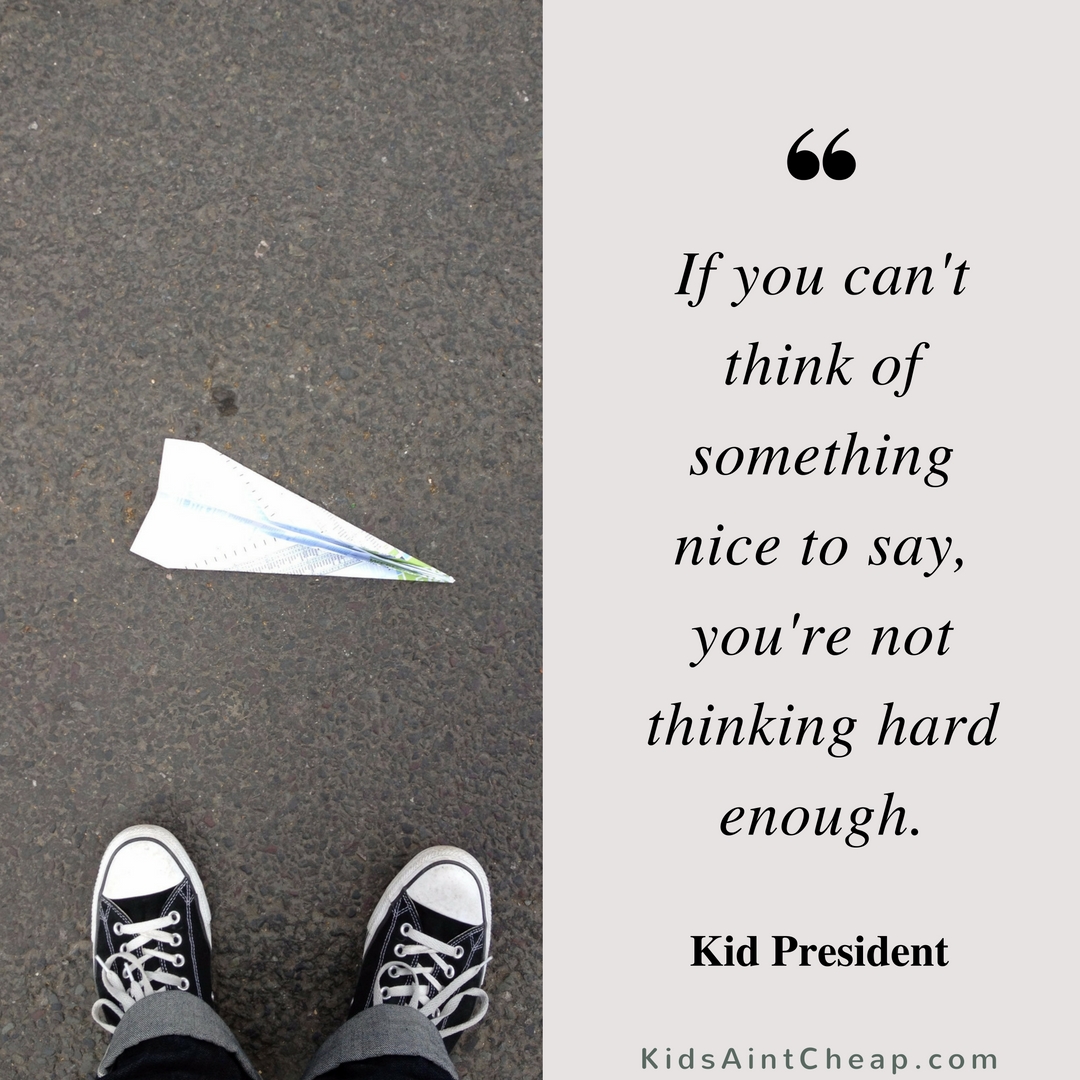
2. “If you can’t think something nice to say, you’re not thinking hard enough.”

Kid President quotes (2)

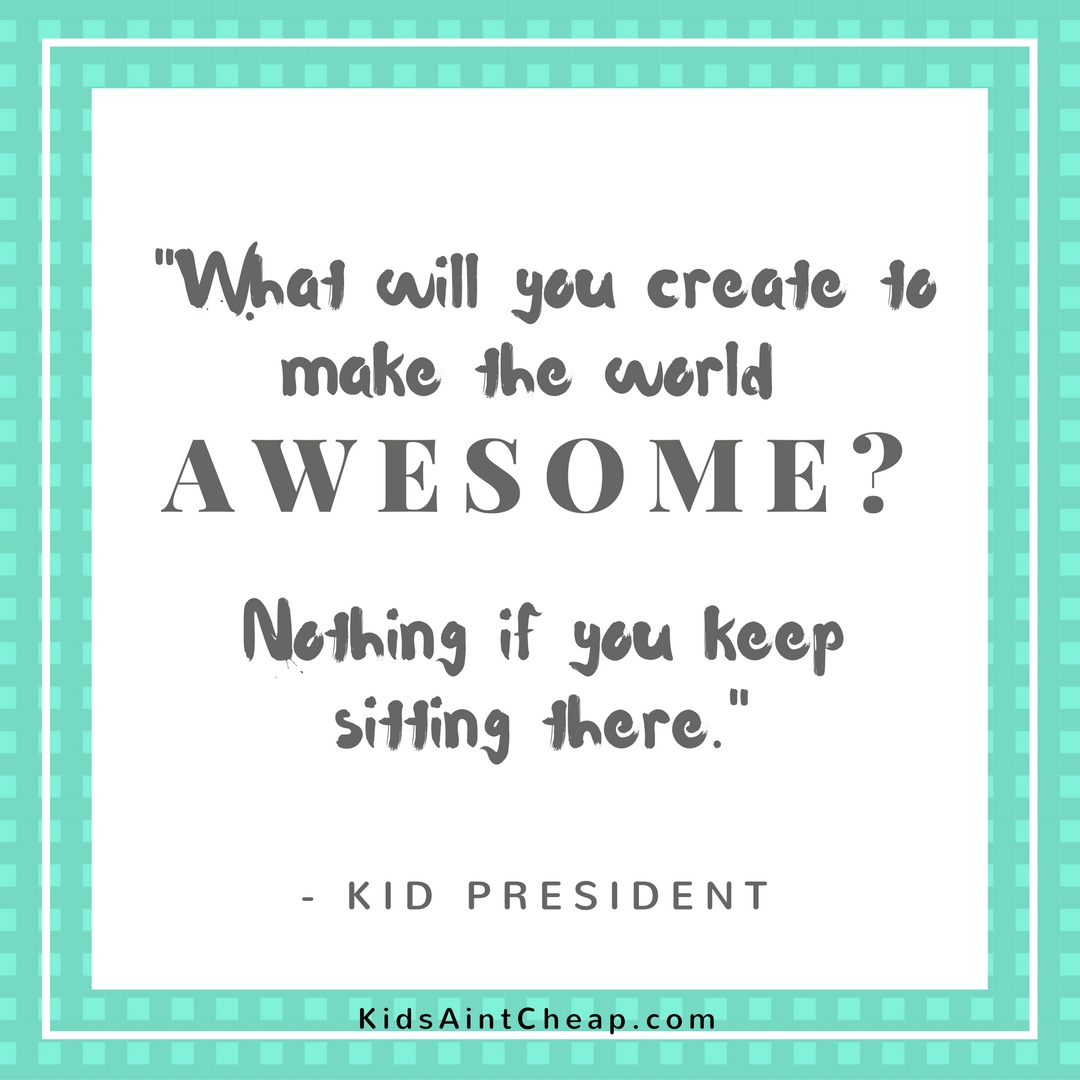
3. What will you create to make the world awesome? Nothing if you keep sitting there.”


Kid President quotes (4)

4. “Before you say something about the barbecue sauce on someone else’s shirt, take a look at the barbecue sauce on your own shirt.”

Kid President Quotes II (1)

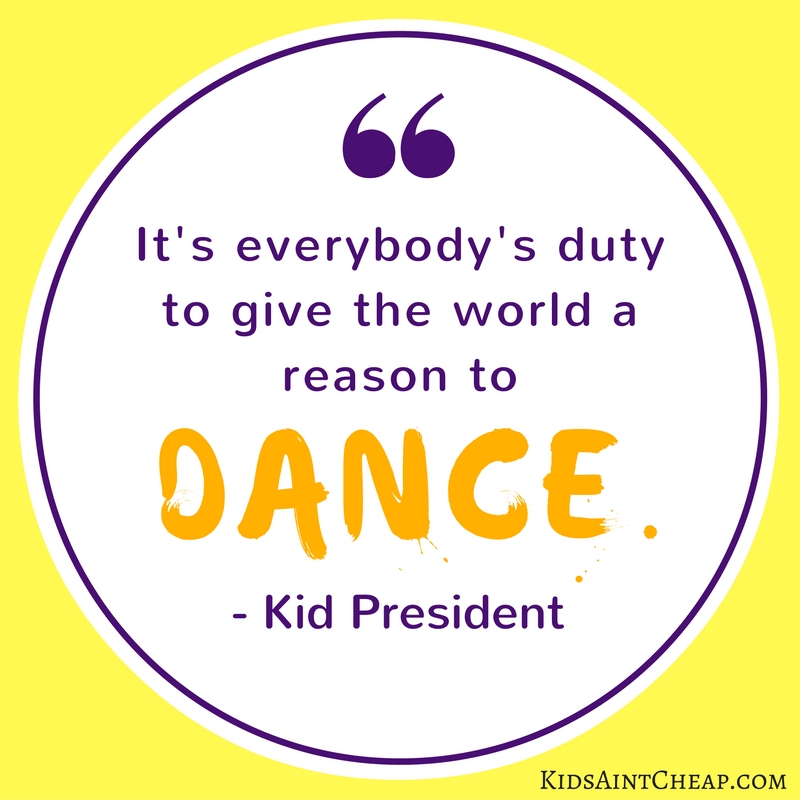
5. “It’s everybody’s duty to give the world a reason to dance.”

Kid President Quotes II (2)

6. “Life is tough, but so are you.”

Kid President Quotes II (3)

7. “You were made to be awesome.”

Kid President Quotes II

8. “Life is tough, but so are you.”

Kid President quotes

What’s your favorite of these quotes by Kid President? Share in the comments below!

Filed Under: Education, Growing Up, Random Musings Tagged With: how to make the world a better place, Kid President, pinnable graphics, quotes by Kid President

5 Apps That Teach Children a Cool Skill

December 12, 2016 | Leave a Comment

Here are five apps that teach a cool skill like cursive, cartooning, and foreign language.Apps seem to be a dime a dozen these days, so finding the right ones can be daunting. When I search through the sea of choices, it’s much simpler to choose something with ABC’s and 123’s to ensure it educates my kids. But then I wondered, are there any apps that teach children a cool skill instead of just the basics?

Yes, “cool” is relative, but after some digging, I found some unique options for you to try.

A Quick Word About Screen-Time for Young Children

We all know that screen-time is best used in moderation. However, in recent studies, I’ve discovered one other significant reason to limit my children’s time parked in front of the screen. Even if it’s educational material, I believe this is still an important thought to consider.

According to this study released on NPR.org, when children decrease their time in front of screens, they are able to read human emotions more easily. The ability to learn from communication, social cues, and problem-solving with others is a need that humans have their entire lives. Using a screen removes the interactive portion of development and threatens to affect a child’s social behavior well into adulthood.

I definitely give my kids screen-time, but I also try to spend a lot of unplugged time with them. That door swings both ways. The kids have to put away their gadgets, and mom must put down her phone.

Bonus Reading: “7 Screen-Free Activities for Preschoolers”

5 Apps That Teach Children a Cool Skill

Cursive Writing Skills – Cursive Writing Wizard Letters

Available for iOS or Android

Cursive writing is no longer required in many schools, even though it’s one of the most beautiful art forms we each can learn. To help your young child develop her own skills with cursive, try this app.

After using the app for a time, work together on writing the real letters on paper so she can better apply what she has learned.

Foreign Language Skills – Duolingo

Available for iOS and Android

Never has it been more relevant than today to teach your child a second language. Expose him to the rich diversity of languages throughout the world with Duolingo – from Spanish to Italian to Chinese.

Sign Language Skills – ASL Kids

Available for iOS and Android

Another amazing skill your children might enjoy learning is American Sign Language. Both of my children started learning when they were infants and loved mimicking my motions. As they got older, we spent time each day at the breakfast table going through their letters, numbers, foods, colors, days of the week, etc.

For something that is so fun to practice and so beneficial to those who use sign language as their primary form of communication, this is definitely one of my top apps that teach children a cool skill.

Money Management Skills – Dinorama

Available for iOS

How better to understand money management, multi-tasking, and running a business than to run your own dinosaur theme park? Dinorama offers children (age 7 and up) the challenge of building their empire from the ground up. This can lead to some great conversations at the dinner table or in the car (after the game is put away) about money management in the real world.

Creative Drawing Skills – Toontastic

Available for iOS

Try Painting Drawing Dooble Kids as an alternative for Android.

Learning to draw can become a lifelong hobby or even a career. With today’s booming commerce on the internet, the creatives have more avenues in which to publish their work than ever. If your child enjoys doodling, cartooning, or any other type of illustration, try out Toontastic.

Do you have older children? Check out “Essential Apps Every Student Must Have.”

Which of these 5 apps would you have loved to use when you were a kid? Share in the comments below.

Filed Under: Education, Growing Up, Product Reviews for Parents, Uncategorized Tagged With: Android, apps for kids, apps that teach children a cool skill, educational apps, iOS

How to Empower Your Child to Avoid the Burden of Debt

December 5, 2016 | Leave a Comment

How to empower your kids to avoid the burden of debt when they grow up!How many twentysomethings do you know starting their post-collegiate lives with six figures in student loan debt? How many times have you seen the burden of debt harm relationships, set back dreams, and perpetuate a lifestyle of “just getting by?”

Has that ever described you?

I’ve experienced student loan debt, overspending my budget, racking up credit card debt, living paycheck to paycheck with no savings accounts, and fear about tomorrow because of debt.

Our culture isn’t so hot at teaching kids how dangerous debt can be, only how to accumulate it. I’m part of the blame because it was once my job to sell credit cards and car loans when I worked at a bank.

In 2012, my husband I paid off our last non-mortgage debt and couldn’t believe the freedom it afforded us. Having a taste for that made us decide to raise our children with that same debt-free mentality.

How to Empower Your Child to Avoid the Burden of Debt

Lead by example.

How did your parents handle money? If asked, could you list a few specific memories you have of their financial habits (good, bad, or ugly)?

If I had to guess, I’d say you remember quite a bit. Your kids will, too.

What you do with your finances, how you behave under stress, and how you treat others is all under frequent observation if you’re a parent.

It’s not all scary, though. If you choose to lean into this process, to do the best you can to lead a good example for your kids, the benefits are two-fold:

  1. Your financial habits will improve the more intentional you become. Your debt load will decrease and your future outlook with your family will look brighter.
  2. You will make a long-lasting impression on your kids of what healthy financial habits look like. As I stated early, they’re bound to remember a great deal of it.

Don’t put it off.

I once interviewed a father of seven who took the time each year to teach his kids about taxes. His reason?

I think one of the best things you can do for your children is to teach them about independence. Independent people earn a living and don’t come back to borrow money from mom and dad when they are in their thirties.

We try to prepare the children for the reality of adulthood by creating a culture that emulates the real world.

This father created jobs for each of the children to do around the house that would earn them a paycheck. He also implemented what he called the “Dad Tax.” Before each paycheck was distributed, he took out a 25% Dad Tax that went straight into the child’s savings account. Around tax time, he gave each child the option to have that money back as a “tax return” just like they would in the real world.

I didn’t know a thing about taxes until I was 20. How cool is it that this dad took on such a grown up topic and implemented it into his home while his children were young?

What’s the takeaway?

  • Start the conversation. It’s never too early to talk to your children about debt and the huge impact it can have in their lives.
  • Your kids are already watching. Be mindful of your actions and try your best to lead by example with your own day-to-day financial decisions.

Bonus Reading: “Money-Saving Tips for First-Year College Students”

What’s one lesson you’d like your children to learn that will help them avoid the burden of debt?

Image Credit: Xochi Romero (UnSplash)

Filed Under: Growing Up, Home and Living, Money and Finances, Parenting Tagged With: burden of debt, how to avoid debt, kids and money, student loan debt, teach your kids about money

7 Screen-Free Activities for Preschoolers

November 14, 2016 | Leave a Comment

Here are several screen-free activities for preschoolers!The last thing you’ll ever hear me say is that I’ll never let my kids use technology. Part of their world will always be tied to it. However, I don’t want them to become overstimulated and addicted. To put up healthy boundaries, here are several screen-free activities for preschoolers – since both of my children are that age.

These activities have worked in my family. Now it’s my turn to hand them over to you.

I notice subtle changes in my children’s behavior when they’re in front of a screen for too long. After doing some research, I now understand better what those changes are.

Or more importantly, what they could become.

What does the research say?

Preschoolers don’t reflect the more serious side effects of too much technology, but the average child eight years and older is spending 8 to 11 hours per day looking at a screen, according to the NY Times. What suffers as a result?

Emotional connect. Reasoning skills. Coping mechanisms. The ability to process thoughts, anxieties, and problems.

All those developmental skills are under attack when screens dominate a child’s day, according to this report from NPR.

The earlier we create boundaries for our children’s time with technology, the better their transition into adulthood will be.

7 Screen-Free Activities for Preschoolers

Read books.

The more that you read, the more things you will know. The more that you learn, the more places you’ll go.  ― Dr. Seuss, I Can Read With My Eyes Shut!

Establishing a daily reading habit with your child is a great way to advance his development away from screens. To change things up, try attending a reading time at your local library or purchase some nonfiction books (i.e. a picture dictionary or a book all about what your child loves most).

We keep a basket in between the children’s car seats so they can pick out a book to read on their own while I drive.

Listen to audio books.

One my kids’ favorite activities is listening to audio books. We pull up “reading chairs” so they know it’s time to sit and listen (you could also cut out cardboard circles with their names on them or set out folded blankets).

The library offers lots of variety when it comes to audio stories for kids. Turn the pages for the children until they get the hang of it and can follow along by themselves.

This activity promotes sitting still, listening, learning by spoken word, and early reading along.

Make believe a favorite character.

During an episode of Daniel Tiger’s Neighborhood, my children watched the characters try on several different costumes and parade around the play room. Once we shut the TV off, my kids instantly wanted to be like those characters, so we grabbed some play clothes and made it happen.

This activity helps kids develop their imagination, and helps them understand that not all fun happens on the other side of a screen.

Bring mess-free travel crafts.

Screen-free activities for toddlers especially come in handy in the car. Have a basket of mess-free crafts, book or toys can help them learn to occupy themselves without DVDs or iPads.

One of my go-to examples is the Melissa and Doug Paint with Water book. These last a long time, help your children learn hand-eye coordination, and never leave a mess behind.

They also make great birthday presents for other children. Find them here.

Build something.

Whether it’s a fort made from couch cushions or a castle made from LEGOs, building something is immensely beneficial to your preschooler. It’s like you can see the smoke rising from the wheels turning in their brain as they problem solve each piece of the puzzle or tower.

My favorite toy that helps my children develop these skills is the Mega Bloks Big Building Bag.
It’s an 80-piece set of easy-to-use building blocks that can be added to over time and at any age.

Getting outside.

Staying active is next to impossible while a child is hooked up to a screen. Just like you can create a reading time every day, try to take the kids outside each day. You can take them to the park, for a walk, to the zoo, the pool, on a field trip, or just out to the driveway with some sidewalk chalk.

Study the world together.

Last Christmas, my husband and I gave our children a globe. Over the last year, we’ve looked at it together and studied the numerous intricacies of our world. Yes, you can download Google Earth for free, but studying a 3D globe in a group is different. The children can feel the earth. They feel the mountain ranges, spin the planet on its axis, and wrap their arms around its round shape.

Being able to study that together creates a discussion format that wouldn’t likely happen through an app.

For more ways to keep your kids busy without putting them in front of a  screen check out these articles.

8 Simple Rainy Day Activities For Kids
Three Inexpensive Spring Break Ideas
How to Save Money On Kids Toys


What screen-free activities for preschoolers does your family enjoy?

Image Credit: Frank McKenna (UnSplash)

This post may contain affiliate links.

Filed Under: Books and Reading, Education, Family Time, Growing Up, Healthy Living & Eating, Home and Living, Parenting, Uncategorized Tagged With: kids and technology, mess free for kids, screen-free activities for preschoolers, Social Media

6 Must-Haves for Working Moms Who Breastfeed

October 31, 2016 | Leave a Comment

If you're one of the thousands of working moms who breastfeed, or will be soon, take a look at some of these.These days, more and more mothers are working outside the home. Toward the end of pregnancy, there is a swarm of decisions that must be made, from what car seat to purchase to what birth plan to use. One of those decisions is whether or not to breastfeed. If you plan on becoming one of the working moms who breastfeed, then here is a list of must-haves to help your transition.

6 Must-Haves for Working Moms who Breastfeed

I worked full-time when my first child was born. After maternity leave, I asked that my hours decrease, but I was still there long enough to require pumping.

Leaving your baby with a sitter and pumping at work is hard. Pumping at work instead of the comfort of your own home isn’t that fantastic at first, either.

After a while, though, I did discover several must-haves I was so grateful to use. Here they are.

A top of the line, dual breast pump

I’m a bit of a cheapskate, but I’m so glad someone talked me into buying a Medela Advanced Breast Pump. My transition into joining the working moms who breastfeed was so much easier than it could have been because of that breast pump.

For more information on quality baby items like the Medela, read here.

A full water bottle

The minute I began pumping, I got thirsty. It would drive me mad not to have water nearby. Keep a quality water bottle freshly stocked at all times – especially when you pump.

A breastfeeding cover

Even if you have total privacy when you pump – and you should – having a breastfeeding cover like this one is a must-have at all times. It’s like have a spare diaper and some wipes on hand. You just never know where you’ll end up when you need them.

Besides, if you’re tense when you pump, you produce less milk and the process takes longer. That can be incredibly frustrating. Invest in something that will help you feel at ease.

Something to do

Pumping at work takes time, and you just sit there. Even though your hands are somewhat tied up, be sure to bring something along to entertain yourself. You could listen to music, an audio book, or a podcast. Or you could read (it can be done).

Or you could count ceiling tiles when you forget to bring something. ::sigh:: I’ve been there.

Storage bags

Breast milk storage bags were also crucial to my success as one of the working moms who breastfeed. They’re designed to hold enough for a single serving and hold up well in a freezer. You’re able to write the date on each one which makes sure your baby gets milk before it expires.

These storage bags were my favorite because they could be attached directly to my Medela breast pump – with the correct accessory. That saved SO much time with a lot less clean up.

A firm understanding of your rights

The biggest thing I’d want working moms who breastfeed to understand is their rights in the working place. They are legally permitted to take breaks to pump as often as necessary. Employers are required to provide a private room, other than a bathroom, during these break times.

Obviously, harassment from co-workers or their unwillingness to comply with regulations is illegal.

Breastfeeding is a wonderful gift you can give your baby. Know your rights. Click here for more information.

Would you add any must-haves for working moms who breastfeed to this list?

Image Credit: William Iven (UnSplash)

This post contains affiliate links.

Filed Under: Baby Stuff, Growing Up, Parenting, Product Reviews for Parents, Shopping Tagged With: Breastfeeding, nursing mothers, pumping breast milk, working moms who breastfeed

5 Chores That Teach Work Ethic Principles to Toddlers

September 12, 2016 | Leave a Comment

Here are five chores that teach work ethic principles to toddlers.

“Chore” is a curse word for some kids. Perhaps you dreaded them, too, in your youth. What your parents, grandparents, and teachers were really doing was instilling work ethic principles in you as you learned what it means to grow up.

Now it’s your turn to pass it on.

Why start when your children are just toddlers, you ask? Isn’t it a bit young? They may be a little too young for learning how to file taxes, but they’re absolutely not too young to learn about helping out. Chores for 2- and 3-year-olds teach work ethic principles in the following ways:

  • Kids learn to be part of a team.
  • They learn responsibility.
  • They form good habits.
  • They learn listening skills.
  • They learn that they’re not entitled to “all play and no work.”

5 Chores That Teach Work Ethic Principles to Toddlers

Each of these chores is simple enough for a toddler to do, even though some may require a parent’s help. Supervise each task. Focus on your child’s obedience in doing the task more than how “well” he or she actually did it. Then, celebrate the completion immediately and enthusiastically. If you pay for chores, then pay your toddler right away.

Clean up toys.

Setting a brief time at the end of each day to pick up toys can help children learn a new habit. I typically choose one area of the house and assign my 3-year-old and 2-year-old to specific items. For example, I’ll ask them to just pick up all the books or all the trains or all the puzzle pieces. That helps them hunt for exactly what they need to pick up.

Bring dishes to the counter after meals.

One day, I was sitting at the lunch table, surrounded by bits of food and dirty dishes. The kids were racing around the house, energized by their meal. I realized that the only way for me to get some help clearing the table was to teach my kids to do it, too. So we implemented a new rule that each family member should carry his or her own dish to the counter. I shadow my youngest to make sure he doesn’t drop something on his foot, but the kids took to it right away.

Make the bed.

Can we all agree that this is an awesome, lifelong habit every kid should learn? Consistency is key in all work ethic principles, but there’s something universal about starting the day with a made bed. Plus, for whatever reason, my 3-year-old gets so excited to enter her room at bedtime and find her bed all nice and neat, waiting for her.

Put away shoes.

Do you have a designated place for shoes in your house? We have a coat closet. The moment the kids walk through the door, the oldest knows to take off her shoes and place them in the closet. The youngest can’t usually take off his shoes by himself, but he knows how to put them in the closet – which counts as a win in my book.

Dust the furniture.

You know what my kids love? Dusting the house with one of those Swiffer Dusters. It’s the kind with the handle and the fluffy guy on the end that looks like a Sesame Street character.

Not only does it dust much better than my previous duster – a rag made from an old tee shirt – but the kids get a kick out of it. It’s light-weight, is easy for toddlers to use, and pretty much gets the job done.

You can even make it talk while your toddler works, if you’re feeling especially ridiculous.

(I highly recommend any toddler activity with “ridiculous” in the description.)

Find it here for $23 at Amazon. You get a 3-foot extendable handle and 12 extra duster refills.

work ethic principles
Amazon

How old were you when you started doing chores?

Share in the comments below!

Image Credit: Ben White (UnSplash)

This post may contain affiliate links. If you make a purchase, Kids Ain’t Cheap will receive a commission, but we only recommend products that we know and love. Thank you for your business!

Filed Under: Growing Up, Home and Living, Money and Finances, Parenting Tagged With: chores, kids and money, Swiffer, toddlers, work ethic principles

We’re Trying to Raise Independent Kids

April 20, 2016 | Leave a Comment

In our effort to raise independent kids my husband and I support our daughter in her choices. Although, there are some things we won't budge on.Before getting pregnant for the first time, my husband and I agreed that we would raise our children to make their own choices, to experience things both good and bad and learn from their mistakes. We feel it is the best way to define yourself as an individual, as it can be just as important to find out what you don’t like in life as it is to discover your passions.

Our daughter has already shown an affinity for dance, sports and all things mechanical. She loves her weekly ballet class and spends the days between showcasing her newly-learned moves to anybody she runs into. She loves soccer, and is looking forward to playing again this summer. On her “team” last year, you can tell which children were into it and wanting to participate, and the ones that were, let’s say, indifferent. She is among the former.

Likely due to the conversations with her Daddy, her love for planes, trains and automobiles (any machine or vehicle, really) shines through. To wit, when it comes to screen time, by far her favourite show is Paw Patrol, featuring puppies operating high-tech rescue vehicles.

As long as she continues to show a passion for these things, we’ll continue to support her. Sports and tech are easy things for us to support, and though dance is a new one for my husband and I, we love how much of a positive impact it has had on her already.

Though my husband and I consider ourselves to be fans of music, neither of us play an instrument. That said, if our daughter came to us wanting to learn an instrument, we’d absolutely do everything we could to support her.

There are some things that we won’t budge on in terms of development. First and foremost, reading is a big part of our daughter’s life. Every night before bed, she gets two books read to her, and at various times throughout the day we’ll read to her. We’ll promote reading once she begins school, and will continue to ensure she develops her communication skills. Good communication skills are crucial as both a person and professional.

Another thing we will not be variable on is time spent outdoors. We grew up camping, playing in the woods and spending time under the stars at the family cottage. Our daughter will spend time doing the same. She won’t be a child that spends all of her time inside. Luckily for us, to this point she’s shown a love for the outdoors, and as she gets older we’re excited about the thought of things like canoe trips, orienteering and other such adventures.

We very much want our daughter, and any other future children, to be their own people. It’s important for them to have unique personalities and to be unafraid to embrace and express their passions in life. We’ll be behind them no matter what, and though we’ll be staunch on communication skills and the outdoors, our children will be able to choose their own path hopefully knowing who they are as a person, and knowing their mom and dad love them and are there for them through it all.

How do you nurture independence in your kids?

Catherine
Catherine

Catherine is a first time momma to a rambunctious toddler. When she isn’t soaking up all that motherhood has to offer, you can find her blogging over at Plunged in Debt where she chronicles her and her husbands journey out of debt. You can also follow her on Twitter.

plungedindebt.com

Filed Under: Growing Up Tagged With: Parenting, raising independent kids

« Previous Page
Next Page »
  • Facebook
  • Pinterest
  • RSS
  • Twitter
Best Parenting Blogs

Most Popular

Baby

9 Baby Names That Sound Expensive Even Though Naming Your Baby Is Still Free

Evan Morgan
Baby

The Rise of “Aggressive” Baby Names Is Raising Eyebrows — Here’s What Parents Are Choosing

Evan Morgan
Baby names

Teachers Admit: These 6 Baby Names Create Instant Bias in the Classroom

Latrice Perez
6 Baby Names That Sound Cute Now but Cause Problems Later

6 Baby Names That Sound Cute Now but Cause Problems Later

Brandon Marcus
11 Ways Kids Are Outsmarting Parental Controls 1. Using Alternate Devices One common trick is simply turning to another device. If a child’s main phone or tablet is restricted, they may borrow a sibling’s, friend’s, or even a school laptop. This instantly gives them access to content outside of parental oversight. Parents often focus on one device, forgetting that others in the household can serve as loopholes. Knowing this tactic helps families tighten controls across all electronics. 2. Clearing Browsing Histories Many kids quickly learn that clearing browsing history hides evidence of restricted activity. With just a few clicks, they can erase any trace of websites visited. This makes it harder for parents to notice when rules are being broken. Parents may assume no history means no browsing, but the reality is often the opposite. Kids are outsmarting parental controls by making it seem like nothing happened at all. 3. Using Private Browsing Modes Most browsers offer “incognito” or private browsing features. Kids use this mode to access websites without leaving a record in the history. To parents checking later, everything looks clean and safe. This simple trick is often one of the first ways kids discover how to bypass restrictions. Conversations about private browsing can help close this gap. 4. Guessing or Resetting Passwords Children who are persistent may try to guess passwords to parental control apps or accounts. Others may find ways to reset them through email prompts or security questions. Once inside, they can disable restrictions entirely. Parents may not even realize controls have been altered until much later. Stronger, less predictable passwords can make this more difficult. 5. Using VPNs to Hide Activity Virtual private networks, or VPNs, let kids disguise their online locations. With one downloaded app, they can bypass geographic or parental restrictions. Some children learn about VPNs through friends or even social media. This makes it easy for them to reach content that should be blocked. Parents often underestimate just how simple it is for kids to use these tools. 6. Creating Fake Accounts When parents monitor social media, kids may create hidden accounts. These “finstas” or fake profiles allow them to interact freely without parental oversight. While their main account appears harmless, the secondary one tells a different story. Kids are outsmarting parental controls by playing both sides at once. Checking for duplicate accounts can help parents stay more aware. 7. Exploiting Time Zone Settings Some kids change the time zone on their devices to bypass screen time limits. This trick allows them to gain extra hours of usage undetected. Parents may assume controls are working, but in reality, the child is bending the clock. It’s a clever loophole that highlights just how resourceful kids can be. Monitoring device settings regularly can catch this tactic. 8. Disabling or Uninstalling Apps Parental control apps can be deleted or disabled with surprising ease. Some kids even reinstall them before a parent checks, making it seem like nothing changed. Others may simply restrict permissions to prevent apps from functioning properly. When apps aren’t monitored closely, parents may not notice they’ve been tampered with. This shows the importance of consistent follow-up. 9. Turning to Friends for Access If a child can’t get past restrictions on their own, they may rely on friends. Visiting a friend’s house or borrowing their phone can give them a free pass. Parents often forget that peer environments can override restrictions set at home. This kind of social workaround is especially common with gaming or social media. Open conversations about trust and responsibility are essential. 10. Hiding Apps in Plain Sight Kids sometimes download apps that look innocent but serve as gateways to hidden activity. These apps may disguise themselves as calculators or utilities. In reality, they allow file storage, private messaging, or browser access. Parents glancing at a home screen may overlook them entirely. Learning to recognize these disguised apps can help parents stay informed. 11. Outpacing Parents’ Tech Knowledge Finally, kids often know more about devices than their parents do. Whether through YouTube tutorials, TikTok hacks, or peer groups, they quickly learn advanced workarounds. This knowledge gap means controls can be bypassed before parents even realize the loophole exists. Staying informed and continually learning about new technology is the best defense. Kids are outsmarting parental controls because they adapt faster than most adults. The Real Solution Lies Beyond Restrictions While controls and filters are important, no system is perfect. Kids will always find creative ways around barriers, making communication the strongest safeguard. Setting clear expectations, building trust, and having ongoing conversations about online behavior matter more than apps alone. Parents who combine technology with open dialogue create a safer digital environment. The goal isn’t to win a battle of wits but to build a relationship that keeps kids both safe and honest. Do you think kids are outsmarting parental controls faster than parents can keep up? Share your experiences in the comments below. What to Read Next... 6 Parenting Tech Shortcuts That Can Expose Your Child to Strangers How Much Screen Time Is Too Much—Legally Speaking? Is Your Child’s School Quietly Tracking Their Location Without Your Consent? How Much Screen Time Is Quietly Reshaping Childhood Behavior? Why Some Parents Are Being Investigated Over Homeschooling Records

11 Ways Kids Are Outsmarting Parental Controls

Catherine Reed

All content on Kids Ain’t Cheap is for entertainment purposes only. By reading this blog, you agree that Kids Ain’t Cheap is not responsible for any actions taken after reading this blog. For the full disclaimer, see our privacy policy.

Please note that Kids Ain’t Cheap has financial relationships with some of the merchants mentioned here. Kids Ain’t Cheap is funded by banner advertising, commission sales and search optimization consulting.

Copyright © 2006–2026 | District Media | All Rights Reserved | Privacy Policy

Copyright © 2026 Runway Pro Theme by Viva la Violette