• Home
  • About Us
  • Toolkit
  • Archives
  • Advertise
  • Privacy Policy

Kids Ain't Cheap

But They Sure Are Worth It

  • Parenting
    • Baby Stuff
    • Books and Reading
      • Aesops Fables
      • Comic Books
    • Education
    • Family Time
    • Green Living
    • Growing Up
    • Healthy Living & Eating
    • Holidays
    • Parenting
    • Random Musings
    • Shopping
    • Stuff to Do
  • Money
  • Product Reviews
    • Books and Magazines
    • Discount Sites
    • Furniture
    • House Keeping
    • Reviews News
    • Toys and Games
  • Contact Us
  • Our Editorial Commitment
  • Search

Trust Fund for Kids: Mistakes to Avoid When Securing Their Future

January 3, 2025 | Leave a Comment

Trust funds for kids
Image Source: Pexels

A trust fund for kids can be a useful financial tool that helps set your children up for success. Inherited wealth can sometimes be spent unwisely due to immaturity or lack of financial education. Distributing your assets to your kids through a trust gives you greater control over how the money is used, ensuring generational wealth isn’t wasted. A trust fund for kids can also be put in place to provide for children with special needs. However, the trust may not have the intended effect if it’s set up improperly. It’s important to avoid common pitfalls when securing your child’s future with a trust. Here are common mistakes parents make when setting up a trust fund for kids. 

Setting Up a Trust Fund for Kids: Common Pitfalls 

Common mistakes when setting up a trust fund for kids
Image Source: Pexels

Not Understanding the Different Types of Trust Funds for Kids

There are two main types of trusts—revocable and irrevocable. A revocable trust can be changed after it’s established, allowing for greater financial flexibility. Irrevocable trusts, on the other hand, usually can’t be amended once they’re set up. However, they often provide more protection from lawsuits and creditors while offering certain tax benefits. 

For example, a generation-skipping trust enables you to pass down money to your grandkids to avoid estate taxes. If you’re setting up a trust for a disabled child, a special needs trust can help ensure they remain eligible for certain government benefits. Figuring out which trust fund for kids is right for your family is a crucial step in the process, especially since irrevocable trusts cannot easily be modified. 

Choosing the Wrong Trustee 

Choosing the wrong trustee
Image Source: Pexels

Parents setting up a trust fund for kids must choose a trustee to manage and disburse the assets according to the rules they set. The trustee will have control over your wealth, so it’s important to choose someone responsible who will invest it wisely. Although you love your family members and friends, it’s possible that they may not be the best choice for this role. Naming a relative as a trustee can put them in the awkward position of having to deny your child access to funds at times. Mixing family and finances in this way could put a strain on your child’s relationships.  

Choosing a professional fiduciary like a bank to be the sole or co-trustee may be a better move depending on your circumstances. As a neutral third party with significant financial expertise, your bank can help ensure your wealth is protected and distributed according to your wishes. However, financial institutions usually charge management fees, which is something to consider. Before you make any decisions, be sure to carefully research and weigh your options. 

Setting Overly Rigid Rules 

Overly rigid rules trust fund for kids
Image Source: Pexels

Trust funds can be used to incentivize your kids to make good decisions. Some parents choose to set rules that reward positive behavior. For example, a child who maintains a great GPA in college may be allowed access to a bigger portion of the funds at an earlier age. You can also tie disbursements to major life milestones, such as getting married or buying a house. However, setting rules that are too rigid could prevent your child from accessing needed funds. After all, life can take many twists and turns, so it may be unwise to tie their inheritance to specific life benchmarks like marriage or college graduation.

It’s important to consider your child’s abilities and goals when setting guardrails. In some cases, it may be better to schedule disbursements according to your child’s age instead of their specific life stage. This setup ensures that your child is mature enough to handle the financial responsibility of managing their inheritance while providing greater flexibility. Another option is to require your adult child to meet with a financial advisor before gaining control of the funds. Your lawyer can help you structure the trust with rules that will set your child up for financial success without being overly strict. 

Failing to Consider the Impact on Financial Aid

Trust fund for kids can impact financial aid
Image Source: Pexels

Parents creating a trust fund for kids must also consider the impact on college scholarships and financial aid. If your child is named as the beneficiary, the trust fund will typically be counted as one of their assets. Depending on the value of the trust and how it’s structured, it could affect their eligibility for financial aid. It’s important to consult your lawyer to determine how distribution rules and other factors could impact your child’s education. 

Trust Funds for Kids Can Be Complicated

Trust funds for kids are complex
Image Source: Pexels

Although trust funds are a valuable financial planning tool, they can be quite complex. That’s why it’s important to consult lawyers and other experts you trust during the setup process. Taking the time to fully understand and carefully consider your options will prevent you from making costly mistakes. 

Vicky Monroe headshot
Vicky Monroe

Vicky Monroe is a freelance personal finance writer who enjoys learning about and discussing the psychology of money. In her free time, she loves to cook and tackle DIY projects.


Filed Under: Money and Finances Tagged With: child trust fund, Kids, money

These 7 Trending Toys Are on Every Kid’s Wish List

December 26, 2024 | Leave a Comment

Christmas wish list
Image Source: 123rf.com

The holiday season is here, and kids everywhere are writing their Christmas wish lists. Wondering what’s hot this year? These seven trending toys are flying off shelves and are sure to make any child’s holiday magical.

1. LEGO Dreamzzz Sets

1. LEGO Dreamzzz Sets
Image Source: 123rf.com

LEGO’s has a cult following and you’ll find something from this brand on many children’s Christmas wish lists. With so many different builds to try out and imaginative structures you can make, it makes a wonderful gift idea for adults and kids alike. One of the newest LEGO crazes is the latest Dreamzzz series. The sets combine classic building fun with imaginative storytelling, making it a top pick for creative kids. The sets are priced at around $19.99 upwards of $200. 

2. Magic Mixies Crystal Ball

Magic Mixies is a fun and interactive toy for kids of all ages. With the use of a crystal ball and magic wand, kids can conjure up magical creatures. The toy combines pretend play with enchanting surprises. If this toy is at the top of your kid’s Christmas wishlist, most average around $62. 

3. Squishmallows

Squishmallows are all the rage where I live. The toys are soft, cuddly, and collectible.  You can get them in all sorts of characters like the little ones I got from Kroger of Jack Skellington. Squishmallows continue to dominate wish lists for kids of all ages. They can be found at many stores in all sizes so prices will vary. If you’re looking for a knockoff version, Dollar Tree has their rendition for just $5. 

4. Barbie DreamHouse 2024 Edition

All my niece wants for Christmas is a Barbie DreamHouse. The house is iconic and the new version of it has a tech-savvy upgrade with interactive features and modern furniture. It’s a must-have for any Barbie lover and will set you back about $125. 

5. Hot Wheels Monster Trucks Glow Racers

5. Hot Wheels Monster Trucks Glow Racers
Image Source: 123rf.com

Hot Wheels are always a good buy. There are so many cars, tracks, and accessories to choose from. One of the Hot Wheels vehicles is the Glowing Monster Truck. They bring the excitement of racing to life with an extra dash of thrill. These monster additions to your child collection will run you around $40 for the truck, glow accessories are sold separately. 

6. Bluey Ultimate Playhouse

Bluey has fans around the world. Children who adore the loveable character may have the Bluey Ultimate Playhouse on their list. The playhouse is detailed and does a great job of bringing their favorite characters and stories to life. The playhouse features lights, sounds, phrases, and figurines. 

7. Nintendo Switch OLED Model

The Nintendo Switch OLED Model is a versatile gaming console with a vibrant 7-inch OLED screen, enhanced audio, and an improved kickstand. Its rich colors, sharp contrast, and immersive audio create a captivating gaming experience in both handheld and docked modes. With a vast library of games and seamless transitions between play modes, the Nintendo Switch OLED is a must-have for gamers.

Make your child’s Christmas wish list dreams come true by getting them the hottest toys of the year. These trending toys are sure to be a hit and will make this Christmas unforgettable. Don’t wait too long, these popular items will sell out fast!

Read More

  • Interactive toys for toddlers
  • Easy DIY Infant Toys
Shay Huntley
Shay Huntley

Shatel Huntley has a Bachelor’s degree in Criminal Justice from Georgia State University. In her spare time, she works with special needs adults and travels the world. Her interests include traveling to off-the-beaten-path destinations, shopping, couponing, and saving.

Filed Under: Toys and Games Tagged With: Gifts, Kids, Parents, Toys, wish list

Suburbs Or City: Where Is The Best Place To Raise A Family?

September 3, 2024 | Leave a Comment

Photo by Hillshire Farm on Unsplash

When deciding where to raise a family, one of the most significant choices is whether to settle in the suburbs or the city. Each environment offers unique benefits and challenges that can greatly impact your family’s lifestyle. This article explores the key factors to consider when choosing between the suburbs or city for raising a family.

Cost of Living

The cost of living can vary drastically between suburban and urban areas. Suburbs often offer more affordable housing options, including larger homes with yards, which are appealing to families. 

Cities, on the other hand, tend to have higher real estate prices, particularly in popular neighborhoods. However, the cost of living in the city might be offset by savings on transportation, as urban areas typically offer better public transit options, reducing the need for a car. 

When weighing the cost of living, it’s essential to consider not only housing prices but also taxes, utilities, and daily expenses. For example, our home in the suburbs is rented out for about the same price as a much smaller apartment in the city, but we have to drive further for certain amenities and don’t have access to public transportation. 

Home sales expert Bill Gassett of Maximum Real Estate Exposure suggests comparing costs wisely when buying a home.

“Consumers must thoroughly investigate costs when considering homeownership. Differences between city and suburban living can impact budgets.

Without a detailed comparison, you could easily spend more daily than expected on groceries, utilities, and property taxes.

It can all add up very quickly. As someone who has lived in both types of locations, you should never underestimate it. There can even be substantial differences in property taxes from adjoining communities. Research and due diligence should not be overlooked.”

Education Opportunities

Education is a top priority for families, and the choice between suburbs or city can significantly impact your children’s schooling. Suburban areas are often known for their well-funded public schools with smaller class sizes, which can lead to a more personalized education experience. 

Cities, however, may offer a wider variety of educational options, including private schools, magnet programs, and specialized schools that focus on arts, sciences, or languages. The quality of education is a critical factor that can influence whether the suburbs or city is the better choice for your family.

Safety and Security

Safety is another crucial consideration when deciding where to raise a family. Suburbs are generally perceived as safer, with lower crime rates and less congestion. Families often feel more comfortable letting their children play outside or walk to school in these environments. 

Cities, while having areas with higher crime rates, also offer neighborhoods that are safe and family-friendly. Urban areas might have more resources for safety, including a larger police presence and community programs aimed at crime prevention. Researching specific neighborhoods is vital to making an informed decision about safety.

Access to Amenities

Living in the city provides unparalleled access to amenities like restaurants, museums, parks, and entertainment venues. Families in urban areas can enjoy cultural activities and events that are just a short walk or subway ride away. 

Suburbs, while typically quieter, often offer a slower pace of life with access to larger parks, recreational facilities, and community centers. Suburban areas may also have closer proximity to nature, with hiking trails and lakes just a short drive away. The availability of amenities is a key factor in determining whether the suburbs or city aligns with your family’s lifestyle preferences.

Community and Social Life

The sense of community can differ greatly between the suburbs or city. Suburbs are known for their tight-knit communities where neighbors often know each other, and local events are family-oriented. This environment can foster a supportive network for both parents and children. 

Cities, with their diverse populations, offer a broader social experience, with opportunities to meet people from various backgrounds. Urban areas may have more social and cultural events that appeal to a wide range of interests. The type of community you envision for your family plays a significant role in deciding the best place to live.

Space and Privacy

Space and privacy are often cited as major reasons families choose the suburbs over the city. Suburban homes generally offer more square footage, including backyards and larger lots, providing children with more space to play and grow. Privacy is another benefit, as suburban areas tend to have less dense housing and quieter streets. 

Conversely, city living often means sacrificing space for convenience, with apartments and townhouses being the norm. However, the trade-off can be worth it for those who prioritize being close to work, schools, and amenities.

Work-Life Balance

Work-life balance is a crucial consideration for many families. Living in the city often means shorter commutes, allowing more time for family activities and less time spent in traffic. The proximity to work, schools, and childcare can significantly impact your daily routine and overall quality of life. 

Suburbs, while potentially offering a more relaxed environment, may come with longer commutes, which can eat into family time. Evaluating how the choice between suburbs or city will affect your work-life balance is essential in making the best decision for your family.

Future Growth and Development

When choosing between the suburbs or city, it’s important to consider the future growth and development of the area. Suburban areas may offer more room for expansion, with new housing developments, schools, and businesses continually emerging. This can be beneficial for families planning to grow or seeking a stable, long-term home. 

Cities, on the other hand, may present opportunities for cultural and economic growth, with new job markets and infrastructure developments. The potential for future growth is a critical factor in deciding where to raise your family.

Suburbs or City: It Depends on Your Family’s Needs

Deciding between the suburbs or city for raising a family involves balancing various factors, including cost of living, education, safety, and access to amenities. Both environments offer unique advantages, and the best choice ultimately depends on your family’s priorities and lifestyle. 

Whether you choose the spacious suburbs or the vibrant city, making an informed decision will help ensure that your family thrives in the environment that suits you best.

Amanda Blankenship

Amanda Blankenship is a full-time stay-at-home mom. Her family recently welcomed their second child, a baby boy, into the world. She loves writing about various topics, including politics and personal finance. In her spare time, Amanda loves to play with her kids, make food from scratch, crochet, and read.

Filed Under: Home and Living Tagged With: education, Kids, Parenting, suburbs or city

Trouble Online: 10 Dangerous Activities Your Kids Are Participating In Online

June 5, 2024 | Leave a Comment

Canva

The digital landscape is vast and alluring, especially for children and teens. However, the internet is also fraught with hidden dangers that can easily entrap young users. Here, we explore ten perilous online activities your kids might be engaging in and why staying vigilant is crucial for their safety.

1. Cyberbullying

Canva

Cyberbullying is a rampant issue in today’s digital age. It involves using electronic communication to bully a person, typically by sending intimidating or threatening messages. Children and teens may be both victims and perpetrators of cyberbullying. The anonymity of the internet emboldens bullies, leading to more severe harassment than what might occur in person. Parents should monitor their children’s online interactions and educate them about the emotional and legal consequences of such behavior.

2. Sharing Personal Information

Canva

Children often underestimate the risks associated with sharing personal information online. They might post their full name, address, school name, or even phone number on social media platforms or gaming sites. This information can be exploited by predators or cybercriminals. It’s imperative to teach children about privacy settings and the dangers of revealing too much about themselves online. Encouraging the use of pseudonyms and vague profile information can help mitigate these risks.

3. Engaging in Inappropriate Content

Canva

Exposure to inappropriate content is a significant concern for young internet users. They might stumble upon or actively seek out explicit material, violent videos, or other age-inappropriate content. This can have detrimental effects on their mental and emotional development. Utilizing parental control software and open discussions about what constitutes appropriate content can help manage this issue. Parents should also create a safe space for children to ask questions about what they encounter online.

4. Participating in Online Challenges

Canva

Online challenges often go viral, enticing kids to participate in dangerous activities. While some are harmless, others can be life-threatening, such as the “Tide Pod Challenge” or the “Skull Breaker Challenge.” Peer pressure and the desire for social media fame drive kids to take part in these risky behaviors. Parents need to stay informed about trending challenges and discuss the potential dangers with their children, emphasizing that no amount of online fame is worth jeopardizing their health.

5. Falling for Scams and Phishing Attacks

Canva

Kids can be particularly susceptible to online scams and phishing attacks. These deceptive practices aim to steal personal information or trick users into downloading malicious software. Phishing scams often appear as legitimate messages from trusted sources, making them hard to recognize. Teaching children how to identify suspicious emails and websites, and the importance of not sharing passwords or clicking on unknown links, can help protect them from these threats.

6. Joining Extremist Groups

Canva

The internet can be a breeding ground for extremist ideologies. Children and teens may unknowingly join forums or social media groups that promote radical views. These groups can influence young minds, leading to radicalization and dangerous real-world actions. Parents should monitor their children’s online group memberships and engage in conversations about tolerance and critical thinking. Encouraging children to question extreme viewpoints and report suspicious activities can prevent them from being drawn into harmful ideologies.

7. Online Gambling

Canva

Online gambling can be addictive and financially devastating. Children might be tempted to participate in online betting or casino games, often using their parents’ credit cards without permission. This activity not only risks financial loss but can also lead to a gambling addiction. Parents should block access to gambling sites and educate their children about the risks of gambling. Setting up parental controls on devices can prevent children from accessing these sites.

8. Social Media Addiction

Canva

Social media platforms are designed to be addictive, with features that encourage constant engagement. Children and teens can easily become obsessed with gaining likes, followers, and online validation, leading to social media addiction. This addiction can impact their mental health, sleep patterns, and real-world relationships. Setting limits on screen time and encouraging offline activities can help balance their social media use. Discussing the importance of real-life interactions over virtual ones is crucial.

9. Engaging in Sexting

Canva

Sexting involves sending sexually explicit messages or images, often via smartphones. While this might seem like a harmless act between consensual parties, it can have severe repercussions, especially for minors. These images can be leaked or used for blackmail, leading to emotional distress and legal issues. Parents should have open discussions about the risks of sexting and the permanence of digital content. Emphasizing the importance of respecting oneself and others online can help deter this behavior.

10. Participating in Illegal Activities

Canva

The internet provides easy access to illegal activities, such as downloading pirated content, hacking, or buying illicit substances. Children might engage in these activities out of curiosity or peer pressure, unaware of the legal consequences. Educating them about the law and the potential penalties for such actions is essential. Encouraging ethical online behavior and explaining the long-term impacts of a criminal record can deter them from engaging in illegal activities.

Online World

Canva

The online world presents numerous dangers for children, but with awareness and proactive measures, parents can help protect their kids from these risks. Regularly discussing online safety, setting clear guidelines, and using parental controls can create a safer digital environment. Encourage open communication and ensure your children know they can come to you with any concerns about their online experiences. Staying informed and involved is key to safeguarding your children in the digital age.

Ashleigh Clyde
Ashleigh Clyde

Ashleigh Clyde is a dedicated youth advocate, journalist, and researcher. Passionate about shedding light on important issues, such as financial literacy and marketing tactics. She has extensive experience in entertainment journalism.

Filed Under: Parenting Tagged With: Cyberbullying, Kids, online, safe online practices

12 Things Your Kids Desperately Need and How to Give It To Them

June 4, 2024 | Leave a Comment

Canva

In today’s rapidly changing world, it’s essential to address the fundamental needs of our children. Ensuring they grow up happy, healthy, and well-adjusted can be challenging, but understanding their core needs and how to meet them is crucial. Here are 12 things your kids desperately need and how to provide them.

1. Unconditional Love and Acceptance

Canva

Every child needs to feel loved and accepted for who they are. This forms the foundation of their self-esteem and emotional well-being. Show your children that your love is not contingent on their achievements or behavior. Spend quality time with them, listen to their concerns, and validate their feelings. Physical affection, such as hugs and kisses, also reinforces your unconditional love.

2. A Safe and Stable Environment

Canva

Children thrive in environments where they feel safe and secure. Create a home where stability and routine are the norms. Consistent daily schedules and established family traditions help children understand what to expect, reducing anxiety. Ensure your home is a safe space, free from unnecessary dangers and filled with nurturing, supportive relationships.

3. Healthy Boundaries and Discipline

Canva

Setting clear, consistent boundaries is crucial for a child’s development. It helps them understand acceptable behavior and develop self-control. Use positive discipline techniques that focus on teaching rather than punishment. Explain the reasons behind rules and consequences, and be consistent in enforcing them. This approach fosters respect and helps children learn to navigate the world responsibly.

4. Encouragement and Support

Canva

Children need encouragement to develop confidence and pursue their interests. Celebrate their achievements, no matter how small, and provide positive reinforcement. Offer support in areas they find challenging, helping them to persevere and build resilience. Show interest in their activities and passions, and provide opportunities for them to explore and grow.

5. Opportunities for Play and Creativity

Canva

Play is vital for a child’s cognitive, social, and emotional development. Ensure your children have ample opportunities for both structured and unstructured play. Provide them with a variety of toys, art supplies, and open-ended materials that stimulate their imagination. Encourage outdoor play and physical activities to promote their overall well-being.

6. Education and Learning

Canva

A quality education is essential for a child’s future success. Support their learning by fostering a positive attitude towards education and being involved in their schooling. Create a conducive learning environment at home with appropriate resources and a designated study space. Encourage curiosity and a love for learning by exploring topics of interest together.

7. Good Nutrition and Health

Canva

Proper nutrition is critical for a child’s physical and mental development. Provide a balanced diet rich in fruits, vegetables, whole grains, and lean proteins. Limit sugary snacks and beverages, and encourage regular physical activity. Regular health check-ups and vaccinations are also important to ensure they stay healthy and develop properly.

8. Emotional Support and Understanding

Canva

Children need emotional support to navigate their feelings and experiences. Be an empathetic listener, offering a safe space for them to express their emotions without judgment. Teach them healthy ways to manage stress and cope with challenges. Model emotional intelligence by handling your own emotions constructively.

9. Social Skills and Friendships

Canva

Developing social skills is crucial for a child’s interpersonal relationships. Encourage positive interactions with peers and model respectful behavior. Provide opportunities for them to build friendships through playdates, group activities, and team sports. Teach them empathy, cooperation, and conflict resolution skills to help them navigate social dynamics effectively.

10. Cultural Awareness and Diversity

Canva

Exposure to diverse cultures and perspectives enriches a child’s understanding of the world. Introduce them to different traditions, languages, and customs through books, movies, and community events. Encourage an open-minded attitude and teach them to appreciate and respect differences. This fosters inclusivity and broadens their worldview.

11. Time Management and Responsibility

Canva

Learning to manage time and take responsibility is essential for a child’s independence. Teach them to set goals, prioritize tasks, and follow through on commitments. Provide age-appropriate chores and responsibilities that contribute to the household. This not only builds their sense of accountability but also helps them develop essential life skills.

12. Positive Role Models

Canva

Children look up to adults and learn by observing their behavior. Be a positive role model by demonstrating integrity, kindness, and perseverance. Surround them with other positive influences, such as mentors, teachers, and family friends. Encourage them to read about or watch stories of inspiring individuals who have made a positive impact on the world.

Nurturing a Bright Future

Canva

Meeting the fundamental needs of your children is key to their overall development and happiness. By providing unconditional love, a safe environment, and opportunities for growth, you lay the groundwork for them to thrive. Remember, your efforts today will shape their tomorrow. Engage with these practices consistently, and watch your children flourish into confident, capable, and compassionate individuals.

Ashleigh Clyde
Ashleigh Clyde

Ashleigh Clyde is a dedicated youth advocate, journalist, and researcher. Passionate about shedding light on important issues, such as financial literacy and marketing tactics. She has extensive experience in entertainment journalism.

Filed Under: Parenting Tagged With: children, Kids, needs, Parenting

The Top 10 Cool Toys in the 50’s

June 3, 2024 | Leave a Comment

The Top 10 Cool Toys in the 50's

The 1950s marked a golden era for toys, introducing iconic items that remain cherished even today. This decade witnessed the emergence of inventive playthings that captured the imagination of children across the globe. From the early stages of the space race to the dawn of television culture, the 50s produced toys that reflected societal changes and technological advancements. Here are the top 10 cool toys from the 1950s that left an indelible mark on childhood memories.

1. Hula Hoop

The Hula Hoop became an instant sensation after its release in 1958. Manufactured by Wham-O, this simple plastic hoop encouraged kids to showcase their skills and agility. It quickly became a cultural phenomenon, with children across the United States competing to see who could keep the hoop spinning the longest. The Hula Hoop’s popularity underscored the era’s fascination with physical activity and outdoor play.

2. Mr. Potato Head

Introduced in 1952 by Hasbro, Mr. Potato Head was the first toy to be advertised on television. This innovative toy allowed children to create comical faces by attaching plastic parts to a potato. The original set included only facial features and accessories, with the potato provided by the child. Mr. Potato Head’s customizable nature and interactive play fostered creativity and became a beloved toy for generations.

3. Barbie Doll

Barbie Doll

Barbie made her debut in 1959, revolutionizing the doll market. Created by Ruth Handler and manufactured by Mattel, Barbie represented a more adult-like figure compared to the baby dolls popular at the time. With her fashionable outfits and varied career options, Barbie empowered young girls to dream big and envision diverse futures. The doll quickly became a symbol of aspiration and play.

4. Play-Doh

Originally created as a wallpaper cleaner, Play-Doh was reimagined as a children’s toy in the mid-1950s. Its malleable and non-toxic formula allowed kids to sculpt and create various shapes and figures. Play-Doh’s colorful appeal and ease of use made it a staple in households and classrooms alike. The toy encouraged imaginative play and artistic expression, solidifying its place in toy history.

5. Slinky

Invented by Richard James in the early 1940s, the Slinky gained widespread popularity in the 1950s. This helical spring toy could “walk” down stairs and perform various tricks, mesmerizing children with its unique motion. The Slinky’s simplicity and versatility made it a staple in toy chests across the country. Its enduring appeal highlights the fascination with kinetic toys and mechanical principles.

6. Matchbox Cars

Matchbox Cars

Matchbox cars, introduced by Lesney Products in 1952, offered miniature die-cast vehicles that fit into a matchbox-sized container. These detailed and affordable toy cars captivated young enthusiasts, fostering a love for automobiles. The small size made them easy to collect and transport, leading to a massive following. Matchbox cars set the standard for miniature car collections and remain popular today.

7. Etch A Sketch

The Etch A Sketch, introduced in 1959 by the Ohio Art Company, provided a new way for children to draw and create art. This mechanical drawing toy featured a screen that could be erased and reused, allowing endless creativity. By turning the knobs, kids could produce intricate designs and then start over with a shake. Etch A Sketch became a beloved toy for its innovative approach to drawing and creativity.

8. Frisbee

Another hit from Wham-O, the Frisbee, took flight in the late 1950s. Inspired by pie tins that college students tossed around, the Frisbee became a popular outdoor activity. Its aerodynamic design allowed for long, gliding throws, making it a favorite at parks and beaches. The Frisbee’s simplicity and fun factor made it an enduring outdoor toy, fostering social play and physical activity.

9. Lego Bricks

Lego Bricks

Lego bricks, created by the Danish company Lego, started gaining international recognition in the 1950s. These interlocking plastic bricks allowed children to build a wide array of structures, from simple houses to complex machines. The endless possibilities for creation encouraged imaginative play and problem-solving skills. Lego’s timeless appeal lies in its ability to evolve while remaining a fundamental building toy.

10. View-Master

The View-Master, initially introduced in the late 1930s, became widely popular in the 1950s. This stereoscopic viewer allowed children to view 3D images by looking through a special lens. With reels featuring scenes from popular movies, cartoons, and travel destinations, the View-Master offered a unique visual experience. It combined education and entertainment, captivating children with its immersive imagery.

Appreciating These Cool Toys from the 50s

Cool toys from the 1950s continue to resonate with new generations, reflecting the timeless nature of play. Each toy on this list not only provided joy and entertainment but also played a role in shaping childhoods during this transformative decade. The legacy of these toys endures, reminding us of a simpler time when imagination and creativity were the cornerstones of play.

Read More:

12 Household Items ’70s Moms Swore by That We Can’t Imagine Using Today

11 Unique Parenting Techniques from the 90s That Are Worth Revisiting

Catherine Reed
Catherine Reed

Catherine is a tech-savvy writer who has focused on the personal finance space for more than eight years. She has a Bachelor’s in Information Technology and enjoys showcasing how tech can simplify everyday personal finance tasks like budgeting, spending tracking, and planning for the future. Additionally, she’s explored the ins and outs of the world of side hustles and loves to share what she’s learned along the way. When she’s not working, you can find her relaxing at home in the Pacific Northwest with her two cats or enjoying a cup of coffee at her neighborhood cafe.

Filed Under: Shopping Tagged With: children, cool toys, Fun Activities, Gifts, Kids, Shopping, Toys

Top 5 Personal Finance Apps for Kids

February 9, 2024 | Leave a Comment

money apps for kids

In today’s digital age, teaching kids about money management from an early age is crucial for their future financial success. With the rise of technology, numerous personal finance apps have been developed specifically for kids, making learning about money fun and engaging. These money apps introduce basic financial concepts and allow children to practice saving, spending, and investing in a controlled environment. Here’s a look at some of the top personal finance apps for kids. [Read more…]

Shay Huntley
Shay Huntley

Shatel Huntley has a Bachelor’s degree in Criminal Justice from Georgia State University. In her spare time, she works with special needs adults and travels the world. Her interests include traveling to off-the-beaten-path destinations, shopping, couponing, and saving.

Filed Under: Budgeting Tagged With: apps, education, financial literacy, Kids, money apps for kids, money management, personal finance

7 Unexpected Expenses as Your Kids Get Older

October 6, 2022 | Leave a Comment

Unexpected Expenses as Your Kids Get Older

My friend recently had a baby, and she has so much fun dressing him in cute clothing that she buys from Etsy. He has a better wardrobe than most adults! I understand her excitement in decking her baby out in adorable clothing (I did the same thing when I had my first child). However, I know her budget is tight, so I want to tell her, “Save some of that money for unexpected expenses as your kids get older,” but, of course, I don’t say that. Yet, parenthood has taught me that life will always throw you and your kids curve balls, which are often expensive!

Here are some unexpected expenses to plan for as your kids get older:

Larger Vehicle

You may think your current vehicle will suffice, especially if you only have one or two children. However, you may be surprised how quickly your family outgrows the car. We had a Toyota Echo when our first child was born, which I thought would be fine. However, we traveled frequently, and all the gear we had to bring for the baby didn’t fit in an Echo. So, in less than four months, we moved up to a minivan, which we still have 18 years later!

Don’t forget that your kids will likely want to bring friends to different activities, which is another reason you might need a bigger car.

Increased Grocery Bill

Everyone knows the grocery bill will increase when you have kids, but no one is prepared for the tween and teen years. Kids that age are growing rapidly, and they need a lot of food! When my son turned 11, I was shocked at how much he started to eat!

Private School or Homeschool

Public school is a good option for most kids, but some need a different environment, so their parents send them to private school. Or, parents like us might decide that homeschooling is a better option. Unfortunately, you may have planned for your kids to graduate from public school, so you’re unprepared to pay for private school or homeschooling when public school doesn’t work out.

Therapy for a Disability

Unexpected Expenses as Your Kids Get Older

No parent thinks their child will have a disability. I didn’t, yet, I have three kids, and each one has two diagnoses—two with autism, two with dyslexia, two with ADHD. These disabilities have cost us thousands of dollars in therapy that insurance would not cover. Thankfully, the therapy helped and the kids are doing great, but we did not anticipate having to pay for therapy, let alone having to spend so much.

Psychologist

Likewise, many kids, especially during COVID, needed a psychologist’s assistance. While most insurance plans cover psychologist appointments, you will likely have to pay a co-pay. Even if your co-pay is only $20 a session, you’re paying $1,080 over a year if your child goes once a week.

Electronics

Thirty years ago, parents didn’t have to pay a lot for electronics unless it was for a Nintendo or Atari game. Now, kids need laptops for their schoolwork, especially since some of the work (or all of it) may be online. In addition, most teens and tweens have cell phones that you’ll need to pay for.

I bought my youngest two simple Gabb phones, but they still run $50 monthly for two lines. Electronics expenses add up quickly!

High School Fund

A wise parent will start a high school fund when their children are young. Many activities in high school are pricey. Consider saving for

  • Class trips,
  • Homecoming,
  • Prom,
  • Senior pictures,
  • College application fees,
  • ACT or SAT prep and test fees

Final Thoughts

If you have a baby or a toddler, pour yourself into them, but remember, there are many unexpected expenses as your kids get older that you’ll want to save for now. Even though it’s cute to dress babies in adorable clothes, make sure you’re also saving for the future.

Read More

5 States that Offer Empowerment Scholarships for Special Needs Children

How to Afford Raising a Child with Special Needs

Can You Homeschool and Work from Home?

Get The Best Trading Laptop

Melissa Batai
Melissa Batai

Melissa is a writer and virtual assistant. She earned her Master’s from Southern Illinois University, and her Bachelor’s in English from the University of Michigan. When she’s not working, you can find her homeschooling her kids, reading a good book, or cooking. She resides in Arizona where she dislikes the summer heat but loves the natural beauty of the area.

Filed Under: Growing Up, Money and Finances, Parenting Blog at KidsAintCheap Tagged With: Activities, Family Budget, family car, Kids, school, Sports

Best Tips To Teach Your Child How To Meditate

June 28, 2019 | Leave a Comment

Studies are showing that when children learn how to meditate, they learn how to handle their emotions better and are capable of self-soothing when situations arise. No matter how old your children are, it’s never too late or too early to teach them a few practices. Teaching them also ensures that you are also taking some time out to do a bit of meditative practice. Here are some of the best tips I can give you on teaching your children this invaluable skill.

[Read more…]

Filed Under: Growing Up, Parenting, Parenting Blog at KidsAintCheap Tagged With: Kids, Parenting

How to Find Good Deals on Kids Sports Equipment

April 27, 2016 | Leave a Comment

If you're feeling the financial pinch from your child's extracurricular's here's how to find good deals on kids sports equipment.So far our daughter has been involved in both soccer and ballet classes. We’re pretty fortunate that neither has been overly expensive but the fact still remains that we’re still at the point of needing new equipment every year because kids grow so fast! Last summer we managed to get away with only needing a soccer ball and outdoor cleats for kiddo and this year was a bit more expensive adding her ballet gear (suit, tight and slippers). Compared to my husband who can spend $50 on a pair of soccer cleats and get a few years out of them, we spend close to $40 for kids cleats and are only able to use them for a few months.

At the end of her soccer year I looked at her cleats and realized they looked brand new. They were literally on her feet for a total of about 15 hours and now, one year later, they don’t come close to fitting her. I figured if she’s in this boat, there has to be other local kids who are too which is how I started my search for less expensive sports equipment.

Facebook groups

This seems to be the best for me locally. There are many (usually private) Facebook groups advertising the sale or swap of all things related to kids. Though they tend to be heavier on baby items there is definitely a good selection of other things. It also gives you an opportunity to reach out to a group of parents with young kids for inquiries about what you’re looking for, if someone in the group doesn’t have any of the equipment that you are looking for they may know someone. I’ve seen many successful transactions in the mommy groups I am a part of.

Online classifieds

I have looked both internationally and locally at different classifieds for stuff that we needed and in there were deals to be found, but in the end we had more luck with Facebook and word of mouth. Still definitely worth checking out.

Local Kids Swap

This is a huge help if you have access to one. Every year one of the huge arenas on town hosts a weekend long kids clothing and ‘’stuff’’ swap. You can attend looking to set up a table and sell or swap your stuff or you can gain admission to buy things that you may need. These tend to be hugely successful and you can find some amazing deals the only downside is that they are usually very busy especially if they’re advertising that they have a ‘’multiples’’ section for twins and triplets (a hot commodity).

Word of Mouth

This is probably my favorite way to find things we need. How successful you are will depend on how connected you are though so it may not work for everyone that well. At my work I see tons of patients every week and I’ve grown to form quite a few relationships with people. When I couldn’t find shin pads that fit kiddo last year I started asking parents whose kids I knew played soccer and in a few days I had a brand new pair sent to me at work from a kid who never used them. It never hurts to ask around! Moms at dance also swap dance gear between kids as new kids start and older kids grow out, though it’s not advertised the receptionist at the studio usually keeps a list of dance gear people have looking to swap if asked.

I feel that it is important to involve children in all kinds of different activities, and while they’re young and have a lot of energy, sports especially. It can be overwhelming when it comes to equipment but don’t let equipment cost alone prevent you from having your kid try a different sport out!

How do you save on your kids sporting activities?

Catherine
Catherine

Catherine is a first time momma to a rambunctious toddler. When she isn’t soaking up all that motherhood has to offer, you can find her blogging over at Plunged in Debt where she chronicles her and her husbands journey out of debt. You can also follow her on Twitter.

plungedindebt.com

Filed Under: Money and Finances Tagged With: buying used, Kids, sports equipment

Do You Involve Your Kids in Politics?

November 4, 2015 | Leave a Comment

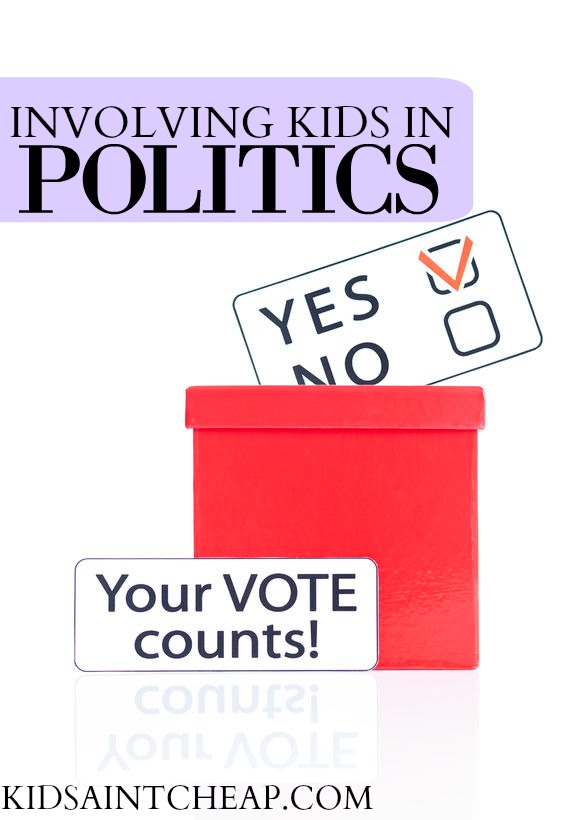
Involving kids in politics isn't something widely talked about but is something our family does. Here's why.Money and politics tend to be two topics that people hold tight to the breast. They often don’t like talking about them, which to me is sort of funny. Both of these topics are so, very important and in my opinion you can’t talk about them too early or too much.

I write this post on the eve of Canada’s federal election and the US will elect a new president in a years’ time. Growing up in a democratic country is a blessing that enough of us, unfortunately, don’t realize. I want my children to understand the importance of having at least a basic understanding of our political system, international effects and why they absolutely must make an educated vote, for any election.

I only have my own experiences to draw on, and in terms of politics, I had very little exposure as a child. This probably has something to do with the fact that the voting age in Canada isn’t until 18 years old, when most people have either graduated or are in the process of graduating high school. I’m sure the mentality is that once you move onto post-secondary education systems it will be discussed but that wasn’t the case, for me at least. I wasn’t a political science student. I didn’t study economics or history. I literally had to Google my own politicians and what the parties meant and represented when the first election happened. Unfortunately most young people don’t even bother to do this and thus, don’t vote.

The US system is much simpler in the sense that you have Democrats and Republicans, as well a set election schedule. Canada has multiple parties (bigger ones being Conservatives, Liberals and NDP) as well no set election schedule, we could essentially have the same prime minister for 30 years. Boring.

Teaching Through Involvement

Teaching our children through involvement is crucial regardless of what country you’re from. We’ve already started with our 3.5 year old. When we’re driving we have her point out the different colored signs. She knows which one mommy and daddy prefers and is beginning to engage in questions. The ‘’why’s’’ have started. While I know she doesn’t necessarily understand our answers, the point is that the conversation has been stimulated.

When we vote tomorrow we will bring our daughter with us. I want her to come and experience it. The TV will be on all night until the final results are in, she will watch it with us. I know she doesn’t ‘’get’’ it but it is important to us that she begins to appreciate just how important it is. I have a friend who will actually host an at home voting booth with her young children, this is a brilliant idea to me. Learning through experience is the best way to learn.

Having a good political background is so important, kids shouldn’t be excluded. They should know who stands for what and how they will be effected too. A time will come when they’re granted voting power and they need to have as much information as possible!

Do you/will you involve your children in understanding politics?

Catherine
Catherine

Catherine is a first time momma to a rambunctious toddler. When she isn’t soaking up all that motherhood has to offer, you can find her blogging over at Plunged in Debt where she chronicles her and her husbands journey out of debt. You can also follow her on Twitter.

plungedindebt.com

Filed Under: Education Tagged With: Kids, money, politics

Would You Make Your Kids Pay You Back For Their Braces?

March 25, 2015 | 1 Comment

make kids pay for their bracesOrthodontic treatment (aka ‘’braces’’) are expensive. The materials aren’t cheap and it’s a long process- usually 12-24 months’ worth of adjustments, fittings, elastics, retainers, it’s a lot of work. I see it every day from pre-treatment to end of treatment. It’s a big topic in dentistry for both kids and adults. Though there is a large population of adults who wear braces, most clients I see are children (or young teens) who are going through treatment, basically because their parents signed them up for it.

The dentist I work for will not place braces on a patient until they (the patient and parents) have full understanding (regardless of age) of the importance of retaining after the treatment is done. 9.5 times out of 10 a person MUST wear their retainers, at least weekly for the rest of their lives, if they want to keep teeth perfectly straight. Yes there are some miracle cases that stay even though the retainer has never been in the mouth, but there’s a slim to none chance teeth will stay straight without some retention. Teeth want to go back to their original position no matter how ‘’right’’ the corrected position is.

Given that most of the ortho people we see are young kids, who despite us reminding them constantly, rarely wear their retainers properly and end up with relapse. Sometimes it’s mild and doesn’t bother them but we see a few cases of almost 100% relapse too where the braces are removed and they simply never bother retaining the teeth.

I had one of these cases in last week. He was a 22 year old male who went through full ortho treatment six years ago. Admittedly he never bothered with the retainers and his teeth have almost totally relapsed. He was complaining because his mom made him pay her back.

His mom paid cash for his braces. Their insurance didn’t cover it so for two years his mom and step dad made monthly payments on his account for his $5,000+case.  He explained that she was mad at him for allowing his teeth to relapse and because he didn’t hold up his end of the bargain by wearing his retainers and she wanted a refund now that he was working full-time.

It got me thinking, though I work in the industry so I feel like our situation may be a little different, the fact remains that if (and likely, when) our daughter gets braces, she will be 100% informed the entire process. Unless medically necessary (there are some instances and there almost a 0% chance she will fall into one) I will not put braces on her until she agrees to follow all directions, including wearing retainers. Though I will gently remind her to wear them occasionally (how could I not being a mom and dental hygienist?) I will not hound her. It’s her responsibility and if I don’t think she could handle it, I won’t do it.

If she agrees and commits 100%, but ultimately fails due to neglect, I’d be super disappointed and may come up with an ultimatum. Though certainly not for everyone, I don’t necessarily think this mom in question was wrong for asking for her son to pay her back as he had made promises to her- as a young adult.

Would you ever ask your kids to pay back for such an expense?

Catherine
Catherine

Catherine is a first time momma to a rambunctious toddler. When she isn’t soaking up all that motherhood has to offer, you can find her blogging over at Plunged in Debt where she chronicles her and her husbands journey out of debt. You can also follow her on Twitter.

plungedindebt.com

Filed Under: Medical Tagged With: braces, Kids, kids pay for their braces

« Previous Page
Next Page »
  • Facebook
  • Pinterest
  • RSS
  • Twitter

Basic Principles Of Good Parenting

Here some basic principles for good parenting:

  1. What You Do Matters: Your kids are watching you. So, be purposeful about what you want to accomplish.
  2. You Can’t be Too Loving: Don’t replace love with material possessions, lowered expectations or leniency.
  3. Be Involved Your Kids Life: Arrange your priorities to focus on what your kid’s needs. Be there mentally and physically.
  4. Adapt Your Parenting: Children grow quickly, so keep pace with your child’s development.
  5. Establish and Set Rules: The rules you set for children will establish the rules they set for themselves later.  Avoid harsh discipline and be consistent.
  6. Explain Your Decisions: What is obvious to you may not be evident to your child. They don’t have the experience you do.
  7. Be Respectful To Your Child: How you treat your child is how they will treat others.  Be polite, respectful and make an effort to pay attention.
Best Parenting Blogs

Most Popular

Baby

9 Baby Names That Sound Rare Without Being Hard to Spell

Evan Morgan
Baby

9 Unusual Baby Names That Sound Like They Belong to Future CEOs

Evan Morgan
Target Store

Choking Incident Prompts Recall of 49,000 Target Gigglescape “Under the Sea” Popping Toys

Evan Morgan
Frustrated Girl

Why Some Students on the Spectrum Are Labeled With ODD

Evan Morgan
Coke Bottles

12 Things Kids Took to School in the ’70s That Would Never Be Allowed Today

Evan Morgan

All content on Kids Ain’t Cheap is for entertainment purposes only. By reading this blog, you agree that Kids Ain’t Cheap is not responsible for any actions taken after reading this blog. For the full disclaimer, see our privacy policy.

Please note that Kids Ain’t Cheap has financial relationships with some of the merchants mentioned here. Kids Ain’t Cheap is funded by banner advertising, commission sales and search optimization consulting.

Copyright © 2006–2026 | District Media | All Rights Reserved | Privacy Policy

Copyright © 2026 Runway Pro Theme by Viva la Violette