
• Home
  • About Us
  • Toolkit
  • Archives
  • Advertise
  • Privacy Policy

Kids Ain't Cheap

But They Sure Are Worth It

  • Parenting
    • Baby Stuff
    • Books and Reading
      • Aesops Fables
      • Comic Books
    • Education
    • Family Time
    • Green Living
    • Growing Up
    • Healthy Living & Eating
    • Holidays
    • Parenting
    • Random Musings
    • Shopping
    • Stuff to Do
  • Money
  • Product Reviews
    • Books and Magazines
    • Discount Sites
    • Furniture
    • House Keeping
    • Reviews News
    • Toys and Games
  • Contact Us
  • Our Editorial Commitment
  • Search

Pet Parents vs. Kid Parents: Is There Really a Difference?

April 27, 2025 | Leave a Comment

Toddler gently petting a cat on the grass with adults nearby.
Image Source: Unsplash

If you’ve ever called yourself a “dog mom” or joked that your cat is your “fur baby,” you’re not alone. These terms have become more common as pet ownership increasingly mirrors family life, especially for those who haven’t yet had children or choose to keep their pets as the heart of the home.

But for those who juggle parenting children alongside pets, comparisons can feel misplaced. What’s the truth? Are the experiences of pet parents and kid parents truly the same, or are we talking apples and oranges? The answer is a little bit of both. Let’s dive into the emotional bonds, practical goals, and real impacts of both roles.

The Emotional Bonds Are More Alike Than You’d Think

Many pet parents form relationships with their animals that echo the deep bonds humans have with their children. According to science, these connections influence decisions, habits, and even finances. Much like parents who plan their day around school pickups or soccer games, pet parents often rearrange their schedules for vet visits or regular walks.

This emotional investment isn’t superficial—it’s biologically rooted. Research has shown that the attachment felt for pets activates the same brain areas associated with nurturing and emotional bonding as it does with human relationships.

These bonds are no less significant because they involve pets instead of children. Whether caring for a furry friend or raising a child, the emotional commitment you make impacts your daily life, sense of responsibility, and even your happiness. These parent-child-like relationships go far beyond “just a pet.”

Practical Goals of Raising a Child vs. A Pet Differ

Though the emotional bonds may feel the same, the practical goals of pet parenting and child-rearing differ significantly. Humans grow into independent adults with their own goals, challenges, and future generations to guide. Pets, on the other hand, remain dependent, regardless of age.

Children are raised to eventually make their own decisions and live independently, while pets will always rely on their owners for food, shelter, and emotional care. Whether you proudly wear the “dog mom” title or see parenting as an entirely different journey, it’s vital to acknowledge the unique roles these relationships play in our lives. It’s crucial to recognize that while the emotional components can overlap, their long-term implications are not the same.

Pets Teach Kids More Than You Might Expect

Here’s where both roles intersect beautifully—kids can learn valuable life skills from growing up with pets. Studies show that children who grow up with animals demonstrate higher levels of compassion, empathy, and responsibility. They learn the importance of nurturing another living being, and this shapes their emotional and social intelligence.

However, younger children still need guidance and supervision when interacting with pets. While a child under 10 may not fully be able to take responsibility for a pet, adult supervision ensures both the child’s and the pet’s well-being. Through this partnership, children also learn what it means to care for someone else—skills that will benefit them throughout their lives.

Pet Care Evolves With Your Child’s Age

As children grow, so too does their ability to manage responsibilities around pets. Early on, a child’s contribution might be simple tasks, like feeding the pet or filling the water bowl. But as they get older, kids can take on more complex pet care duties, such as walking the dog or grooming. Research shows that children’s capacity to take responsibility for pets increases with age, especially as they transition from elementary to middle school.

In many families, by the time children reach their teens, they’re often responsible for pet care, including walking the dog, cleaning the cat litter box, and ensuring the pet’s needs are met. During this period, they develop problem-solving skills, responsibility, and empathy. It’s a way to help them build their emotional muscle and establish a routine of care and respect.

Attachments to Pets Boost Children’s Emotional Health

The attachment between children and their pets often becomes one of their most significant early emotional bonds. Much like a trusted family member, pets provide comfort and companionship, offering a sense of security.

Studies have found that children who form strong attachments to pets tend to experience lower levels of anxiety and depression, increased self-esteem, and a higher quality of life. Pets offer a constant presence that isn’t swayed by peer pressure, school drama, or social dynamics—something that can be especially grounding for children during stressful times.

As kids navigate difficult transitions, such as moving or family changes, the emotional stability a pet provides can help anchor them. These relationships offer a safe space for children to express and process emotions, building emotional resilience for the future.

Why the Comparison Matters—And When It Doesn’t

So, are pet parenting and raising a child the same thing? Not exactly. The demands, outcomes, and societal expectations are different. However, both roles involve love, sacrifice, and a commitment to nurturing a life that relies on us.

While pet parents may not face the same long-term responsibilities as child parents, the emotional labor involved is undeniably real. The bond you build with your pet—whether through care, patience, or companionship—is equally worthy of recognition.

Ultimately, both types of parents offer the same thing: a loving, steady environment in which growth, healing, and learning take place. And that’s a beautiful thing—whether it’s on four legs or two.

Are you both a pet parent and a kid parent? We’d love to hear how the two roles compare in your household—share your thoughts in the comments below!

Read More:

  • Focus On Wellness: Keeping Your Family And Pets As Healthy As Possible
  • These Are The 8 Best Pets For Small Children
Samantha Warren
Samantha

Samantha Warren is a holistic marketing strategist with 8+ years of experience partnering with startups, Fortune 500 companies, and everything in between. With an entrepreneurial mindset, she excels at shaping brand narratives through data-driven, creative content. When she’s not working, Samantha loves to travel and draws inspiration from her trips to Thailand, Spain, Costa Rica, and beyond.


Filed Under: Parenting Tagged With: children and mental health, Parenting, pet parents, pets and kids, pets for children

Sitting All Day Is Ruining Your Health: Here’s What to Do About It

April 27, 2025 | Leave a Comment

Woman sitting on the floor using her phone, leaning against a bed in a relaxed posture.
Image Source: Unsplash

Between work Zooms, school pick-ups, and a late-night Netflix wind-down, it’s shockingly easy to spend 8–10 hours parked in a chair. The result? A silent health threat rivaling smoking and obesity. But getting healthier doesn’t require training for a marathon or joining an expensive gym. Small, consistent choices can dismantle the dangers of a sedentary routine—no matter how hectic your schedule.

Below are five research-based truths about prolonged sitting and the realistic steps you can take (starting right now) to keep your body—and mood—thriving.

1. Your Body Isn’t Built for “Idle Mode”

Our muscles, joints, and cardiovascular system evolved for frequent movement, yet modern life nudges us into “energy-saving” mode for most of the day. When you’re sitting all day, calorie burn plummets, circulation slows, and enzymes that help break down blood fats shut down. Over time that sluggishness snowballs into metabolic syndrome: high blood pressure, elevated blood sugar, increased belly fat, and poor cholesterol profiles—all precursors to type 2 diabetes and heart disease.

Quick fix: Set a phone timer or smartwatch alert for every 30 minutes. When it pings, stand up, stretch overhead, roll your shoulders, or pace the hallway for 60 seconds. Those micro-bursts restart blood flow and keep metabolism ticking.

2. Prolonged Sitting Is Linked to Life-Threatening Diseases

Data from more than one million people show that logging 8 or more sedentary hours daily (without adequate exercise) ups the risk of dying from cardiovascular disease by 147 percent. One Australian study found men who watched 23 hours of TV a week had a 64 percent higher risk of fatal heart events than those who watched 11 hours or fewer. Translation: the couch and the office chair can be as hazardous as a pack of cigarettes if movement never balances the scale.

Quick fix: Re-think in-home screen time. Turn part of family streaming sessions into an “active watch-along”—march in place, stretch hips, or foam-roll during each episode. Kids love copying goofy parent moves, and you’ll chip away at danger without missing plot twists.

3. Daily Workouts Don’t Fully Cancel an Otherwise Sedentary Day

Squeezing in a 30-minute run is fantastic, but if the other 15 awake hours are motionless, your cells still suffer. An NIH study showed healthy 33-year-olds experienced higher BMI and worse cholesterol ratios after just one week of increased sitting—even though their formal exercise routine stayed the same. Sitting and moving affect the body through separate pathways, so both need attention.

Quick fix: Stack movement “snacks.” Do calf-raises while brushing teeth, body-weight squats while microwaving lunch, or a two-minute dance break each time you refill a water bottle.

4. Sixty Minutes of Moderate Activity Can Offset Much of the Risk

Here’s the uplifting news: you don’t need heroic feats to reverse the trend. A landmark meta-analysis in The Lancet found 60–75 minutes of brisk walking, cycling, or other moderate exercise daily nearly erased the mortality risk linked with 8 hours of sitting. That might sound daunting, but it’s cumulative—10 minutes here, 15 minutes there add up quickly.

Quick fix:

  • Walk the kids to school or the bus stop instead of driving.
  • Pace the sidelines during soccer practice instead of sitting.
  • Challenge the family to a post-dinner stroll four nights a week.
    These lifestyle swaps can easily hit the 60-minute sweet-spot without carving extra time from your calendar.
Smiling woman encouraging a child on a wooden rocking horse, sharing a joyful moment.
Image Source: Unsplash

5. Movement Lifts Mood, Energy, and Parenting Patience

Sedentary days don’t just stiffen joints—they drag down mental health. Light-to-moderate movement increases blood flow to the brain, triggering endorphins and sharpening focus. Parents who sprinkle activity throughout the day report better sleep, fewer afternoon crashes, and a calmer response to toddler meltdowns. Modeling these habits also signals to kids that bodies are tools to be used—not furniture to park.

Quick fix: Keep a jump rope, resistance band, or yoga mat in high-traffic rooms. Visual cues remind you—and curious kids—to move. Turn it into a two-minute “beat the timer” challenge: who can do the most rope swings or plank holds before the microwave dings?

Build Movement Into the Life You Already Live

You don’t need perfection; you need momentum. Pick one of the quick fixes above and test-drive it for seven days. Notice how your back, mood, or evening energy shifts. Then layer on a second habit. Over a month, these small wins snowball into measurable gains: looser jeans, lower resting heart rate, extra patience at homework time.

Fast Ideas at a Glance

Trigger30-Second MoveWhy It Works
Phone ringsStand & marchIncreases circulation; cues brain to associate calls with activity
Email sentShoulder rolls + chest stretchCounteracts hunching; reduces neck tension
Kids’ cartoon intro20 jumping jacksElevates heart rate; easy for children to join
Coffee brewCounter push-upsStrengthens upper body without equipment
Work breakWalk stairs 2 flightsQuick cardio burst; ignites calorie burn

The Bottom Line

Sitting all day is a health risk you can’t afford—especially when little ones are counting on you. But preventing the damage doesn’t require drastic overhauls. Interrupt long sitting spells, weave in movement snacks, and aim for about an hour of moderate activity spread across your day. Your heart, mind, and family life will feel the difference.

How do you sneak extra steps or stretches into packed days? Drop your favorite mini-workout or posture hack in the comments—let’s build a toolbox of parent-tested ideas together.

Read Next

  • Babysitting Without Cash: 10 Ways to Barter Your Way Out of Childcare Costs
  • 13 Effective Time-Management Tips for Busy Parents
Samantha Warren
Samantha

Samantha Warren is a holistic marketing strategist with 8+ years of experience partnering with startups, Fortune 500 companies, and everything in between. With an entrepreneurial mindset, she excels at shaping brand narratives through data-driven, creative content. When she’s not working, Samantha loves to travel and draws inspiration from her trips to Thailand, Spain, Costa Rica, and beyond.

Filed Under: Healthy Living & Eating Tagged With: family health, health risks of sitting, movement tips, parent wellness, Physical Activity, sedentary lifestyle, sitting all day

Surviving the “No” Phase Without Losing Your Mind

April 27, 2025 | Leave a Comment

A hand making a shaka sign in a forest setting, symbolizing calm and resilience.
Image Source: Unsplash

One day your sweet toddler is giggling over finger paint, and the next they’re refusing everything from broccoli to bedtime with an emphatic “No!”. Sound familiar? You’re not alone—and, crucially, your child isn’t plotting to drive you up the wall.

The toddler no phase is a normal developmental milestone rooted in a growing sense of independence. As exhausting as it is, every “no” is your child’s way of saying, I’m my own person. The good news? You can support that healthy autonomy can keep your sanity intact.

Here are six research-backed strategies for sailing through this stormy season with empathy, structure, and far fewer power struggles.

1. Pause and Redirect—Space Calms the Storm

Toddlers’ brains are still wiring the circuits that regulate big feelings.

When you meet a loud “No!” with equal intensity, you feed the fire. Instead, take a brief pause—two steady breaths—and calmly redirect: “You’re upset about putting on shoes. Let’s pick a song while we try again.” Redirection shifts your child’s focus, defuses adrenaline, and models self-control. When cooperation follows, celebrate: “You did it! High-five!” Praise reinforces flexible behavior—and toddlers love repeat performances.

2. Lean on Predictable Routines

Children relax when they know what happens next. Consistent meal, nap, and play windows reduce surprise transitions—the #1 trigger for “no!” battles.

Post a simple picture schedule at toddler eye-level:

🍳 → 👟 → 🚗

Touch each icon as you go. The routine becomes the boss, not you, which feels safer for autonomy-seeking toddlers.

3. Offer Curated Choices

Choice is toddler gold, but unlimited options are overwhelming. Offer two pre-approved paths:

  • “Blue cup or red cup?”
  • “Brush teeth before pajamas or after?”

Either answer works for you, yet your child feels powerful. Even small choices cut defiance dramatically by meeting the developmental need for control.

4. Spot (and Soften) Common Triggers

Most meltdowns trace back to H.A.L.T. cues: Hungry, Angry, Lonely, Tired. Keep snacks handy, build quiet cuddles into busy days, and respect sleep windows. For inevitable transitions (leaving the park, turning off videos) give countdown warnings: “Five more pushes, then stroller.” Timers or musical cues offer concrete signals that help toddlers shift gears without defaulting to no!

A young child covering their face with both hands, reflecting emotional vulnerability.
Image Source: Unsplash

5. Keep Your Cool—Regulation Is Contagious

Toddlers are emotional mirrors. A calm, low voice and relaxed body posture tell their nervous system, We’re safe. Drop to their eye level, label the feeling (“You’re mad the blocks fell”) and hold a boundary (“Blocks stay on the floor”). When you regulate yourself, you co-regulate them and teach the lifelong skill of staying steady under stress.

6. Reframe the Phase—It’s Practice for Real Life

Repeated “no”s are tiring but temporary. More importantly, they’re rehearsal for assertiveness, decision-making, and self-advocacy—traits we value in teens and adults. Your role is guide, not adversary:

  1. Acknowledge the feeling or desire.
  2. Offer a limited choice or clear expectation.
  3. Support the outcome without shame.

Each round teaches your child, My voice matters, and there are respectful ways to use it.

When to Worry

Occasional stubbornness is normal. If refusals escalate into daily, hour-long meltdowns that disrupt sleep, eating, or safety—or if your child’s speech and social milestones seem stalled—check in with your pediatrician or an early-childhood therapist. Early support turns challenges into growth opportunities.

You’ve Got This (Really)

Surviving the toddler no phase isn’t about perfection; it’s about presence. Every time you pause instead of react, offer a choice instead of a command, or hold a boundary with love, you strengthen trust—and teach your child healthy independence. Keep perspective: the season is short, the lessons last forever, and you’re doing better than you think.

Your turn: Share your funniest no phase moment—or a strategy that saved the day—in the comments. Your story might be the deep breath another parent needs today.

Read More

  • 10 Ways to Survive Living On The Streets With Your Kids
  • A Pet Owner’s Guide to Surviving the Holidays
Samantha Warren
Samantha

Samantha Warren is a holistic marketing strategist with 8+ years of experience partnering with startups, Fortune 500 companies, and everything in between. With an entrepreneurial mindset, she excels at shaping brand narratives through data-driven, creative content. When she’s not working, Samantha loves to travel and draws inspiration from her trips to Thailand, Spain, Costa Rica, and beyond.

Filed Under: Parenting Tagged With: early childhood behavior, parenting toddlers, Positive Parenting, toddler discipline, toddler no phase, toddler tantrums

From Chaos to Calm: Strategies for Difficult Toddler Behavior

April 27, 2025 | Leave a Comment

Toddler yelling while wearing a jacket and hat outdoors.
Image Source: Unsplash

Some days with a toddler feel like living with a tiny whirlwind—one who hurls snack cups, insists pants are optional, and sobs because a banana broke “wrong.” If you’ve ever hidden in the pantry to regroup, you’re not alone. Difficult toddler behavior can upend even the most patient parent, but it doesn’t have to rule your household. With a handful of proven tools, a lot of empathy, and steady consistency, you can guide your child from meltdown to mastery and regain a sense of calm along the way.

Below are five expert-backed strategies that turn daily chaos into teachable moments. Each one is simple enough to start today and powerful enough to transform tomorrow.

1. Set Clear, Positive Expectations

Toddlers spend their days testing cause and effect: What happens if I throw this cup? How loud can I scream before Dad reacts? Vague commands like “Be good” or “Stop it” leave them guessing. Swap those for specific, observable directions:

  • “Food stays on the table.”
  • “Feet stay on the floor.”
  • “We use indoor voices.”

Phrase expectations in the positive—tell your child what to do, not just what not to do. Research shows positive wording reduces stress and helps young children process instructions faster. Post simple picture cues at toddler eye-level (a pair of feet on the floor, a spoon staying in a bowl) to reinforce the message without constant nagging.

Parent shortcut: Before entering a store or restaurant, kneel to eye level and preview 1–2 rules. Toddlers remember better when the information is fresh, short, and interactive (“Can you show me what ‘walking feet’ look like?”).

2. Anchor the Day With Predictable Routines

Imagine an adult schedule that changed hourly with no warning—you’d melt down too. Toddlers crave predictability because it makes their big world feel safe. Establish consistent meal, nap, and bedtime windows; add micro-routines for tricky transitions:

  1. Play → Cleanup song → Snack
  2. Brush teeth → Pick two books → Lights out

Use a visual schedule with photos or drawings: breakfast plate, toy box, bath, pajamas. Point to the next step so your child sees what’s coming instead of feeling blindsided. Stable routines reduce tantrums because children spend less energy fighting the unknown.

Tip for shifts: Life happens—doctor visits, travel, relatives. When routine must change, give a toddler-sized heads-up: “After lunch, Grandma will pick you up. Then we’ll have playground time later.” Even a brief preview lowers anxiety.

3. Lead With Positive Reinforcement

Think of attention as fertilizer: whatever you water grows. If 90 percent of your words focus on whining, throwing, or yelling, guess what behavior blossoms? Flip the script: notice the good—loudly and often.

  • “You shared your blocks. That was kind!”
  • “Thank you for using gentle hands with the cat.”
  • “Wow, you put your shoes on the first time I asked!”

Keep praise immediate and specific; pair it with a smile, high-five, or brief hug. Experts recommend a 4-to-1 ratio of positive to corrective comments for toddlers.

For minor misbehaviors (whining, foot stomping), try planned ignoring. When the unwanted action no longer earns a reaction, it often fades.

Mini-reward system: Place five clothespins on a “Fantastic Day” jar each morning. Each time you catch positive behavior, drop a pin into the jar so your toddler hears the clink. When all pins move, celebrate with a dance party or extra story—no candy needed.

Father and daughter sitting indoors doing a calming hand game.
Image Source: Unsplash

4. Teach Emotional Skills Through Empathy

A toddler’s brain is under construction; the part that controls impulse and language lags behind raw emotion. Meltdowns are often cries for help, not defiance. Start with empathy:

  1. Name the feeling —“You’re mad your tower fell.”
  2. Validate —“It’s okay to feel mad.”
  3. Guide —“Let’s take two big balloon breaths and rebuild.”

Using feeling words builds your child’s vocabulary for self-expression.

Pair that with simple calming tools (blowing bubbles, squeezing a pillow, stomping like dinosaurs) and practice them outside crisis moments so the skills are ready when the storm hits. Children whose parents respond with empathy develop better emotional regulation and fewer behavior problems later (source).

Remember: you’re not indulging bad behavior—you’re teaching a life skill.

5. Sync Up With All Caregivers

Mixed messages confuse toddlers and undercut progress. Share your key phrases, routines, and reward systems with partners, grandparents, babysitters, and daycare teachers:

  • Expectation: “Shoes stay on.”
  • Cue: “Remember, walking feet.”
  • Praise method: high-five + “Great listening!”

Regular 5-minute check-ins (text or voice memo) keep everyone aligned and allow quick tweaks: “Skipping morning nap made bedtime rough. Let’s keep the nap tomorrow.” If your child attends daycare, ask what strategies work there and mirror them at home. Consistency across environments accelerates learning and sparks confidence: rules are clear, adults are united, and the world feels less chaotic.

Keeping Yourself Calm While Teaching Calm

All the strategies above rely on one priceless ingredient—your composure. A dysregulated adult can’t coach regulation in a child. Build tiny self-care pauses into the day: sip water before intervening, breathe while counting to five, tag-team with a partner for a 10-minute reset. Modeling self-control shows your toddler that big feelings are manageable, not dangerous.

From Tantrums to Teach-able Moments

Difficult toddler behavior is normal, temporary, and (believe it or not) an opportunity. When you set clear expectations, ground the day in routine, highlight the positive, teach feelings, and team up with other caregivers, you’re not just surviving; you’re laying foundations for empathy, resilience, and self-discipline. That tiny whirlwind will calm in time, and thanks to your guidance, they’ll emerge ready to navigate the bigger storms life sends their way.

What tactic calmed your latest toddler tornado? Share your wins (and epic fails—we all have them) in the comments. Every story helps another parent feel less alone.

Read More

  • 4 Cheap Recreational Activities for the Whole Family
  • Tired of Chaos? Blunt Advice for Restoring Order at Home

Samantha Warren
Samantha

Samantha Warren is a holistic marketing strategist with 8+ years of experience partnering with startups, Fortune 500 companies, and everything in between. With an entrepreneurial mindset, she excels at shaping brand narratives through data-driven, creative content. When she’s not working, Samantha loves to travel and draws inspiration from her trips to Thailand, Spain, Costa Rica, and beyond.

Filed Under: Parenting Tagged With: behavior management, communication, empathy, parenting tips, Positive Reinforcement, routines, Tantrums, toddler behavior, toddler challenges

Is My Child a Narcissist? Recognizing Narcissistic Behaviors

April 27, 2025 | Leave a Comment

Child sticking out tongue with slouched posture outdoors
Image Source: Unsplash

You love your child, yet something feels off. Maybe every minor setback is someone else’s fault, or compliments quickly morph into cruel comparisons with friends. Asking, “Could my child be showing narcissistic traits?” can feel scary, but noticing these patterns early is an act of powerful, preventative love.

Early awareness means you can shift the family climate, model healthier coping strategies, and guide your child toward genuine empathy before unhelpful habits harden. Below are five research-backed warning signs of narcissistic behaviors in children, plus practical steps to recalibrate your home environment so your child can thrive.

1. Achievements Become Your Parent-Child Battleground

Does a simple “Great job on that test!” evolve into “Yes, I’m so proud—I always knew you’d outshine the others”? Children whose victories are consistently used to elevate the family’s social image can start to believe praise equals superiority, not effort.

Psychologists call this parental overvaluation—treating ordinary milestones as evidence your child is extraordinary in every way. A landmark Dutch study found that overvaluation predicted early narcissistic attitudes more strongly than lack of warmth did.

Try this instead: Praise process (“You studied hard”) and character (“You showed perseverance”), not status or exclusivity.

2. Friendships Feel Like One-Way Streets

All kids quarrel, yet chronically narcissistic children show patterns: they gossip to stay on top, scapegoat peers for group mishaps, or ditch friends as soon as someone new seems “better.” They may apologize only when coerced, without genuine remorse. If your child rarely owns a share of conflict, ask them to narrate the other child’s perspective. Struggling to do so signals an empathy gap, a core component of narcissism.

Action step: Role-play disputes at home and rehearse taking turns stating feelings. Make empathy a family sport, not a lecture.

3. Boundaries? What Boundaries?

Narcissistic traits flourish in homes where limits swing between too loose (permissive pampering) and too rigid (harsh criticism). Either extreme teaches children one lesson: Rules bend to power. Balanced parenting—warmth plus consistency—models mutual respect.

Reset the tone: State rules once, calmly, and follow through. Pair consequences with empathy: “I see you’re upset; it’s still time to stop hitting.” Predictable structure signals that feelings matter, but they never trump another person’s safety or dignity.

4. Identity Feels Inflated—or Fragile

Grandiose boasting (“I’m the smartest kid ever!”) sometimes masks deep insecurity (“If I’m not the best, am I worthless?”). Children swinging between swagger and meltdown after minor criticism may be relying on an unstable self-image patched together by external praise.

Foster a realistic sense of self: Encourage activities outside academics—sports, art, volunteering—where your child risks healthy failure and learns effort counts more than titles. Share your own mistakes out loud to normalize imperfection.

5. Family Roles Are Rigid—Golden Child vs. Scapegoat

If one sibling can “do no wrong” while another is chronically blamed, you may be seeing narcissistic family scripting. Children in the golden role learn entitlement; scapegoats absorb shame, sometimes developing people-pleasing or rebellion.

Rebalance dynamics: Rotate privileges and chores. Celebrate each child’s unique strengths. If you notice favoritism creeping in (from yourself or a co-parent), address it head-on, perhaps with a therapist’s help.

Is It Just a Phase?

Preschoolers are naturally egocentric; they’re still wiring the brain circuits for perspective-taking. What distinguishes normal self-focus from concern?

Developmentally TypicalWorth a Closer Look
Occasional braggingChronic need to dominate conversations
Disliking to share but learning slowlyRefusing to share while mocking others
Accepts “no” after brief protestExplosive rage or manipulation when refused

If patterns persist past age 8, intensify despite guidance, or create social isolation, seek an evaluation from a child psychologist.

Child meditating peacefully on a tree stump in the woods.
Image Source: Unsplash

6 Ways to Guide Your Child Toward Empathy and Balance

  1. Model reflective listening. Show you can summarize your child’s feelings without judgment; then ask them to do the same for yours.
  2. Praise empathy moments. “I saw you help Ella when she fell—that was kind.”
  3. Teach mindful breathing. Emotional regulation opens space for empathy.
  4. Volunteer together. Helping shelters or neighbors shifts focus from self to community.
  5. Limit comparison language. Swap “You’re the best artist” for “I love your color choice—tell me about it.”
  6. Consider therapy early. CBT and family systems work can redirect unhealthy narratives before adolescence cements them.

Your Child’s Story Isn’t Written in Stone

Spotting narcissistic behaviors in children doesn’t mean raising an irredeemable “narcissist.” Personalities are still forming; brains remain wonderfully plastic. By balancing warmth with realistic expectations, setting consistent boundaries, and elevating empathy as a family value, you give your child the tools to develop genuine confidence without trampling others.

Feel uneasy? That’s okay—that feeling can propel growth. Engage supports: pediatricians, counselors, parenting groups. Remember, calling out harmful patterns is not blame; it’s brave stewardship.

Have you wrestled with similar concerns? Share insights or questions below—your story may help another parent find the courage to course-correct with compassion.

Read More

  • The School Is Calling Again: 5 Ways to Help Change a Child’s Bad Behavior at School
  • Should You Buy a House in a Bad School District?

Samantha Warren
Samantha

Samantha Warren is a holistic marketing strategist with 8+ years of experience partnering with startups, Fortune 500 companies, and everything in between. With an entrepreneurial mindset, she excels at shaping brand narratives through data-driven, creative content. When she’s not working, Samantha loves to travel and draws inspiration from her trips to Thailand, Spain, Costa Rica, and beyond.

Filed Under: Parenting Tagged With: Child Psychology, childhood trauma, empathy development, family dynamics, mental wellness, narcissistic behaviors in children, narcissistic parents, parenting tips

Beyond Nuggets: Healthy and Easy Toddler Food Ideas

April 27, 2025 | Leave a Comment

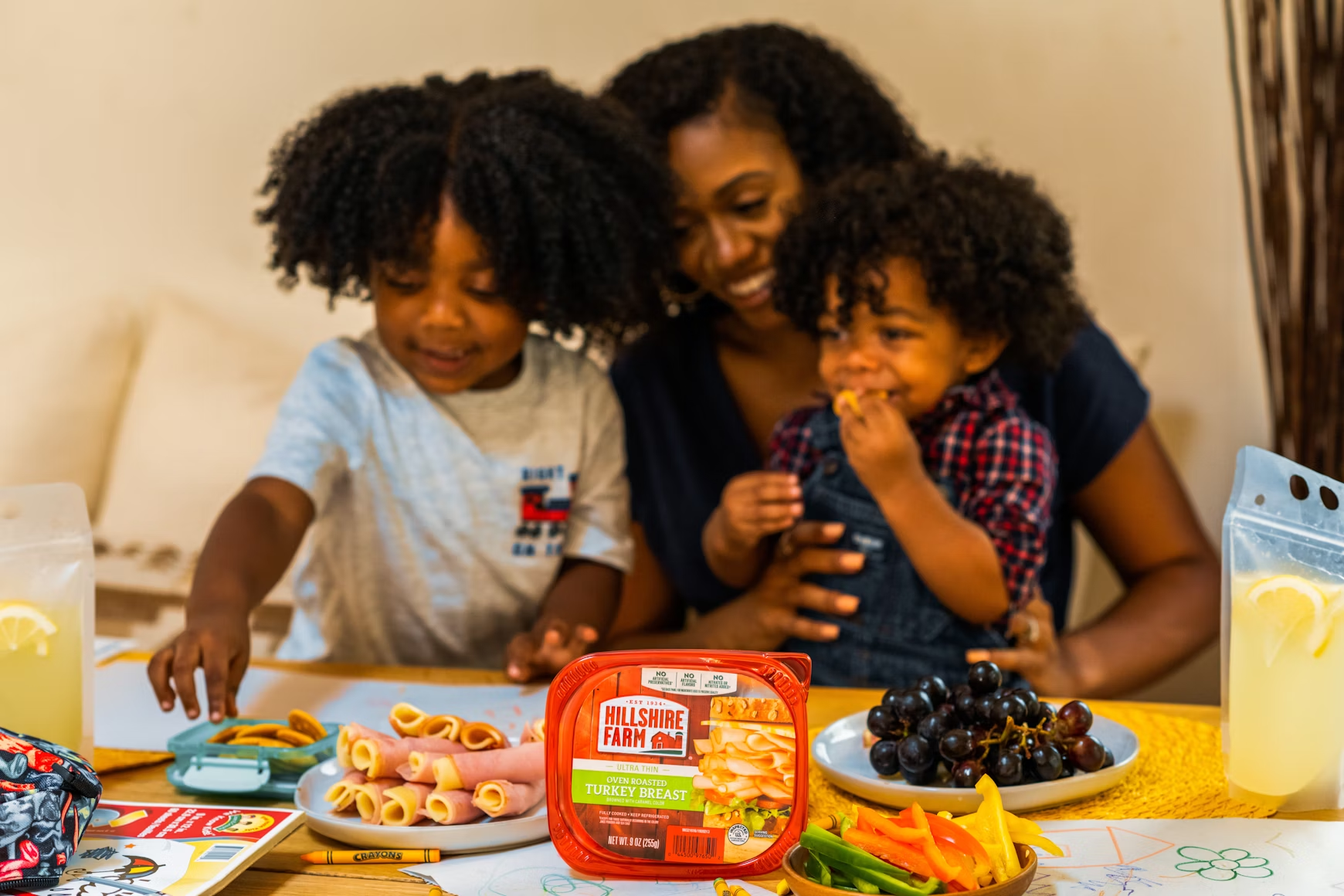
Mom and kids enjoying snacks and crafts at the table.
Image Source: Unsplash

If your little one would happily eat chicken nuggets for breakfast, lunch, and dinner, you’re not the only parent on earth. At this age, pickiness peaks, textures trump taste, and anything green can trigger a meltdown. Still, toddlers need iron, calcium, healthy fats, and fiber to power rapid growth. Below are seven realistic upgrades—no culinary degree required—that add nutrition and variety without sparking civil war at the table.

1. Plant-Based Nuggets: Same Shape, Smarter Inside

No need to ban nuggets; just switch to a plant-based version. Brands like Beyond Chicken or Quorn mimic the crunchy coating kids expect while delivering 50% less saturated fat and bonus fiber from wheat gluten or faba beans. Serve with baked sweet-potato fries or steamed carrot coins. Familiar look, better nutrients—zero toddler drama.

Fast tip: Keep beloved dips (ketchup, hummus, yogurt ranch) on hand. A trusted dip persuades reluctant eaters to try new foods.

2. Two-Minute Smoothies That Pack a Punch

Smoothies are stealth nutrition in a cup:

  • 1 cup Greek yogurt
  • ½ cup frozen berries
  • ½ banana
  • Splash of milk or fortified plant beverage

Blend and hand it off with a handful of whole-grain cereal for crunch. You’ve just supplied protein, calcium, antioxidants, and fiber—ideal for breakfast or afternoon “hangry” hour. Refrigerate extra portions in small jars; they keep 24 hours.

3. Finger Foods That Fuel Independence

Toddlers learn by doing, so stock nutrient-dense finger foods they can grab solo:

  • Soft-steamed broccoli florets
  • Ripe avocado wedges (roll in ground flax so they’re not slippery)
  • Sliced hard-boiled eggs
  • Baked chickpea puffs for plant protein + crunch

Put everything on a divided plate so your child can pick and choose—research shows autonomy increases acceptance of new foods.

Plate with egg, avocado, and toast beside a bowl of yogurt with berries.
Image Source: Unsplash

4. Egg-Veggie Muffins: Meal-Prep MVP

Whisk six eggs with a splash of milk, fold in one cup finely grated zucchini and ¼ cup shredded cheese. Divide into greased mini-muffin tins; bake 15 minutes at 350 °F. These frittata bites supply iron, protein, and hidden veg. Store five days in the fridge or two months in the freezer—reheat 20 seconds for a grab-and-go breakfast or protein-rich snack.

5. Flexi Plant-Forward Plates

You don’t have to go full vegan. Try a “meat-plus” approach: mix minced lentils or tofu into taco meat, meatloaf, or spaghetti sauce. Fiber goes up, saturated fat drops, flavor stays familiar. Fortified soy milk or calcium-set tofu match dairy’s bone-building nutrients, giving allergy families or budget weeks some breathing room.

6. Snack Smart: Upgrade, Don’t Eliminate

Toddlers snack two or three times a day; leverage that grazing:

Old Stand-bySimple UpgradeWhy It Wins
Applesauce pouchDiced pear + cinnamonMore fiber, no added sugar
Cheese crackerWhole-grain pita + hummusAdds protein + chickpea fiber
Fruit snacksFrozen grapes (quartered)Natural sweetness + vitamin C

Present snacks in a muffin tin “sampler.” Novel presentation nudges cautious eaters to explore new textures minus pressure.

7. Involve Your Toddler—Mess and All

Children who help prep meals are far more likely to taste them. Toddlers can rinse berries, tear lettuce, sprinkle cheese on mini pizzas, or pick between the green or blue smoothie straws. These micro-choices satisfy their need for control and expose them to new foods in a low-stakes way. Yes, the counter gets sticky, but the payoff is priceless: a budding eater who’s invested in the meal.

Why These Small Shifts Matter

Early food experiences shape taste buds, gut health, and attitudes toward eating for life. Each new texture, color, or flavor widens your child’s comfort zone and teaches flexibility, crucial for future school cafeterias and birthday parties. Remember: toddlers often need 15+ exposures to accept a new food. Stay calm, keep portions toddler-sized (tablespoon scoops), and celebrate sniffing or licking as forward progress.

Quick FAQ

  • What if my toddler refuses dinner? Offer a consistent bedtime snack like banana and milk. Intake balances over days, not single meals.
  • Are plant-based nuggets allergen-safe? Many contain wheat or soy. If gluten- or soy-free is vital, try homemade chickpea-crumb nuggets baked in the oven.
  • How much protein does a toddler need? Roughly 13 grams daily for ages 1-3—easily met with dairy, beans, eggs, or fortified alternatives.

The Takeaway

Healthy toddler food doesn’t demand Pinterest perfection—just intentional variety and patience. Swap the usual nuggets for plant-powered versions, keep smoothie fixings ready, batch egg muffins once a week, and invite your mini sous-chef to stir, sprinkle, and sample. Those small, steady steps build adventurous eaters, confident helpers, and calmer mealtimes for everyone.

Which unexpected healthy food does your toddler love? Drop your discoveries in the comments—another parent will thank you!

Read More

  • Is Giving a Toddler an iPad the Same as Giving Them Junk Food?
  • 5 Homemade Baby Food Hacks

Samantha Warren
Samantha

Samantha Warren is a holistic marketing strategist with 8+ years of experience partnering with startups, Fortune 500 companies, and everything in between. With an entrepreneurial mindset, she excels at shaping brand narratives through data-driven, creative content. When she’s not working, Samantha loves to travel and draws inspiration from her trips to Thailand, Spain, Costa Rica, and beyond.

Filed Under: Healthy Living & Eating Tagged With: easy toddler recipes, healthy snacks kids love, healthy toddler food, picky eaters, plant-based toddler diet, protein for toddlers, toddler meals, toddler nutrition

Real Talk: Blunt Parenting Advice You Won’t Hear Elsewhere

April 27, 2025 | Leave a Comment

Mother holding her baby outdoors.
Image Source: Unsplash

Parenting is beautiful, exhausting, confusing—and everybody seems to have an opinion. Yet a surprising amount of advice arrives wrapped in Pinterest-perfect packaging that can leave you feeling even worse when real life doesn’t match the feed.

Ready for something different? Here are five straight-shooting truths to keep in your back pocket when the next wave of guilt, doubt, or judgment hits.

1. Don’t Let Fear Do the Parenting for You

Safety matters, but modern parenting culture often turns every choice into a life-or-death decision. Helmets, car seats, and online controls? Yes. Obsessively catastrophizing every scraped knee? That’s fear talking, not wisdom. Childhood is becoming a “fear-based industry.” Constant anxiety teaches kids the world is terrifying, and you don’t trust their ability to navigate it.

Try this:

  • Ask, “Is this rule about real safety—or my own discomfort?”
  • Pick one minor risk (letting them climb that low tree, maybe) and consciously let it be okay.
  • Celebrate the courage—yours and theirs.

2. Mom (or Dad) Guilt Doesn’t Make You a Better Parent

You skipped bedtime stories to finish a work report. You bought take-out again. Cue the soundtrack of self-reproach. But guilt rarely changes behavior; it just drains your mental energy. Working mom guilt is real. It’s important to remember that pursuing goals outside of child-raising isn’t selfish—it models ambition, balance, and self-respect.

Reframe it: Your passions are not a betrayal of your kids; they’re part of the blueprint you’re giving them for an adult life they’ll one day build themselves.

3. Good Parents Own Their Mistakes—Out Loud

Ever catch yourself snapping, “Because I said so!” or zoning out on your phone? Parenting missteps are inevitable. Refusing to acknowledge them doesn’t protect your child; it teaches denial, blame-shifting, or perfectionism.

Do this instead:

  1. Pause, breathe, and admit: “I shouldn’t have yelled just now.”
  2. Apologize without excuses. “I’m sorry. You didn’t deserve that.”
  3. State the plan: “Next time I’ll take a break before I lose my temper.”

Children who hear adults apologize learn humility, accountability, and the reassuring truth that mistakes aren’t fatal to relationships.

Parents bonding with baby while playing guitar on the couch.
Image Source: Unsplash

4. Kindness Outperforms Any Fancy Parenting Hack

Warm, responsive caregiving was the single strongest buffer against stress-related behavior issues in kids. In practical terms, your calm tone, patient explanations, and genuine listening beat chore charts, sticker boards, or the trendiest enrichment activities.

Bottom line: Your love—expressed consistently—is the hack. Everything else is optional.

5. Respectful Structure Beats Endless Arguing

Some kids negotiate bedtime like seasoned attorneys. Constant debating is exhausting, but shutting it down with “Because I’m the parent—that’s why!” simply ups the stakes. Keep firm boundaries and provide a respectful “appeals” process.

  • Boundary: Screens off at 7 p.m.
  • Appeal: Child may calmly present a reason for an exception (“I have an online study group at 7 p.m.”).
  • Parent’s call: You decide—but the child feels heard.

Children learn two crucial life skills: advocating for themselves politely and accepting “no” without a meltdown.

When You Drop the Mask, Parenting Gets Real

None of this advice will make every bedtime peaceful or every grocery run meltdown-free. What it does offer is permission to:

  • Be imperfect. The goal isn’t spotless performance; it’s genuine connection.
  • Trust your gut. You know your family better than any influencer or relative with unsolicited tips.
  • Show your humanness. Kids raised by real, self-reflective adults grow into real, self-reflective adults.

So next time boredom strikes, a tantrum erupts, or the guilt voice whispers that you’re failing, remember these blunt truths. Parenting is messy. It’s also resilient—a trait both you and your kids can embody every single day.

Join the Conversation

What piece of blunt parenting advice has helped you most? Drop your experiences (or favorite truth-bombs) in the comments below—your candor might be exactly what another tired parent needs tonight.

Read More

  • My Best Advice For New Moms
  • My Employment Advice to Stay-at-Home Parents
Samantha Warren
Samantha

Samantha Warren is a holistic marketing strategist with 8+ years of experience partnering with startups, Fortune 500 companies, and everything in between. With an entrepreneurial mindset, she excels at shaping brand narratives through data-driven, creative content. When she’s not working, Samantha loves to travel and draws inspiration from her trips to Thailand, Spain, Costa Rica, and beyond.

Filed Under: Parenting Tagged With: blunt parenting tips, child discipline, Child Psychology, mom guilt, parenting advice, parenting fears, respectful parenting, toxic parenting

Still Parenting? How to Shift Your Role With Grown Children

April 27, 2025 | Leave a Comment

Family playing together in a park.
Image Source: Unsplash

When your youngest crosses the stage at graduation, you might imagine your “active-duty” parenting days are over.

Yet within weeks you may find yourself fielding late-night texts about apartment leases, proof-reading résumés, or offering toddler-sitting for a brand-new grandbaby.

The truth: parenting never ends—it evolves.

And if you’re unprepared for that evolution, you can feel blindsided by hurt feelings, power struggles, or outright silence.

The six evidence-based strategies below will help you move gracefully from hands-on caretaker to trusted mentor, preserving closeness while giving everyone the autonomy they need to flourish.

1. Embrace the Inevitable Evolution

College, employment, marriage, divorce—every milestone nudges your relationship into new territory. What worked at 16 (“Be home by 11.”) falls flat at 26.

Family therapists describe the healthiest parent-adult child ties as “supportive autonomy”—high warmth paired with respect for independence.

Treat advice like salt: useful, but best sprinkled only after you’re asked.

Try this: Next time your child shares a dilemma, ask, “Would you like suggestions, or do you just want me to listen?”

The question alone signals you value their agency.

2. Navigate Role Reversal With Compassion

Roughly 17 million U.S. adults provide some care for parents over 65 (AARP).

Accepting help—from driving to doctor appointments to managing online banking—may bruise your ego.

Meanwhile, your child could feel awkward “parenting” the person who once changed their diapers.

  • Hold a “family business” meeting. Separate logistical talk (medical wishes, finances) from social visits so fun time isn’t hijacked by paperwork.
  • Clarify boundaries early. Which tasks are you comfortable delegating? Which decisions remain solely yours? Putting this in writing lightens emotional load for everyone.

3. Recognize Emotional Needs on Both Sides

During COVID-19, NIH-funded studies found parents often prioritized their children’s mental health at the expense of their own.

Over-functioning breeds resentment and burnout. Schedule regular two-way check-ins: “How are you lately? How can we support each other?”

Equalizing the emotional labor keeps your bond balanced.

If guilt surfaces (common when adult children move away or miss family events), use technology creatively—shared photo streams, virtual game nights—to maintain presence without sacrificing your life goals.

4. Set—and Respect—Healthy Boundaries

Maybe you once knew every detail of their day. Now constant texting or dropping by unannounced can feel intrusive.

Common boundary shifts:

Old PatternNew Agreement
Expecting daily phone callsWeekly catch-up plus urgent texts
Planning all holidays at your houseRotating locations or going on a joint trip
Commenting on outfits, partners, parenting choicesOffering opinions only when asked

Boundaries prevent resentment by clarifying expectations before hurt feelings emerge.

Remember: boundaries aren’t barriers—they’re guardrails.

5. Honor the Invisible Labor You’ve Carried

Many parents feel unsupported during their heaviest caregiving years. Those decades of unseen effort can leave lingering fatigue, just as adult children need you for emotional counsel, babysitting, or pet-sitting.

Try this: Share a reflective story, not to guilt them but to illustrate context. “When you were in Little League, I left work early twice a week. I loved it, but it was a juggle. Now I’m rediscovering hobbies I put on hold.”

Transparency fosters empathy and makes it easier to negotiate new reciprocity—maybe they fix your tech while you read bedtime stories to the grandkids.

Young child and older child holding hands on grass.
Image Source: Unsplash

6. Loosen the Grip Without Losing Connection

Most parents view the transition positively when they remain flexible. Swap directive phrases (“You need to…”) for open-ended curiosity (“What’s your plan for…?”). Ask which communication style best fits their life stage—some prefer quick memes over hour-long calls.

Rituals that keep ties strong without smothering:

  • Monthly Parent-Kid Dinner: Rotate who chooses restaurant or recipe.
  • Shared Media Club: Read the same novel or watch the same series, then debrief over FaceTime.
  • Skill Swap Sundays: You teach a family recipe; they teach smartphone tricks.

Putting It All Together

Parenting adult children is a delicate dance of showing up differently:

  1. Listen more than fix.
  2. Ask before advising.
  3. Trade control for mutual respect.

Expect bumps—old power dynamics may resurface under stress.

Each time you practice these new steps, the dance grows smoother and more rewarding. You witness your child build careers, families, and identities. Realize your influence remains, now expressed through trust rather than rules. Your role hasn’t ended; it’s matured—like a well-rooted tree giving shade and steady presence while allowing new branches to reach skyward.

Conversation Starter

How has your parenting style evolved now that your kids are grown? What boundary or ritual has helped most? Share below—your insight could be another parent’s lifeline.

Read More

  • 6 Parenting Decisions That Could Lead to Legal Trouble
  • Free Online Games to Teach Kids about the Environment
Samantha Warren
Samantha

Samantha Warren is a holistic marketing strategist with 8+ years of experience partnering with startups, Fortune 500 companies, and everything in between. With an entrepreneurial mindset, she excels at shaping brand narratives through data-driven, creative content. When she’s not working, Samantha loves to travel and draws inspiration from her trips to Thailand, Spain, Costa Rica, and beyond.
Filed Under: Parenting Tagged With: boundaries, caregiving, emotional support, empty-nest tips, family dynamics, grown kids, parenting adult children, shifting parental roles

Setting Boundaries with Your Grown Children: It’s Healthy

April 27, 2025 | Leave a Comment

Woman and kids drawing in the sand at the beach.
Image Source: Unsplash

Parenting doesn’t evaporate when your son turns 22 or your daughter buys her first place—it simply changes shape. Yet many moms and dads stay stuck in the old script: 24/7 availability, quick financial bail-outs, and silent resentment because their own needs never make the list. Healthy limits aren’t about love lost; they’re about love expressed in a way that nourishes everyone in the family—including you. Below you’ll find five core reasons boundaries matter and concrete ways to make them stick.

1. Boundaries Fuel Adult Growth

Constant rescuing—covering short rent, settling parking tickets, smoothing arguments with professors or bosses—feels helpful. But psychologists call it “parental over-functioning.” Every time we over-function, we under-function our kids. Stepping back respectfully forces a young adult to:

  • Problem-solve. They brainstorm, research, seek mentors.
  • Face consequences. Late fees and awkward apologies become real teachers.
  • Build confidence. “I figured it out” is empowering.

Try this: When your 26-year-old texts, “My rent’s short again—help!” reply: “I understand this is stressful. I can talk through budgeting strategies after work.” You’re supportive—just not an ATM.

2. Boundaries Build Mutual Respect

A boundary is a line around what you value: time, energy, finances, home privacy. When you state it calmly—“Please call before dropping by” or “We can’t loan money right now”—you send two vital messages:

  1. I honor my own limits.
  2. I trust you to honor them, too.

Clear lines end guess-work, guilt trips, and simmering anger that later explodes over something minor (“You moved my crockpot without asking!”). When respect flows both directions, adult kids feel valued rather than micromanaged, and you feel seen rather than taken for granted.

3. Boundaries Lower Stress and Prevent Burnout

Red-flag feelings that signal a boundary is overdue:

  • Dread when your child’s name pops up on your phone.
  • Anxiety about their finances or relationships long after hanging up.
  • Resentment because you always adjust your schedule to theirs.

Studies show parents who set consistent limits report better sleep, lower blood pressure, and higher life satisfaction. Less crisis management equals more bandwidth for friends, travel, hobbies, and yes—enjoying time with your adult kids on healthier terms.

4. Boundaries Depend on Real Conversation

Healthy family limits aren’t delivered like courtroom verdicts; they’re co-authored. Approach boundary talks as collaborative planning sessions:

  1. Lead with empathy. “I love helping, but I’ve been feeling overwhelmed.”
  2. State the limit clearly. “Going forward, we need 48 hours’ notice before babysitting.”
  3. Offer alternatives. “If we’re booked, here are two trusted sitters.”
  4. Hold firm, kindly. Repetition + consistency = new normal.

Expect initial pushback—especially if you’ve always said yes. That discomfort means the family dynamic is recalibrating. Stay gentle but steady; habits change when expectations stay predictable.

Man running toward a child on a toy scooter in the park.
Image Source: Unsplash

5. Boundaries Protect Your Well-Being

You’re allowed to guard your finances, health, marriage, and retirement dreams. Saying “no” to a loan you can’t afford isn’t selfish; it’s financially responsible. Choosing not to host Thanksgiving every year because your knees ache isn’t heartless; it’s realistic self-care. Healthy parents model balanced adulthood, teaching grown kids that self-respect is an everyday practice, not a luxury.

Quick-Start Boundary Menu

Common Tension PointBoundary StatementWhy It Works
Surprise drop-ins“Text first. If the house is free, we’ll confirm.”Protects privacy; honors everyone’s schedule
Late-night crisis calls“Emergencies only after 10 p.m. Otherwise we’ll talk at breakfast.”Preserves sleep and reduces emotional hijacking
Frequent money requests“We can gift $___ per quarter. Beyond that, we’ll brainstorm resources.”Sets clear financial ceiling; prevents resentment
Child-care overload“We’d love grandkid time two Fridays a month—please book ahead.”Balances joy of babysitting with personal plans
Sensitive topics (politics, partners)“Let’s agree to pause this subject if voices rise.”Creates a safety valve before conversations turn toxic

Handling Pushback Without Guilt

  • Stay calm. Yelling reinforces the old hierarchy.
  • Use “I” statements. “I need Sunday mornings free,” not “You’re so demanding.”
  • Repeat the limit. The broken-record method signals consistency.
  • Seek backup. A therapist, couples counselor, or peer group can cheer you on.

If the response escalates to manipulation (guilt trips, silent treatment), remember: people often resist most right before they adjust.

Boundary Myths—Busted

Myth 1: Boundaries equal estrangement.
Reality: Most adult kids eventually appreciate clear lines; relationships often deepen once resentment fades.

Myth 2: Saying no is unloving.
Reality: Chronic yes’s breed fatigue; energized parents give warmer, more authentic yes’s.

Myth 3: Good parents sacrifice endlessly.
Reality: Healthy parents show children how to integrate self-care with compassion—a lifelong skill.

Your Role Has Grown, Too

You’ll always be Mom or Dad, but now you’re also a mentor, sounding board, and respected elder. Boundaries free you to step into those roles without the weight of 24-hour crisis control. And they free your adult child to step into their grown-up shoes—learning, stumbling, and rising stronger because you believed they could.

Remember: Lines in the sand can wash away. Boundaries built on calm, consistent communication function more like bridges—connecting two independent adults who value each other’s dignity and space.

Join the Conversation

Have you drawn a boundary that changed your family dynamic—for better or worse? Share your wins, worries, or work-in-progress moments in the comments. Your story could be the encouragement another parent needs tonight.

Read More

  • 7 Things Kids Don’t Actually Need That Parents Still Feel Guilty About
  • How to Let Go of Parental Guilt and Accept Imperfection
Samantha Warren
Samantha

Samantha Warren is a holistic marketing strategist with 8+ years of experience partnering with startups, Fortune 500 companies, and everything in between. With an entrepreneurial mindset, she excels at shaping brand narratives through data-driven, creative content. When she’s not working, Samantha loves to travel and draws inspiration from her trips to Thailand, Spain, Costa Rica, and beyond.

Filed Under: Parenting Tagged With: adult-child independence, boundaries with grown children, family wellness, healthy family relationships, Open Communication, parenting adult children, self-care for parents

Are You a Helicopter Pet Parent? 5 Signs You’re Too Involved—and How to Dial It Back

April 27, 2025 | Leave a Comment

Person petting a cat with green eyes outdoors.
Image Source: Unsplash

You adore your pet—maybe even more than a few human relatives. But is your devotion crossing the line from dedicated to downright overbearing? While dogs and cats rely on us for food, safety, and affection, constant hovering can create anxiety, stifle confidence, and stress everyone out (including you). Below, we unpack what helicopter pet parenting looks like, why it happens, and how to give your four-legged friend the freedom they need to thrive.

What Is a Helicopter Pet Parent?

The phrase borrows from “helicopter parenting” in the human-kid world: think nonstop supervision, micromanaging every experience, and worrying over the smallest blip in the day. For pets, that might mean:

  • Shadowing them from room to room
  • Googling every sneeze or soft stool
  • Avoiding any off-leash exploration—even in fenced areas
  • Obsessing over Instagram “perfect” routines and enrichment toys
  • Planning your entire life (and vacations) around your animal 24/7

Your heart is in the right place, but too much oversight can backfire, leaving pets under-socialized, less resilient, and even more anxious.

1. You Plan Every Vacation Around Your Pet

Choosing a dog-friendly destination is great. Cancelling every non-pet invitation or refusing family trips because you can’t bear to leave Fluffy for a night? That’s a red flag. Board-certified behaviorists note that moderate separation—staying with a trusted sitter, for example—helps dogs gain coping skills and eases their stress when unexpected absences occur. Giving yourself time away is also crucial for your own well-being.

Quick Fix: Create a short list of reputable sitters or boarding facilities well in advance. Start with half-day trials so your pet builds confidence in new settings while you practice letting go.

2. You Monitor Every Minor Health Quirk

A bit of eye goop or a single skipped meal can send some owners into a veterinary spiral. While vigilance is important, over-monitoring breeds needless stress and can make pets associate normal bodily functions with panic signals from you.

Quick Fix: Keep a symptom log and follow the 24-hour rule: if a mild issue persists or is accompanied by other changes (vomiting, lethargy, pain), call the vet. Otherwise, note and watch—no frantic Googling required.

3. You Speak for Your Pet 24/7

“He’s upset because I moved his toy.” “She’s depressed because the music is sad.” Constant anthropomorphizing can blur the line between real animal cues and your own projections. Misreading signals may prompt unnecessary interventions that disrupt natural coping.

Quick Fix: Learn the basics of canine and feline body language—ears, tail carriage, pupil size, vocalizations—so you can respond to actual stress signs rather than imagined ones.

Woman petting a cat on a snowy path.
Image Source: Unsplash

4. You Avoid Any Rough Play or Risk

It’s natural to protect your pet, but safe risk-taking (chasing a ball off-leash in a secure field, climbing a cat tree, romping with well-matched dogs) builds confidence and physical fitness. Over-restriction can lead to pent-up energy and behavioral issues.

Quick Fix: Use the “80/20” rule: 80% structured safety (leash walks, fenced yards), 20% supervised freedom (dog-park areas, agility courses, puzzle feeders that encourage natural foraging).

5. You Constantly Compare Your Pet to Others

Scrolling past an endless feed of immaculate enrichment stations, championship-level agility runs, and “my dog eats only hand-foraged blueberries” reels can trigger a spiral of self-doubt. Before you know it, you’re questioning whether the Friday evening couch snuggle you both adore is somehow inferior to a color-coded sniffari or a three-tiered lick-mat charcuterie board. This comparison trap doesn’t just erode your confidence—it can also chip away at your pet’s comfort.

  • Pressure to perform: Piling on advanced tricks or intense daily “brain games” because “everyone else’s dog can do it” may overwhelm a naturally chill pup—or exhaust an older cat whose joints just want a warm patch of sunlight.
  • Guilt-driven spending: Shelling out for every trending toy or subscription box can clutter your home with gear your animal never needed, while your attention (the thing they crave most) gets stretched thin.
  • Shifting the goalposts: Constant comparison makes it hard to see the quiet wins—like the formerly shy rescue who now greets visitors, or the senior cat who’s finally comfortable taking meds. These everyday victories matter more than Instagram optics.

Quick Fix: Unfollow or mute accounts that trigger anxiety and jot weekly wins—like a shy rescue greeting a guest—to stay focused on your own journey and choose enrichment that truly fits your pet’s temperament, life stage, and health. Then take one social-media-free day each week and use that reclaimed scrolling time to play, brush, or simply relax together so you both feel the difference.

How to Find a Healthier Balance

45% of Gen-Z owners say their pet is the most important thing in their lives. There’s nothing wrong with loving your pet, but it’s important to strike the right balance. Here are a few tips to do that:

  1. Schedule “independence training.” Let your dog gnaw a safe chew in another room or your cat explore a new perch while you step away.
  2. Set realistic health-check routines. Weigh monthly, brush weekly, vet annually—extra visits only for clear symptoms.
  3. Practice gradual separations. Short absences help pets learn you always return.
  4. Invest in enrichment, not perfection. A cardboard box can beat a pricey puzzle toy if it sparks curiosity.
  5. Mind your own stress. Pets read our emotions. Lowering your anxiety often lowers theirs.

The Bottom Line on Helicopter Pet Parenting

Being a caring guardian means meeting your pet’s needs—not micromanaging their every move. By stepping back thoughtfully, you’ll nurture a calmer, more confident animal and reclaim a bit of sanity for yourself. Love, after all, is strongest when mixed with trust.

Have you caught yourself helicoptering? Share your experiences or tips for striking a balance in the comments below!

Read More

  • Dogs and Children: 6 Tips for Teaching Them to Be Gentle With Each Other
  • 8 Possible Reasons Why Your Cat Won’t Eat
Samantha Warren
Samantha

Samantha Warren is a holistic marketing strategist with 8+ years of experience partnering with startups, Fortune 500 companies, and everything in between. With an entrepreneurial mindset, she excels at shaping brand narratives through data-driven, creative content. When she’s not working, Samantha loves to travel and draws inspiration from her trips to Thailand, Spain, Costa Rica, and beyond.

Filed Under: Parenting Tagged With: cat care, dog parenting tips, Gen Z pet parents, helicopter pet parent, overprotective pet owners, pet health monitoring, pet safety

The Parent Trap: Why We Feel Guilty About Children Being Bored

April 27, 2025 | Leave a Comment

Child peeking through slats of a bench.
Image Source: Unsplash

It’s 3 p.m. on a rainy Saturday. Your child sighs, flops onto the couch, and declares, “I’m soooo bored.” Instantly a wave of discomfort—or outright panic—hits you. Should you pull out a STEM kit? Suggest a craft? Arrange an impromptu playdate? Many of us have been conditioned to believe that boredom signals bad parenting, but the science (and plenty of childhood memories) says otherwise. Boredom isn’t a crisis. In fact, allowing kids to sit with it can unlock creativity, boost resilience, and foster self-directed problem-solving.

So why do we feel guilty when our kids aren’t constantly entertained? And how can we flip that guilt into growth—for them and for us? Let’s unpack the pressure, look at the research, and outline practical ways to escape the boredom guilt trap.

The Pressure to Entertain: Where the Guilt Begins

Modern parenting comes with what feels like an endless checklist:
Enrich their minds. Limit screens. Encourage social skills. Keep them safe—yet daring. Promote empathy, STEM fluency, second languages, and mindfulness.

When a child complains of boredom, alarms go off in our head—I must have missed something! Social media doesn’t help; scroll any feed and you’ll find color-coded activity schedules, “quiet bins,” and parents filming elaborate science experiments between conference calls. No wonder we equate a bored child with a parenting fail.

What Research Says About Parental Guilt

Guilt itself isn’t harmful—it can nudge us toward reflection and positive change. But chronic, unearned guilt erodes well-being. A PubMed-indexed study on parental reflective functioning found that caregivers who doubt their ability to read and meet a child’s emotional needs experience higher levels of guilt and anxiety, particularly when children display behavioral challenges. In other words, when a child is whiny or restless, many parents internalize it as proof of inadequacy rather than recognizing it as a normal developmental state.

Boredom Isn’t the Enemy—It’s a Developmental Tool

Psychologists often describe boredom as a “searchlight” for the brain. Deprived of immediate stimulation, the mind begins looking inward, sparking imagination, planning, daydreaming, and self-discovery. Several studies link unstructured downtime with:

  • Enhanced creative thinking and divergent problem-solving
  • Better emotional regulation (kids learn to sit with mild discomfort)
  • Increased intrinsic motivation (doing things for personal satisfaction, not just external rewards)

When we instantly supply entertainment, we rob children of that valuable searchlight experience.

Child lying on a couch using a tablet.
Image Source: Unsplash

Screen Time, Boredom, and the Guilt Spiral

Screens are convenient boredom-busters, and they’re not inherently evil. Yet many parents hand over a tablet and heap guilt on themselves in the same breath. A 2022 paper in Personality and Social Psychology Bulletin found that parental guilt around screen use correlated with higher stress and lower relationship satisfaction—regardless of actual screen hours.

Translation: the feeling of failure did more damage than the cartoon itself. Reducing guilt, setting realistic limits, and co-viewing when possible are healthier than self-flagellation.

Five Parent-Friendly Ways to Flip the Script

Need an easy way to turn “I’m bored” into a creativity boost? Try these quick tips:

  • Pause before solving: When “I’m bored” pops up, resist jumping in with fixes—try “Hmm, I wonder what you’ll think of doing?” and hand the problem back to your child.
  • Normalize boredom with stories: Tell them about the blanket fort you engineered or the backyard stick game you invented out of sheer boredom so they see idle moments as temporary—and survivable.
  • Stock a boredom basket: Keep a bin of open-ended supplies (cardboard tubes, washi tape, scrap fabric, magazines, blank notebooks) and simply point kids toward it, then step away.
  • Reframe screen-time guilt: If you need 20 minutes to cook or answer emails, queue up quality content, set a timer, and release the shame—balance across the week matters more than one afternoon.
  • Use reflective talk afterward: Once they’ve self-entertained, ask “What did you decide to do? How did it feel?” to reinforce their sense of agency and creative problem-solving.

Releasing the Need to Always Entertain

Next time boredom appears, remember: you’re not neglecting your child; you’re gifting them space to invent, adapt, and reflect. Yes, ceilings may get stared at, and cushions may become mountains. That’s childhood doing its job.

Parenting without constant guilt means trusting natural developmental processes—and trusting yourself. Chances are, the creative, resilient adult you hope your child will become is already taking shape in those quiet, “boring” afternoons.

How has letting boredom breathe sparked unexpected creativity in your household? Drop your stories or tips below—your experience might free another parent from unnecessary guilt.

Read More

  • 6 Surprising Ways Kids Benefit From Boredom
  • Things To Do When The Kids Say “I’m Bored!”
Samantha Warren
Samantha

Samantha Warren is a holistic marketing strategist with 8+ years of experience partnering with startups, Fortune 500 companies, and everything in between. With an entrepreneurial mindset, she excels at shaping brand narratives through data-driven, creative content. When she’s not working, Samantha loves to travel and draws inspiration from her trips to Thailand, Spain, Costa Rica, and beyond.

Filed Under: Parenting Tagged With: autonomy in children, child boredom, child development, Creativity, emotional resilience, parental guilt, parenting anxiety, Screen Time

Is My Toddler Eating Enough?

April 27, 2025 | Leave a Comment

Smiling toddler in a high chair eating banana and finger foods.
Image Source: Unsplash

Toddlers have an uncanny ability to keep parents guessing: one day they devour everything in sight, the next they survive on a lone strawberry and a cracker crumb. This feast-or-famine pattern is normal, but it can leave you wondering whether your little one is getting the nutrients needed to grow and thrive.

Good news: toddlers typically need far less food than most adults think. Below you’ll find an in-depth look at calorie needs, sample daily menus, portion visuals, common myths, and professional red-flag signs—so you can step away from the clean-plate police and into calmer, happier meals.

Daily Calorie Targets—A Quick Refresher

  • Baseline equation: ~40 calories × your child’s height in inches
  • Typical range (12–36 months): 1,000 – 1,400 calories/day
  • Growth spurts: expect brief spikes in appetite every few weeks

Calories are only half the story, though. Nutrient density (vitamins, minerals, good fats) matters more than raw numbers. If your pediatrician is satisfied with your child’s growth curve, occasional “off days” are rarely a concern.

Portion Size Cheat Sheet (Per Serving)

Food GroupToddler PortionReal-Life Visual
Grains / Starches¼–½ slice bread • 2 Tbsp cooked rice/pastaPing-pong ball
Fruits1–2 Tbsp cooked/soft raw or ½ small piece whole fruit2-3 grapes sliced
Vegetables1–2 Tbsp cooked or finely shredded rawLarge adult thumb
Protein (meat, fish, beans, eggs)1 oz or 2 Tbsp1 chicken-nugget size
Dairy½ cup milk or yogurt • ½ oz cheeseHalf a string cheese
Fats1–2 tsp butter, nut butter, oilTip of your thumb

Parent reality check: Plating an adult-sized taco and wondering why half ends up on the floor? Cut portions to toddler scale first, then offer seconds on request.

Sample 3-Day Menu (Balanced but Flexible)

DayBreakfastAM SnackLunchPM SnackDinnerBedtime Snack (if needed)
Mon½ cup oatmeal + ¼ banana + drizzle nut butter¼ cup cottage cheese + peach cubesMini pita, 1 oz turkey, 2 Tbsp avocado, 1 Tbsp shredded carrots½ cup milk + 2 whole-grain crackers1 oz salmon, 2 Tbsp sweet potato, 2 Tbsp broccoli2 Tbsp applesauce
TueScrambled ½ egg, 1 Tbsp cheese, 1 Tbsp spinach + ½ slice toast¼ cup yogurt + 1 Tbsp blueberries1 oz beans, 2 Tbsp brown rice, 1 Tbsp cornSliced pear (2 Tbsp) + 1 Tbsp hummus1 meatball (1 oz), 2 Tbsp pasta, 1 Tbsp peasWarm milk (½ cup)
Wed½ waffle + 1 Tbsp almond butter + 1 Tbsp diced strawberries½ hard-boiled egg + 2 cucumber roundsQuesadilla wedge (1 oz cheese) + 1 Tbsp salsa + 1 Tbsp black beans1 mini smoothie (¼ cup yogurt, ¼ banana, spinach)1 oz chicken, 2 Tbsp quinoa, 1 Tbsp roasted carrotsNone (if dinner eaten well)

Adjust liquids to match your toddler’s thirst and doctor’s guidance.

Toddler with food on face standing by a door.
Image Source: Unsplash

Hunger & Fullness Cues: Trust the Process

Babies and toddlers come equipped with remarkably accurate internal gauges, and honoring them is the first step toward raising intuitive eaters. True hunger shows up when your little one opens her mouth eagerly, points toward food or the high-chair, or even signs “eat” or “more.” Fullness, on the other hand, is just as clear: she may turn her head away, clamp her lips, push the spoon aside, drop food, or suddenly become more interested in stacking peas than swallowing them.

When caregivers respect these cues—offering food at hunger signals and ending the meal at fullness—they teach children to rely on their bodies rather than emotions or external pressure to decide how much to eat. That self-trust is a lifelong guardrail against overeating and food guilt.

Keeping Mealtimes Peaceful

A calm table starts with the right tools and expectations. Child-sized plates, short-handled forks, and easy-grip cups give toddlers the autonomy they crave. Serving meals family-style—placing bowls in the center and letting kids spoon out their own portions—has been shown to increase the variety they’re willing to try. Keep the meal to about twenty minutes; after that, boredom breeds battles, so when the timer dings simply clear the dishes without comment.

Model curiosity by tasting new foods yourself and describing them—“Crunchy carrot, sweet mango”—instead of coaxing “just one bite.” Finally, trot out a “learning food” at most meals, pairing one unfamiliar option with two well-loved choices; repeated, pressure-free exposure (often ten to fifteen tries) does far more to expand a child’s palate than hiding spinach in muffins ever will.

Hydration & Drinks

Between meals, water is the go-to thirst quencher, preferably offered in an open or straw cup. Whole milk remains important until a child turns two, after which many families transition to 2 percent or follow their pediatrician’s advice. What to avoid? Sugary drinks, flavored milks, excessive juice, and the habit of letting a toddler toddle around all day with a milk cup—continuous sipping can blunt appetite for real food and contribute to dental issues.

Red Flags—When to Seek Professional Help

Growth charts tell a story; if weight drops by two percentile lines, it’s time to check in. Frequent gagging or choking, obvious difficulty chewing, or refusing all but a handful of textures for more than a couple of months also warrant attention. Other concerns include relying on fewer than ten accepted foods, extreme anxiety or meltdowns at every meal, and visible signs of nutrient deficiencies such as pallor, brittle hair, or constant fatigue. Early intervention with a pediatric dietitian or feeding therapist can prevent small issues from becoming entrenched eating challenges.

Parental Mindset: The Division of Responsibility

Dietitian Ellyn Satter’s division of responsibility is the gold standard for low-stress meals. Parents decide the what, when, and where of eating—choosing the menu, setting meal and snack times, and providing a pleasant eating space. Children decide whether to eat and how much. Holding to these distinct roles, gently and consistently, eliminates power struggles, builds trust, and lets everyone focus on enjoying food—and each other—around the table.

The Bottom Line on Toddler Food Portions

Toddler food portions are intentionally small. Instead of micromanaging bites, focus on variety across days, reliable meal-and-snack rhythms, and responsive feeding cues. Offer, model, trust—repeat. When you zoom out, you’ll see that your “picky” eater is likely doing just fine.

We’d love to hear from you! What portion or routine shift brought peace to your table? Drop your wisdom (or questions) below—parent solidarity welcomed.

Read More

  • Ways for Your Family to Stay Healthy
  • Costs Associated With Maintaining a Healthy Home

Samantha Warren
Samantha

Samantha Warren is a holistic marketing strategist with 8+ years of experience partnering with startups, Fortune 500 companies, and everything in between. With an entrepreneurial mindset, she excels at shaping brand narratives through data-driven, creative content. When she’s not working, Samantha loves to travel and draws inspiration from her trips to Thailand, Spain, Costa Rica, and beyond.

Filed Under: Parenting Tagged With: child nutrition, feeding toddlers, healthy toddler diet, toddler appetite, toddler food portions, toddler meals, toddler nutrition

« Previous Page
Next Page »
  • Facebook
  • Pinterest
  • RSS
  • Twitter
Best Parenting Blogs

Most Popular

Baby Girl

12 “Grandma” Baby Names That Are Suddenly Cool Again

Evan Morgan
Baby

9 Baby Names That Sound Rare Without Being Hard to Spell

Evan Morgan
Target Store

Choking Incident Prompts Recall of 49,000 Target Gigglescape “Under the Sea” Popping Toys

Evan Morgan
Frustrated Girl

Why Some Students on the Spectrum Are Labeled With ODD

Evan Morgan
Coke Bottles

12 Things Kids Took to School in the ’70s That Would Never Be Allowed Today

Evan Morgan

All content on Kids Ain’t Cheap is for entertainment purposes only. By reading this blog, you agree that Kids Ain’t Cheap is not responsible for any actions taken after reading this blog. For the full disclaimer, see our privacy policy.

Please note that Kids Ain’t Cheap has financial relationships with some of the merchants mentioned here. Kids Ain’t Cheap is funded by banner advertising, commission sales and search optimization consulting.

Copyright © 2006–2026 | District Media | All Rights Reserved | Privacy Policy

Copyright © 2026 Runway Pro Theme by Viva la Violette