• Home
  • About Us
  • Toolkit
  • Archives
  • Advertise
  • Privacy Policy

Kids Ain't Cheap

But They Sure Are Worth It

  • Parenting
    • Baby Stuff
    • Books and Reading
      • Aesops Fables
      • Comic Books
    • Education
    • Family Time
    • Green Living
    • Growing Up
    • Healthy Living & Eating
    • Holidays
    • Parenting
    • Random Musings
    • Shopping
    • Stuff to Do
  • Money
  • Product Reviews
    • Books and Magazines
    • Discount Sites
    • Furniture
    • House Keeping
    • Reviews News
    • Toys and Games
  • Contact Us
  • Our Editorial Commitment
  • Search

Fostering Independence in Young Children: Start Early

April 27, 2025 | Leave a Comment

Young child walking alone through tall grass at sunset.
Image Source: Unsplash

Parenting can feel like an endless tug-of-war between protecting your child and preparing them to stand on their own. It’s tough to watch little fingers fumble with buttons or zippers, especially when you’re running late. Yet those slow, sometimes messy moments are exactly where confidence is born. Fostering independence in young children isn’t about pushing them out of the nest too soon; it’s about giving them age-appropriate tools, space, and trust so they can discover the thrill of “I did it myself!”—a feeling that fuels resilience for years to come.

Below are five research-backed strategies that turn everyday routines into powerful lessons in self-reliance—without adding stress to your already busy day.

1. Confidence Grows From Small Responsibilities

A toddler who gets to carry the napkins to the table or toss dirty socks in the hamper is practicing more than motor skills—they’re learning capability. Studies show children who are trusted with simple, predictable chores develop stronger problem-solving abilities and a healthier self-image. Start tiny: have your two-year-old match lids to plastic containers, or let your preschooler water one potted plant each afternoon. Resist the urge to “fix” crooked placemats or wonky sock pairs. Every imperfect success whispers, You can do hard things, louder than any pep talk.

Try this tonight: After dinner, hand your child a damp cloth and invite them to wipe the table. Praise the effort (“You covered the whole surface!”) rather than the outcome. They’ll beam—and so will you.

2. Embrace the Magic of Independent Play

Unstructured playtime is often where kids’ best ideas—and coping skills—are born. When children build block towers, invent puppet voices, or run toy cars along couch cushions, they practice creativity, decision-making, and emotional regulation. The key is stepping back long enough for true independence to blossom. If they invite you in, follow their lead—but try not to steer. A few minutes of “boring” parental observation can yield 30 minutes of absorbed solo play, giving everyone a peaceful reset.

Set the stage: Create a “yes space” stocked with open-ended items—scarves, cardboard tubes, non-toxic crayons—and store electronics elsewhere. Then announce, “Playtime is yours. I’ll be right here folding laundry if you need me.” Expect a brief protest the first few times; soon curiosity outweighs clinginess.

3. Use Choices and Routines as Secret Weapons

Independence soars when kids feel a healthy sense of control. Offering limited choices—“blue shirt or green shirt?”—lets them practice decision-making without overwhelming options. Pair that freedom with predictable routines, and you carve reliable pathways in their day. Familiar sequences (“Potty, wash hands, then lunch”) reduce power struggles and teach children to anticipate next steps without constant reminders.

Quick tweak: Post a picture schedule at eye level: a toothbrush icon, a book, and a bed for bedtime; a sun, shoes, and backpack for mornings. Invite your child to slide a clothespin along the images as each step is finished. You’ll watch independence click into place—literally.

Cozy, organized living room in a wooden cabin-style home.
Image Source: Unsplash

4. Set Up Your Home for Success

Imagine trying to make breakfast with the cereal on the top shelf and spoons locked in a drawer. That’s how your child feels when needed items are out of reach. A few strategic adjustments can transform frustration into freedom:

  • Lower hooks for coats and backpacks.
  • Label toy bins with words and pictures.
  • Store snacks in clear, easy-open containers on a low shelf.
  • Keep step stools in bathrooms and closets.

These tweaks send a powerful message: This space belongs to you, too. As children navigate their environment smoothly, their confidence (and cooperation) skyrockets.

5. Remember: Independence Builds Emotional Muscle

Each time your child struggles through a challenge—tying shoes, solving a puzzle, negotiating toy-sharing—they add a layer of resilience. Research links early autonomy with reduced anxiety and stronger adaptability later in life. In other words, letting kids handle age-appropriate friction now prepares them to weather bigger storms later.

When frustration flares: Offer “just-enough” help. Instead of finishing the Lego model, guide with questions: “What piece might fit here?” Validate feelings (“It’s tricky, huh?”) while keeping the task in their hands. You’re not only teaching perseverance—you’re modeling how to manage emotions under pressure.

Trust Is the Root of Independence

Ultimately, fostering independence in young children is an act of trust—trust in their abilities and in your willingness to let them learn by doing. Yes, toast will drop butter-side down. Socks will end up mismatched. But each small stumble is an investment in self-belief that pays lifelong dividends. So pause before swooping in. Cheer on the effort. And remember: the confident, resilient adult you dream of raising starts with one wobbly button, one boldly chosen outfit, one victorious “I did it!”

Your turn: How do you weave independence into daily life? Share your favorite tip—or funniest toddler attempt—in the comments. Every little story helps another parent breathe easier.

Read More

  • We’re Trying to Raise Independent Kids
  • 4 Financial Reasons to Teach Your Kids About Car Maintenance Early
Samantha Warren
Samantha

Samantha Warren is a holistic marketing strategist with 8+ years of experience partnering with startups, Fortune 500 companies, and everything in between. With an entrepreneurial mindset, she excels at shaping brand narratives through data-driven, creative content. When she’s not working, Samantha loves to travel and draws inspiration from her trips to Thailand, Spain, Costa Rica, and beyond.

Filed Under: Parenting Tagged With: child independence, confidence in children, early childhood development, parenting tips, preschool routines, resilience in kids, toddler behavior

The Surprising Ways Children Learn Best Outside School

April 27, 2025 | Leave a Comment

Image Source: Unsplash

When we picture “learning,” we often imagine neat rows of desks, worksheets, and standardized tests. Yet some of the most powerful lessons unfold far from fluorescent lights—under trees, on kitchen floors, or in the middle of backyard mud puddles. A growing body of research (and a lot of relieved parents) confirms what many kids instinctively show us: they learn best when exploring the world beyond classroom walls. From sharper attention spans to stronger problem-solving skills, here’s why stepping outside traditional school settings may be the smartest move for your child’s growth—and exactly how to harness those benefits at home.

1. Nature Super-Charges Focus (and Grades)

If your child fidgets through homework, the solution might be as simple as dirt under their nails. Studies comparing indoor and outdoor lessons found that students who learned outside returned to the classroom calmer, more engaged, and needing fewer reminders to stay on task. Many retained the academic material better than peers who stayed indoors —proof that fresh air isn’t just downtime; it’s a brain booster that can translate into higher scores and happier study sessions.

2. Outdoor Play Turbo-Boosts Engagement

Kids don’t daydream on the playground. They laser-focus on whatever excites them—a line of marching ants, a leaf that looks like a heart, or a stick that suddenly becomes a magic wand. In the Muddy Hands Report, 88% of teachers said pupils were more engaged during outdoor lessons. 86% observed better learning overall. When curiosity leads, attention follows—so learning begins to feel like play, not pressure.

3. Time in Green Spaces Fuels Mental Health

Academic success is only half the story; kids also need emotional resilience. Regular exposure to nature has been linked to lower anxiety, improved mood, better sleep, and higher physical activity—all of which prime the brain for learning. Whether it’s a forest hike or 10 minutes tending a balcony herb garden, green time equips children to handle stress and stay motivated when challenges arise.

4. Unstructured Exploration Builds Critical-Thinking Muscles

Unlike worksheets with one “right” answer, natural environments rarely hand out instructions. Should I balance this log or crawl under it? Is that bug safe to touch? Each choice trains children to hypothesize, test, and revise—core skills of scientific thinking and creativity. Researchers consistently find that kids who spend more time in open-ended outdoor play score higher on measures of innovation and flexible problem-solving than peers who spend most of their day indoors.

5. Outdoor Lessons Boost Attendance and Core Skills

For students who dread traditional classrooms, absenteeism quickly snowballs into academic gaps. Innovative schools that make outdoor learning a staple—gardening for math fractions, creek walks for biology—report higher attendance and noticeable gains in reading and writing. This is especially true among previously disengaged kids. When learning feels relevant, tangible, and empowering, children want to show up. Experiential learning is often the best method!

Child pointing at a globe.
Image Source: Unsplash

How to Bring Big-World Learning Home

You don’t need a forest-school budget or acres of land. Try these low-effort, high-impact ideas:

Simple ActivityHidden SkillsQuick Tips
Backyard “Mini-Beast” SafariObservation, vocabulary, empathyHand your child a magnifying glass; ask them to draw or photograph three insects they find.
Kitchen ChemistryFractions, cause-and-effect, patienceLet kids measure ingredients for bread or pancakes, then watch yeast or baking powder make bubbles.
Neighborhood Mapping WalkSpatial reasoning, storytellingHave your child sketch a simple map labeling interesting trees, murals, or friendly pets.
Rain-Gauge ChallengeData collection, graphingPlace a jar outside, mark daily rainfall, then chart results at week’s end.
DIY Bird Feeder & LogbookResponsibility, ecologyCoat a toilet-paper roll in peanut butter and seeds; hang it up and record visiting species.

Re-imagining Education: A Gift Beyond Desks

Kids are wired to learn everywhere—on sidewalks, in sandboxes, beneath the stars. By loosening the grip on rigid academics and embracing everyday adventures, we raise not just smart students but confident, curious humans. The beauty of learning outside school lies in its variability: no two days or discoveries are identical. That unpredictability cultivates adaptability and wonder—traits that standardized tests can’t capture but the future will absolutely demand.

Your Turn: What outdoor or hands-on activity sparked a lightbulb moment for your child? Share your story in the comments; your idea could become another family’s new favorite lesson.

Read More

  • Paying For Your Kids Education
  • How To Afford Out-of-State Tuition

Samantha Warren
Samantha

Samantha Warren is a holistic marketing strategist with 8+ years of experience partnering with startups, Fortune 500 companies, and everything in between. With an entrepreneurial mindset, she excels at shaping brand narratives through data-driven, creative content. When she’s not working, Samantha loves to travel and draws inspiration from her trips to Thailand, Spain, Costa Rica, and beyond.

Filed Under: Parenting Tagged With: alternative education, child development, Cognitive Development, hands-on learning, kids and nature, outdoor learning, parenting tips

5 Signs You Might Have Narcissistic Parents (and How to Cope With the Impact)

April 27, 2025 | Leave a Comment

Young child staring out a window with a serious expression.
Image Source: Unsplash

You love your parents, yet something about your childhood just doesn’t sit right. Maybe you felt like the adult in the relationship, or perhaps you notice a deep sense of guilt, perfectionism, or fear of setting boundaries that seems to trace back to family patterns. If that resonates, you may be dealing with the after-effects of narcissistic parenting—an experience millions share but few immediately recognize.

The good news? Once you can spot the signs, you can start healing on your terms. Below are five hallmark patterns of narcissistic parents—followed by concrete, therapist-approved strategies you can use to protect (and rebuild) your emotional health.

1. Your Achievements Were Never Truly Yours

Think back to big wins: straight-A report cards, sports trophies, college admissions. Did your parent soak up the spotlight—“We worked so hard!”—or turn your success into their bragging rights? Narcissistic parents see children as extensions of themselves, not independent beings. Your accomplishments become props for their ego, and your “failures” feel like personal attacks on them.

The impact: You may grow up believing love is conditional and that worth equals achievement.

Try this:

  • Celebrate privately. Keep a journal (or trusted friend group) where you honor wins on your terms.
  • Reframe mistakes. When you fall short, say out loud: “My value isn’t tied to this outcome.” Over time you’ll weaken perfectionism’s grip.

2. You Had to Parent Your Parent

Many adult children remember soothing a parent’s meltdowns, mediating parental conflicts, or tiptoeing around volatile moods. This role reversal—called parentification—is emotionally exhausting.

The impact: Chronic hyper-vigilance, people-pleasing, and difficulty recognizing your own needs.

Try this:

  • Name the switch. Simply labeling the unfairness (“I was the caretaker, not the kid”) can lift shame.
  • Practice saying “maybe later.” Small acts of self-prioritization retrain your nervous system to see your needs as valid.

3. Your Inner Critic Is Ruthless

Did compliments feel rare while criticism felt constant? Children internalize that harsh commentary and replay it as adults. At the same time, you might over-empathize with people who mistreat you—because empathy was a survival skill.

The impact: Extreme self-criticism, emotional numbness, or accepting unhealthy relationships.

Try this:

  • Counter the critic. When the inner voice says “You’re a failure,” answer with a factual neutral thought: “I made one mistake, and mistakes are human.”
  • Track empathy leaks. Notice when you excuse others’ bad behavior at your expense. Pause and ask: “Would I allow this for someone I love?”

4. Boundaries Feel Dangerous—Yet Vital

Telling a narcissistic parent “no” often triggered guilt, rage, or silent treatment. As an adult, boundaries may feel like betrayal.

The impact: Saying “yes” when you mean “no,” or over-explaining simple requests.

Try this:

  • Start micro. Set a low-stakes limit (e.g., “I can’t talk after 9 p.m.”). Enforce it once. Each success rewires the fear response.
  • Use written scripts. Draft short phrases (“I’m not discussing that topic”) to avoid on-the-spot scrambling.

5. You Need—and Deserve—Support

Survival skills that protected you as a child can isolate you as an adult. Healing accelerates when you’re surrounded by people who validate your reality.

The impact: Difficulty trusting, minimizing your own pain, or feeling undeserving of help.

Try this:

  • Find validating spaces. Trauma-informed therapists, support groups, or online communities (e.g., r/raisedbynarcissists) can normalize your experience.
  • Schedule “body time.” Activities that calm the nervous system—yoga, walking, art—turn self-care into tangible healing, not a buzzword.
Person facing the sea with eyes covered by a flowing scarf.
Image Source: Unsplash

Your Past Isn’t Your Identity

Recognizing narcissistic parents isn’t about blame—it’s about liberation. People-pleasing, emotional burnout, or shaky boundaries aren’t character flaws; they’re adaptive strategies you no longer need. Healing isn’t linear, but every small boundary kept, every self-kind thought, is a brick in the foundation of a new, self-directed life. You deserve relationships that honor your worth—starting with the one you have with yourself.

Have you walked this path? Share a coping tool or supportive resource in the comments—your insight might be the lifeline someone else is searching for.

Read More

  • The School Is Calling Again: 5 Ways to Help Change a Child’s Bad Behavior at School
  • 4 Strategies to Encourage Healthy Eating Habits in Kids

Samantha Warren
Samantha

Samantha Warren is a holistic marketing strategist with 8+ years of experience partnering with startups, Fortune 500 companies, and everything in between. With an entrepreneurial mindset, she excels at shaping brand narratives through data-driven, creative content. When she’s not working, Samantha loves to travel and draws inspiration from her trips to Thailand, Spain, Costa Rica, and beyond.

Filed Under: Parenting Tagged With: boundaries, childhood trauma, emotional health, family dynamics, mental wellness, narcissistic parents, parenting support, toxic family

9 Things No One Tells You About Getting a Dog With PTSD

April 25, 2025 | Leave a Comment

Man comforting a dog in his lap outdoors.
Image Source: Unsplash

Imagine welcoming a dog whose wagging tail hides a battlefield of memories—one slammed door, a stranger’s touch, even a playful squeal can launch them back into survival mode. Post-traumatic stress in dogs isn’t rare, and whether you’re considering a highly trained PTSD service partner or opening your home to a rescue with a scarred past, the journey demands more than love alone.

It calls for patience measured in months, a budget that factors in specialized training, and a household ready to trade quick obedience for slow, deliberate trust-building. This guide unpacks the realities—costs, timelines, kid-safe protocols, and the emotional roller-coaster of setbacks and breakthroughs—so you can decide confidently if you’re prepared to turn compassion into a life-changing second chance for both of you.

1. They’re Not “Broken”—They’re Surviving

Abuse, combat, or chronic neglect can wire a dog’s brain to stay on high alert. Sudden sounds, new faces, or even gentle correction may trigger panic. The barking, hiding, or snapping you see isn’t misbehavior. It’s a survival strategy left over from trauma. Your first job is to create safety, not demand obedience on day one.

2. A PTSD Service Dog Is a Highly Skilled Partner

Well-trained PTSD service dogs can perform 3–12 custom tasks: waking a handler from night terrors, fetching meds, blocking strangers in a crowd, leading to exits during panic attacks, and more. They’re emotional geniuses, but they still need clear, consistent feedback to keep their skills sharp.

Training takes 18–30 months, and programs can cost $20k–$50k. Grants and nonprofits help, but waitlists are long; be ready for both the time and the price tag.

3. Rescue Dogs Can Have PTSD, Too

Shelter dogs—especially those from hoarding cases, puppy mills, or war zones—often show trauma symptoms: shutdowns, compulsive pacing, aggression, or extreme fear. They can absolutely become loving pets, but the healing phase may last months (or years). Patience must outweigh your timetable for “good behavior.” When you adopt a dog, it’s crucial to be aware of the support your new furry friend will need. Otherwise, you could create a harmful situation for the dog.

4. Treatment Is Ongoing, Not One-and-Done

Like people, dogs don’t “get over” traumatic memories; they learn new emotional responses through:

  • Desensitization: slow, planned exposure to triggers.
  • Counter-conditioning: pairing triggers with high-value rewards.
  • Play therapy & scent work: building confidence and joy.

A force-free trainer or veterinary behaviorist is worth the investment if triggers are severe.

5. Kids Need Coaching and Close Supervision

High-energy toddlers + a hyper-vigilant dog can be risky. Lay ground rules before introductions:

  • Approach from the side, not head-on.
  • Offer treats on an open palm.
  • Read “dog language” together: tucked tail means “I’m scared,” yawning can mean stress.

Frame the dog as a survivor: “Luna had scary days before she met us, so gentle voices help her feel safe.”

6. Household Chaos Matters More Than Breed

Don’t choose by looks alone. A sensitive shepherd might thrive in a quiet home, while a stoic lab mix panics at kids’ birthday parties. Evaluate your routine: loud music, frequent visitors, or unpredictable travel can overwhelm some PTSD dogs even with training. Your lifestyle matters a lot for the wellbeing of your pup.

Man and dog resting their heads together in a quiet moment.
Image Source: Unsplash

7. Your Dog Is a Tool—But Not The Cure

For handlers living with PTSD, a service dog can reduce medication needs, lower heart-rate spikes, and encourage exercise. Still, it’s important to avoid making the dog your only coping strategy. Balanced care = therapy + meds (if prescribed) + lifestyle habits + your dog’s assistance. Above all, we recommend speaking with your healthcare provider about this.

8. Prepare for Setbacks—and Small Victories

Progress is rarely linear. You may celebrate three calm weeks, then face a sudden relapse after fireworks or a dropped pan. Track triggers in a journal, adjust training plans, and celebrate micro-wins: approaching a door without bolting, accepting a new visitor, sleeping through one thunderclap. These small wins add up to big results. Nothing is insignificant!

9. The Bond Is Deeper Than “Normal”

When you earn the trust of a traumatized animal—or rely on a dog to manage your own trauma—you create an extraordinary connection. Silent cues, mutual regulation, and shared courage turn ordinary walks and couch cuddles into powerful moments of healing for everyone in the household.

Is it worth it? Absolutely. Hard days will come: chewed shoes, canceled plans, therapy bills. Yet you’ll watch resilience bloom—in your dog, in your kids’ empathy, and in your own patience. Opening your home to a dog with PTSD is less about fixing an animal and more about building a family culture of compassion and second chances.

Have experience with a dog with PTSD? Share your lessons in the comments—your story could guide another family on this rewarding path.

Read More

  • Dogs and Children: 6 Tips for Teaching Them to Be Gentle With Each Other
  • A Pet Owner’s Guide to Surviving the Holidays
Samantha Warren
Samantha

Samantha Warren is a holistic marketing strategist with 8+ years of experience partnering with startups, Fortune 500 companies, and everything in between. With an entrepreneurial mindset, she excels at shaping brand narratives through data-driven, creative content. When she’s not working, Samantha loves to travel and draws inspiration from her trips to Thailand, Spain, Costa Rica, and beyond.

Filed Under: Parenting Tagged With: canine PTSD, dog rescue, emotional support animals, kid safety, parenting with pets, PTSD dogs, service dogs

5 Powerful Ways to Strengthen Your Marriage Before Having a Baby

April 25, 2025 | Leave a Comment

Image Source: Unsplash

A new baby is one of life’s greatest joys—and one of the biggest stress tests your relationship will ever face. Sleep deprivation, shifting roles, and the daily logistics of caring for a tiny human can strain even the healthiest partnership. Couples who carve out time before baby arrives to deepen connection often weather those early months with more patience, teamwork, and joy. The strategies below aren’t grand gestures; they’re small, intentional habits you can start today to strengthen your marriage before having a baby.

1. Make Dating Each Other a Non-Negotiable Habit

Once diapers and feedings rule the clock, impromptu dinners out become rare. Start now by scheduling a weekly “us” block—even if it’s just an hour after work spent playing a board game or cooking a new recipe together. The point is focused attention, not fancy plans. Research on relationship maintenance shows that couples who preserve regular couple time report higher satisfaction after children arrive. Put it on the calendar, treat it like an appointment, and practice ignoring phones while you’re together—you’ll need that muscle later.

Quick idea: Create an at-home date jar. Each of you writes low-effort ideas on slips of paper (e.g., “watch our first-date movie,” “plan a dream vacation slideshow”). Draw one whenever you need inspiration.

2. Learn—and Speak—Each Other’s Love Languages

Gary Chapman’s five Love Languages (words of affirmation, quality time, acts of service, gifts, physical touch) give you a shorthand for meeting emotional needs quickly—crucial when time and energy run low. Take the free quiz online, compare results, and brainstorm small ways to “speak” your partner’s language daily. Does acts of service top their list? A surprise coffee or folding the laundry can feel like a love letter. When the baby arrives, these tiny gestures reassure both partners that they’re still seen and valued.

3. Practice Conflict Skills and Fast Forgiveness

Disagreements about naps, budgets, or who’s on night duty will happen. Strengthen your “fight fair” muscles now:

  • Use soft start-ups (“I feel overwhelmed about…”) instead of blame.
  • Take 20-minute breaks if voices rise—physiological calm helps productive problem-solving.
  • Close each conflict with an actionable plan (“I’ll handle tomorrow’s pediatrician call; you prep dinner”).

Couples who repair conflicts quickly experience less lingering resentment and better postpartum mental health. Remember: you and your partner are a team, not opponents.

4. Put Your Marriage on the Family Priority List

Babies require near-constant attention, but your partnership still needs nurturing. Discuss in advance how you’ll keep it a priority. Ideas:

  • Daily check-ins: ten minutes after baby’s bedtime to share highs, lows, and gratitude.
  • Micro-dates: grandparent or friend watches the baby while you walk the block with coffee.
  • Boundary setting: agree to protect couple time from unnecessary phone or social-media scrolling.

A stable, loving marriage is a gift you give your child—it models healthy attachment and teamwork.

5. Schedule Weekly “Expectation Check-Ins”

Pregnancy often brings unspoken assumptions about feeding choices, division of labor, finances, or visiting family. Set aside a weekly chat (Sunday evenings work well) to cover:

  1. Feelings check: What’s exciting or worrying you this week?
  2. Logistics: Who’s handling which tasks (nursery prep, insurance paperwork)?
  3. Future roles: How do we envision nights, chores, and career plans after baby arrives?

These conversations surface differences before exhaustion hits and build trust that you can tackle tough topics together.

Close-up of two people holding hands gently
Image Source: Unsplash

Strong Partnerships Begin With Small, Consistent Choices

Strengthening your marriage before having a baby isn’t about perfection; it’s about practicing presence, empathy, and flexibility. By dating intentionally, speaking each other’s love language, handling conflict with grace, prioritizing the partnership, and checking in often, you create a resilient foundation. When sleepless nights and diaper piles arrive, that foundation becomes the safety net that keeps you united and your growing family thriving.

How are you preparing your relationship for parenthood? Drop your favorite tip—or biggest worry—in the comments. Your insight could encourage another couple on the same path.

Read More

  • 10 Questions to Ask Each Other Before Marriage
  • How to Make the Most of Your Baby Registry

Samantha Warren
Samantha

Samantha Warren is a holistic marketing strategist with 8+ years of experience partnering with startups, Fortune 500 companies, and everything in between. With an entrepreneurial mindset, she excels at shaping brand narratives through data-driven, creative content. When she’s not working, Samantha loves to travel and draws inspiration from her trips to Thailand, Spain, Costa Rica, and beyond.

Filed Under: Parenting Tagged With: communication in marriage, first-time parents, love languages, marriage and parenting, new parents | Relationships & Parenting, preparing for baby, relationship advice

Mealtime Battles: Ending Power Struggles Over Toddler Foods

April 25, 2025 | Leave a Comment

Baby being spoon-fed soft food.
Image Source: Unsplash

It’s broccoli vs. willpower, and your toddler is winning—again. If you’ve ever pleaded “Just one bite” while your child clamps their mouth shut, you’re not alone. Mealtime battles can feel endless, emotional, and exhausting. The good news? A calmer, more effective path exists. The five core strategies below—plus a bonus tip—are rooted in research and real-life coaching with families. Put them together and you’ll transform the table from a battlefield into a place of connection (and yes, actual eating).

1. Stick to a Steady Mealtime Rhythm

Toddlers thrive on predictability. Scheduling breakfast, lunch, dinner, and two snacks at roughly the same times each day helps regulate hunger cues and mood swings. When small stomachs know fuel is coming, they’re less likely to launch a hunger-induced protest. Aim for meals every three to four hours and snacks midway between. A posted family “food clock” or picture schedule can help toddlers visualize when the next eating opportunity arrives, reducing panic or begging minutes after they push the plate away. Structure sets the stage for success.

2. Offer Variety—Minus the Pressure

Present two to three food groups at each meal: a protein, a fruit or veggie, and a starch or dairy. Add a “safe food” you know your toddler usually accepts (a few plain crackers or cheese cubes) so they never arrive at the table fearing total unfamiliarity. Then step back. Research shows toddlers often need 10–15 exposures to a new food before trying it voluntarily. Your job: expose without insisting. Statements like “These carrots are crunchy—you can taste if you’re curious” invite exploration while preserving autonomy.

3. Ditch Bribes, Threats & Dessert Deals

Promising ice cream for broccoli teaches that veggies are chores and sweets are rewards. Linking foods to morality (“good” vs. “bad”) or performance (“finish or no TV”) plants unhealthy associations that can linger into adulthood. Keep desserts and treats neutral: if you plan to serve a cookie, offer it alongside the meal or as an unconditional after-dinner item, not as ransom. Likewise, avoid punishments like “Go to bed hungry” which can erode trust and increase anxiety around food.

4. Avoid Food Negotiations and One-More-Bite Bargains

The Division of Responsibility in Feeding, popularized by dietitian Ellyn Satter, clarifies roles: parents decide what, when, and where food is offered; children decide whether and how much to eat from what’s provided. Nagging “three more bites” or cooking a second meal when the first is rejected turns eating into a power game. Re-serve leftovers at the next programmed snack if you wish, but stick to the menu. Over time your toddler learns the table is predictable, not a stage for endless haggling.

5. Keep Your Cool—Model the Behavior You Want

Toddlers read facial expressions and tone better than they process explanations. A tight jaw or sigh signals mealtime stress even before words emerge. If a plate is flung, take a breath, remove the food calmly, and state the limit: “Food stays on the table. Let’s clean and try again.” Losing your temper may silence the protest in the moment, but it fuels anxiety at future meals. If you feel anger bubbling, tag-team with another adult or call a quick “reset” break. Your regulation teaches them regulation.

Smiling toddler being spoon-fed by an adult.
Image Source: Unsplash

Bonus: Involve Toddlers Before the Meal Starts

Kids who help shop, wash produce, or stir batter are more invested in tasting the final result. Toddlers can rinse grapes, dump pre-measured ingredients, or garnish plates with parsley “confetti.” The sensory play of touching squishy dough or snapping green beans demystifies new foods. Let them proudly carry a dish to the table and announce, “I made the salad!” Participation builds ownership—and curiosity often triumphs over skepticism.

Putting It All Together

Ending toddler mealtime battles isn’t about perfection; it’s about consistency plus calm presence. A predictable schedule eases hunger swings, variety without pressure sparks exploration, and firm boundaries keep negotiations at bay. When you model patience—and invite tiny hands into prep work—meals shift from struggle to shared experience.

Remember: toddlers’ appetites and preferences change daily. A skipped meal is not a failure; it’s part of learning to listen to their bodies. Over weeks and months, these strategies create a foundation of trust, autonomy, and balanced nutrition.

Do you have a hard-won tip that tamed a mealtime meltdown—or a funny food flop to share? Drop it in the comments. Your story might help another exhausted parent breathe easier tonight.

Read More

  • Can Yelling Ever Be “Justified” Parenting—or Is It Always Damage?
  • Meal Planning For A Family On A Budget

Samantha Warren
Samantha

Samantha Warren is a holistic marketing strategist with 8+ years of experience partnering with startups, Fortune 500 companies, and everything in between. With an entrepreneurial mindset, she excels at shaping brand narratives through data-driven, creative content. When she’s not working, Samantha loves to travel and draws inspiration from her trips to Thailand, Spain, Costa Rica, and beyond.

Filed Under: Parenting Tagged With: feeding toddlers | Toddler Eating & Nutrition, mealtime struggles, parenting tips, picky eaters, toddler food habits, toddler mealtime battles, toddler nutrition

Cure Cabin Fever: Simple Indoor Ideas Kids Actually Love

April 25, 2025 | Leave a Comment

Child peeking through a wooden window indoors.
Image Source: Unsplash

When “I’m bored!” echoes from every room, cabin fever can deflate the whole household. The good news? With a sprinkle of imagination, nearly any space—living room, hallway, even the kitchen—can morph into an adventure zone. The following activities require minimal setup, spark creativity, burn energy, and strengthen family bonds. Mix, match, and repeat to reach the 700-word finish line of indoor sanity.

1. Host an Indoor Scavenger Hunt

Start with ten easy items (“something soft,” “two blue things”) or craft rhymed clues that send kids racing from sofa to closet. Want to level up? Photograph each clue’s location on your phone so younger children have visual hints. Older kids can solve riddles or complete mini-challenges at each stop—“Do five jumping jacks before grabbing the next clue.” The finale might be a homemade coupon for picking dessert or choosing tomorrow’s breakfast. Fast setup, zero cost, big excitement—and kids practice teamwork, observation, and problem-solving.

2. Create a DIY Movie Theater

Transform an ordinary afternoon into a cinematic event. Kids make admission tickets, design posters, and arrange seating with pillows and blankets. Set up a “concession stand” with popcorn bags, sliced fruit, or a quick brownie mix. Rotate who chooses the feature film so everyone feels included. Ask trivia questions about the movie afterward to encourage recall and discussion. Tip: dim the lights and cue a “coming attractions” clip (an age-appropriate short trailer) to mimic the theater experience.

3. Build a Blanket-Fort Wonderland

Drape quilts over chairs, tables, or couches to create secret hideouts. Inside, forts can become pirate ships sailing stormy seas or outer-space command centers. Once built, shift gears to quiet activities: read aloud by flashlight, host a plush-toy tea party, or relax with calming music. The temporary nature of forts teaches resourcefulness—kids engineer stability with cushions and clothes pins—while offering a cozy retreat to recharge.

4. Make a Sensory Bin

Fill a plastic tub with inexpensive materials: dry rice, pasta, cotton balls, dried beans, or kinetic sand. Bury small toys or laminated letters for children to discover by touch. Sensory play strengthens fine-motor skills and invites mindfulness, especially helpful when kids feel overstimulated. Extend the learning by offering measuring cups and funnels for scooping, sorting, and counting. (If your child still mouths objects, choose large, non-chokable items like chunky wooden blocks or silicone shapes.)

5. Design an Indoor Obstacle Course

Channel restless energy into a DIY “Ninja Warrior” track: hop over tape lines, crawl under broomsticks balanced on chairs, and zigzag around plastic cups. Use painter’s tape to mark balance beams or create a hopscotch grid. Challenge kids to beat their own time or race a sibling. For younger toddlers, keep it simple: crawl through a cardboard-box tunnel and toss stuffed animals into laundry baskets. Physical play indoors boosts gross-motor skills and mood—without wrecking the furniture.

Child in a lab coat doing a science experiment at home.
Image Source: Unsplash

6. Launch a Kitchen Science Lab

Cooking ingredients double as chemistry supplies. Make erupting volcanoes with baking soda and vinegar tinted with food coloring, or craft homemade play dough (flour, salt, warm water, a spoonful of oil). Transform milk, dish soap, and food coloring into a swirling “color explosion.” Discuss observations: What changed? Why did bubbles form? Quick experiments spark scientific curiosity and use items already in your pantry.

7. Host a Chopped-Style Snack Challenge

Raid the fridge and set out three or four surprise ingredients (think apple slices, pretzels, yogurt, raisins). Then, see who can invent the tastiest snack in ten minutes. No hot stove required—just creativity, basic knives for older kids, and parental oversight. Kids learn food prep, flavor pairing, and presentation. Award playful titles like “Best Crunch” or “Most Colorful Creation.”

8. Stage an Indoor Campout

Set up a pop-up tent or sleeping bags in the living room. Switch off overhead lights and rely on flashlights or battery lanterns. Share ghost stories (not too spooky), sing camp songs, and toast marshmallows over the stovetop or microwave s’mores. Falling asleep “under canvas” at home adds novelty without braving cold temperatures. Little campers wake up with big memories.

9. Spin a Story-Chain

Sit in a circle. One person starts a tale with a single sentence: “On a snowy day, Max discovered a secret door behind the bookcase…” Each family member adds a sentence, continuing until the plot reaches a silly or epic conclusion. Story-chains build language skills, imagination, and listening patience. They usually end in giggles.

10. Create a Family Art Gallery

Pull out crayons, washable paints, or scrap paper collage supplies. Set a timer for 20 minutes of “studio time,” then display masterpieces on a hallway wall or clothesline. Add captions and host a gallery walk, where each artist explains their work. Art boosts fine-motor development and self-expression. The finished gallery brightens long winter afternoons.

Finding Joy Indoors

Store a few “special-use” items—puzzles, craft kits, a deck of card-game prompts—in a labeled bin out of everyday reach. Rotate them every few weeks to renew interest without spending extra money. Keep a brainstorming list on the fridge so kids can help choose the next boredom buster.

Cabin fever simply signals a need for novelty, movement, or connection. Whether you’re racing an obstacle course or nesting in a blanket fort, a few minutes of engaged, playful presence turns restlessness into laughter. On gloomy days, these mini-adventures remind everyone that joy lives right at home—no sunshine required.

What’s your go-to cure for cabin fever? Share below; your idea might save another parent’s sanity!

Read More

  • 7 Birthday Gifts Your Child Should Never Bring to a Party
  • A Fun and Economical Way to Get Kids Interested in Reading: Comic Books
Samantha Warren
Samantha

Samantha Warren is a holistic marketing strategist with 8+ years of experience partnering with startups, Fortune 500 companies, and everything in between. With an entrepreneurial mindset, she excels at shaping brand narratives through data-driven, creative content. When she’s not working, Samantha loves to travel and draws inspiration from her trips to Thailand, Spain, Costa Rica, and beyond.

Filed Under: Parenting Tagged With: cabin fever, child development, creative play | Activities & Play, Family bonding, indoor activities for kids, indoor games, parenting tips, winter boredom

How to Spot a “Cool” Parent Who’s Actually Just Checked Out

April 25, 2025 | Leave a Comment

Smiling child with arms outstretched, parents standing behind
Image Source: Unsplash

Pizza for breakfast, TikTok till midnight, homework optional—at first glance, the laid-back parenting vibe feels breezy and progressive. After all, who wants to be the strict rule-enforcer when you could be the parent everyone’s friends rave about? Yet beneath the easygoing facade lurks a hard truth: children need warmth and structure.

Kids read our presence—or absence—almost like Wi-Fi signal bars. They sense when we’re so intent on staying “fun” that we skip the tougher task of noticing their fears, negotiating screen limits, or insisting on homework before YouTube. Over time, that missing signal teaches them to self-soothe with snacks, scrolling, or late-night gaming instead of turning to a trusted adult.

If you sense that carefree vibes have drifted into emotional absence, use the guide below as an honest gut-check.

What’s a “Cool” Parent—And Why That’s Not Always a Compliment

Popular culture often equates looseness with love, yet many “cool” moms or dads slide into the uninvolved parent category: emotionally distant, lightly supervising, and slow to discipline. Research links this hands-off style to weak coping skills, lower grades, and shaky self-esteem.

5 Signs the “Cool” Parent Is Actually Checked Out

1. Minimal Structure or Supervision

Kids crave safe guardrails. Chronic lateness, skipped curfews, or unmonitored screen time may look relaxed, yet inside children feel unstable—and cortisol levels rise when life feels unpredictable.

2. “Yes” Is the Default to Avoid Conflict

Always agreeing seems kind, but it shifts adult responsibility onto kids who are not wired to make big life calls. The short-term harmony often mutates into long-term anxiety because children sense you are dodging the emotional labor of parenting.

3. Missing Emotional Availability

A weekend full of roller coasters and milkshakes does not offset weekday silence. When parents overlook subtle cues—shrugged shoulders, a wavering voice—kids internalize the message that their inner world is invisible.

4. No Follow-Through on Promises or Consequences

Empty threats (“Clean your room or no phone!” followed by a shrug) erode trust and teach that words hold no weight. Over time, children copy the pattern in friendships and school commitments.

5. Popularity Trumps Effectiveness

Acting like a peer can feel bonding, but friendship status blocks tough, necessary guidance. Children need you to be their secure base—someone who will risk a temporary eye-roll to protect their future.

Young child swinging with a playful expression
Image Source: Unsplash

Why Presence Beats Popularity

Freedom without security can stunt emotional health. Balanced parenting—sometimes called authoritative or “lighthouse” parenting—pairs warmth with clear limits. Kids thrive when adults are both fun and firm.

How to Stay Present Without Losing Your Cool

  • Show up consistently. Share one tech-free meal a day or a nightly ten-minute check-in where you ask and answer open-ended questions.
  • Set clear, kind expectations. Explain why sugar limits or curfews exist (“Your brain needs deep sleep to lock in today’s learning”). Follow through every time.
  • Listen more than you lecture. Use reflective phrases—“Sounds like algebra felt overwhelming”—before offering advice.
  • Guide, don’t punish. Swap shame-based punishments for logical consequences: if a bike is left in the rain, the child wipes it down and oils the chain.
  • Model emotional regulation. Narrate your calm-down rituals—deep breathing, counting to ten—so kids see practical tools in action.

When “Cool” Requires a Closer Look

A carefree home with no meltdowns over rules may hide children yearning for real attention. Fun is great—alongside boundaries and emotional presence.

If you notice “cool but detached” parenting in yourself or others, take it as a cue to re-engage. The greatest gift isn’t popularity; it’s meaningful connection.

How do you balance fun with firm in your household? Share your strategies in the comments below—your insight could help another parent today.

Read More

  • Owning a Home Can Be a Great Investment, but Renting Gives You Freedom
  • 5 Apps That Teach Children a Cool Skill

Samantha Warren
Samantha

Samantha Warren is a holistic marketing strategist with 8+ years of experience partnering with startups, Fortune 500 companies, and everything in between. With an entrepreneurial mindset, she excels at shaping brand narratives through data-driven, creative content. When she’s not working, Samantha loves to travel and draws inspiration from her trips to Thailand, Spain, Costa Rica, and beyond.

Filed Under: Parenting Tagged With: child development, cool parenting, discipline struggles | Parenting, emotional availability, parenting styles, permissive parenting, relationships, uninvolved parent

Biting, Hitting, Kicking: Managing Aggressive Toddler Behavior with Confidence and Compassion

April 25, 2025 | Leave a Comment

Toddler throwing a rock with a frustrated expression
Image Source: Unsplash

The toddler years are equal parts wonder and whirlwind. One minute your child is stacking blocks, the next they’re sinking teeth into a classmate’s arm or launching a shampoo bottle across the tub. Your pulse spikes, the questions flood in—Is this normal?

The short answer: yes, aggressive toddler behavior is common, and with steady guidance, it will ease. The five strategies below combine child-development know-how with practical, real-life tactics so you can protect everyone in the moment and teach lifelong self-regulation skills.

1. Stay Calm and Model Regulation

Toddlers are emotional mirrors; they borrow your nervous-system settings to steady their own.

  • Use a steady tone and relaxed posture. Kneel to eye level, soften your shoulders, and say, “I see you’re mad. I’m here to help.”
  • Narrate your coping. “My heart is beating fast, so I’m taking three deep breaths.” This shows them a concrete tool.
  • Offer a calm presence, not a lecture. In the heat of the moment, fewer words and slower movements speak loudest.

Every peaceful response wires their brain to associate safety—not chaos—with conflict resolution.

2. Set Clear Rules and Praise Gentle Choices

Boundaries feel like hugs to a dysregulated brain; they make the world predictable.

  • State rules in the positive. “Hands are for hugging and building” instead of “Don’t hit.”
  • Rehearse gentle touch. Guide their hand to softly pat your arm, then label it: “That’s gentle.”
  • Catch kindness quickly. The instant you see a soft touch or a patient wait, narrate it with enthusiasm: “You waited for a turn—your friend feels safe with you!”

Consistent language plus quick praise locks the desired behavior into habit.

3. Step In Safely When Things Escalate

When another child’s safety is at risk, swift, firm action matters.

  1. Block or hold gently. Wrap your arms around your toddler from behind (a secure “bear hug”) so they can’t swing or bite.
  2. State the limit. “I won’t let you hit.” Short, calm, and absolute.
  3. Reset together. Once calm, revisit the scene: “It was noisy and you felt crowded. Next time, we can say, ‘Space, please,’ or walk away.”

This pattern—intervene, label, rehearse—turns each incident into a mini-lesson instead of a power struggle.

4. Offer Physical Outlets for Big Feelings

Aggression often signals pent-up energy or sensory overload. Give that energy somewhere safe to land.

  • Punch-pillow corner. A floor pillow they can wallop when anger spikes.
  • Jump-zone. A small trampoline, mattress on the floor, or cushion pile for full-body release.
  • Oral comfort. A silicone teether or crunchy snack can satisfy the urge to bite.
  • Heavy work. Have them push a laundry basket full of books or carry a mini backpack of rice bags—proprioceptive input calms the nervous system.

Couple each option with permission language: “It’s okay to feel mad; pillows are for punching, people are not.”

Grandfather and young girl talking while holding a phone
Image Source: Unsplash

5. Team Up With All Caregivers

Mixed messages slow progress; unity speeds it up.

  • Share key phrases. “Hands are for helping” or “I won’t let you hit” should echo across home, daycare, and Grandma’s house.
  • Compare triggers and wins. A quick weekly text thread or two-minute pickup chat keeps everyone updated on what’s working.
  • Plan consistent consequences. Agree that biting ends playtime for a brief, calm reset—no matter who’s supervising.

A unified front gives toddlers a clear roadmap, reducing confusion and testing.

Empathy First—Every Time

Toddlers lack the words and brain wiring to manage huge emotions; aggression is their clumsy SOS. By staying calm, setting consistent limits, and teaching safe alternatives, you become their compass for emotional safety. This season won’t last forever, but the skills you build together will.

Have you tamed biting or kicking in your house? Drop your best tip (or your biggest struggle) in the comments below—we’re learning together.

Read More

  • Spring Fever is Hitting; Time to Plant Some Bulbs
  • 7 Signs Your Child Is Emotionally Overstimulated, Not Misbehaving

Samantha Warren
Samantha

Samantha Warren is a holistic marketing strategist with 8+ years of experience partnering with startups, Fortune 500 companies, and everything in between. With an entrepreneurial mindset, she excels at shaping brand narratives through data-driven, creative content. When she’s not working, Samantha loves to travel and draws inspiration from her trips to Thailand, Spain, Costa Rica, and beyond.
Filed Under: Parenting Tagged With: Emotional Regulation, Parenting, parenting advice | Toddler Behavior, parenting toddlers, toddler aggression, toddler biting, toddler discipline, toddler hitting

Ditch the Guilt: A Realistic Approach to Parenting

April 25, 2025 | Leave a Comment

Mother and daughter talking on a couch at home
Image Source: Unsplash

You missed picture day, snapped at bedtime, grabbed fast food—and then watched the blooper reel on repeat all evening. Sounds familiar? Parenting guilt is so common that it feels like part of the job description. Yet replaying every misstep rarely makes us better caregivers; it just drains the very energy our children crave.

The antidote isn’t pretending mistakes don’t matter—it’s pivoting from self-criticism to self-compassion so we can show up calm, clear-headed, and fully present. The five reframes below turn guilt into guidance and prove that the healthiest families run on empathy for everyone—including the grown-ups.

1. Guilt Signals You Care—but It Drains Your Energy

You feel guilty because you love your child. The problem begins when that pang lingers:

  • Acknowledge, then act. Admit the misstep—“I yelled, and that felt scary”—then focus on repair: a hug, an apology, or a plan to prevent a repeat.
  • Shift the spotlight. Instead of replaying what went wrong, ask, “What small choice can rebuild connection right now?”

Guilt is a helpful alarm bell; just don’t let it blare all night.

2. Reframe “Me Time” as Role-Modeling

A solo walk or coffee break isn’t indulgent; it’s a live lesson in self-respect.

  • Narrate the why. “I’m going for a quick jog to boost my mood and energy.” Kids learn that caring for oneself is normal, not selfish.
  • Set clear boundaries. Use a visual timer or special “quiet toys” so children see when you’ll be fully available again—trust grows when promises match reality.

Self-care isn’t escape; it’s maintenance that keeps the family engine running smoothly.

3. “Selfish” Choices Can Be Long-Term Gifts

Some decisions spark instant guilt—choosing a job with longer hours, skipping a second language, or saying no to yet another extracurricular. Evaluate them through a bigger lens:

  • Motives matter. Are you choosing greater financial stability, mental health, or family balance? Those benefits ripple outward.
  • Share the vision. Explain: “This new role means less after-school time together now but more flexibility next summer.” Kids learn to weigh short-term sacrifice against long-term gain.

Thoughtful trade-offs often cultivate resilience and opportunity—hardly selfish outcomes.

4. Treat Mistakes as Lessons, Not Proof of Failure

Blunders will happen: forgotten permission slips, late pickups, over-the-top reactions.

  1. Own it quickly. “I was late, and that must’ve felt worrying.”
  2. Name the tweak. “Next time I’ll set a phone alarm.”
  3. Move forward. Lingering shame teaches kids that errors are fatal; swift repairs teach adaptability.

Every misstep becomes a blueprint for growth instead of evidence you’re a “bad” parent.

Hand reaching toward the sunrise over calm water
Image Source: Unsplash

5. Practice Self-Forgiveness Daily

You encourage your child to try again after errors—grant yourself the same grace. You coach your child to shake off mistakes and try again—extend the same courtesy to yourself.

  • Use compassionate self-talk. Swap “I’m such a mess” for “I’m learning a lot today.”
  • Create a reset ritual. A deep breath, a glass of water, or stepping outside can signal the mental shift from guilt to grace.
  • Model aloud. “I’m disappointed I forgot, but I forgive myself and set a reminder so it won’t happen again.”

Forgiving yourself frees bandwidth for creativity, humor, and genuine connection—the things kids remember most.

Guilt-Light Parenting Deepens Connection

Letting go of guilt isn’t shirking responsibility; it’s choosing to lead from calm clarity instead of constant self-doubt. When you reframe, learn, and forgive, you show up as the imperfect yet present parent your child truly needs.

How do you release guilt in your parenting journey? Share a recent win—or an ongoing struggle—in the comments.

Read More

  • 7 Things Kids Don’t Actually Need That Parents Still Feel Guilty About
  • How to Let Go of Parental Guilt and Accept Imperfection
Samantha Warren
Samantha

Samantha Warren is a holistic marketing strategist with 8+ years of experience partnering with startups, Fortune 500 companies, and everything in between. With an entrepreneurial mindset, she excels at shaping brand narratives through data-driven, creative content. When she’s not working, Samantha loves to travel and draws inspiration from her trips to Thailand, Spain, Costa Rica, and beyond.

Filed Under: Parenting Tagged With: emotional health | Parenting, Forgiveness, Mental Well-Being, mindful parenting, parental self-care, parenting guilt, parenting mistakes, realistic parenting

Building Strong Character in Your Children: Simple Steps

April 25, 2025 | Leave a Comment

Smiling child in red jacket standing in a grassy field at sunset
Image Source: Unsplash

Screens ping, trends change overnight, and peer pressure starts earlier than ever. In the middle of that whirlwind, core values—kindness, honesty, resilience—act like an internal GPS, guiding kids toward healthy relationships and lasting fulfillment.

Character isn’t built during one big lecture; it’s shaped in a thousand everyday moments when parents model empathy, hand over responsibility, and talk openly about what matters. The ideas below turn lofty virtues into practical, bite-sized habits any family can start today.

1. Practice Empathy Together

True empathy begins with noticing. Pause in public places and name what you see:

  • Spot feelings. “She looks disappointed—what might help her feel better?”
  • Brainstorm solutions. Ask, “If that were you, what would you want someone to do?”
  • Celebrate follow-through. A simple “Thanks for holding the door; that was thoughtful” reinforces the behavior.

Tiny daily chances to comfort others teach kids that emotions matter and kindness is an action word, not just a polite ideal. Don’t underestimate the power of turning a theoretical concept into a concrete one.

2. Hand Over Age-Appropriate Independence

Confidence grows when children see proof of their own capability. So, empower them by giving them autonomy!

  • Toddlers (2-4): Let them pour water into a cup placed inside the sink.
  • Early elementary (5-8): Invite them to plan Friday’s snack menu or feed the pet.
  • Tweens & teens: Give ownership of part of the morning routine—setting alarms, packing lunches.

Each task delivers a silent message: I trust you. That trust fuels accountability better than any pep talk.

3. Model the Values You Preach

Kids hear your words, but study your actions. Make sure you do the following:

  • Integrity on display. Return extra change, even if it’s a hassle.
  • Apology in motion. “I snapped earlier because I was stressed—that wasn’t fair to you.”
  • Kindness under pressure. Greet the grumpy neighbor with warmth; children learn that courtesy isn’t conditional.

Think of yourself as the living textbook your child reads every day.

4. Use Creative Tools for Kindness and Problem-Solving

Play lowers defenses and turns abstract ideas into muscle memory. That’s why it’s so important to carve out intentional time for creativity and play in your child’s life. For example:

  • Gratitude tree. Tape a paper trunk on the fridge; add leaf-shaped sticky notes for daily “thank-yous.”
  • Stuffed-animal theater. Role-play a playground snub, then swap roles so your child tries different solutions.
  • Feelings dice. Craft a cube with emotions on each side; roll it and act out how to cope in a healthy way.

Making virtues interactive helps them stick long after the craft glue dries.

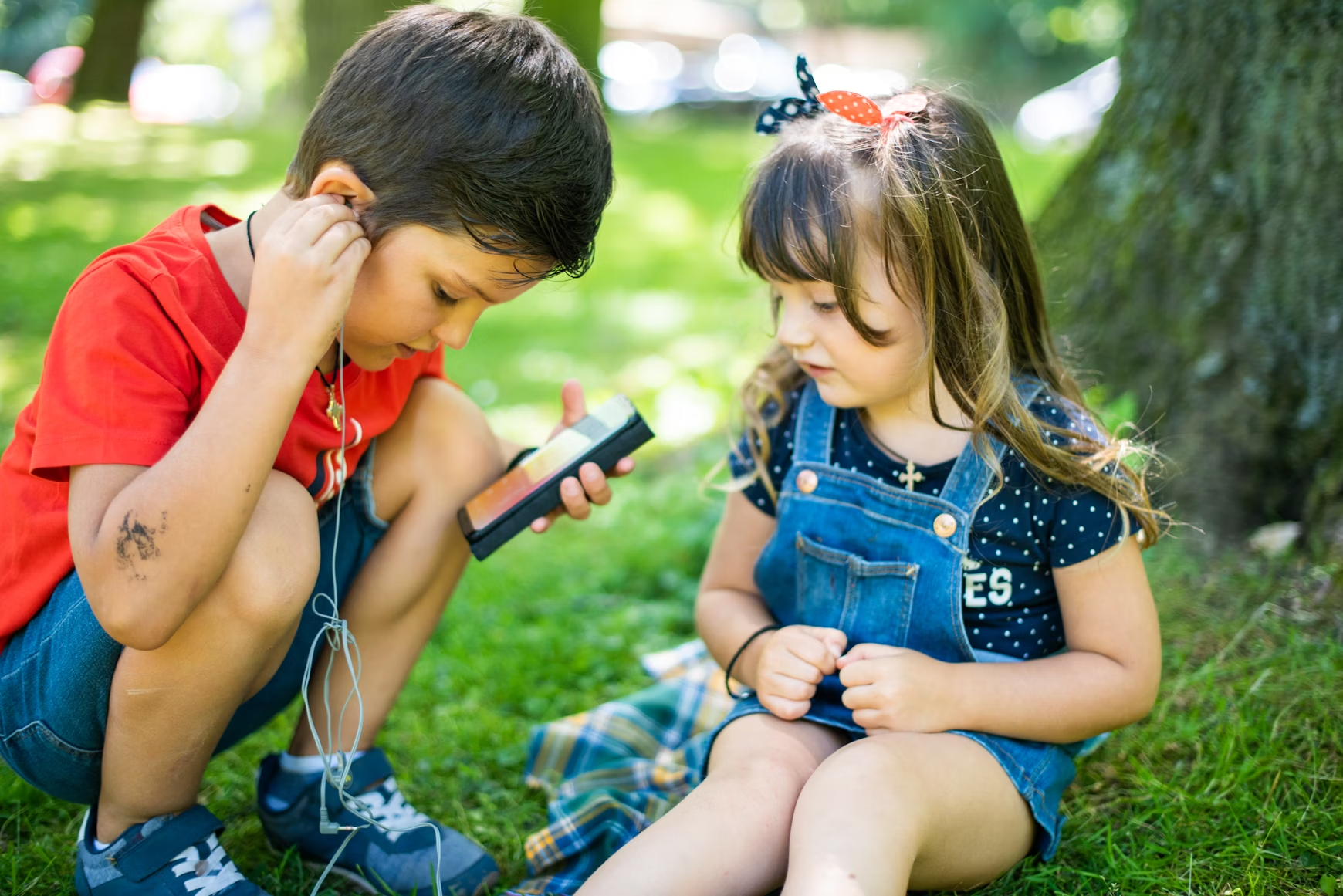
Two kids sitting on grass, sharing earphones and a phone
Image Source: Unsplash

5. Talk Openly About Values—With Real Examples

Your child will mirror the values you demonstrate in the world. Link lofty ideals to everyday choices.

  • Honesty in action. “We’re turning in this lost wallet because its owner is probably worried.”
  • Respect for spaces. “Let’s pick up this litter; we share this park with everyone.”
  • Resilience check-in. After a tough test, ask, “What did you learn that will help next time?”

Concrete moments anchor values far better than abstract lectures.

Small Steps, Big Impact

Character is carved in the mundane: how you handle spilled juice, the words you use when traffic stalls, the grace you show after your own mistakes. Perfection isn’t required—consistent presence and intentional choices are. Pick one small step today—maybe letting your child rinse dishes or adding a gratitude leaf—and watch it ripple outward as your child’s inner compass takes shape.

How do you encourage character-building at home? Share your tips in the comments!

Read More

  • Is Gentle Parenting Creating Entitled Kids—or Building Strong Character?
  • 7 Tips for Patience With an Extremely Active Child

Samantha Warren
Samantha

Samantha Warren is a holistic marketing strategist with 8+ years of experience partnering with startups, Fortune 500 companies, and everything in between. With an entrepreneurial mindset, she excels at shaping brand narratives through data-driven, creative content. When she’s not working, Samantha loves to travel and draws inspiration from her trips to Thailand, Spain, Costa Rica, and beyond.

Filed Under: Parenting Tagged With: character development, child development, child independence, empathy in children, parenting tips, values education | Parenting

8 Irresponsible Purchases Parents Are Making For Their Children

April 25, 2025 | Leave a Comment

8 Irresponsible Purchases Parents Are Making For Their Children
Image Source: Pexels

As parents, we all want to give our children the best lives possible. If you didn’t have a lot growing up, you probably don’t want your kids to experience the disappointment of going without. However, it’s important not to go overboard and make irresponsible purchases for your children. Kids don’t need luxuries like designer goods or in-app purchases to thrive. In fact, overindulging your kids can spoil them and make them less grateful. Here are 8 irresponsible purchases you should consider skipping.

1. Designer Goods 

Designer Goods
Image Source: Pexels

If your child doesn’t wear a uniform to school, he or she may feel pressure to keep up with other kids and wear designer clothes. Your kids probably think they need to rock Air Jordan sneakers or expensive Lululemon gear to become popular. 

But buying your children pricey clothes is teaching them the wrong lesson—that they have to dress to impress to be accepted. It may be better to skip this irresponsible purchase and tell your kids that they have great personalities, regardless of what they’re wearing. 

2. In-App Purchases

In-App Purchases
Image Source: Pexels

Many games that are popular with kids, including Roblox and Fortnite, allow kids to make in-app purchases to upgrade their character. These digital points can be surprisingly pricey. According to Statista, 40% of families spend between $10 and $100 per month on in-app purchases. 

Although gaming can boost creative expression, it’s important to limit your child’s screen time and in-app purchases. Games can feel real to kids and become kind of addictive. If your child has trouble putting the controller down when asked or makes excessive in-app purchases, it’s probably time to cut back on screens. 

3. iPhones 

iPhones
Image Source: Pexels

iPhones tend to be very expensive, especially if you purchase a brand new one from Apple. For example, the iPhone 16 Pro model starts at about $999. Kids are often more likely to lose or mistreat their belongings than adults. 

If your child is getting their first phone, it may be better to start with a cheaper brand while they learn digital responsibility. Once they prove that they can handle their new device, you could discuss upgrading their phone as a Christmas or birthday gift. Or better yet, ask your child to contribute some of their savings to the purchase price of the phone. 

4. Junk Food 

Junk Food
Image Source: Pexels

Kids of all ages love sugary snacks and junk food. Your kids probably beg for treats like soda and cereal at the store. Although it’s tempting to give in, holding firm can help safeguard your children’s health. 

We all know that kids would eat a big bowl of ice cream for dinner if allowed. But they usually don’t understand the negative consequences of eating too much junk food, such as lack of energy, poor academic performance, and weight gain. Even if your kids don’t like vegetables, it’s important to keep serving them a balanced diet to set them up for success. 

5. Pets

Pets
Image Source: Pexels

Pets can teach children responsibility, but parents often end up doing all of the work. Kids who swear they’ll walk the dog before you adopt them often stop after a few weeks when the novelty starts to wear off. While there is no shortage of child-appropriate pets, from dogs and cats to fish, gerbils, and small reptiles, each come with their own unique needs. 

When looking at adding a pet to your family, make sure you think about which type of pet will fit with your family’s lifestyle the best. While fish aren’t snuggly or playful in the same way a dog is, they also need much less active care and attention, making them a better fit for families who are out of the house most of the day.

6. Beauty Products 

Beauty Products
Image Source: Pexels

Children have become enamored with beauty products after seeing them on social media. Kids as young as six have skincare routines, even though all they need is a gentle soap or lotion at most. 

Children have thinner, more sensitive skin than adults, so using these “anti-aging” or “brightening” products can cause facial irritation and breakouts. Allowing your kids to use makeup at a young age can also cause skin issues like rashes and redness. 

7. Too Many Toys 

Too Many Toys
Image Source: Pexels

If your kids ask for new toys constantly and you always say yes, you’ll amass a giant pile of action figures. Plus, when kids have too many toys, they may get overwhelmed and have a hard time playing with everything. Being mindful of the requests you say “yes” to can help you avoid this problem. 

Try to opt for items that offer high replayability value and are different from ones your child already has. Kids get lots of toys for birthdays and holidays, so refrain from buying them anything new as those dates approach. 

8. Huge, Expensive Birthday Parties

Huge, Expensive Birthday Parties
Image Source: Pexels

Do you remember watching My Super Sweet 16 growing up? The teens on the show had generous parents who threw them huge parties and gave them lavish gifts. However, many of the teens seemed dissatisfied and entitled. 

Although you want to celebrate your child on their birthday, spoiling them with over-the-top parties and presents may not be the right approach. Going overboard and splurging on balloon arches and pony rides could give your kids unrealistic expectations and make them less grateful overall. 

Is there anything you won’t buy for your kids for their own good? Share your thoughts in the comments.

Read More:

Should People Be Fined for Having Too Many Kids?

Do You Need Kids To Live a “Fulfilled” Life?

Vicky Monroe headshot
Vicky Monroe

Vicky Monroe is a freelance personal finance writer who enjoys learning about and discussing the psychology of money. In her free time, she loves to cook and tackle DIY projects.

Filed Under: Money and Finances Tagged With: Gifts, money, Spending

« Previous Page
Next Page »
  • Facebook
  • Pinterest
  • RSS
  • Twitter
Best Parenting Blogs

Most Popular

Baby Girl

12 “Grandma” Baby Names That Are Suddenly Cool Again

Evan Morgan
Baby

9 Baby Names That Sound Rare Without Being Hard to Spell

Evan Morgan
Target Store

Choking Incident Prompts Recall of 49,000 Target Gigglescape “Under the Sea” Popping Toys

Evan Morgan
Frustrated Girl

Why Some Students on the Spectrum Are Labeled With ODD

Evan Morgan
Coke Bottles

12 Things Kids Took to School in the ’70s That Would Never Be Allowed Today

Evan Morgan

All content on Kids Ain’t Cheap is for entertainment purposes only. By reading this blog, you agree that Kids Ain’t Cheap is not responsible for any actions taken after reading this blog. For the full disclaimer, see our privacy policy.

Please note that Kids Ain’t Cheap has financial relationships with some of the merchants mentioned here. Kids Ain’t Cheap is funded by banner advertising, commission sales and search optimization consulting.

Copyright © 2006–2026 | District Media | All Rights Reserved | Privacy Policy

Copyright © 2026 Runway Pro Theme by Viva la Violette