• Home
  • About Us
  • Toolkit
  • Archives
  • Advertise
  • Privacy Policy

Kids Ain't Cheap

But They Sure Are Worth It

  • Parenting
    • Baby Stuff
    • Books and Reading
      • Aesops Fables
      • Comic Books
    • Education
    • Family Time
    • Green Living
    • Growing Up
    • Healthy Living & Eating
    • Holidays
    • Parenting
    • Random Musings
    • Shopping
    • Stuff to Do
  • Money
  • Product Reviews
    • Books and Magazines
    • Discount Sites
    • Furniture
    • House Keeping
    • Reviews News
    • Toys and Games
  • Contact Us
  • Our Editorial Commitment
  • Search

8 Reasons Why “Free‑Range Parenting” Might Be Endangering Your Child

April 22, 2025 | Leave a Comment

symbolizing free-range parenting risks.
Image Source: Unsplash

Letting kids roam the neighborhood, solve problems solo, and learn from unfiltered experience sounds empowering—and in measured doses, it can be. Yet an “all‑in” free‑range approach can also place children in situations they’re not developmentally ready to handle. Recent headlines, research, and even court cases show there are real downsides when freedom isn’t paired with age‑appropriate safeguards. Before you hand your eight‑year‑old the house key and shrug, consider these eight critical risks—and what to do instead.

1. Real‑World Hazards With Limited Supervision

Free‑range parenting encourages minimal oversight so kids can build resilience. But without an adult nearby, children are more vulnerable to injuries, traffic accidents, or unsafe strangers. A 2023 review in Pediatrics noted that unsupervised elementary‑age kids are three times more likely to need emergency care for preventable accidents than peers who had a nearby caregiver. 

2. Legal Trouble and Charges of Neglect

What feels like healthy independence to you may violate your state’s child neglect statutes. In 2022 a Maryland couple faced a CPS investigation for letting their ten‑ and six‑year‑olds walk home from a park alone—perfectly legal in some places, reportable neglect in others. The legal patchwork means free‑range families can unintentionally invite police or child‑protective scrutiny.

3. Overestimating a Child’s Readiness

Even the most emotionally mature eight‑year‑old still makes decisions with a brain that’s only part‑built for risk calculation. The prefrontal cortex—responsible for impulse control and weighing consequences—doesn’t finish wiring until the mid‑twenties.

That gap means kids can recite safety rules flawlessly at the kitchen table yet freeze or choose poorly when a real‑world curveball hits: a loose dog charges, a stranger offers help, traffic patterns change.

Free‑range ideals often assume “common sense” kicks in as soon as a child shows early confidence. In reality, judgment under stress is the very last skill to mature. Giving unsupervised bike routes, online access, or sibling‑sitting duties too soon can flood a child’s nervous system, turning an exciting challenge into panic.

When stress spikes, even practiced guidelines blur, and kids default to emotion‑driven reactions—run, hide, comply—rather than the logical steps they rehearsed with you.

4. Neighborhood Design and Community Trust

A leafy cul‑de‑sac differs drastically from a busy urban corridor. Fewer sidewalks, high‑traffic intersections, or low community cohesion raise real safety stakes.

Parents in walkable, socially connected neighborhoods are more likely to allow independent mobility than parents in high‑traffic zones. Geography matters—free‑range ideals must bend to the built environment.

5. Decline of the “It Takes a Village” Culture

Boomers recall neighbors who knew every kid by name; today many families don’t know who lives two doors down. With fewer watchful eyes, children truly are more alone—reducing the informal safety net free‑range parenting once relied on.

holding a smartphone with digital icons suggesting risk.
Image Source: Unsplash

6. Digital Dangers Increase With Physical Freedom

A child mature enough to bike to the park alone probably also owns a phone. Unmonitored devices open doors to cyberbullying, predatory messaging, and addictive content. Offline independence must be matched with robust digital boundaries.

7. Confusing Autonomy With Emotional Distance

Freedom shouldn’t equal detachment. When parents skip regular check‑ins, kids may misinterpret independence as indifference. Children who feel “cut loose” can internalize anxiety rather than confidence, especially if they’re sensitive or prone to worry. Maintain open channels—ask where they went, what felt tricky, and how they solved problems.

8. Limited Self‑Advocacy in True Emergencies

If a stranger offers help—or harm—does your child know how to react? Free‑range advocates teach scripts like “No, thank you” or memorizing addresses, but real crises require composure many youngsters don’t yet possess. First practice calling 911, then role‑play asking a store clerk for help, then extend travel distance. Independence is a ladder, not a leap.

Finding a Healthy Middle Ground

  1. Check Local Laws before allowing solo outings; ignorance won’t shield you from legal fallout.
  2. Gradual Freedom works best—start with supervised “shadow” walks a half block ahead, progressing to short solo trips.
  3. Equip, Then Release: Teach road rules, stranger‑danger scripts, and digital‑device boundaries before granting new privileges.
  4. Community Connections: Introduce kids to trusted neighbors and store owners who can act as safe points if trouble arises.
  5. Regular Debriefs: After each independent outing, ask what went well and what felt scary to reinforce critical‑thinking skills.

Balanced independence cultivates resilience and keeps children safe. By layering age‑appropriate supervision, legal awareness, and ongoing dialogue, parents can nurture confident explorers without exposing them to unnecessary danger.

Have you blended freedom and safety in your family? Share your best tips—or cautionary tales—in the comments!

Read More

  • Clothes From Shein and Temu Could Be Hazardous To Your Child’s Health
  • 3 Essential Tips for Finding the Best Family Neighborhood to Raise Kids

Samantha Warren
Samantha

Samantha Warren is a holistic marketing strategist with 8+ years of experience partnering with startups, Fortune 500 companies, and everything in between. With an entrepreneurial mindset, she excels at shaping brand narratives through data-driven, creative content. When she’s not working, Samantha loves to travel and draws inspiration from her trips to Thailand, Spain, Costa Rica, and beyond.


Filed Under: Parenting Tagged With: child safety, digital safety, free‑range parenting, legal issues, modern parenting, parenting risks, unsupervised children

Why “Old Lady” Names Are Back—And People Are Loving It

April 22, 2025 | Leave a Comment

A collage of vintage names in varying fonts
Image Source: Unsplash

Not long ago, names like Dorothy or Ethel summoned images of bingo halls rather than baby monitors. Yet here we are in 2025, watching these so‑called “old‑lady” names climb baby‑name lists and fill preschool cubbies.

What sparked this shift from ultra‑modern monikers to retro‑refined originals? It turns out there’s something irresistibly timeless about giving a child a name that brims with history, heart, and a hint of grandma’s cozy charm.

1. Vintage Names Are (Really) Trending Again

Scroll any national registry and you’ll spot Ada, Agnes, and Ivy inching upward. According to Netmums’ annual baby‑name review, searches for classic girl names jumped 38 percent in the last year, with Ada, Alice, and Amelia leading the charge. Pop culture plays a huge role—think Wednesday on Netflix reviving Enid, or period dramas casting elegant characters named Violet and Sybil. Parents craving both familiarity and freshness find that vintage baby names fit the bill: they’re recognizable yet rarely duplicated in the average kindergarten class.

2. Celebrity Choices Shine a Spotlight

When celebrities choose traditional names, the rest of us take notice. Blake Lively and Ryan Reynolds opted for Betty (honoring Reynolds’s late father), while Lily Allen welcomed Ethel back into the limelight. Even British royal circles favor the retro vibe: think Archie Harrison and Lilibet Diana. These highly publicized picks prove that “old” doesn’t equal outdated— it equals enduring. And if Hollywood’s A‑list can resurrect classics, everyday parents feel empowered to do the same.

3. Rare Beauties Finally Getting Their Due

Not every parent wants a name ranked in the top 20. Enter hidden gems like Constance, Opal, and Mabel—names steeped in history yet still distinctive. Mabel rose more than 200 places on the U.S. Social Security list between 2020 and 2024, thanks in part to social media accounts that curate “storybook” or “cottage‑core” baby‑name boards. These sites showcase lyrical, underused classics that strike the perfect balance between unique and time‑tested.

4. Pop‑Culture Nostalgia Is Everywhere

From vinyl records to “grandmillennial” décor, nostalgia reigns. TikTok brims with “old‑lady name” compilations featuring sleeping newborns tagged #Eloise and #Maxine. Even gaming and fashion embrace retro aesthetics, so it’s no surprise parents want names that echo simpler times. After years of pandemic uncertainty, a vintage name can feel comforting—like wrapping your newborn in a handmade quilt passed down through generations.

5. Old Names Offer Modern Versatility

A name such as Ruby feels equally at home on a playground and in a boardroom. Many classic names also come with playful nicknames—Evangeline becomes Evie; Josephine turns into Jo or Posey. This built‑in flexibility lets children decide how they wish to present themselves later in life. Meanwhile, vintage middle names (Louise, Pearl) pair beautifully with contemporary first names, giving parents endless mix‑and‑match options.

A vintage black-and-white family portrait showing two men standing behind three women, with two young children (one a baby) seated in front, posed outdoors near a house with overgrown foliage
Image Source: Unsplash

6. Family History Feels More Important Than Ever

DNA kits and genealogy apps have turned many millennials into armchair historians. Reviving a great‑grandmother’s name isn’t merely trendy; it’s a tangible bridge to heritage. Parents find joy—and sometimes healing—in honoring ancestors while offering children a built‑in story about where they come from.

7. Gender‑Neutral Classics Expand Choices

Names like Florence and Frances are traditionally feminine, but plenty of vintage picks fall into gender‑neutral territory: Charlie, Sidney, Ellis, and August are soaring for both boys and girls. This flexibility resonates with parents seeking names that allow children room to define themselves beyond traditional gender boxes.

8. Eco‑Friendly Vibes

Nature‑infused classics—Iris, Hazel, Olive—carry botanical charm without feeling invented. As sustainability enters mainstream parenting (cloth diapers, handmade toys), nature‑themed vintage names dovetail with an eco‑minded lifestyle, signaling respect for both history and the environment.

9. Built‑In Nicknames Add Warmth

Old‑school diminutives—Millie for Mildred, Tilly for Matilda, Lottie for Charlotte—inject casual warmth while leaving the formal version ready for resumes and diplomas. Parents appreciate having both playful and professional options at the ready.

10. They Simply Feel Timeless

Trends ebb and flow, but true classics weather generational shifts. A baby Eleanor in 1925 could become a centenarian Ellie today, her name aging gracefully alongside her. Parents choosing vintage baby names bank on that longevity—ensuring their child’s identity won’t feel “dated” in a decade.

Choosing a Name With a Story

Ultimately, selecting a vintage baby name is less about following a trend and more about storytelling. Each resurrected classic—Agatha, Hattie, Rosalind—brings with it a legacy, whether familial or cultural. In a fast‑paced digital age, these names ground us, reminding families of their roots while allowing new chapters to unfold.

What “old lady” or vintage baby names are on your shortlist? Share your favorites in the comments!

Read More

  • Why Some Parents Regret Choosing a Unique Name
  • 7 Names That Used to Be Popular—But Are Now Fading Fast
Samantha Warren
Samantha

Samantha Warren is a holistic marketing strategist with 8+ years of experience partnering with startups, Fortune 500 companies, and everything in between. With an entrepreneurial mindset, she excels at shaping brand narratives through data-driven, creative content. When she’s not working, Samantha loves to travel and draws inspiration from her trips to Thailand, Spain, Costa Rica, and beyond.

Filed Under: Parenting Tagged With: baby girl names, baby name trends, family naming tips, old lady names, Parenting, vintage baby names

7 Reasons You Shouldn’t Waste Money on Private Schools

April 22, 2025 | Leave a Comment

Empty classroom with rows of desks facing a chalkboard.
Image Source: Unsplash

Many parents assume a hefty tuition bill guarantees a superior education. Yet rising tuition and widening equity gaps raise a crucial question: is private school really the smart investment? Below are seven evidence‑based reasons you might want to keep that money in your pocket.

1. The Cost Is Sky‑High—And Often Unjustified

The Cost Is Sky‑High—And Often Unjustified

Annual tuition at a private K‑12 school can top $20,000—and that figure rarely accounts for required uniforms, technology fees, mandatory fundraising, or the travel costs tied to sports and debate tournaments.

When analysts control for factors such as parental income, educational attainment, and neighborhood resources, the difference in long‑term earnings between private‑ and public‑school graduates largely disappears. In other words, the premium you pay up front doesn’t necessarily translate into higher wages down the line.

Consider what else $20,000 per year could do: build a robust college fund, finance tutoring in a child’s weakest subject, or underwrite family experiences that nurture curiosity outside the classroom.

2. Limited Diversity Restricts Growth

Many private schools draw from a narrower socioeconomic bracket, meaning students often see fewer cultural perspectives in day‑to‑day interactions. A more homogeneous environment can unintentionally limit empathy, stifle problem‑solving skills, and reduce the ability to collaborate across cultural lines—abilities that modern employers prize.

By contrast, most public schools reflect their surrounding communities, exposing students to a richer tapestry of languages, traditions, and viewpoints. That daily immersion in difference fosters open‑mindedness, resilience, and the social agility necessary in a global economy.

Data summarized by Education Week shows public‑school students interact with a more diverse peer group, boosting social skills employers increasingly value.

3. Social Circles Can Be Restrictive

Tuition‑driven communities sometimes foster cliques around status or wealth, leaving kids less prepared to relate beyond their immediate bubble. In contrast, public‑school students navigate a wider range of personalities—experience that translates into stronger adaptability in college and the workplace.

4. Public Schools Suffer When Families Opt Out

When involved families leave, districts lose both funding and engaged volunteers. Over time, that siphons resources from neighborhood schools and widens opportunity gaps. Choosing public education is a vote of support for your entire community.

5. Inequality Gets Even Worse

Smaller classes and cutting‑edge labs at private schools aren’t universally accessible. When some families can “buy” advantages, the achievement gap widens. Sociologists warn that such disparities erode social cohesion and perpetuate cycles of privilege.

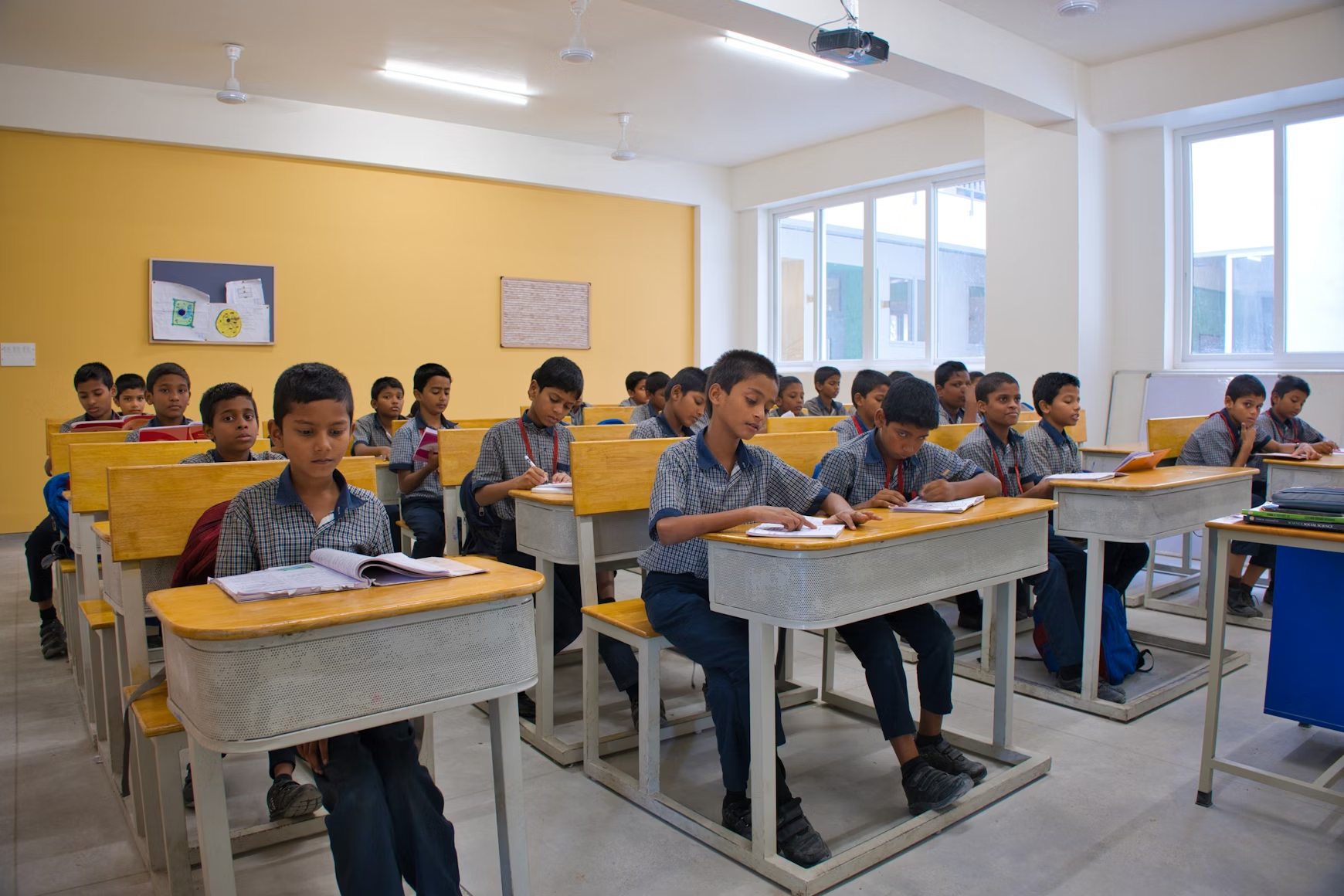
Students in uniform seated at desks, focused on writing in a classroom.
Image Source: Unsplash

6. Enrollment Isn’t Guaranteed—Stress Isn’t Cheap

Private schools cap class sizes and maintain waitlists, turning admission into a competitive, stressful process. Even after acceptance, families face ongoing performance pressure to justify the investment—pressure that can drain emotional and financial reserves alike.

7. Public Schools Offer Surprising Advantages

Gifted programs, Advanced Placement courses, and free extracurriculars abound in many districts. Studies tracking college outcomes find that motivated public‑school students often earn scholarships and thrive at top universities—proof that success hinges more on support at home than on a pricey campus.

What Your Child Really Needs Is You

No single school model fits every family. But stretching finances for prestige can introduce its own set of stresses—without guaranteeing better results. Classroom resources matter, yet the biggest driver of student success is still engaged, encouraging caregivers. Before committing to a sky‑high private school cost, consider whether your child might gain just as much—in academics and in perspective—within your local public system.

Choosing between public and private? Share your thoughts below; other parents will appreciate your insight.

Read More

  • Year-round Money Saving and Fun Activites for Parents and Kids
  • Saving Money on Big Family Events
Samantha Warren
Samantha

Samantha Warren is a holistic marketing strategist with 8+ years of experience partnering with startups, Fortune 500 companies, and everything in between. With an entrepreneurial mindset, she excels at shaping brand narratives through data-driven, creative content. When she’s not working, Samantha loves to travel and draws inspiration from her trips to Thailand, Spain, Costa Rica, and beyond.
Filed Under: Parenting Tagged With: child education, education, family budgeting | Parenting, parenting advice, private school cost, public vs. private school, school choice

Are School Lunches Healthier Than What You Pack? The Answer May Surprise You

April 22, 2025 | Leave a Comment

Schoolchildren eating lunch, illustrating the debate on healthy meal choices.
Image Source: Unsplash

If you’ve ever hesitated between packing lunch or letting your child eat in the cafeteria, you’re not alone. Many parents assume a homemade meal is always healthier—but today’s federally regulated school lunches sometimes come out ahead. Here’s a look at why the cafeteria tray may beat the lunchbox more often than you’d guess.

School Lunches Follow Strict Nutrition Standards

Meals served through the National School Lunch Program are designed to cover roughly one‑third of a child’s daily nutrient requirements. Regulations mandate a minimum amount of fruits, vegetables, whole grains, and lean proteins while capping sodium and saturated fat. Cafeterias must also rotate colorful produce and offer low‑fat or fat‑free milk.

By contrast, a packed meal is limited only by parental diligence and morning time constraints. If you’re running late, it’s easy to default to cheese crackers, processed deli meat, or a single piece of fruit—choices that rarely meet the comprehensive standards set for school kitchens.

Packed Lunches Often Contain More Sugar

Convenience items like juice boxes, cookies, and fruit snacks slip into lunch bags easily. In one large study comparing cafeteria and home‑brought meals, researchers found packed lunches averaged significantly higher amounts of added sugar and dessert items—a difference linked to increased overall calorie intake.

Fruits and Vegetables: Cafeterias Have the Edge

Most districts require students to put at least one fruit or vegetable on the tray. That simple rule works: students who regularly choose school meals eat more produce than peers with packed lunches, according to peer‑reviewed data published in the Journal of Nutrition Education and Behavior.

Many districts employ a simple but effective rule: every student must select at least one fruit or vegetable before reaching the cashier.

That policy, combined with eye‑catching salad bars and pre‑cut produce cups, significantly increases the odds that kids will actually eat their greens (or reds, oranges, and purples). In contrast, the carrot sticks nestled beside a homemade sandwich often come back home untouched, wilted by afternoon. Over time, the cafeteria’s mandatory produce approach adds up to a greater overall intake of fiber, vitamins, and disease‑fighting antioxidants.

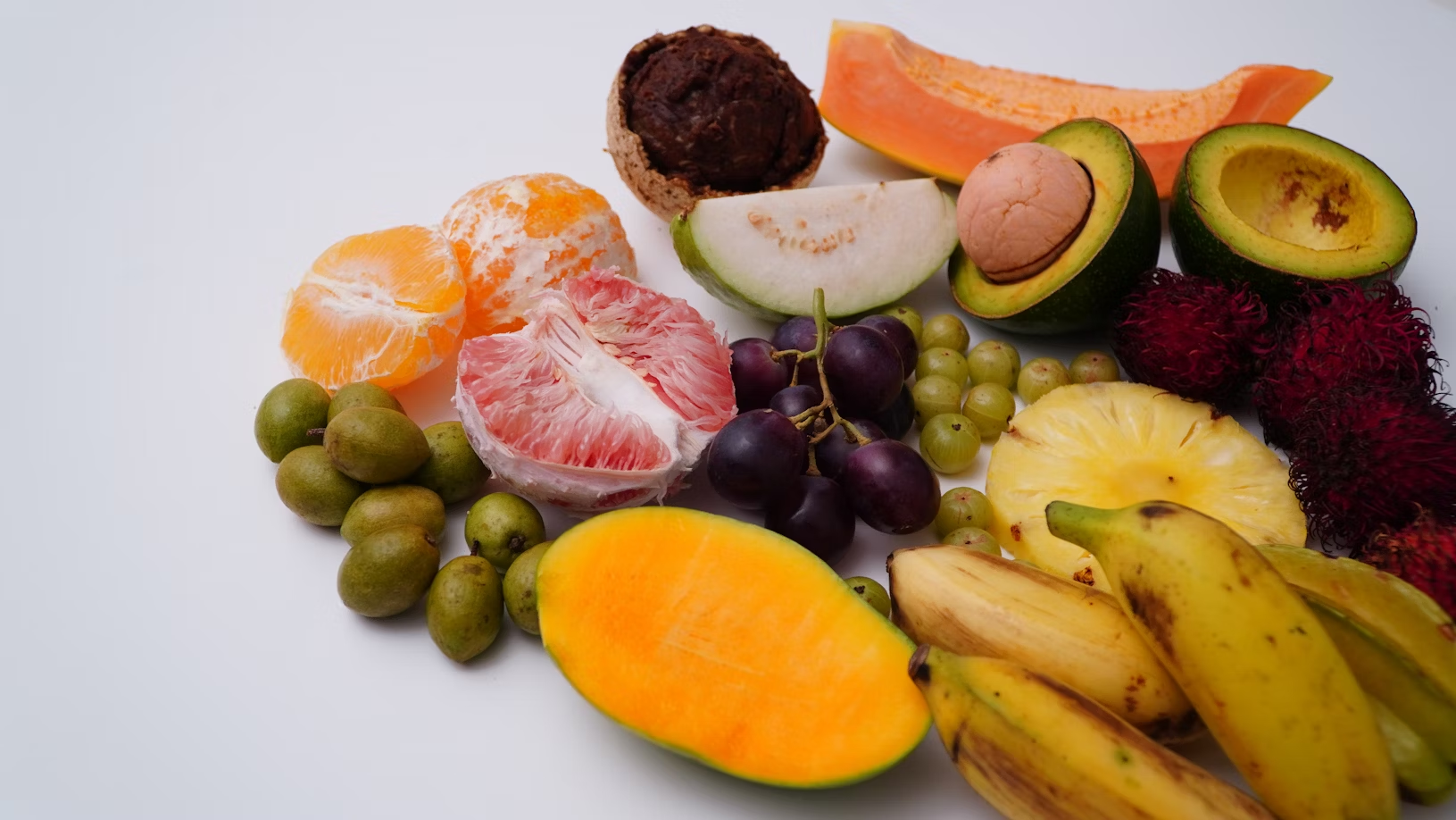
Colorful fruits providing fiber, vitamins, and fats.
Image Source: Unsplash

Fiber, Vitamins, and Fat: A Nutrient Check

On average, school lunches deliver more fiber, calcium, and vitamin A while containing less saturated fat than the typical packed alternative. Unless parents plan carefully—think whole‑grain bread, fresh produce, and low‑fat dairy—lunchbox nutrition can fall short.

Cost Isn’t Always What It Seems

At first glance, packing may look cheaper, but rising grocery prices narrow the gap. When researchers at the School Nutrition Association compared actual ingredient costs and container expenses, they found the price difference was minimal—and school meals offered higher nutrient density per dollar.

Many parents assume packing saves money, but rising grocery costs, single‑serve packaging, and the hidden expense of reusable containers can quickly erode perceived savings. Analyses that factor in both ingredients and packaging reveal a surprisingly narrow price gap, and in some cases, school lunches actually offer more nutrients per dollar. For families eligible for free or reduced‑price meals, the cafeteria option can be markedly cheaper without sacrificing quality.

How to Decide What’s Best for Your Family

  1. Mix and match. Let kids buy lunch on days the menu features balanced favorites, and pack when you want more control.
  2. Upgrade the lunchbox. If you do pack, aim for at least one fruit, one vegetable, and a whole‑grain main item each day.
  3. Check the menu together. Reviewing options with your child encourages mindful choices—whether from home or school.

The bottom line: school lunches are often, but not always, the healthier option. A quick look at what’s on the tray—and what’s going in the lunchbox—can help you make the best call for your child.

What are your thoughts regarding your child nutriotional habits? Let us know in the comments below!

Read More

  • 15 Nostalgic Snacks and Treats We Wish Would Make a Comeback
  • 4 Strategies to Encourage Healthy Eating Habits in Kids
Samantha Warren
Samantha

Samantha Warren is a holistic marketing strategist with 8+ years of experience partnering with startups, Fortune 500 companies, and everything in between. With an entrepreneurial mindset, she excels at shaping brand narratives through data-driven, creative content. When she’s not working, Samantha loves to travel and draws inspiration from her trips to Thailand, Spain, Costa Rica, and beyond.

Filed Under: Parenting Tagged With: child nutrition, healthy eating at school, lunch tips for parents, packed lunch comparison, parenting strategies | Parenting, school lunches

“Mom Wine Culture” Isn’t Funny Anymore—It Might Be Dangerous

April 22, 2025 | Leave a Comment

People clinking glasses of red wine together in a celebratory toast.
Image Source: Unsplash

Glittery glasses labeled Mommy Juice. Instagram memes about needing Chardonnay to survive math homework. What began as tongue‑in‑cheek solidarity has quietly morphed into a normalized coping mechanism—and high‑risk drinking among women is climbing fast. Below, we unpack why the joke has gone too far and how parents can reclaim healthier stress‑relief strategies.

High‑Risk Drinking Among Women Is Skyrocketing

A landmark study in JAMA Psychiatry found high‑risk drinking among women jumped 58 percent between 2001 and 2013. Problem drinking rose more than 80 percent in the same window. These spikes parallel the rise of social‑media humor celebrating daily “wine o’clock.” While correlation isn’t causation, the timing signals a cultural shift worth examining.

The Culture Normalizes Binge Drinking

“Mom wine” jokes glamorize heavy pours and portray caregivers as perfectly functional—even heroic—while drinking. Addiction specialists warn that hiding behind humor delays recognition of unhealthy patterns and makes it harder to seek help before dependency sets in.

Alcohol as a Coping Strategy Worsens Mental Health

Self‑medicating with alcohol may provide a quick mood lift, but the science is clear: over time, it compounds exhaustion, anxiety, and depression. Alcohol fragments your sleep cycle, spikes next‑day cortisol, and disrupts hormones—fueling the very stress you hoped to escape.

The result is a vicious loop: drink to relax → sleep poorly → feel wired and anxious → reach for another glass.

Kids Notice More Than We Think

Children internalize how adults handle stress. Frequent jokes about “needing wine” risk teaching them that alcohol is essential for coping with everyday life. Long‑term research links parental drinking patterns to greater odds that children will experiment earlier—and more heavily—with alcohol themselves.

Bartender spritzing citrus over a cocktail in dramatic lighting.
Image Source: Unsplash

Social Media and Targeted Marketing Fan the Flames

Alcohol companies market pastel cans, “slim” cocktails, and hashtags like #MomJuice to position drinking as a reward for maternal sacrifice. The result? A feedback loop where marketing, memes, and peer pressure frame alcohol as both fashionable and harmless.

Recognizing When Wine‑O’Clock Crosses the Line

Ask yourself:

  1. Frequency: Do wine jokes (and drinks) show up nightly?
  2. Quantity: Are pours creeping larger, or is that “one glass” actually half a bottle?
  3. Mood Dependence: Does a tough day automatically trigger the thought I deserve a drink?
  4. Secrecy: Are you hiding bottles, under‑reporting consumption, or bristling at concern from loved ones?
  5. Functioning: Are morning headaches, irritability, or foggy focus impacting work or parenting?

If you nodded to several points, it might be time to reset your relationship with alcohol.

Why Women Are Uniquely Vulnerable

  • Biology: Women metabolize alcohol differently; the same number of drinks raises blood‑alcohol levels faster and causes more liver and heart damage.
  • Marketing: Brands pitch low‑calorie “health‑conscious” cocktails, blurring the line between wellness and drinking culture.
  • Mental Load: Juggling childcare, careers, and household management heightens chronic stress—fertile ground for habitual coping behaviors.
  • Stigma of Help‑Seeking: Social pressure to “do it all” keeps many mothers from admitting they’re struggling.

Healthier Ways to De‑Stress

Swap the Wine For How It Helps
10‑minute walk or stretchLowers cortisol and boosts mood naturally
Group text with honest ventingProvides connection without hangovers
Guided meditation appCalms racing thoughts in 5 minutes
Mocktail or herbal tea ritualKeeps the “pause and sip” habit minus the alcohol
Short therapy check‑insOffers professional tools to manage overwhelm

Rewriting the Narrative

“Mom wine culture” may have started as harmless humor, but normalizing alcohol as the default coping tool risks real harm. True self‑care comes from rest, supportive community, and honest conversations—not the bottom of a glass. By modeling healthier habits, parents protect both their own well‑being and the example they set for their children.

Have you felt pressured to join in #MommyJuice jokes? What sober‑friendly strategies help you unwind? Share your story in the comments—let’s swap real support for punchlines.

Read More

  • The Old Woman and The Wine Jar; An Aesop’s Fable
  • 13 Parenting Tips from Cultures Around the World

Samantha Warren
Samantha

Samantha Warren is a holistic marketing strategist with 8+ years of experience partnering with startups, Fortune 500 companies, and everything in between. With an entrepreneurial mindset, she excels at shaping brand narratives through data-driven, creative content. When she’s not working, Samantha loves to travel and draws inspiration from her trips to Thailand, Spain, Costa Rica, and beyond.
Filed Under: Parenting Tagged With: alcohol misuse, mom wine culture, motherhood and mental health, parenting habits | Parenting, parenting stress, wellness

Should Fathers Get Equal Paternity Leave? Here’s What Men Are Saying

April 22, 2025 | Leave a Comment

Shirtless father holding and smiling at his baby.
Image Source: Unsplash

Maternity leave has long been the default conversation around newborn care—but modern dads are raising a new question: Why not equal paternity leave?

More fathers are speaking out about the benefits, the stigma, and the urgent need for change.

Paternity Leave Builds Strong Bonds From Day One

Studies show babies whose fathers take leave enjoy stronger emotional security and healthier cognitive development. Neuroscientists even note measurable changes in dads’ brain activity—greater empathy and faster responsiveness—after dedicated time at home.

Time away from work gives fathers the chance to master diaper duty, soothe midnight cries, and learn their baby’s unique rhythms—skills that translate into lifelong confidence.

The research above links dedicated dad‑time with:

  • Secure attachment: Babies respond to multiple caregivers, easing separation anxiety later.
  • Faster language development: Two distinct caregiving styles double the infant’s exposure to vocabulary and intonation.
  • Healthier stress responses: Regular skin‑to‑skin contact with both parents steadies a newborn’s heart rate and cortisol levels.

Neuroscientists even observe structural changes in dads’ brains—areas tied to empathy light up after extended time at home, sharpening responsiveness and emotional attunement.

Cultural Stigma Still Holds Many Fathers Back

Paternity leave policies exist in many countries around the world (including Japan), but outdated expectations of the “primary breadwinner” keep men at their desks.

Common blockers include:

  • Workplace optics: Fear of seeming less ambitious or indispensable.
  • Financial worries: Bonuses, overtime, and promotions may feel at risk.
  • Peer pressure: Colleagues silently equate long hours with loyalty.

Changing these norms requires vocal leadership—when senior managers take leave, they send a clear signal that caregiving is career‑compatible.

Man in a suit standing alone, looking at a wall display in a hallway.
Image Source: Unsplash

Men Want Leave—But Fear Career Penalties

Many fathers hesitate to take leave, worrying about lost income or being viewed as less committed at work. Until companies normalize paternity leave, dads remain caught between family and career.

Employers that normalize paternity leave reap measurable gains in retention and morale.

Equal Leave Challenges Gender Norms at Home

When dads take meaningful time off, household dynamics rebalance:

  • Future family planning feels less daunting when both caregivers can step back with confidence.
  • Mothers return to work sooner and with less stress.
  • Children witness shared responsibility, shaping attitudes about gender equality.

U.S. Policy Lags Behind Public Opinion

Only a handful of U.S. states mandate paid paternity leave, and most private plans offer mere days. Yet national polls now favor about 10 weeks of paid leave for both parents. Momentum for federal reform is building fast.

How Companies Can Lead the Way

  1. Make policies explicit and easy to find. Hidden handbooks discourage uptake.
  2. Offer coaching for managers on handling coverage plans and welcoming returning parents.
  3. Highlight success stories of dads who advanced after taking leave.
  4. Provide financial top‑ups that close the gap between statutory pay and full salary.
  5. Normalize flexible transitions—gradual return schedules, remote days, and phased workloads.

When leadership treats paternity leave as a strategic investment, participation rises quickly.

Tips for Expectant Dads Planning Their Leave

  • Start early. Notify HR in writing as soon as possible to lock in dates.
  • Draft a coverage plan. Document projects, deadlines, and temporary owners.
  • Set boundaries. Decide whether you’ll be fully offline or check email weekly; communicate clearly.
  • Prep finances. Map out salary replacement, benefits, and any childcare overlap.
  • Practice baby logistics. Take infant‑care classes, set up the nursery, and learn bottle prep before day one.

Being proactive eases both workplace transitions and the whirlwind of newborn life.

Giving Families a Fair Start Requires Fair Time

No parent should choose between bonding with a newborn and job security. Paternity leave isn’t a luxury—it’s an investment in healthier children, more equitable partnerships, and stronger workplaces. Policies succeed when culture supports them; it’s time both caught up with family realities.

What are your thoughts on paid paternity leave? Tell us in the comments!

Read More

  • Toddlers and Television: Keeping TV Time Minimized with a Schedule
  • Planning a Road Trip with a Toddler

Samantha Warren
Samantha

Samantha Warren is a holistic marketing strategist with 8+ years of experience partnering with startups, Fortune 500 companies, and everything in between. With an entrepreneurial mindset, she excels at shaping brand narratives through data-driven, creative content. When she’s not working, Samantha loves to travel and draws inspiration from her trips to Thailand, Spain, Costa Rica, and beyond.

Filed Under: Parenting Tagged With: father‑child bonding, fatherhood, gender equality, paid family leave, parental leave reform | Parenting, parenting policies, parenting tips, paternity leave, Work‑Life Balance

8 Times Divorce Is Actually Better for the Kids

April 22, 2025 | Leave a Comment

Father lifting his daughter outdoors, suggesting a happier outcome after divorce.
Image Source: Unsplash

No parent plans on divorce. Yet in some situations, ending an unhealthy marriage protects children from stress that can linger for years. Below are eight scenarios in which research suggests kids may thrive more after a thoughtful separation than in a persistently high‑conflict home.

1. When Constant Fighting Becomes the Norm

Ongoing hostility raises children’s stress hormones and elevates the risk of anxiety or depression. Long‑term studies summarized by the American Psychological Association show that kids in chronically high‑conflict homes often fare worse than peers whose parents divorced and reduced the tension.

Daily shouting, icy silence, or subtle digs spike a child’s stress hormones, rewiring the brain for hyper‑vigilance. Kids in homes where conflict never cools are more prone to anxiety, depression, and sleep disorders—even if the fighting stops once they leave for college. A well‑structured divorce can remove that nonstop soundtrack of tension, allowing children’s nervous systems to reset.

2. When Two Peaceful Households Beat One Tense One

Splitting time between calm homes is emotionally easier than tiptoeing around a single war‑zone living room. Many newly single parents rediscover patience, humor, and genuine presence once the daily friction disappears. Children often report they can finally “relax and be themselves” because they’re not bracing for the next argument.

Once parents live apart, many rediscover patience and presence. Children in balanced, low‑conflict co‑parenting arrangements frequently report feeling calmer and better supported than when they lived under one stressed roof.

3. When Divorce Brings Out Better Parenting

Emotional bandwidth expands when adults are no longer battling each other daily. Freed from constant conflict, each parent can focus on homework help, bedtime stories, and quality conversations that strengthen attachment.

Conflict consumes mental bandwidth. Without the perpetual drain of trying to “win” marital battles, parents frequently show up with more energy for bedtime stories, soccer games, and one‑on‑one talks. Quality time rises, nagging drops, and the parent‑child bond deepens—benefits that echo far beyond the divorce decree.

4. When Kids No Longer Have to Choose Sides

Divorce can end the informal referee role kids play during marital disputes. Clear boundaries and a cooperative parenting plan keep children from feeling responsible for adult emotions.

In a volatile marriage, children become reluctant referees—reading mom’s face before asking dad a question, moderating dinner conversations, or absorbing blame to keep peace.

A clear co‑parenting plan can end that emotional tug‑of‑war. When expectations, schedules, and rules are agreed upon and consistent, kids stop feeling responsible for managing adult emotions.

5. When You Can Model Healthy Boundaries

Leaving a disrespectful or emotionally unsafe partnership teaches kids that self‑respect matters. They internalize that healthy relationships require kindness, safety, and mutual support—not silent resentment or volatility.

Parents lifting a child, symbolizing effective teamwork in raising kids.
Image Source: Unsplash

6. When Co‑Parenting Works Better Than Marriage

Plenty of separated couples communicate more effectively about rules, schedules, and schoolwork than they did as spouses. A review by Child Mind Institute notes that consistent routines and mutual respect—not living under one roof—predict children’s post‑divorce adjustment.

7. When the Home Atmosphere Finally Feels Safer

Many children describe a palpable “sigh of relief” after conflict subsides. In surveys by family‑law organizations, the majority of teens from formerly volatile homes said divorce improved household calm and emotional safety.

8. When It’s Time to Break the Cycle

Children learn relationship scripts by observation. Ending an unhealthy marriage can interrupt patterns of manipulation, aggression, or withdrawal—encouraging the next generation to seek healthier partnerships.

Choosing Growth Over Staying Stuck

Divorce is never easy, but in some cases it opens a path to healing and healthier parenting. Children don’t need perfect families; they need safe, emotionally available parents. If every reasonable effort has failed and conflict remains constant, a respectful separation may give everyone—kids included—a better chance to thrive.

Have you thought before about what happens in the child mind’s during conflictive marriage?

Read More

  • How to Handle a Divorce and Maintain Your Kids’ Well-Being
  • 8 Parenting Trends That Sound Great (But Might Be Hurting Your Kids)
Samantha Warren
Samantha

Samantha Warren is a holistic marketing strategist with 8+ years of experience partnering with startups, Fortune 500 companies, and everything in between. With an entrepreneurial mindset, she excels at shaping brand narratives through data-driven, creative content. When she’s not working, Samantha loves to travel and draws inspiration from her trips to Thailand, Spain, Costa Rica, and beyond.

Filed Under: Parenting Tagged With: child mental health, co‑parenting, divorce, divorce and children, family life, high‑conflict households | Parenting, parenting after divorce

Is It Financially Irresponsible to Have More Than Two Kids?

April 22, 2025 | Leave a Comment

Three young children in colorful sweaters sitting by a window.
Image Source: Unsplash

Parenting is more than just a journey of love and growth; it also comes with its fair share of financial and emotional calculations. When grocery bills rise, clothing needs multiply, and extra-curricular activities become a routine, many parents start pondering the cost of having more children. The question often becomes: “Is having more than two kids simply too expensive?” While love and connection drive family decisions, understanding the financial impact of having more children can provide clarity, helping parents assess whether expanding their family is a viable or risky endeavor.

Parenting involves constant math—both emotional and economic. When grocery totals rise and tiny shoes stack up, many parents ask: “Is having more than two kids simply too expensive?” While love tops any ledger, understanding the financial cost of children helps families decide whether expanding the crew is realistic—or risky.

The Bigger the Family, the Smarter the Spending?

USDA data show that families with three or more children spend about 24 percent less per child than those with just one or two. Economists call this economies of scale: shared bedrooms, hand‑me‑downs, bulk grocery runs—all reduce per‑kid costs.

Location and Age Matter More Than You Think

Hidden Factors in Family Budgeting

While having multiple children can lower per-child expenses through economies of scale, other factors can quickly alter this calculation. The location of the family and the age of the children can have an even more substantial impact on the financial equation.

Age of Children:

The stage of life a child is in can also influence the cost. While toddlers and young children may be less expensive to maintain in terms of food and clothing, the costs skyrocket as they reach their teenage years. Teenagers tend to eat more, require more expensive clothing, and often need things like driver’s insurance and school-related expenses (e.g., extracurricular activities, sports, and college prep). Therefore, while the initial years of parenthood might be less costly, it is important to plan for the financial spike in the later stages.

Location:

The geographical area where a family resides plays a significant role in the cost of raising children. Families in rural areas often spend about 27 percent less per child compared to those living in urban areas, particularly in the Northeast U.S. Housing is a significant factor, with lower costs in rural areas. Moreover, child care tends to be less expensive, and overall living costs are more manageable in smaller towns and less densely populated areas. Conversely, urban areas, especially those on the coasts, can quickly elevate the cost of living due to expensive real estate, daycare, and other basic needs.

More Kids Can Mean Less Wealth—But Not Always

A long‑term European cohort study linked having four or more children to lower parental net worth, citing higher debt and reduced savings. Yet access to public benefits—or help from relatives—can soften the blow, underscoring that support networks matter as much as salary.

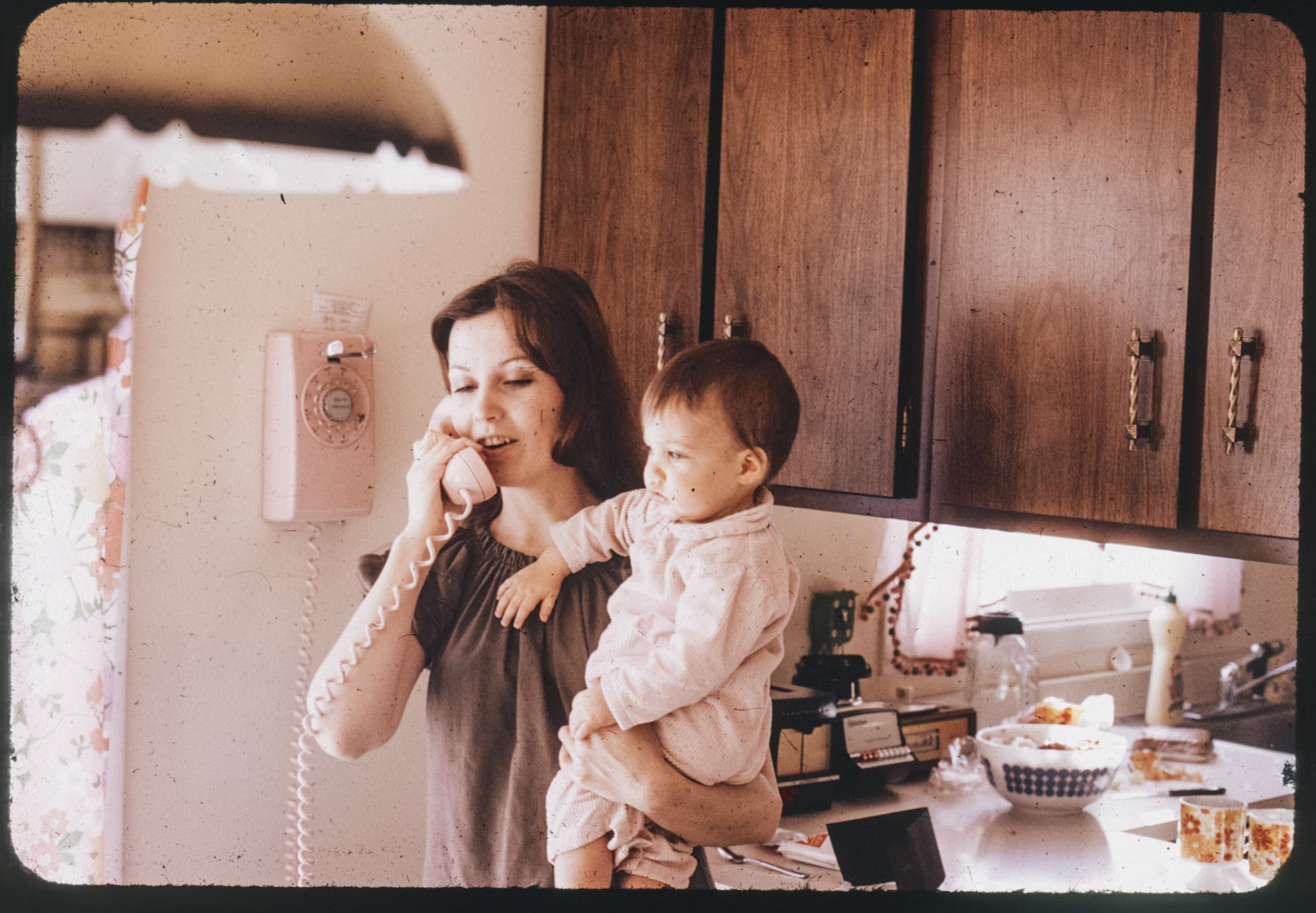
Mother holding baby while talking on a rotary phone in the kitchen.
Image Source: Unsplash

Moms Often Bear the Career Cost

U.S. Census research shows maternal labor‑force participation drops sharply after the first birth and declines further with each additional child. Fewer working years means lower lifetime earnings and slimmer retirement accounts—financial factors dads and moms must discuss openly.

Tight Budgets Can Stretch Well‑Being

Equitable Growth estimates the first few years of raising one child run $12,000‑$14,000 annually, excluding college or orthodontics. Families already walking a financial tightrope may see stress crowd out joy if they add another dependent without a safety cushion.

Making the “Right” Choice Looks Different for Everyone

Some large families thrive on thrift, creativity, and extended‑family help; others find even a second child strains finances and mental bandwidth. The responsible path is less about headcount and more about clarity: realistic budgets, an emergency fund, and honest conversations about time and energy.

Love Multiplies—So Should Planning

Larger families can flourish, but they demand deeper strategy. Track spending, forecast income changes, and fortify your support network before deciding. Financial responsibility isn’t perfection; it’s informed intention.

How did you decide how many kids to have? Share your story in the comments.

Read More

  • 5 Tips for Planning a Cheap Family Getaway
  • 10 Essential Tips For Planning a Worry-Free Family Trip
Samantha Warren
Samantha

Samantha Warren is a holistic marketing strategist with 8+ years of experience partnering with startups, Fortune 500 companies, and everything in between. With an entrepreneurial mindset, she excels at shaping brand narratives through data-driven, creative content. When she’s not working, Samantha loves to travel and draws inspiration from her trips to Thailand, Spain, Costa Rica, and beyond.

Filed Under: Parenting Tagged With: budgeting for families | Money & Family, cost of children, financial planning, kids and money, large families, parenting choices

Why You Should Avoid These 5 Overused Baby Names

April 22, 2025 | Leave a Comment

Newborn baby sleeping peacefully on a soft white blanket.
Image Source: Unsplash

Naming a baby is thrilling—but the high stakes make it easy to fall into trendy territory you’ll later regret. If you want something timeless yet distinctive, steering clear of today’s most overused names can help. Below are five naming trends nearing saturation and a few fresh alternatives to keep your child’s name both meaningful and memorable.

1. The “‑aden” Wave Is Receding

Jaden, Aiden, Brayden: once modern, now slipping fast. For instance, Jaden fell more than 160 places in the latest popularity charts. If you love the rhythm, try Arlo or Bodhi—similar bounce, less trend fatigue.

Why it’s fading: Parents who embraced the trend twenty years ago are now looking for fresher territory, so classroom redundancy is setting in.

Try instead:

  • Arlo – short, upbeat, and outside the current top‑100.
  • Bodhi – spiritual vibe without the overuse.
  • Ronan – Celtic strength with soft vowels.

2. Chart‑Toppers Like Olivia and Liam Are Everywhere

Classics endure, but their ubiquity means your child may share a classroom with multiple namesakes. Consider variants such as Liviana or Leo to retain the charm without joining the crowd.

Why it’s risky: A true classic never feels dated, but ubiquity can make even a beloved name feel less personal.

Try instead:

  • Liviana or Livia – keeps the “Liv” charm with added flair.
  • Leo or Leonel – shares Liam’s friendly, two‑syllable energy.
  • Celia or Celine – vintage chic without the crowd.

3. Cowboy‑Inspired Picks Risk Novelty Burnout

Television hits have boosted names like Waylon and Huck. Unless they hold personal or regional meaning, they may feel gimmicky once the media moment fades. Swap in rugged yet less-hyped choices like Colter or Reid.

Why it’s volatile: Pop‑culture‑driven spikes often fade once the series finale rolls and parents move on to the next obsession.

Try instead:

  • Colter – Western grit but still uncommon.
  • Reid – slim, strong, and evergreen.
  • Shepherd (Shep) – pastoral twist with room for cute nicknames.

Ask yourself: Will this name still resonate once the show slips from Netflix’s front page? If the answer is shaky, keep brainstorming.

Smiling baby in a pink outfit looking up.
Image Source: Unsplash

4. “Z” Names Are Nearing Peak Saturation

Zayn, Zuri, and Azalea sound fresh now, but rapidly rising popularity can make them feel dated later. Subtler options—Eliza, Zara, Luz—keep the zing without chasing a fad.

Why it might age: Once‑rare initials lose their sparkle when every second birth announcement starts with the same letter.

Try instead:

  • Eliza – the Z sound stays, but subtle placement reduces trendiness.
  • Luz – Spanish for “light,” short and radiant.
  • Zahara – exotic feel, but outside the top‑500.

5. Vintage Favorites Are Losing Their Rarity

Amelia, Ezra, and Hazel surged as charming throwbacks, yet their current top‑ten status erodes uniqueness. Delve deeper into the archives with picks like Mabel, Sylvie, or Otis to retain nostalgia minus the déjà vu.

Why you may hesitate: Once‑quirky antiques become today’s mainstream, erasing the “unexpected” factor that tempted many parents in the first place.

Try instead:

  • Mabel – sweet, old‑school charm still below the top‑300.
  • Sylvie – French sparkle with vintage roots.
  • Otis – soulful, musical, yet rare.

Choosing a Name That Grows With Your Child

Here are a few more tips to wrap up:

  • Audit nicknames, initials, and domain handles. Cute at birth can be awkward at sixteen (think unfortunate initials or default email addresses). Say the full name aloud, jot the initials, and search popular social platforms to spot conflicts early.
  • Test for global usability. If international travel or bilingual households are in the picture, pick something easily pronounced in your core languages. “Luna” is nearly universal; “Rhett” can be trickier abroad.
  • Sleep on it—literally. Tape the favorite to the fridge, use it in conversation for a week, and imagine calling it across a playground. That lived‑in test often surfaces hidden hesitations.

Trends come and go, but a name chosen for meaning, heritage, and personal resonance will always stand out in your child’s life. Aim for pronunciation ease and emotional significance over fashionable buzz—your future self (and your grown child) will thank you.

Would you choose any of theses children’s names for your child? If so, let us know in the comments below.

Read More

  • The Expenses of a Family Pet
  • 7 Girls Names That Mean Queen and How Your Daughter Can Flourish With These Names
Samantha Warren
Samantha

Samantha Warren is a holistic marketing strategist with 8+ years of experience partnering with startups, Fortune 500 companies, and everything in between. With an entrepreneurial mindset, she excels at shaping brand narratives through data-driven, creative content. When she’s not working, Samantha loves to travel and draws inspiration from her trips to Thailand, Spain, Costa Rica, and beyond.

Filed Under: Parenting Tagged With: baby names, baby‑name trends 2024, Choosing a Baby Name, overused names, parenting advice, parenting tips | Parenting, unique baby names

7 Unorthodox Parenting Methods That Actually Work

April 21, 2025 | Leave a Comment

7 Unorthodox Parenting Methods That Actually Work
Image Source: Pexels

Parenting is about creative problem-solving. Every parent deals with unique issues that require out-of-the-box solutions. While not every parenting method will work for your family, it’s important to understand the helpful tools at your disposal. We’ve laid out several of the best unorthodox parenting methods that might help you as you get through the terrible twos, the teenage years, and everything in between.

1. No Screens 

No Screens
Image Source: Pexels

According to the University of Albany, 87% of kids spend too much time in front of screens, exceeding the recommendations from the American Academy of Pediatrics. Although kids love watching shows and playing games on their tablets, it may not be the best activity for their development. Unicef says that screens hijack children’s attention spans, reduce their impulse control, and lower their empathy levels. 

When one mom decided to take the screens away completely, she noticed immediate improvements in her children’s behavior. The kids didn’t throw as many tantrums and even had fewer nightmares. They were more creative and calmer. The family as a whole also spent more quality time together and engaged in new hobbies together. Although life without screens can seem incomprehensible at first, this unorthodox parenting method may actually work! 

2. Free Range Parenting 

Free Range Parenting
Image Source: Pexels

Actors Kristen Bell and Dax Shepherd use an unorthodox parenting method called “free ranging.” It’s basically the opposite of helicopter parenting. Instead of closely supervising their kids all the time, Dax and Kristen give their offspring more autonomy. For example, they allow them to ride their motorcycles around the neighborhood unsupervised. 

Proponents of this unusual parenting style say that it helps kids build independence and problem-solving skills. However, striking the right balance between autonomy and parental oversight is important to ensure your kids stay safe. 

3. Homeschooling 

Homeschooling
Image Source: Pexels

It’s a common misconception that homeschooled kids struggle academically. Studies have actually shown that homeschoolers perform better on standardized tests and earn higher GPAs in college. Many homeschoolers also thrive socially and are just as outgoing as their public school peers. 

However, if you’re thinking about homeschooling, it’s crucial to provide your kids with adequate resources and opportunities. Do your research to find a robust curriculum that suits your child’s needs. Make sure to provide plenty of after-school enrichment, including extracurriculars, museum visits, and social opportunities. 

4. Low or No Sugar

Low or No Sugar
Image Source: Pexels

With the prevalence of sugar in foods, some parents are deciding to limit or fully delay their child’s consumption of it. While you can never fully escape sugar as it naturally occurs in fruits and vegetables, high sugar foods like candy or sodas are on another level. A 12-oz can of Pepsi contains 40 grams of sugar, which is almost double the recommended limit for adults. 

The Keck School of Medicine at USC has found that toddlers who drink a half cup of 100% juice every day are 30% more likely to be overweight within two years. It’s essential that parents understand how much sugar a child at any given age can consume. Starting our kids off with healthy habits is the key to a long and successful life.

5. Toy Cycling 

Toy Cycling
Image Source: Pexels

Many kids receive mountains of toys for Christmas and have overflowing toy chests. However, leaving out all of your child’s toys can overwhelm them. Montessori toy rotation is an unorthodox parenting method that involves limiting your child’s toy selection.

Instead of leaving out every stuffie and figurine, Montessori parents only give their kids access to a few toys and activities at a time. This helps children focus better and truly master the skills that each toy is designed to teach. Every week, Montessori parents rotate the selection of toys, swapping them out for a different set. This creates a sense of novelty that helps children get excited about learning through play. 

6. Starting Chores Early 

Starting Chores Early
Image Source: Pexels

Most of us had chores growing up and learned responsibility by doing laundry and mopping floors. Although the value of chores is widely understood, many parents don’t start early enough. 

Believe it or not, children as young as 2 or 3 benefit from chores. Kids who start putting toys away and dressing themselves at a young age report higher levels of confidence and self-esteem. Kids who learn to help around the house early even feel better at academics and happier with their lives. 

7. Gentle Parenting 

Gentle Parenting
Image Source: Pexels

Many people believe that gentle parenting is permissive. But it’s all about holding space for your child’s emotions and teaching boundaries in an empathetic way. For example, a gentle parent wouldn’t allow their child to hit them. They’d validate that the child is having big emotions and explain that hitting is still isn’t allowed. 

When a child misbehaves, gentle parents will try to redirect the child, helping them choose a more positive behavior. Modeling the behavior that you want to see can also encourage your kids to make better decisions. If these non-punitive strategies don’t work, gentle parents can still use natural or logical consequences to discipline their kids. For example, if a child throws his food on the floor, he may be required to help clean it up as a logical consequence. 

Studies have shown that positive parenting techniques like gentle parenting lead to better brain functioning during the teen years. Plus, kids who experience this unorthodox parenting method have better relationships and mental health as adults. 

Which unorthodox parenting methods do you swear by? Are there any that haven’t worked for you? Share your thoughts in the comments. 

Vicky Monroe headshot
Vicky Monroe

Vicky Monroe is a freelance personal finance writer who enjoys learning about and discussing the psychology of money. In her free time, she loves to cook and tackle DIY projects.

Filed Under: Parenting Tagged With: child development, Parenting, parenting methods

7 Girls Names That Mean Queen and How Your Daughter Can Flourish With These Names

April 19, 2025 | Leave a Comment

Baby wearing a crown, symbolizing queenly names
Image Source: Unsplash

There’s something powerful about choosing a name that carries both history and hope. For many parents, naming a daughter isn’t just about picking something pretty—it’s about setting the tone for the kind of life she will lead.

Girls names that mean queen feel especially resonant: they sound regal and carry deep meanings tied to leadership, grace, and strength. Below are seven inspiring options and how each can encourage your daughter’s growth.

1. Malika: A Cultural Crown of Strength

Malika, from Arabic, literally means “queen.” The name is soft in sound yet strong in symbolism, representing wisdom and maternal strength. Giving your daughter this name can instill confidence early on, reminding her she carries the qualities of a leader from birth. Its global recognition makes it distinguished yet accessible.

2. Malkah: A Regal Name with Deep Roots

Malkah is a Hebrew choice that also translates directly to “queen.” Long used in Jewish tradition, it conveys not only rulership but divine grace and dignity. The gentle “‑ah” ending softens its royal power, merging strength and femininity. Naming your daughter Malkah can spark conversations about heritage and potential.

3. Elizabeth: Timeless and Unshakable

Elizabeth means “God is my oath” and stands as one of history’s most enduring royal names. Worn by queens and leaders across centuries, it offers a legacy of resilience. Its flexibility allows sweet nicknames—Lizzy, Ellie, Beth—while retaining regal stature. For a girl growing into her own story, Elizabeth provides both tradition and adaptability.

4. Victoria: A Triumph of Identity

Victoria translates to “victory” and heralds perseverance and elegance. Most famously linked to Queen Victoria of England, the name carries a sense of intelligence and influence. Calling your child Victoria can plant seeds of determination, encouraging her to rise above challenges with grace.

5. Alexandra: Defender With a Royal Flair

Alexandra stems from Greek and means “defender of humankind.” Historically tied to queens and dignitaries, it balances kindness with courage. A girl called Alexandra may feel inspired to champion fairness and protect what matters—traits any parent would love to nurture.

6. Meredith: Leading with Quiet Power

Meredith, of Welsh origin, translates to “great ruler.” Less overtly regal than some picks, it offers a subtle nod to leadership. The name feels grounded and intelligent, perfect for a girl who will grow into her strength in her own way.

7. Mira: A Short Name with Big Meaning

Mira may be brief, but in Arabic it carries the meaning “female ruler,” and in other languages can mean “peace” or “wonder.” Its minimalist style hides an array of powerful interpretations, reminding your daughter that greatness doesn’t always shout.

Baby wearing a crown, highlighting why queenly names mean more
Image Source: Unsplash

Why Queenly Names Do More Than Sound Pretty

Choosing a name that means “queen” isn’t simply about titles; it’s about potential.

Names tied to leadership and dignity send an early message of self‑worth. From Malika to Victoria, each option plants a seed of confidence—ready to bloom as your daughter discovers her own path.

A child’s name is more than a label—it’s the first story they carry into every classroom, playground, and workplace they’ll enter. An empowering name signals strength, possibility, and self‑worth, offering kids a built‑in reminder of the qualities you believe they already possess.

When a name feels bold and meaningful, it can spark confidence during introductions, fuel resilience when doubts creep in, and inspire them to live up to its message. In short, an empowering name plants a lifelong seed of assurance that who they are—and who they can become—was celebrated from day one.

Which queenly name speaks to you? Share your favorite in the comments—we’d love to hear the story behind your choice.

Read More

  • Naming Regrets: 8 Types of Names That Could Spell Trouble for Your Child’s Future
  • From Mean to Queen: 11 Secrets to Being a Happier Calmer Mom
Samantha Warren
Samantha

Samantha Warren is a holistic marketing strategist with 8+ years of experience partnering with startups, Fortune 500 companies, and everything in between. With an entrepreneurial mindset, she excels at shaping brand narratives through data-driven, creative content. When she’s not working, Samantha loves to travel and draws inspiration from her trips to Thailand, Spain, Costa Rica, and beyond.

Filed Under: Parenting Tagged With: baby girl names, empowering names | Parenting, girls names that mean queen, leadership names, names with meaning, royal baby names, strong girl names

Should Parents Allow Their Children to Choose Their Own Diets?

April 19, 2025 | Leave a Comment

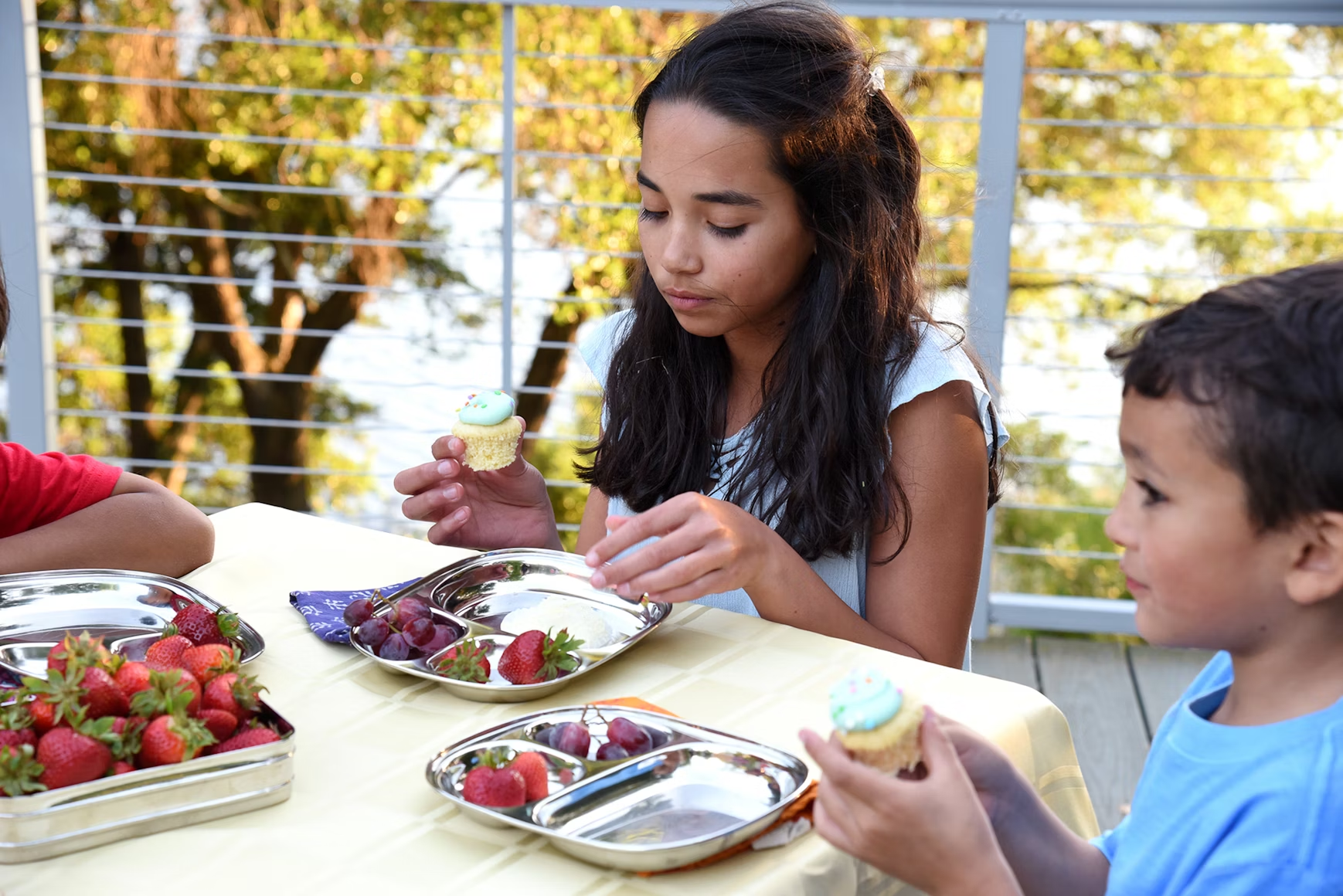
Kids enjoying fruit and cupcakes, exploring their own diet choices
Image Source: Unsplash

Food is more than fuel—it’s comfort, celebration, and, yes, sometimes conflict. If you’ve ever watched your child push peas around a plate or beg for snacks minutes after dinner, you’ve probably wondered: should parents allow their children to choose their own diets?

As with most parenting dilemmas, the answer isn’t a flat yes or no. The goal is balanced power: empower kids while guiding them toward habits that last a lifetime.

Parental Influence Begins With What You Model

Children learn first by watching. Sit‑down meals, visible produce on the counter, and your own enjoyment of vegetables all imprint on young minds. Research on family eating patterns shows that kids copy the foods their parents serve themselves—fruits over fries, water over soda—more than any verbal instructions ever could.

Choice Reduces Food Fights—but Within Limits

Giving a child a bit of control curbs resistance. Offer two or three nutritious options rather than total freedom, and suddenly peas versus carrots feels like a win–win.

Studies on picky eating highlight that guided autonomy increases a child’s willingness to try new foods; it’s freedom with a safety net.

Repetition Builds Familiarity—and Healthier Preferences

One taste rarely seals the deal. Nutrition experts note that children often need 8 to 15 neutral exposures before accepting a new food.

Rotate textures—raw sticks, steamed florets, blended soups—to give broccoli or peppers multiple chances to shine. Patience and persistence pay off; what was once refused can become a favorite.

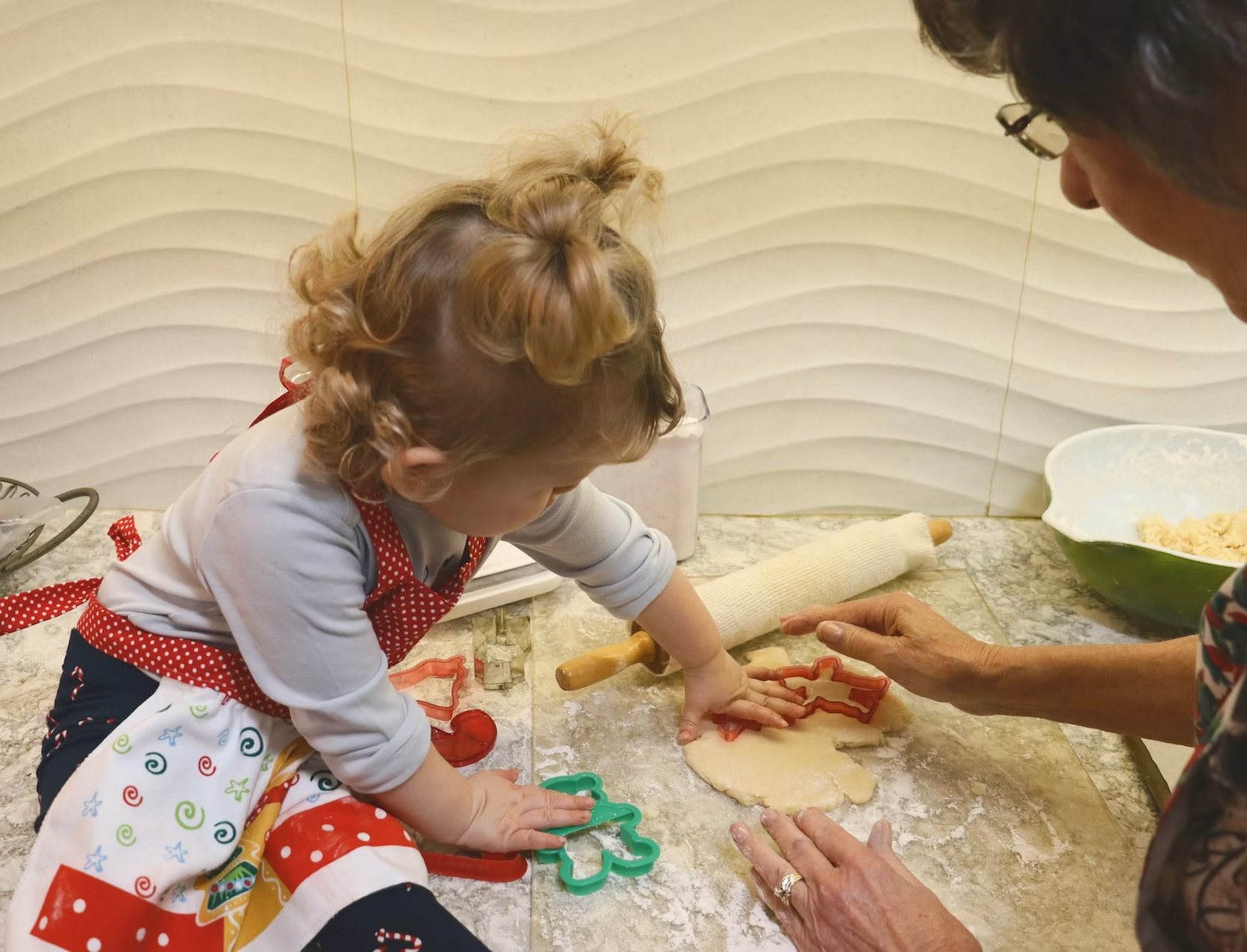
Child helping with meal prep in the kitchen
Image Source: Unsplash

Get Them Involved in the Kitchen

Hand a child a vegetable peeler or let them top a mini pizza, and something shifts: ownership breeds curiosity. Kids who help plan and cook meals are more likely to taste—and eventually like—those dishes. Simple tasks such as rinsing berries or stirring pancake batter transform mealtime from chore to collaboration.

Be Aware of Your Own Food Preferences

Stock the pantry with cookies and chips, and guess what children will crave? Parents’ purchasing habits shape a household’s default “go‑to” snacks. Swapping high‑sugar choices for fruit cups or nuts lowers temptation and models mindful shopping. A parent’s cart is often the first nutrition lesson a child sees.

What This Means for Your Family Table

Allowing kids to choose their food doesn’t equal a junk‑food free‑for‑all. It means offering structured choice: several nourishing options, clear kitchen routines, and consistent exposure to new flavors. A balanced approach teaches kids to tune into their own hunger cues while respecting the value of wholesome food.

Think of yourself as the curator, not a short‑order cook. You decide what makes it to the table and when meals happen; your child decides which items to eat and how much. Serve meals family‑style so little hands can practice portioning carrots, quinoa, or roasted chicken on their own plate.

Offer two veggie colors, a protein, and a familiar carb—then step back. When dessert is on deck, present it alongside the meal rather than dangling it as a reward; this normalizes treat foods and strips them of forbidden‑fruit allure.

Build predictable rhythms: breakfast at 7, snack at 10, lunch at 12:30, and so on. Regular timing reassures children that more food is always coming, reducing the urge to overeat.

Between meals, keep a “snack station” stocked with ready‑to‑grab fruit, cheese sticks, and whole‑grain crackers. The choices feel expansive, yet every option still fuels growing bodies.

Raising a Curious—and Capable—Eater

Food doesn’t have to be a daily power struggle. Trust your child with small decisions, stay involved, and watch confidence—and curiosity—grow.

Progress, not perfection, is the standard. When family meals spark connection instead of conflict, everyone leaves the table nourished in more ways than one.

How do you manage picky eating tendencies in your kids? Share your thoughts in the comments below!

Read More

  • Encouraging Good Language Development for Toddlers
  • Meals So Great Baby Doesn’t Throw it Back: 5 DIY Baby Foods You Can Make at Home
Samantha Warren
Samantha

Samantha Warren is a holistic marketing strategist with 8+ years of experience partnering with startups, Fortune 500 companies, and everything in between. With an entrepreneurial mindset, she excels at shaping brand narratives through data-driven, creative content. When she’s not working, Samantha loves to travel and draws inspiration from her trips to Thailand, Spain, Costa Rica, and beyond.

Filed Under: Parenting Tagged With: child development, child nutrition, family meals | Parenting, healthy eating habits, parenting tips, picky eating

« Previous Page
Next Page »
  • Facebook
  • Pinterest
  • RSS
  • Twitter
Best Parenting Blogs

Most Popular

Baby Girl

12 “Grandma” Baby Names That Are Suddenly Cool Again

Evan Morgan
Baby

9 Baby Names That Sound Rare Without Being Hard to Spell

Evan Morgan
Target Store

Choking Incident Prompts Recall of 49,000 Target Gigglescape “Under the Sea” Popping Toys

Evan Morgan
Frustrated Girl

Why Some Students on the Spectrum Are Labeled With ODD

Evan Morgan
Coke Bottles

12 Things Kids Took to School in the ’70s That Would Never Be Allowed Today

Evan Morgan

All content on Kids Ain’t Cheap is for entertainment purposes only. By reading this blog, you agree that Kids Ain’t Cheap is not responsible for any actions taken after reading this blog. For the full disclaimer, see our privacy policy.

Please note that Kids Ain’t Cheap has financial relationships with some of the merchants mentioned here. Kids Ain’t Cheap is funded by banner advertising, commission sales and search optimization consulting.

Copyright © 2006–2026 | District Media | All Rights Reserved | Privacy Policy

Copyright © 2026 Runway Pro Theme by Viva la Violette