• Home
  • About Us
  • Toolkit
  • Archives
  • Advertise
  • Privacy Policy

Kids Ain't Cheap

But They Sure Are Worth It

  • Parenting
    • Baby Stuff
    • Books and Reading
      • Aesops Fables
      • Comic Books
    • Education
    • Family Time
    • Green Living
    • Growing Up
    • Healthy Living & Eating
    • Holidays
    • Parenting
    • Random Musings
    • Shopping
    • Stuff to Do
  • Money
  • Product Reviews
    • Books and Magazines
    • Discount Sites
    • Furniture
    • House Keeping
    • Reviews News
    • Toys and Games
  • Contact Us
  • Our Editorial Commitment
  • Search

Cheap Ways to Childproof a Condominium

May 6, 2021 | Leave a Comment

Childproof a Condominium

When baby starts crawling and walking, you may feel like you don’t have enough eyes to keep track of him. Babies this age love getting into cabinets and putting things into their mouths. They love to explore. While these traits are good for babies’ growing knowledge, it can also put them in danger, sometimes mortal danger. However, there are cheap ways to childproof a condominium that will help keep your baby safe and help you maintain some control over his environment.

Cheap Ways to Childproof a Condominium

If you’re trying to save money or be frugal when childproofing, you’ll be happy to know you can start with the free fixes first.

Free Ways to Childproof

Consider Baby Safety Before You Buy

Childproof a Condominium
Photo by National Cancer Institute on Unsplash

If you even remotely are considering having a child when you are condo shopping, the best thing you can do is find a child-friendly condo layout. That means finding a condo that doesn’t have a large balcony that over looks the living space. (Trying to childproof an upstairs railing can be a nightmare!) Likewise, open concept plans may be more difficult to childproof because you can use doorways to separate off areas.

Rearrange Your Cupboards

Once your child starts becoming more mobile, it’s time to rearrange your cupboards. In the lower cabinets, put things like pots and pans. If baby gets into these items, no harm done. You’ll want to move any glass containers or lids to higher shelves.

Put Up Dangerous Items

Many people keep cleaning chemicals under their kitchen sink. A better place for these might be in a higher cupboard so you don’t risk your child getting into them and accidentally getting poisoned. Automatic lighters and other potentially dangerous items should all be put up. Out of sight, out of mind.

Keep Furniture Away from Windows

The next free thing you can do is keep furniture away from high windows. If your child’s bedroom is on the second floor or higher, be sure to keep the bed and dresser away from the window. This step makes it harder for your child to inadvertently fall from the window since she has nothing to climb.

Tie Up Window Blind Cords

Window blind cords create a real danger for young children. In a study by The Center for Injury Research and Policy at Nationwide Children’s Hospital, researchers “found that over 26 years emergency departments treated almost 17,000 children for strangulation from window covering cords.  Of those cases, 271 children died” (Today.com).

Sure, you can buy expensive cord binders, but check out Pinterest for a way to make a free cord binder. All you need is a light piece of plastic that you probably were going to throw in recycling anyway and a pair of scissors. This idea is ingenious!

Bath Seat

Don’t feel the need to buy a special bath seat for when your little one takes a bath. Instead, place your child in a laundry basket in the tub when giving her a bath. She can stay seated in a smaller area, so there is less chance of slipping or falling.

Low-Cost Options

After you exhaust the free options, there are several low-cost ways to childproof your condo.

Tennis Balls on Sharp Corners

Little ones can often lose their balance when just learning to walk, so cut the side of a tennis ball and stick it on the sharp corners of tables and other items like the hearth of the fireplace.

Elastic on Handles

To keep cabinets with handles closed, put rubber bands around the handles. Double twist to make sure the doors stay securely closed.

If you have cabinets without handles, either install handles or you can buy inner door latches. These run about $1 a piece.

Plastic Container Around Power Cords

If you have a power strip you want to babyproof, you can take a cheap plastic tub, put the power strip inside, and cut a hole on the side for the cords. See full instructions and image on Pinterest.

Hairband Around the Toilet Paper Roll

Childproof a Condominium

Remember the fun age when toddlers delight in unrolling ALL the toilet paper on the roll? End that habit with a rubber band around the toilet paper roll.

Band-aids over Electrical Outlets

If it will be a few days before you can get to the store, you can cover electrical outlets with band-aids. However, your baby will likely figure this one out quickly, so eventually you’ll want to buy electrical outlet plug covers. These are very affordable at only $6 per 24 pack.

Door Knob Covers

There may be some rooms and closets that you just don’t want your child to get into unattended. For those rooms, consider door knob covers. These are easy for parents to use, but little ones usually can’t figure them out until at least the preschool years.

DIY Baby Gate

If there is a doorway you want to keep baby from going through, you can create a DIY baby gate. You’ll need two tension rods and fabric. True, you’ll have to invest some money into this project, but the overall cost is much cheaper than metal, store-bought baby gates. Plus, these are softer.

Air Vent Protection

If you have air vents on the floor, your child may be unable to resist dropping items down the slats. Prevent this by putting fabric tulle under or over the air vent. Air can still flow through unobstructed, but your child will no longer be able to put things through the cracks.

Final Thoughts

These are just a few of the cheap ways to childproof a condominium. While you won’t have to spend a fortune childproofing, you will likely need to buy some supplies. There are free childproofing fixes, but you’ll also probably have to buy some of the low-cost supplies to truly keep your child safe. But don’t worry, in a few years, childproofing will be a distant memory as your child gains more independence and learns what’s safe and what isn’t.

Read More

Childproofing Your Home Reduces Risk by 70%

Is It Worth Buying Expensive Car Seats

Did You Know Your Preschooler’s Apps Are Full of Ads?

Melissa Batai
Melissa Batai

Melissa is a writer and virtual assistant. She earned her Master’s from Southern Illinois University, and her Bachelor’s in English from the University of Michigan. When she’s not working, you can find her homeschooling her kids, reading a good book, or cooking. She resides in Arizona where she dislikes the summer heat but loves the natural beauty of the area.


Filed Under: Home and Living, Parenting, Safety Tagged With: Baby, childproof, Safety

What Is the Financial Responsibility of a Step Parent?

November 19, 2020 | Leave a Comment

Step Parent Financial Responsibility

Many second marriages now come with the bonus of additional children—step children.  As a step parent, you’re expected to provide support and understanding for your “bonus children.”  But what other responsibilities do you have?  Namely, what are the financial responsibilities?

Financial Responsibility of a Step Parent?

Your financial responsibility is largely determined by your step child’s situation.  Did his other parent die?  Are his parents divorced, but the other spouse is paying child support?  Was he abandoned by his other parent and receives no visits or monetary help from that parent?  Do you have your own kids that you bring to this marriage?  If so, what is your financial situation with your ex?

All of these variables come into play when you decide what your financial responsibility is as a step parent.

Do You Want to Adopt?

One of the first questions before you tie the knot is to determine if you want to adopt your step children.  Of course, this isn’t an option for everyone, especially if the step children’s other parent plays a role in their lives.  However, if your step children have an absent parent or their parent has died, you may want to adopt them, especially if they are open to the idea.

There are many advantages to adopting step children.  Most importantly, you will then be able to have a legal say in their lives.  Likewise, if your new spouse becomes incapacitated, you are recognized by the law as your step children’s parent.

Talk to a Financial Planner

Step Parent Financial Responsibility
Photo by Amy Hirschi on Unsplash

After you’ve made that crucial decision, the next is to consider talking to a financial planner.  When merging a household, there are many financial decisions to make.

When it comes to taxes, will you file jointly with your new spouse?  If so, will you be able to claim the children on your tax return, or will their other parent?

When it comes to money management, will you merge finances or keep them separate?  If you decide to keep them separate, what will be your financial obligation to your step children?

Analyze Your Life Insurance Beneficiaries

Finally, analyze your life insurance beneficiaries.  You, your spouse, and your step children are now a family, and as such, you want to make sure that they will be able to function financially should the unexpected happen.

Unfortunately, some people forget to change their beneficiaries, so as soon as you’re married, make sure to change the beneficiaries to your new family.  Also evaluate whether you have enough life insurance after your new marriage.  You may find you need to secure more.

Final Thoughts

Each relationship is unique.  While there are no explicit rules about a step parent’s financial responsibility to her step children like there are with biological parents and children, you still want to make sure your new family is taken care of financially.  You can do this by considering whether to adopt, consulting with a financial planner, and updating your life insurance.

Read More

Steps to Divorce: 7 Immediate Steps to Take Before Getting a Divorce

Understanding Life Insurance: Everything You Need to Know

How to Talk to Your Family about Life Insurance

Melissa Batai
Melissa Batai

Melissa is a writer and virtual assistant. She earned her Master’s from Southern Illinois University, and her Bachelor’s in English from the University of Michigan. When she’s not working, you can find her homeschooling her kids, reading a good book, or cooking. She resides in Arizona where she dislikes the summer heat but loves the natural beauty of the area.

Filed Under: Money and Finances, Parenting Tagged With: blended family, family finances, step children, step parent

Teach Your Child About Money – Free Savings Chart for Kids

November 12, 2020 | Leave a Comment

Free Savings Chart for Kids

One of the most wonderful gifts you can give your children is a healthy understanding of money. Not a craving for it or an assumption that it will lead to happiness. Instead, you have the privilege – the responsibility – to teach children about hard work, the power of saving, the dangers of debt, and the gift of giving. To help your children learn, we’ll also set you up with a free savings chart for kids.

How to Teach Your Child About Saving Money

Many people are in crisis mode, financially. It’s impossible to know what they learned or didn’t learn about money at home, but would America look different if more parents taught their children the principles I listed above? What if more parents led by example by communicating together about a budget, saying no more often to frivolous spending, and showing their children how to save up and pay cash instead of using credit cards?

It’s purely my speculation, but I’d go so far as to say we’d have less stress, less divorce, fewer addictions, more giving, and greater job satisfaction. Do you agree?

With the right steps, we can teach our children to live differently.

What About Student Loan Debt?

Free Savings Chart for Kids
Photo by Alexis Brown on Unsplash

You’re probably thinking, “What about student loans? I was just trying to further my education and now I’m overwhelmed by debt as a result.” Totally valid point. I remember approaching high school graduation and hearing everyone discuss their reasons for choosing one school over another. NOT ONCE did my friends and I stew over the debt load we’d receive from student loans. None of us saw what was coming.

In fact, according to StudentLoanHero.com, outstanding student loan debt reached more than $1.64 trillion in 2020.

How can we teach our children to save money in the face of such a burden of debt?

Start the Conversations

A great way to educate your young tribe about the dos and don’ts of spending is to create an open line of communication. Encourage them to ask questions. Show them the process of paying for your groceries or a meal at a restaurant. Take them to the bank and show them how you make a savings deposit.

Also, a conversation is a great way to tackle topics like:

  • Work ethic
  • Getting a job
  • Planning for the future
  • Saving for a major purchase
  • Saving for college (tell them about the ways you are saving for their college while they’re young)
  • Integrity
  • Greed
  • Envy
  • Contentment
  • Generosity

You don’t have to run down this list every night at the dinner table, but the more conversations you do have about these topics, the more seeds your planting in your child’s mind. You’re teaching her how to think about money, not what to think.

Put Them to Work

Free Savings Chart for Kids
Photo by NeONBRAND on Unsplash

We’ve covered the important step of talking about money. Next, it’s time to apply what your child has learned. If he’s old enough to hold a broom or to straighten up his room, your child is old enough to get paid for chores.

It’s important that he knows the money isn’t just for spending. Saving is a difficult concept for young minds, at first, unless they have something for which they’re saving. For example, if your daughter sees a Belle doll in the toy aisle and begs for you to buy it, you have some choices. You can purchase the doll, you can discuss the cost and why it’s not in the budget, or you can write down the dollar amount on a paper, head home, and help her calculate how many chores it’d take to save for the doll.

To aid in that endeavor, here are some free tools you can use with your child.

Free Savings Chart for Kids – and Other Great Savings Tools

Printable Savings Chart for Kids – via CouponsAreGreat.net

Downloadable “Share, Save, Spend” Chart for Kids – via iMom.com

Printable Savings Thermometer Chart – via Frugal-Mama.com

52-Week Money Challenge for Kids

Printable Play Money for Kids

Final Thoughts

Combine a free savings chart for kids with some great conversations and hard work around the house.  You’ll be setting the stage for great financial decisions, which will hopefully follow your children into adulthood!

Got some tips for teaching children to save money? Share one below!

Read More

5 Chores That Teach Work Ethic Principles to Toddlers

How Much, If Any, Should You Pay Your Kids for Chores?

Teach Them Young: 3 Key Tips to Help Your Child Learn about Money

Editors note:  This article has been brought to you by Dollar Dig.  Dollar Dig helps you save money at over 4,000 stores.  Open a Dollar Dig account today to start saving!

Melissa Batai
Melissa Batai

Melissa is a writer and virtual assistant. She earned her Master’s from Southern Illinois University, and her Bachelor’s in English from the University of Michigan. When she’s not working, you can find her homeschooling her kids, reading a good book, or cooking. She resides in Arizona where she dislikes the summer heat but loves the natural beauty of the area.

Filed Under: Education, Family Time, Home and Living, Money and Finances, Parenting Tagged With: 52 week money challenge, how to teach children to save money, kids and money, savings chart for kids, teach your child to save

What Is the Greenlight Card for Kids?

November 5, 2020 | Leave a Comment

If you have kids that are in middle school and high school, you likely feel the need (as I do) to teach them financial common sense.  The hope is that eventually they will be able to move out on their own and be financially responsible.  However, this lesson isn’t quickly learned, and it requires a lot of parental oversight to do it right.  One tool that can help you is the Greenlight Card for kids.

Greenlight Debit Card for Kids

What Is the Greenlight Card for Kids?

The Greenlight Card for kids is a debit card your children can use, but it comes with some amazing parental controls so you can help guide and influence your children in their money habits.

Please note that if your kids have smartphones, there is an app they can use which will show them their balance and chores and allow them to make requests.  However, the Greenlight Card for Kids can be used if kids don’t have smartphones, also.

Features of the Greenlight Card for Kids

This card makes allowances high tech.

Instantly Deposit Money

You can reward your children for chores well done by depositing money in their Greenlight Card.  Within the card app, children can set up different categories such as spend, save, and give.  They can also set up long-term goal categories such as saving for a car.

Parental Benefits

You can help your children manage their money with this helpful card.  You’ll be given real time spending alerts.

Teach your children about interest by giving them interest payments on their savings.  You decide how much you want to give them.

In addition, you can enable the feature that allows them to withdraw money from the ATM and set how much they’re allowed to withdraw.  Or, you can make withdrawing money off limits.

Features for Older Kids

Greenlight Debit Card for Kids
Photo by Stephen Phillips – Hostreviews.co.uk on Unsplash

If your teens have jobs, they can have their paycheck automatically deposited to the Greenlight Card for Kids.  The card can also be added to Apple Pay or Google Pay.

Safety Features

Each Greenlight Card is FDIC insured.  In addition, the card blocks your children from spending money for gambling or buying lottery tickets.  They also won’t be able to spend money at places like massage parlors and horse or dog races, and they cannot get cashback from a purchase.  You’ll get an alert if they try.

In addition, parents have the ability to turn the debit card on or off, should they need to.

How Much Does the Greenlight Card Cost?

The first month is free.  After that, you pay $4.99 for debit cards for up to five kids.  Should you need replacement cards, the first replacement cards are free.

Final Thoughts

The Greenlight Card for Kids offers a way to give your children financial independence while also providing parental oversight so you can help guide your children into financial growth.  This tool is an excellent way to exchange money between parents and kids while having features that let your children grow in responsibility as they grow up.

CIT Bank Money Market Account

Read More

Handling Allowance with My Daughter

Games That Teach Kids About Money

Teach Them Young: 3 Key Tips to Help Your Kids Learn about Money

Melissa Batai
Melissa Batai

Melissa is a writer and virtual assistant. She earned her Master’s from Southern Illinois University, and her Bachelor’s in English from the University of Michigan. When she’s not working, you can find her homeschooling her kids, reading a good book, or cooking. She resides in Arizona where she dislikes the summer heat but loves the natural beauty of the area.
Filed Under: Money and Finances, Parenting, Technology Tagged With: Allowance, debit card, money management, teaching children money management

7 Reasons You Shouldn’t Buy Your Kid a Car

October 15, 2020 | 2 Comments


Buying Your Kid a Car

When I was 15, my dad died.  When it was time for me to get my license and a car, my mom gave me my dad’s El Camino truck.  My dad loved El Caminos; he would buy beat-up ones for cheap, refurbish them, and then sell them for a profit.  The one I inherited was a beat-up one he had bought but wasn’t able to begin to fix up before he died.  I took shop class when I was 16, and during downtime, we could bring in our cars for a car wash.  I’ll never forget my humiliation when I brought in the El Camino, and huge, rusted chunks fell off when we washed the car.  The El Camino wasn’t a good car to drive in the winter, so my mom sold it.  She then bought me a beater Ford Escort, and I paid her a payment every month until I’d paid her back in full.   Should you consider buying your kid a car?  My husband and I firmly believe there are many reasons why parents should not buy their children cars.

1. Kids Need to Learn How to Earn What They Get

One of the reasons you shouldn’t buy your kid a car is because they need to learn how to earn what they get. Part of your job as a parent is to teach your kids responsibility.

Of course, you should provide for their basic needs, such as housing, clothes, food, etc. But giving them everything they want in life is not going to teach them to appreciate what they are given.

You could argue that they will have to pay for the gas and any repairs but not the actual car. Even with those financial responsibilities, it may not be enough to teach your kids that they get what they earn for themselves.

There is a saying that if you “give a man a fish you feed him for a day but if you teach a man to fish you feed him for a lifetime”.  Applying it to this situation means giving your kid a car isn’t the best thing you can do for them.

2.  They Need to Learn Patience

Depending on the type of car your child wants, saving up money for it will take some time.  However, in doing so, she will have learned a valuable lesson.  Hopefully, that patience will continue throughout her life so she doesn’t get into the habit of buying things on credit before she can truly afford them.

As an adult, I’ve had to wait for many things that I wanted until I could afford them.  My husband and I didn’t even buy our first house until we were in our early 40s.

3. Buying Their Own Car Could Help Them Build Credit

Even though it’s preferable that kids save to buy their own car, some argue that a loan could work to their advantage when buying their own car. If they are responsible for making their payments on time, it can help them build their credit for future purchases.

Putting your kid in debt at a young age isn’t necessarily the ideal situation. For one thing, you will probably have to co-sign the loan. But perhaps it’s a better option than buying your kid a car and paying for it yourself.

4.  They Shouldn’t Expect the Best

Many kids now expect that they will have the same standard of living their parents have while they are still quite young.  These kids don’t realize that their parents have been working 10, 20, 30 years to earn the standard of living they currently experience.

When I started out on my own, I struggled, as many of us have.  When I moved out, most of my furniture came from garage sales.  Most of my clothes came from second-hand stores.  Most of my early cars were beaters.

Buying Your Kid a Car
Photo by Steady Hand Co. on Unsplash

One of the things I remember most vividly about reading Michelle Obama’s biography, Becoming, is that Barrack Obama had a car in college that had a hole in the floorboard of the passenger seat.  Michelle Obama wrote about keeping her feet far from the hole and seeing the pavement rushing past.  Clearly, I had a similar experience with my dad’s El Camino, and many of you reading might have also experienced driving a beater car because it was cheap.

5. They May Not Take Care of It

Another one of the reasons you shouldn’t buy your kid a car is because many teens are not good at taking care of their stuff. If yours is one of them, do you really think it’s a good idea to spend thousands on a car for them?

Before shelling out a ton of money on a vehicle, consider whether or not your kid is ready to take responsibility for the car. Talk to them about changing the oil, filters, wiper blades, and other regular maintenance.

If it is clear your kid expects you to pay for repairs and give them gas money, you can certainly say no to the car.

6. Is it the Best Use of Your Money?

Buying your kid a car may not be the best use of your money. This is just one more reason you shouldn’t buy your kid a car.

For instance, you might be able to take the money and invest it for your future retirement. Or, pay down debt instead of buying your kid a car.

7. It May Cause Them to Study Less

If your child is given a car, it may lead him to feel like he is free to come and go as he chooses. This is especially true if you have not given him strict rules on when he should be home at night.

With too much freedom, your teen may spend less time on the things she should be doing, such as studying. This could cause her grades to drop and threaten her ability to get into a good college.

So, what do you think? Should you buy your kid a car?

Read More

Your Teen and Their First Car,

4 Tips to Save on Car Insurance for Teens,

Should You Give Your Teen a Debit Card


Melissa Batai
Melissa Batai

Melissa is a writer and virtual assistant. She earned her Master’s from Southern Illinois University, and her Bachelor’s in English from the University of Michigan. When she’s not working, you can find her homeschooling her kids, reading a good book, or cooking. She resides in Arizona where she dislikes the summer heat but loves the natural beauty of the area.
Filed Under: Parenting Tagged With: getting a teen a car, teens

A Self-Care Guide for Parents of Drug Addicts

October 1, 2020 | Leave a Comment

Approximately 23 million Americans are living with at least one addiction, yet only half of them are receiving treatment.

For parents, one of the hardest things you’ll ever do is helping your child through an addiction. You need to be there for your child, but you also need to take care of yourself to stay sane.

Are you seeking help for parents of drug addicts? Keep reading below to learn about what you can do to navigate your child’s addiction and treatment.

[Read more…]

Filed Under: KACURP, Money and Finances, Parenting

Is Gabb Wireless a Good First Cell Phone?

August 6, 2020 | 1 Comment

Though we put it off as long as we felt we could, this summer, we decided to get our child a cell phone for his birthday.  We had specific requirements for a cell phone.  Namely, we didn’t want it to have internet access, yet we wanted it to look like the phones his friends use.  We did a lot of research before we finally bought a phone from Gabb Wireless.

Is Gabb Wireless a Good First Cell Phone for Kids?

Features of a Gabb Wireless Cell Phone

While a Gabb Wireless cell phone doesn’t have all the features a typical cell phone has, it does have several important ones:

  • A 5” display,
  • 2 MP front and 5 MP rear camera,
  • 5 mm Earphone Port for headphones,
  • Battery that lasts up to three days,
  • 2GB RAM/16GB ROM,
  • Coverage on a nationwide 4G LTE network, and
  • 12 essential apps including phone, messaging, contacts, camera, video, gallery, calendar, calculator, clock, voice recorder, FM radio, and file manager.

In addition, Gabb Wireless doesn’t require a long-term contract.  You pay month by month (billed on the 15th of the month with payment on the 17th), and you can cancel at any time.

You can go to the Gabb Wireless website to see if coverage is available in your area.

Is Gabb Wireless a Good First Cell Phone?

Honestly, the answer depends on what you’re looking for.  However, there are several reasons why Gabb Wireless is a good first cell phone for our child.

Unlimited Text and Calling

We use Ting for our own cell phone service, so we were pretty sure we didn’t want to add him to our plan.  (With Ting you pay as you use, so you pay for each individual call and text, which we didn’t want to do with a teen.)

Our teen isn’t particularly chatty, but he uses his new Gabb Wireless cell phone a lot.  He is working on a political campaign, and part of his work is calling registered voters for about six to eight hours a week.  That translates to A LOT of cell phone calls.  We’re so glad he has unlimited calling!

He also likes to text his friends, so he uses that feature frequently.

No Internet Access

We specifically wanted a phone that didn’t have internet access and all of the trouble that could potentially go with the internet such as viewing inappropriate content, spending too much time playing games or using social media, or just fueling a cell phone addiction, which is so easy to do.

We wanted our teen to have a cell phone, but we didn’t want to give him too much device that he wouldn’t handle responsibly.  In a few years, he can upgrade to a regular smart phone.

Appearance

If you’ve spent any time looking for cell phones that don’t have internet access, you know that many of them look like relics from 15 years ago.  We really appreciated that the Gabb Wireless cell phone looks like any other regular smart phone.  That was an important feature for our teen.

Low Cost

Our child is forgetful and not the most gentle with his possessions, so we wanted a phone that was reasonably priced.  We bought the cell phone from Gabb Wireless for $69 on sale.  (Sometimes they have sales where the price of the phone goes as low as $49!)

Gabb Wireless has their own network, so we pay approximately $24 a month for the service, but as I mentioned, there is unlimited text and calling.  So, the total outlay between buying the phone and paying for service for a year is $357 ($69 for the phone and $288 for a year of coverage).

Basic Apps

Is Gabb Wireless a Good First Cell Phone for Kids?
Photo by Lance Anderson on Unsplash

The phone does have basic apps and features that our teen enjoys.  He listens to music on his phone when he takes walks, and he uses the alarm feature frequently.

Downsides to the Gabb Wireless as a Good First Cell Phone

If you’re a parent who wants a simpler phone for your kids that keeps away many of the dangers of a traditional smart phone, Gabb Wireless may be a good first cell phone for you.  However, there are definitely some drawbacks to this phone.

No Ability to Track

The majority of smartphones give you the ability to track your child.  You can quickly check and see exactly where they are.  This gives parents reassurance that children are where they’re supposed to be when they say they are.  In the unlikely chance that your child gets kidnapped (or if he simply gets lost), the tracking feature can also help the police find him.

Unfortunately, Gabb Wireless does not have this ability.  For some parents, that alone is a reason to not buy this phone.  I do hope that this is something Gabb Wireless is able to remedy in the future.

Can’t Send or Receive Images

While a Gabb Wireless phone does have a camera, you can’t use the camera to send photos in your texts.  Texts can only send text messages.

I completely understand why Gabb Wireless did this, but still, sometimes this feature can be annoying.  Within the first week of getting his phone, my son was chatting with his aunt who sent over some pictures of her dogs, but my son did not receive the images.  He was a bit embarrassed to tell her that his new phone doesn’t let him view images.

No Way to Monitor Texts

Since there is no Internet on this phone, there is no way to install monitoring software to monitor your child’s texts.  This seems to be a flaw in an otherwise extremely safe phone.  I would hope in future models that Gabb Wireless could address this issue.

Final Thoughts

For our family, Gabb Wireless is a good first cell phone.  It looks like other smart phones with more capabilities, and it offers basic features that are necessary for younger children.  Yet, it takes away one of the greatest sources of addiction as well as mischief—the Internet.

There are some drawbacks to this phone, but overall, Gabb Wireless is the best “safe” cell phone we found on the market.

Melissa Batai
Melissa Batai

Melissa is a writer and virtual assistant. She earned her Master’s from Southern Illinois University, and her Bachelor’s in English from the University of Michigan. When she’s not working, you can find her homeschooling her kids, reading a good book, or cooking. She resides in Arizona where she dislikes the summer heat but loves the natural beauty of the area.
Filed Under: Growing Up, Money and Finances, Parenting, Safety, Technology Tagged With: cell phone review, kids and cellphones

Encourage Toddler Play without Breaking the Bank

May 21, 2020 | Leave a Comment

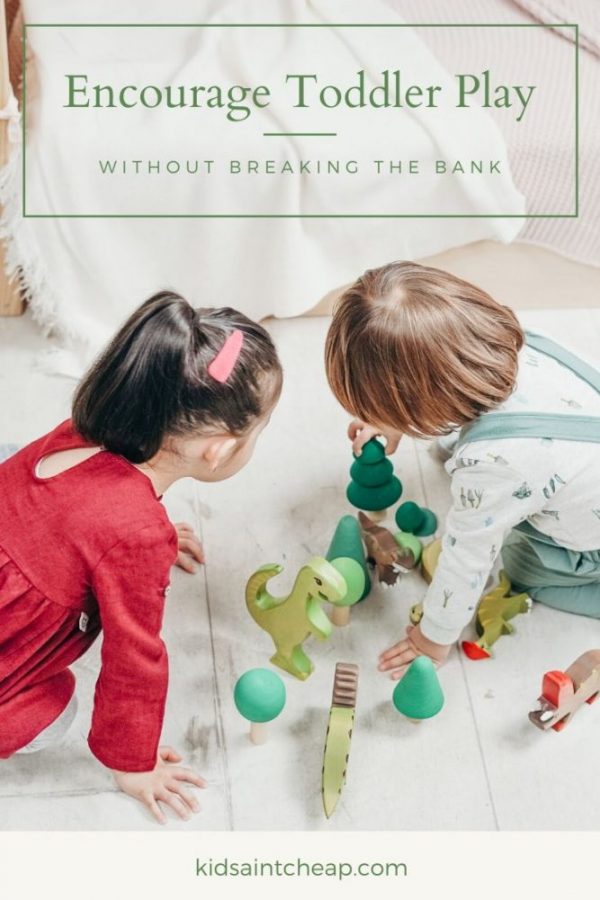
The toddler years from one to three are a time of tremendous growth.  Kids learn to walk, run, and explore their worlds.  They are curious, and both their minds and bodies are developing rapidly.  As a parent, giving your children safe ways to play and explore is important to their development.  At this age, you can find plenty of frugal ways to encourage toddler play without breaking the bank.

Encourage Toddler Play without Breaking the Bank

Low-Cost Supplies

There are so many low-cost supplies that you can stock your shelves with that will keep your child happy for hours.

Play-Doh

For less than $5, you can pick up a small set of Play-Doh for your toddler.  Play-Doh has definitely gotten fancier since my kids were toddlers.  Now you can buy Play-Doh with glitter in it and in a large variety of color.  Kids are usually happy playing with just Play-Doh, but if you want to spend a bit more, you can buy Play-Doh toys like a hair dresser shop or a gravel construction yard, for example.  You can also try your hand at making homemade playdough.

Finger Paint

If you have $8, you can buy a 6 pack of finger paint that will provide your child with artistic and sensory expression.  All of my children loved to finger paint when they were toddlers, but my middle child easily wanted to finger paint several times a week.  She still enjoys art, and I attribute it to all the time she spent finger painting when she was young.

Bubbles

This is likely the best way to encourage toddler play without breaking the bank.  Bubbles are ridiculously cheap, less than $1 for a small bottle, and yet your child can likely use them for at least a month.  He can experiment with how hard to blow to form the bubble or run and try to get the bubble to form.  Even better, mom or dad can blow bubbles while your toddler tries to catch them without popping them or runs through them.

Sidewalk Chalk

Sidewalk chalk is yet another way to let your little artist express herself.  You can get a box of 48 pieces of chunky chalk (perfect for little hands) for around $5.  These will last all summer, and your sidewalk or driveway is the perfect canvas.

Bath Supplies

After finger painting, my younger two kids’ favorite activity was taking a bath.  They loved to have the tub filled with bubbles to play in.  When the bubbles dissipated, they liked to play with their bath toys.  They could easily spend 45 minutes to an hour in the tub.  (Just make sure a parent stays in the room with them.)  You could buy the bubbles and a few toys for your kids for less than $20.  My girls’ favorite bath activity was using bath crayons to draw on the tub walls.

Doctor Kit

Many toddlers like playing doctor.  They take the stethoscope to your chest to check your breathing, they check your reflexes, and then they give you their diagnosis.  They also love it when you give them an exam.  These kits are a bit more expensive, around $20, but your child will likely use them quite a bit.  (We bought ours used at a garage sale for $1, which is another great way to save money).

Make It Yourself

There are other ways to encourage toddler play without breaking the bank.  Namely, instead of buying something, make it yourself!

Calm/Glitter Bottles

Many toddlers are fascinated with calm/glitter bottles and can spend a surprising amount of time tipping them from side to side.  Making a calm bottle is not difficult; there are plenty of tutorials online.

Once you buy the ingredients, you likely have enough to make several bottles.  Once your child tires of one, make a new one in a different color with different items inside.  Even though this tutorial only had glitter, I’ve seen calm bottles filled with a variety of items like large stars to give them some more visual appeal.

Bowling Set

Another idea for outdoor fun is to make a toddler bowling set.  You’ll need some empty water bottles and a ball.  Your toddler can practice knocking them down.  He’ll love it if you play with him.

The nice thing about a homemade bowling set is not only that it’s frugal, but if one bowling pin gets damaged, it’s easy to replace.

https://youtu.be/PHm4jK6x_sg

Sensory Play

There are a host of reasons why sensory play is beneficial for kids, not the least of which is that it helps develop connections in the brain and encourages imaginative play.

Probably the easiest one is to buy a can of shaving cream.  When my kids were about three, I’d put a light layer of shaving cream on a cookie sheet, and they practiced writing their letters in the shaving cream.  They loved the sensation, and they were learning at the same time.

Another less messy way to do this is to put a bit of shaving cream and a drop or two of dye in a gallon plastic freezer bag.  (Don’t fill it too much!)  Then kids can write their letters in the cream, but they do so on top of the bag so they still get sensory input, but there’s no mess for parents to clean up.

There are plenty of sensory play ideas online.

Don’t Forget the Books!

While it’s very important to encourage play in your toddlers, don’t forget to also read aloud to your child daily, the more the better.  The stories that you read aloud to your child now will eventually lead to imaginative play later.

I read aloud to my children frequently, and when my girls were in first and second grade, we read the entire Little House on the Prairie series.  They had the discipline to sit through those books because they were used to being read to.  For the next few years, much of their imaginative play was based on what they learned through those books.

Final Thoughts

Children under the age of three experience a phenomenal amount of brain and body growth in these important years.  Starting now, make sure to give your child plenty of safe opportunities to play and learn.

Melissa Batai
Melissa Batai

Melissa is a writer and virtual assistant. She earned her Master’s from Southern Illinois University, and her Bachelor’s in English from the University of Michigan. When she’s not working, you can find her homeschooling her kids, reading a good book, or cooking. She resides in Arizona where she dislikes the summer heat but loves the natural beauty of the area.

Filed Under: Education, Growing Up, Parenting Tagged With: frugal and fun, long-lasting toys for toddlers, toddlers

Should You Keep Your Child on a Schedule When School Is Out?

April 16, 2020 | Leave a Comment

Most American children are currently home from school and sheltering in place as ordered by their governors.  I’ve seen different advice flying across the Internet about how to handle this situation.  Some give a schedule to follow.  Others say this is a stressful time for kids, so let them relax and just be.  Of course, you as the parent ultimately choose what is best for your child.  But there are some things to consider when asking yourself, “Should you keep your child on a schedule when school is out?”

Should You Keep Your Kids on a Schedule When School Is Out?

Why You Should Have a Schedule

My kids, since they were little, have always done better when they had a schedule.  Now, I’m not saying we had a strict schedule, i.e. get up at 7, eat breakfast at 7:15, do the dishes at 7:30.  Honestly, such a regimented, precise schedule would drive me batty.

However, think of your own schedule.  You likely have a daily rhythm.  You get up at a certain time, you may then work out, then drink your coffee, then make breakfast, etc.  Those daily rhythms give us a sense of normalcy, something all of us desperately need now.

Should You Keep Your Child on a Schedule When School Is Out?
Photo by Trent Szmolnik on Unsplash

When asking if you should keep your child on a schedule when school is out, keep in mind that when they’re in school, kids have a schedule.  They know what to expect.  It makes them feel secure.  That is why I’d suggest having a schedule for your kids now, during these precarious times.  We could all benefit from feeling that at least one part of life is still normal.

How to Create a Schedule

In my experience, having the parent create the schedule doesn’t work well.  Instead, ask for input from your kids, if they’re old enough.  I would advise against making the schedule too strict.  For instance, when my kids first started staying home in March, my youngest, who is 10, went to work making a fairly strict schedule.  We followed it for about a week, but we all felt confined by it.

Should Your Child Follow a Schedule When School Is Out?
Photo by Andrew Neel on Unsplash

Now, in the four weeks that we’ve been home, we’ve relaxed the schedule a bit.  The kids still get up at the same time they used to when they went to school, so our morning routine is largely the same.  Then, at the time that we would normally take the kids to school, we start school work.  We follow a general routine of which order we do subjects, and that just makes life easier.  We don’t have to take the time to decide what we want to do next.

Allow More Free Time Then Normal

Even though a schedule can help the rhythms of your day, make sure to build in more free time.  We are living in a very stressful time.  That takes a toll on all of us, including kids.

I prefer to have the kids’ schoolwork completely done by lunchtime.  Then we have the afternoon to pursue other interests.  I do let my kids watch TV and play video games, but there is a time limit for these.  I’ve been surprised to find the kids playing more together and spending more time creating art and performing dance routines together.

Final Thoughts

We’re living in an odd time in history, the likes of which our country hasn’t seen in 100 years.  My advice, when considering should you keep your kids on a schedule when school is out is yes, keep a loose schedule.  But also allow plenty of free time.

Melissa Batai
Melissa Batai

Melissa is a writer and virtual assistant. She earned her Master’s from Southern Illinois University, and her Bachelor’s in English from the University of Michigan. When she’s not working, you can find her homeschooling her kids, reading a good book, or cooking. She resides in Arizona where she dislikes the summer heat but loves the natural beauty of the area.

Filed Under: Healthy Living & Eating, Parenting, Parenting Blog at KidsAintCheap Tagged With: daily schedule for stay-at-home moms, schedules

Free Ways to Keep Kids Occupied If Under a Shelter In Place Order

April 2, 2020 | Leave a Comment

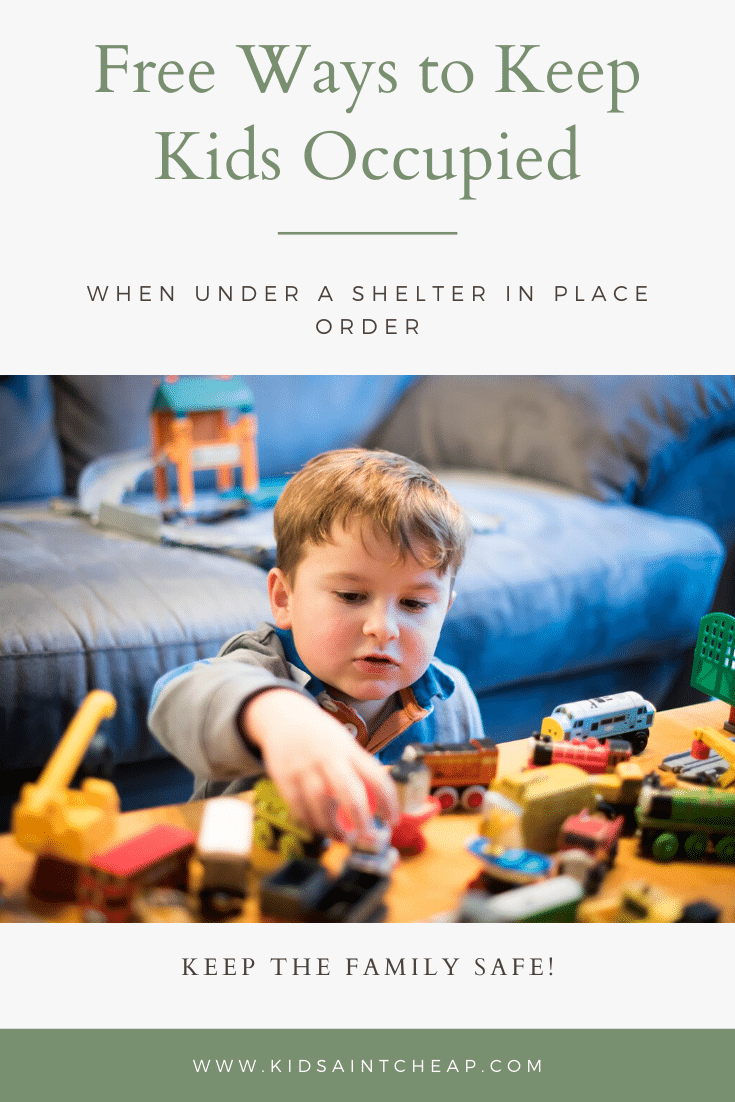
If you’re like me, one day you knew that there was a virus circulating the globe.  You knew that there were cases in America, and you were cautious, but not too concerned.  And then, on a Thursday, things started to get intense.  Shops were running low on groceries.  A few days later, kids’ schools were cancelled.  And now, just a few weeks after that, much of the United States is shuttered.  If your kids are bored, here are some free ways to keep kids occupied if under a shelter in place order.

Free Ways to Keep Kids Occupied When Under a Shelter in Place Order

Set a Schedule

The most important thing I would suggest you do with your kids is set a schedule.  It doesn’t have to be rigid, but instead, just a general guide for the way the day will go.  Kids thrive on routine (school is based on routine), and without it, kids can feel bored and lost.

At our house, we already homeschool two kids, and the other one is home from public school.  We do school roughly most of the morning, the kids get a tv break before lunch, then we do more school and creative activities in the afternoon, and the younger ones get TV time or video games before dinner.  After dinner, we have a show we watch together, then we have read alouds, and then bed.

Even though the whole world feels off-centered now, we roughly know what will happen every day.

Encourage Creativity

As I mentioned, we have creativity time.  You can browse Pinterest for craft ideas, or YouTube for art videos.  Or, you can join Mo Willems for Lunch Doodles and get a free art lesson daily.

Require Some Learning Every Day

If your children are home from school, they likely have class work to do.  If their school has stopped all coursework, still have your children do something educational every day, whether that’s doing Khan Academy, or playing a math game online, or reading a book, or watching a documentary on television.  My kids and I are still doing three to four hours of school a day.

Be a Little More Lenient with Media Time

Having said that, we’re all a little bored and stir crazy, so it’s okay to give your kids a little more media time.  I’ve doubled my kids media time (from 1 hr. per day to 2 hours per day).  Just be careful not to let them spend all of their time on media.

Free Ways to Keep Kids Occupied If Under a Shelter in Place Order
Photo by JESHOOTS.COM on Unsplash

For many kids, increased time watching TV and playing video games can lead to increased negative behaviors, so give them more leeway within reason.

Enjoy the Family Time

Lastly, enjoy more time as a family.  Before this pandemic, most of us were too busy every day.  Now we have the gift of time together.  Take that time to play a board game together or watch a movie or have a family discussion.

Final Thoughts

If you’re stuck at home, as so many of us are, try to find the positives of the situation.  We’re all experiencing something we’ll likely never experience again in our lifetimes.  Use these free ways to keep kids occupied if under a shelter in place order to make the time go faster and be more productive for the whole family.

Melissa Batai
Melissa Batai

Melissa is a writer and virtual assistant. She earned her Master’s from Southern Illinois University, and her Bachelor’s in English from the University of Michigan. When she’s not working, you can find her homeschooling her kids, reading a good book, or cooking. She resides in Arizona where she dislikes the summer heat but loves the natural beauty of the area.

Filed Under: Home and Living, Money and Finances, Parenting Tagged With: family time, schedules, school

How To Save A Ton of Money by Trading Your Kids’ Old Clothes

January 8, 2020 | Leave a Comment


How To Save A Ton of Money by Trading Your Kids' Old Clothes

Kids grow fast. The speed at which they grow often means they only get a handful of wear out of brand-new jeans before their ankles start making an appearance. Buying new clothes at a rapid case is a sure way to go broke. It’s also wasteful. The good news is that most moms are in the exact space you are. Trading your kids’ old clothes can save a ton of money. Here’s how to do it.

Three Ways To Save Money by Trading Your Kids’ Old Clothes

1. Host a Clothing Swap

A clothing swap is a great way to not only save money by finding new-to-you clothes for your children; it’s a great way to socialize and meet new people with similar interests.

Invite your friends with kids roughly the same age (or size) as yours. If your kids attend school, you can send an invite through their classroom. Ask everyone to bring a few gently used items of clothing for a swap. 

As everyone arrives, collect the donated items of clothes. Give everyone a ticket for the number of things they brought. As they browse the merchandise, they can turn in their tickets for new-to-them clothes. 

2. Consignment Shop

By swapping clothes at a consignment shop, you can not only save money, but you may also even make a little.  

Once a month, I take a bin of clothes to two consignment shops in my town. I’ve collected the clothes all month as I’ve done laundry and noticed things don’t quite fit anymore. I also strategically save holiday and seasonal items until a few months before, as the shops are more likely to purchase at that time.  

The consignment shop will sort through my bin based on what meets their qualifications. They’ll offer cash for the items they want, or a 20 percent bump if I choose store credit instead. Depending on if I need new clothes for my kids, I may choose the store credit and grab some items they may be lacking. What they don’t take, I’ll hit up at the next consignment shop, or take directly to goodwill.  

Occasionally, I’ll take the cash and apply it to whatever financial goal I’m currently working on.

3. Selling Online

Selling online has become much more sophisticated since the days eBay first came on the scene. It’s more convenient, especially if you tend to have higher-end clothes or clothes with tags.

Think about the clothes you receive for your kids from Grandma and Grandpa that never get worn because they’re already too small. Sell them online, then use that cash to subsidize the cost of new clothes. Better yet, make that cash go further buying gently used clothes either on the same site you sold to, or a consignment shop. 

Some of my favorite online resources for selling kids’ clothes are Kidizen, ThredUp, and Josies’ Friends.

Do you have a favorite method to save money on kids’ clothes? Share with us in the comments below.

Read more:

Here Are the Best Online Shopping Sites for Affordable Kids Clothes

Save Money And Host A Clothing Swap

Kid’s Clothing Consignment Sales: Are They Really Worth It?

Kate Fox

Kate Fox is a former CPA, with twenty years of experience in public accounting and corporate finance. Born and raised in Alaska, Kate is currently based out of southeastern North Carolina.  She loves coaching others on personal finance and spends her free time traveling with her family or relaxing by the pool with a good book, probably about money.

Filed Under: Growing Up, Money and Finances, Parenting, Secondhand Stores Tagged With: consignment shops, kids clothes, online shopping, save money

how to evaluate the cost of extracurricular activities

December 23, 2019 | Leave a Comment

the cost of extracurricular activities

As my children grow older, I’m beginning to explore the need to keep them busy while 1) allowing unstructured time for them to play and 2) providing them with moderate access to technology. It’s an art, and I’m often wondering if I’ve found the best recipe. What are the optimal measurements of each?

Part of this exploration also involves determining how much my budget allows for extracurricular activities.

Because – like kids, extracurricular activities ain’t cheap. And it continues to rise.

Choosing The Right Extracurricular Activity

My daughter takes to things reasonably easy. She’s a quick learner, prone to beginner luck with almost every activity I’ve signed her up for – ballet, soccer, gymnastics, cheerleading, karate, art, piano – to name a few. But once it gets hard and she has to make an effort, she doesn’t enjoy it, and it becomes a power tug of war between the two of us. It’s a juxtaposition of forcing her to stick to her commitments vs. allowing her to explore her real interests.

However, to my delight, riding horses has proven to be something special. It wasn’t love-at-first-sight, but I watcher her desire to learn blossom a little each day. 

The Cost of Extracurricular Activities

What was not to my delight, equestrian hobbies come at high expense. Between weekly riding lessons, show clothes, and show fees – I spend approximately $300 a month, on average. And we don’t even own (or lease) a horse. (yet)

I could buy a car for that. Not a Testa, but a reasonable car – something like a Honda Civic. 

Once I realized that riding horses was something she was going to stick with, I realized I needed to adjust my budget. But truth-be-told, I wasn’t sure how – our budget is pretty tight, and I would prefer to pour all my money into paying off our mortgage. 

Is the Cost Worth It? A Cost / Benefit Approach

At this point, I wrestled with whether the cost of riding horses was something I was willing to bear. What value was this adding to her life? The merits can be debated, but where I landed was that riding a horse requires caring for a horse. 

She has to groom her horse before she can ride. Horse camp involves mucking out stalls. Caring for an animal like a horse develops responsibility, as well as respect for an animal. She’s also building her confidence as she showcases her skills in front of her peers and judges. 

I hope that her relationship with horses continues to grow and as she enters junior high and high school, she chooses to spend her time at the barn, rather than out partying (as I did at that age).

Making Adjustments To My Budget – Now and in the Future

Ultimately, I decided the cost was worth it. I took on some additional writing assignments to offset the cost, and I cut back on the amount I was allocating to my mortgage-free fund.  

My son, on the other hand – he’s a different beast. He has little to no interest in extracurricular activities, and he’s an introvert. This combination is something I’m aware needs special attention in the current society we live in. I need to make sure he develops his social skills, but balance this need with respect for his personality. 

He’s also extremely bright. Over the next few years, I believe I will find myself becoming a chess or Mathlete parent. I’m okay with that. Time will tell. And when it does, I’ll need to adjust my budget again.


How do you approach the cost of extracurricular activities for your children? Have you found them to be more expensive than you initially expected?

Read more:

Paying for Extracurriculars Without Breaking the Bank

Teaching Kids the Value of Hard Work

Four Money Habits You Need To Teach Your Children

Kate Fox

Kate Fox is a former CPA, with twenty years of experience in public accounting and corporate finance. Born and raised in Alaska, Kate is currently based out of southeastern North Carolina.  She loves coaching others on personal finance and spends her free time traveling with her family or relaxing by the pool with a good book, probably about money.

Filed Under: Education, Money and Finances, Parenting Tagged With: after school activities, extracurricular activties, hobbies

« Previous Page
Next Page »
  • Facebook
  • Pinterest
  • RSS
  • Twitter
Best Parenting Blogs

Most Popular

Baby Girl

12 “Grandma” Baby Names That Are Suddenly Cool Again

Evan Morgan
Baby

9 Baby Names That Sound Rare Without Being Hard to Spell

Evan Morgan
Target Store

Choking Incident Prompts Recall of 49,000 Target Gigglescape “Under the Sea” Popping Toys

Evan Morgan
Frustrated Girl

Why Some Students on the Spectrum Are Labeled With ODD

Evan Morgan
Coke Bottles

12 Things Kids Took to School in the ’70s That Would Never Be Allowed Today

Evan Morgan

All content on Kids Ain’t Cheap is for entertainment purposes only. By reading this blog, you agree that Kids Ain’t Cheap is not responsible for any actions taken after reading this blog. For the full disclaimer, see our privacy policy.

Please note that Kids Ain’t Cheap has financial relationships with some of the merchants mentioned here. Kids Ain’t Cheap is funded by banner advertising, commission sales and search optimization consulting.

Copyright © 2006–2026 | District Media | All Rights Reserved | Privacy Policy

Copyright © 2026 Runway Pro Theme by Viva la Violette