• Home
  • About Us
  • Toolkit
  • Archives
  • Advertise
  • Privacy Policy

Kids Ain't Cheap

But They Sure Are Worth It

  • Parenting
    • Baby Stuff
    • Books and Reading
      • Aesops Fables
      • Comic Books
    • Education
    • Family Time
    • Green Living
    • Growing Up
    • Healthy Living & Eating
    • Holidays
    • Parenting
    • Random Musings
    • Shopping
    • Stuff to Do
  • Money
  • Product Reviews
    • Books and Magazines
    • Discount Sites
    • Furniture
    • House Keeping
    • Reviews News
    • Toys and Games
  • Contact Us
  • Our Editorial Commitment
  • Search

Everything You Should Teach Your Kids About Fire Safety

April 23, 2025 | Leave a Comment

Child in a fire chief costume with real firefighters, symbolizing fire safety lessons.
Image Source: Unsplash

Fires can be terrifying—especially for children. In a crisis, instinct alone may not be enough; knowledge and preparation make all the difference.

Teaching fire safety early is crucial, equipping kids with the awareness and confidence to react appropriately in an emergency. Understanding how fires start, how to safely escape, and when to call for help can make a life-saving difference. The sooner kids learn, the more empowered they’ll be to protect themselves and others.

The following tips help turn safety lessons into everyday habits the whole family can practice and remember—creating a safer home and a well-prepared child.

1. Create and Practice a Fire Escape Plan

Every family needs two ways out of every room and a single meeting spot outside.

  • Draw it together. Use markers or stickers to trace windows and doors on a big sheet of paper; let kids color the “outside safe tree” or mailbox meeting point.
  • Name the exits aloud. As you tuck them in, ask: “If smoke came from the hall, which window would you use?”
  • Drill twice a year—day and night. Set a timer; aim to reach the meeting spot in under two minutes. Vary scenarios (blocked hallway, parent in another room) so problem‑solving becomes automatic.
  • Review older‑kid roles. Tweens can practice guiding younger siblings by holding hands and staying low.

For step‑by‑step planning templates, check the National Fire Protection Association’s (NFPA) free resources.

2. Keep Children Three Feet Away from Hot Objects

Stovetops, space heaters, and even a steaming mug of cocoa can cause painful burns.

  • Add barriers. A sturdy safety gate around fireplaces keeps curious toddlers at bay without constant reminders.
  • Mark a “kid‑free zone.” Place bright painter’s tape three feet around ranges and portable heaters; remind little chefs to stand behind the line.
  • Narrate your moves. Say, “I’m turning pot handles inward so you can’t bump them,” to model caution.
  • Use visual timers. While soup simmers, set a sand timer kids can watch; when the sand runs out, they know ‘look, don’t touch’ time is over.

3. Fire Starters Are for Grown‑Ups Only

Matches and lighters should be stored up high and out of sight. Role‑play what to do if they ever find one—walk away and tell an adult. Reinforcing this message reduces the risk of child‑set fires.

4. Install and Test Smoke Alarms Regularly

Place alarms on every level and outside each bedroom. Test them monthly together so the sound is familiar, then choose a yearly “battery birthday” for replacements. You should replace the entire unit every ten years to ensure reliability.

A fire hose reel and sign, highlighting the need for early fire safety education.
Image Source: Unsplash

5. Fire Safety Education Works—Start Early

Preschool‑level programs that use songs, puppet shows, or picture books help kids remember key rules. Look for materials that encourage hands‑on practice and positive reinforcement rather than fear.

6. Teach Stop, Drop, and Roll (and When to Use It)

Make practice fun—count to three, then roll together like logs. Emphasize that this technique is only for clothing on fire, not every emergency.

7. Remind Kids Not to Hide During a Fire

Fear can send children under beds or into closets. Explain that hiding makes it hard for firefighters to help. Show pictures of firefighters in gear so the masks and suits look friendly, not scary.

8. Use Fire Safety Stories and Games

Interactive books and online games turn safety rules into memorable adventures. Try a “find the smoke alarm” scavenger hunt or craft a beaded bracelet spelling your home’s emergency number.

Keep Safety Simple and Ongoing

Fire safety shouldn’t be a one‑time lecture. Bring it up during ordinary moments: while cooking, hearing a siren, or replacing alarm batteries. A calm, age‑appropriate approach empowers kids without scaring them—building knowledge they’ll carry for life.

Have you talked about fire safety with your kids? Share your tips or questions in the comments—we’d love to hear what works in your home.

Read More

  • Living in Risk: 13 Most Hazardous Places to Reside In The US
  • Keep Your Home Safe From Fires Using These Tips

Samantha Warren
Samantha

Samantha Warren is a holistic marketing strategist with 8+ years of experience partnering with startups, Fortune 500 companies, and everything in between. With an entrepreneurial mindset, she excels at shaping brand narratives through data-driven, creative content. When she’s not working, Samantha loves to travel and draws inspiration from her trips to Thailand, Spain, Costa Rica, and beyond.

Filed Under: Parenting Tagged With: burn prevention, child safety tips, emergency preparedness, family fire escape plan, fire safety for kids, home safety, kids fire education | Parenting, parenting advice, Safety

Should You Let Your Family Choose Your Baby’s Name? Experts Weigh In

April 23, 2025 | Leave a Comment

Sleeping newborn in a tiny wooden bed, symbolizing family naming decisions.
Image Source: Unsplash

Welcoming a new baby is exhilarating—but deciding on a name can feel like a high‑stakes debate. Between honoring traditions, following your own style, and managing strong family opinions, you might wonder how much say relatives should really have. Below, we explore what naming specialists and seasoned parents recommend for keeping your baby name choice joyful rather than stressful.

The Upside of Inviting Family Into the Conversation:

Bringing relatives into the brainstorming phase can unearth gems you’d never discover on your own. Grandparents may recall ancestral names, regional spellings, or stories behind long‑forgotten relatives that add depth and meaning.

Siblings might introduce trend‑resistant options you haven’t considered. When families discuss a name’s origin and significance, they often strengthen intergenerational bonds—offering your child a built‑in lesson about belonging and shared heritage.

Naming Together: Why Some Parents Involve Family

Inviting relatives into the process can spark ideas you’d never think of alone. Grandparents may suggest heritage names or spellings that celebrate cultural roots. Parenting counselors note that when families discuss name meaning and history, it often deepens intergenerational bonds and highlights shared values—an early lesson in belonging for your child.

Warning Signs of Too Much Input

Too many cooks in the kitchen can leave you second‑guessing. If a relative’s opinion feels more like pressure than guidance, it’s time to set boundaries. Child‑development experts on Verywell Family highlight that expecting universal approval only fuels disappointment; a key sign you’ve opened the door too wide is when you feel anxious rather than inspired after each conversation.

Timing Matters—When Should You Share the Name?

Some parents reveal their short list before birth to gather feedback, while others wait until they’re holding the baby to avoid debates. The editors at BabyCenter suggest sharing only when you’re comfortable sticking to your decision—early disclosure invites commentary you may not be ready to handle.

Cultural Identity and Name Meaning

A name can honor ancestry or linguistic heritage without boxing you into one style. Many families blend a traditional first name with a modern middle name, or vice versa. The goal is ensuring the final choice still feels like your child’s name—reflecting both family pride and personal taste.

How to Balance Family Input With Your Preferences

If you welcome ideas, be clear about the ground rules: “We’d love suggestions, but we may choose something else.” Keep a private list with your partner so you don’t lose sight of what you both love. Practicing firm yet kind responses—“That’s a beautiful option; we’ll think it over”—helps shut down persistent campaigning without hurt feelings.

Deciding as a Team: The Parents Come First

Ultimately, the two people raising your child need to be enthusiastic about the final name. A choice driven by guilt or obligation can breed regret—something no parent needs during midnight feedings. Trust that a united front now sets the tone for future parenting decisions.

A hand writing names on colorful kindergarten cubbies.
Image Source: Unsplash

A Name to Grow With

Picture the name on kindergarten cubbies and a professional résumé. Some unique picks win over extended family once they’re attached to a smiling baby. And remember, if your child dislikes the name later, they can choose a nickname or even legally change it as an adult—another reason to focus on meaning and flexibility over family consensus.

Your Name, Your Story

Family opinions often come from love, but they shouldn’t outweigh your instincts. Take suggestions as inspiration, not mandates, and decide when—and if—you share your final pick. The name you choose marks the first page of your child’s story; write it with confidence and joy.

What are your thoughts regarding naming your baby, any new insights? Let us know in the comments below!

Read More

  • Why Some Parents Regret Choosing a Unique Name
  • 5 Baby Names That Have Been Banned Worldwide

Samantha Warren
Samantha

Samantha Warren is a holistic marketing strategist with 8+ years of experience partnering with startups, Fortune 500 companies, and everything in between. With an entrepreneurial mindset, she excels at shaping brand narratives through data-driven, creative content. When she’s not working, Samantha loves to travel and draws inspiration from her trips to Thailand, Spain, Costa Rica, and beyond.

Filed Under: Parenting Tagged With: baby name choice, baby names, family input baby name, name reveal, naming your baby, new baby tips | Parenting, parenting advice

7 Reasons You Shouldn’t Waste Money on Private Schools

April 22, 2025 | Leave a Comment

Empty classroom with rows of desks facing a chalkboard.
Image Source: Unsplash

Many parents assume a hefty tuition bill guarantees a superior education. Yet rising tuition and widening equity gaps raise a crucial question: is private school really the smart investment? Below are seven evidence‑based reasons you might want to keep that money in your pocket.

1. The Cost Is Sky‑High—And Often Unjustified

The Cost Is Sky‑High—And Often Unjustified

Annual tuition at a private K‑12 school can top $20,000—and that figure rarely accounts for required uniforms, technology fees, mandatory fundraising, or the travel costs tied to sports and debate tournaments.

When analysts control for factors such as parental income, educational attainment, and neighborhood resources, the difference in long‑term earnings between private‑ and public‑school graduates largely disappears. In other words, the premium you pay up front doesn’t necessarily translate into higher wages down the line.

Consider what else $20,000 per year could do: build a robust college fund, finance tutoring in a child’s weakest subject, or underwrite family experiences that nurture curiosity outside the classroom.

2. Limited Diversity Restricts Growth

Many private schools draw from a narrower socioeconomic bracket, meaning students often see fewer cultural perspectives in day‑to‑day interactions. A more homogeneous environment can unintentionally limit empathy, stifle problem‑solving skills, and reduce the ability to collaborate across cultural lines—abilities that modern employers prize.

By contrast, most public schools reflect their surrounding communities, exposing students to a richer tapestry of languages, traditions, and viewpoints. That daily immersion in difference fosters open‑mindedness, resilience, and the social agility necessary in a global economy.

Data summarized by Education Week shows public‑school students interact with a more diverse peer group, boosting social skills employers increasingly value.

3. Social Circles Can Be Restrictive

Tuition‑driven communities sometimes foster cliques around status or wealth, leaving kids less prepared to relate beyond their immediate bubble. In contrast, public‑school students navigate a wider range of personalities—experience that translates into stronger adaptability in college and the workplace.

4. Public Schools Suffer When Families Opt Out

When involved families leave, districts lose both funding and engaged volunteers. Over time, that siphons resources from neighborhood schools and widens opportunity gaps. Choosing public education is a vote of support for your entire community.

5. Inequality Gets Even Worse

Smaller classes and cutting‑edge labs at private schools aren’t universally accessible. When some families can “buy” advantages, the achievement gap widens. Sociologists warn that such disparities erode social cohesion and perpetuate cycles of privilege.

Students in uniform seated at desks, focused on writing in a classroom.
Image Source: Unsplash

6. Enrollment Isn’t Guaranteed—Stress Isn’t Cheap

Private schools cap class sizes and maintain waitlists, turning admission into a competitive, stressful process. Even after acceptance, families face ongoing performance pressure to justify the investment—pressure that can drain emotional and financial reserves alike.

7. Public Schools Offer Surprising Advantages

Gifted programs, Advanced Placement courses, and free extracurriculars abound in many districts. Studies tracking college outcomes find that motivated public‑school students often earn scholarships and thrive at top universities—proof that success hinges more on support at home than on a pricey campus.

What Your Child Really Needs Is You

No single school model fits every family. But stretching finances for prestige can introduce its own set of stresses—without guaranteeing better results. Classroom resources matter, yet the biggest driver of student success is still engaged, encouraging caregivers. Before committing to a sky‑high private school cost, consider whether your child might gain just as much—in academics and in perspective—within your local public system.

Choosing between public and private? Share your thoughts below; other parents will appreciate your insight.

Read More

  • Year-round Money Saving and Fun Activites for Parents and Kids
  • Saving Money on Big Family Events
Samantha Warren
Samantha

Samantha Warren is a holistic marketing strategist with 8+ years of experience partnering with startups, Fortune 500 companies, and everything in between. With an entrepreneurial mindset, she excels at shaping brand narratives through data-driven, creative content. When she’s not working, Samantha loves to travel and draws inspiration from her trips to Thailand, Spain, Costa Rica, and beyond.
Filed Under: Parenting Tagged With: child education, education, family budgeting | Parenting, parenting advice, private school cost, public vs. private school, school choice

Why You Should Avoid These 5 Overused Baby Names

April 22, 2025 | Leave a Comment

Newborn baby sleeping peacefully on a soft white blanket.
Image Source: Unsplash

Naming a baby is thrilling—but the high stakes make it easy to fall into trendy territory you’ll later regret. If you want something timeless yet distinctive, steering clear of today’s most overused names can help. Below are five naming trends nearing saturation and a few fresh alternatives to keep your child’s name both meaningful and memorable.

1. The “‑aden” Wave Is Receding

Jaden, Aiden, Brayden: once modern, now slipping fast. For instance, Jaden fell more than 160 places in the latest popularity charts. If you love the rhythm, try Arlo or Bodhi—similar bounce, less trend fatigue.

Why it’s fading: Parents who embraced the trend twenty years ago are now looking for fresher territory, so classroom redundancy is setting in.

Try instead:

  • Arlo – short, upbeat, and outside the current top‑100.
  • Bodhi – spiritual vibe without the overuse.
  • Ronan – Celtic strength with soft vowels.

2. Chart‑Toppers Like Olivia and Liam Are Everywhere

Classics endure, but their ubiquity means your child may share a classroom with multiple namesakes. Consider variants such as Liviana or Leo to retain the charm without joining the crowd.

Why it’s risky: A true classic never feels dated, but ubiquity can make even a beloved name feel less personal.

Try instead:

  • Liviana or Livia – keeps the “Liv” charm with added flair.
  • Leo or Leonel – shares Liam’s friendly, two‑syllable energy.
  • Celia or Celine – vintage chic without the crowd.

3. Cowboy‑Inspired Picks Risk Novelty Burnout

Television hits have boosted names like Waylon and Huck. Unless they hold personal or regional meaning, they may feel gimmicky once the media moment fades. Swap in rugged yet less-hyped choices like Colter or Reid.

Why it’s volatile: Pop‑culture‑driven spikes often fade once the series finale rolls and parents move on to the next obsession.

Try instead:

  • Colter – Western grit but still uncommon.
  • Reid – slim, strong, and evergreen.
  • Shepherd (Shep) – pastoral twist with room for cute nicknames.

Ask yourself: Will this name still resonate once the show slips from Netflix’s front page? If the answer is shaky, keep brainstorming.

Smiling baby in a pink outfit looking up.
Image Source: Unsplash

4. “Z” Names Are Nearing Peak Saturation

Zayn, Zuri, and Azalea sound fresh now, but rapidly rising popularity can make them feel dated later. Subtler options—Eliza, Zara, Luz—keep the zing without chasing a fad.

Why it might age: Once‑rare initials lose their sparkle when every second birth announcement starts with the same letter.

Try instead:

  • Eliza – the Z sound stays, but subtle placement reduces trendiness.
  • Luz – Spanish for “light,” short and radiant.
  • Zahara – exotic feel, but outside the top‑500.

5. Vintage Favorites Are Losing Their Rarity

Amelia, Ezra, and Hazel surged as charming throwbacks, yet their current top‑ten status erodes uniqueness. Delve deeper into the archives with picks like Mabel, Sylvie, or Otis to retain nostalgia minus the déjà vu.

Why you may hesitate: Once‑quirky antiques become today’s mainstream, erasing the “unexpected” factor that tempted many parents in the first place.

Try instead:

  • Mabel – sweet, old‑school charm still below the top‑300.
  • Sylvie – French sparkle with vintage roots.
  • Otis – soulful, musical, yet rare.

Choosing a Name That Grows With Your Child

Here are a few more tips to wrap up:

  • Audit nicknames, initials, and domain handles. Cute at birth can be awkward at sixteen (think unfortunate initials or default email addresses). Say the full name aloud, jot the initials, and search popular social platforms to spot conflicts early.
  • Test for global usability. If international travel or bilingual households are in the picture, pick something easily pronounced in your core languages. “Luna” is nearly universal; “Rhett” can be trickier abroad.
  • Sleep on it—literally. Tape the favorite to the fridge, use it in conversation for a week, and imagine calling it across a playground. That lived‑in test often surfaces hidden hesitations.

Trends come and go, but a name chosen for meaning, heritage, and personal resonance will always stand out in your child’s life. Aim for pronunciation ease and emotional significance over fashionable buzz—your future self (and your grown child) will thank you.

Would you choose any of theses children’s names for your child? If so, let us know in the comments below.

Read More

  • The Expenses of a Family Pet
  • 7 Girls Names That Mean Queen and How Your Daughter Can Flourish With These Names
Samantha Warren
Samantha

Samantha Warren is a holistic marketing strategist with 8+ years of experience partnering with startups, Fortune 500 companies, and everything in between. With an entrepreneurial mindset, she excels at shaping brand narratives through data-driven, creative content. When she’s not working, Samantha loves to travel and draws inspiration from her trips to Thailand, Spain, Costa Rica, and beyond.

Filed Under: Parenting Tagged With: baby names, baby‑name trends 2024, Choosing a Baby Name, overused names, parenting advice, parenting tips | Parenting, unique baby names

Wearing Makeup: Here Is the Age That Psychologists Agree It’s Okay for Girls to Wear Makeup

April 19, 2025 | 3 Comments

Girl getting makeup done, referencing psychologist-approved age.
Image Source: Unsplash

There comes a moment in many households that catches parents off guard: your daughter asks to wear makeup. Whether it’s a swipe of lip gloss before school or a request for mascara before a sleepover, it can leave you wondering—“Is she too young?”

While our first reaction might be rooted in concern, the conversation around kids wearing makeup is far more nuanced than a quick yes or no.

The good news? Psychologists point to guidelines—rather than a single “magic age”—and recommend a thoughtful approach grounded in communication, culture, and confidence.

There’s No One‑Size‑Fits‑All Answer

If you’re hunting for a universal age, you won’t find it. Developmental experts note that emotional maturity, family values, and community norms matter more than the number on a birthday cake. In some homes, makeup is seen as playful and harmless; in others, it symbolizes growing up too fast.

The key is identifying what makes sense for your child and your parenting style, then revisiting the conversation as she develops.

Cultural Norms Matter More Than You May Realize

Makeup can signal very different things depending on where—and how—you were raised. In some cultures, cosmetics are part of tradition or spirituality; in others, they’re tied to adulthood.

This wide variation shows there’s no universal social script. What feels “too young” in one community might be completely age‑appropriate in another. Considering cultural context helps parents avoid snap judgments and craft boundaries that fit their family’s worldview.

Your Attitude Toward Makeup Matters Most

Parents often overlook how their own routines shape kids’ perceptions. If you treat makeup as fun or expressive, your child may view it that way. If it seems like a daily necessity, she might learn that appearance comes first. Modeling balanced messages around beauty, confidence, and self‑care goes further than any rulebook.

Ask yourself: “What does my makeup routine communicate about self‑worth?”

The Psychological Impact Is Real—But Manageable

A little lipstick on its own may be harmless, yet peer pressure can give cosmetics extra weight. Rather than treating makeup as the culprit, use it as a springboard for honest talks about body image and media influence. Reinforcing skills like media literacy and self‑compassion keeps appearance anxiety in check.

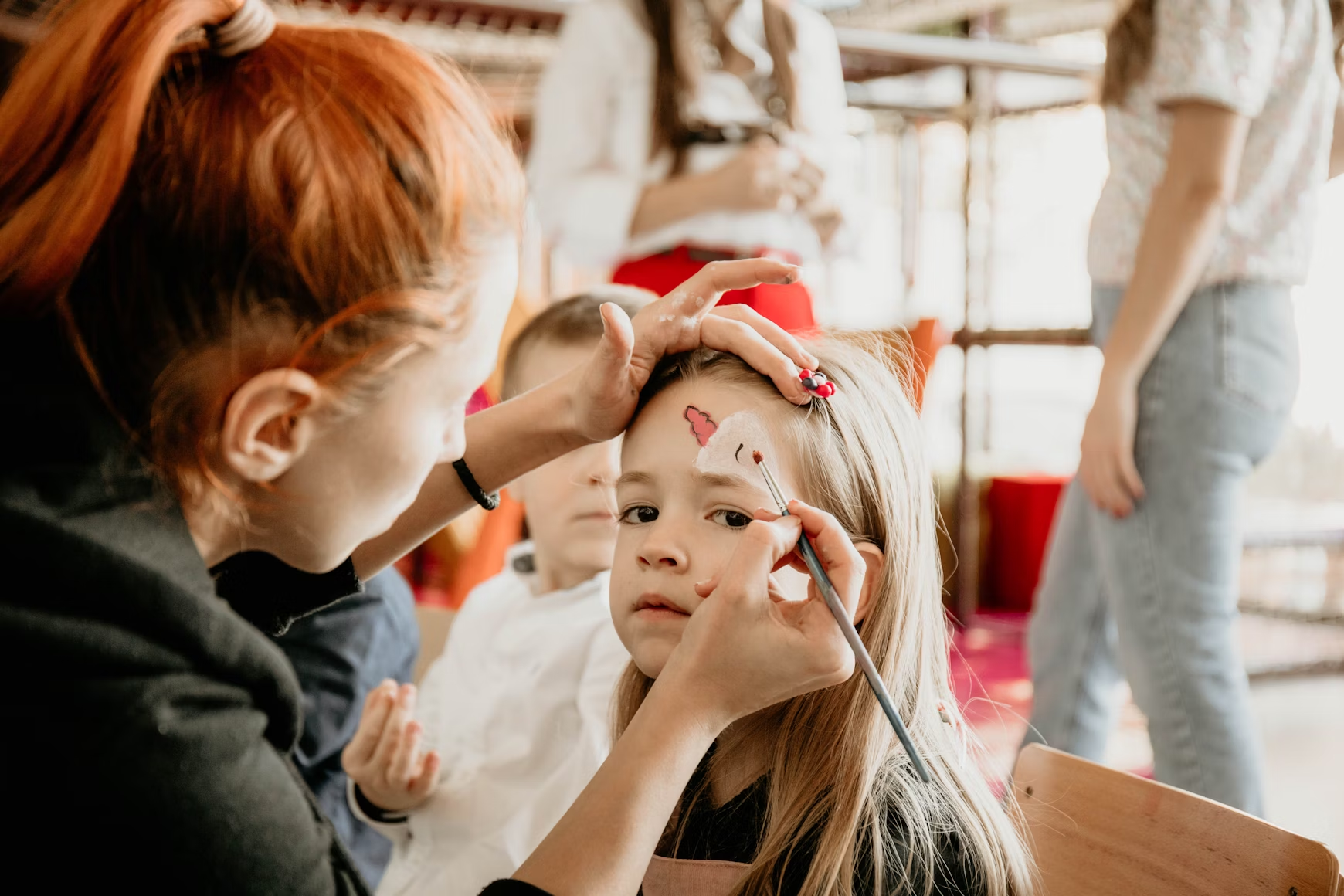
Child having face paint done, highlighting healthy ground rules and ongoing talks
Image Source: Unsplash

Start with Healthy Ground Rules and Ongoing Talks

Introducing makeup should be gradual and guided. Many parents find success limiting it to playtime or special occasions at first, then expanding privileges as maturity grows.

Emphasize that cosmetics are a form of self‑expression—not a requirement—and keep discussions open as peer dynamics shift. A good starting point is sheer or natural products that feel more like “training wheels” than a full glam look.

It’s Less About Age—More About Readiness

Still unsure? Focus on emotional and social readiness. Can your child handle comments—positive or critical—about her appearance? Does she understand basic hygiene like removing makeup properly and not sharing products? Is she using cosmetics for fun, or because she feels “less than” without them?

These answers reveal whether she’s prepared, far better than any age guideline.

A Thoughtful First Step Makes All the Difference

Instead of issuing a hard yes or no, frame this milestone as a coaching moment. You can show your child how to choose safe products, budget wisely, and emphasize skin care. Matching nail colors or experimenting with bold (but washable) eye shadow during home playtime can keep the spotlight on fun rather than flaw‑fixing. The discussion is bigger than blush—it’s about fostering confidence and balanced values.

Navigating Makeup with Heart and Intention

Letting your daughter wear makeup doesn’t have to be an all‑or‑nothing choice. By staying tuned in, setting age‑appropriate boundaries, and maintaining open dialogue, you nurture self‑worth over surface impressions.

Remember, the goal is not to ban or endorse cosmetics wholesale but to help your child understand her beauty and strength come from within. Like many parenting milestones, makeup is another chance to connect, validate, and empower.

Do you let your child wear makeup? Share your thoughts in the comments below!

Read More

  • What’s Happening to the Child Tax Credit?
  • The Importance of Simply Asking: Money Saving Edition
Samantha Warren
Samantha

Samantha Warren is a holistic marketing strategist with 8+ years of experience partnering with startups, Fortune 500 companies, and everything in between. With an entrepreneurial mindset, she excels at shaping brand narratives through data-driven, creative content. When she’s not working, Samantha loves to travel and draws inspiration from her trips to Thailand, Spain, Costa Rica, and beyond.

Filed Under: Parenting Tagged With: age‑appropriate makeup, beauty standards | Parenting, child development, child self‑esteem, girls wearing makeup, makeup for kids, parenting advice

10 Parenting Practices That Are More Harmful Than You Think

April 19, 2025 | Leave a Comment

Mother holding baby, referencing harmful parenting practices
Image Source: Unsplash

Most parents want the very best for their children—but even with good intentions, some habits can unknowingly stunt confidence, strain relationships, or trigger anxiety. The goal of this list isn’t to spark guilt; it’s to spark growth. When we know better, we can do better—and model that same openness for our kids.

1. Ignoring Emotional Needs (Uninvolved Parenting)

When children repeatedly feel brushed off—“Stop crying, it’s no big deal”—they may internalize the belief that their feelings are unimportant.

Your takeaway: schedule daily check‑ins, validate feelings before offering solutions, and show you’re listening with eye contact and reflective language (“It sounds like recess felt tough today.”)

2. Using Strict Control Without Warmth (Authoritarian Parenting)

Rules without relationship equal rebellion—or, at the other extreme, people‑pleasing anxiety. Research shows that authoritarian homes correlate with higher levels of childhood stress and lower academic curiosity. Swap “Because I said so” for explanations that teach why a rule exists; pair consequences with reassurance of love.

3. Too Much Freedom, Not Enough Structure (Permissive Parenting)

Kids crave boundaries; they signal safety. When limits are vague (“Do whatever, just be good”), children struggle with impulse control and often test bigger risks. A balanced approach—clear rules delivered with warmth—helps kids predict outcomes and trust your guidance.

4. Spanking and Physical Discipline (Corporal Punishment)

Decades of data reveal that spanking increases aggression and lowers moral internalization. Swap physical punishment for time‑ins, natural consequences, and collaborative problem‑solving.

5. Letting the Internet Guide You

A single viral post can spread medical myths faster than fact‑checked articles. Pediatricians warn that trending “remedies” (think raw‑milk baby formula or bleach baths) can be downright dangerous. The American Academy of Pediatrics urges parents to verify any health hack with a licensed provider before trying it.

Two children holding hands, cautioning against comparisons
Image Source: Unsplash

6. Comparing Your Child to Others

“Why can’t you behave like your sister?” may motivate in the moment, but research shows frequent comparison fuels sibling rivalry and erodes self‑worth. Highlight individual strengths instead: “I love how curious you are about science” or “Your drawings show such creativity.”

7. Rewarding Only Results, Not Effort

Praising A‑grades without acknowledging the hours of studying teaches kids that worth equals performance. Carol Dweck’s growth‑mindset research suggests recognizing effort (“You worked hard on those math problems”) cultivates resilience and a love of learning—even when outcomes disappoint.

8. Over‑Scheduling Without Downtime

Back‑to‑back activities can crowd out essential play, sleep, and daydreaming—all critical for mental health and creativity. We recommend at least an hour of unstructured time daily. Protect “white‑space” in the family calendar where boredom—and imagination—can bloom.

9. Threatening Consequences You Don’t Enforce

Empty threats teach kids that boundaries bend. If you declare “No video games for a week,” stick to it—or choose a realistic, shorter ban you will uphold. Consistency builds trust in your word and clarity around expectations.

10. Expecting Adult‑Level Emotional Control

Brains aren’t fully wired for self‑regulation until the mid‑20s. Demanding immediate calm (“Stop crying NOW”) can shame kids for normal feelings. Instead, coach them through breathing exercises, label emotions out loud (“Looks like you’re frustrated”), and practice coping skills when everyone’s calm.

Moving Forward With Awareness and Compassion

Recognizing harmful parenting practices isn’t an indictment—it’s an invitation to evolve. Children don’t need perfect parents; they need parents willing to learn, apologize, and try again.

Choose one habit above to tweak this week—maybe validating feelings instead of dismissing them, or setting firmer digital‑advice filters—and note the shift in your child’s confidence. Small, consistent changes compound into a healthier family culture where everyone can thrive.

Which point resonated most with you—or what would you add? Drop a comment below and keep the conversation growing.

Read More

  • 5 Tips to Ease the Anxiety of Moving for Your Kids
  • Parental Trauma: Healthy Children Have Never Had to Endure These 12 Things

Samantha Warren
Samantha

Samantha Warren is a holistic marketing strategist with 8+ years of experience partnering with startups, Fortune 500 companies, and everything in between. With an entrepreneurial mindset, she excels at shaping brand narratives through data-driven, creative content. When she’s not working, Samantha loves to travel and draws inspiration from her trips to Thailand, Spain, Costa Rica, and beyond.

Filed Under: Parenting Tagged With: child development, discipline, harmful parenting practices, parenting advice, parenting health, parenting pitfalls, parenting tips

8 Parenting Trends That Sound Great (But Might Be Hurting Your Kids)

April 18, 2025 | Leave a Comment

Parent and child in the park
Image Source: Unsplash

We all want what’s best for our children—but what happens when trendy parenting advice starts to backfire? In today’s world of parenting influencers, viral hacks, and picture‑perfect Instagram families, it’s easy to feel like you’re constantly chasing the newest way to raise happy, resilient kids.

Yet some well‑meaning approaches can do more harm than good. That doesn’t mean you’ve failed—far from it. It simply means pausing, reflecting, and refocusing on what truly supports your child’s development.

Below are eight popular parenting trends that deserve a second look—plus gentle shifts that keep long‑term well‑being front and center.

1. Gentle Parenting Gone Too Far

Gentle parenting emphasizes empathy and respect—powerful foundations for emotional intelligence. But when the concept morphs into anything goes permissiveness, kids can struggle with self‑regulation and boundary‑reading.

Children thrive on warmth plus structure; empathy works best alongside clear, consistent limits. If you find yourself saying “yes” to avoid conflict, pair compassion with follow‑through: “I hear you’re upset, and the answer is still no.”

2. Hyper‑Aware Parenting

Staying informed about milestones is smart, yet constant scanning for problems can spark parental anxiety and over‑intervention. The American Psychological Association warns that kids can absorb this tension and develop self‑doubt. Instead, trust evidence‑based check‑ups—yearly pediatric visits and developmental screenings—while celebrating strengths between appointments.

3. Screen Time as a Primary Soother

Tablets in restaurants can be lifesavers, but defaulting to screens for every whimper short‑circuits key social skills. The American Academy of Pediatrics recommends no more than one hour of high‑quality screen time per day for preschoolers and co‑viewing whenever possible. Swap some digital moments for storytelling or rough‑and‑tumble play, which boost language and motor development.

4. Oversharing Kids’ Lives Online

A single cute photo feels harmless, but a steady stream can create a digital footprint your child never consented to. Beyond privacy risks children whose lives are heavily shared online often feel pressure to “perform” for the camera.

Ask yourself: Will this post still feel respectful when my child is 16? Consider private photo‑sharing apps or closed family groups instead of public feeds.

5. Scheduled to the Minute

Between language lessons, sports, and STEM camps, some kids have calendars tighter than a CEO’s. Over‑scheduling has been linked to stress and diminished creativity. Protect downtime by designating at least a few device‑free, activity‑free hours each week. Boredom isn’t a failure—it’s an incubator for imagination.

Person overwhelmed by emotions, symbolizing internal chaos
Image Source: Unsplash

Validating feelings is crucial, but treating every mood swing like an emergency can teach kids that discomfort is intolerable. Emotion‑coaching experts advise a balanced script: Name the feeling → set a limit if needed → brainstorm coping tools.

Calm acknowledgment (“You’re angry you lost the game—let’s talk about what might help”) models resilience better than dramatic interventions.

Ignoring Social Media Risks

Nearly half of teens report that social media makes them feel worse about their body image or social life. Adolescents spending three‑plus hours daily on platforms double their risk of depression.

Active monitoring—knowing whom your child follows, using built‑in time limits, and discussing digital citizenship—offers far more protection than blanket bans or laissez‑faire freedom.

8. Never Letting Kids Be Uncomfortable

Stepping in at the first sign of boredom, frustration, or failure prevents kids from practicing coping skills. Manageable struggle fuels perseverance and confidence. Encourage problem‑solving before rescuing: “That puzzle is tricky. What’s one strategy you could try next?”

Stepping Back to See the Bigger Picture

Parenting doesn’t need to be perfect—it just needs to be intentional. Many of these trends spring from love and protection, yet overlooking long‑term development for short‑term comfort can create new challenges.

The good news? You can pivot at any time. By blending evidence‑based guidelines with your child’s unique temperament, you’ll craft a parenting approach that fosters resilience and joy—for both of you.

Which parenting trends have you tried—and which surprised you the most? Share your insights in the comments below; we’d love to learn from your journey.

Read More

  • Parenting Win: Teaching Money Skills to Your Kids
  • Parenting Hacks: 9 Effective Strategies for Helping Your Child Take Medications
Samantha Warren
Samantha

Samantha Warren is a holistic marketing strategist with 8+ years of experience partnering with startups, Fortune 500 companies, and everything in between. With an entrepreneurial mindset, she excels at shaping brand narratives through data-driven, creative content. When she’s not working, Samantha loves to travel and draws inspiration from her trips to Thailand, Spain, Costa Rica, and beyond.
Filed Under: Parenting Tagged With: child development, child mental health, gentle parenting, parenting advice, parenting trends, Screen Time, social media and kids

Are We Over‑Diagnosing Kids With ADHD Just to Keep Them in Line?

April 17, 2025 | Leave a Comment

Child in hospital wheelchair, undergoing ADHD assessment
Image Source: Unsplash

Despite the rising awareness of attention‑deficit/hyperactivity disorder (ADHD), many parents wonder whether we’re labeling normal childhood energy as a disorder just to manage behavior.

ADHD diagnosis rates have surged over the past two decades. For some kids, a diagnosis opens the door to meaningful support; for others, it can mean medication and misunderstanding. Is your child struggling with a disorder, or do they simply need a different kind of attention?

Understanding What ADHD Really Means

An ADHD diagnosis requires much more than forgetfulness or an inability to sit still. According to the National Institute of Mental Health, children must show clear symptoms—such as impulsivity or hyperactivity—before age 12, and those symptoms must disrupt everyday life in multiple settings. A fidgety child isn’t automatically ADHD if they’re calm and focused at home but struggle only in one classroom. ADHD is a clinical condition, not a judgment on personality or parenting.

Diagnosis Is Complex—And It Should Be

When behavior feels outside the norm, it’s natural to want answers. A proper ADHD diagnosis should never hinge on a single checklist. We recommend a comprehensive evaluation that includes input from teachers, parents, and medical professionals while ruling out anxiety, depression, or learning disorders. Each of these conditions can mimic ADHD symptoms, and mistaking one for the other can lead to the wrong treatment.

Not Every Wiggly Kid Has ADHD

Researchers warn that ADHD is sometimes overdiagnosed—especially in children with mild symptoms. A large‑scale NIH review found growing evidence of overdiagnosis and overtreatment, leading to unnecessary medication use. Some kids who simply need more movement, hands‑on learning, or emotional guidance may instead receive a clinical label. The goal is to recognize genuine disorder while avoiding the quick pathologizing of normal development.

a closer look with a baby
Image Source: Unsplash

A Closer Look at Inequities in Diagnosis

Diagnosis isn’t evenly distributed. A Penn State study found white children—particularly high achievers—are more likely to be overdiagnosed, while children of color may be overlooked even with clear symptoms. Diagnostic rates also vary widely across regions; kids in rural areas are more frequently labeled than those in urban schools. Bias, access, and cultural misunderstandings all influence who receives an ADHD diagnosis.

Why One Label Can Change Everything

Once a child receives an ADHD diagnosis, it can become their defining trait. Labels can guide school support, shape peer perceptions, and affect self‑esteem. For some families, the diagnosis brings relief and resources; for others it feels like a box that doesn’t fit. A label should start a conversation about tailored support, not end it.

What You Can Do as a Parent

  1. Observe, don’t panic. Track when behaviors appear and what triggers them.
  2. Gather perspectives. Ask teachers, pediatricians, and caregivers what they notice.
  3. Question the process. Ensure evaluations include rating scales, interviews, and developmental history.
  4. Look for underlying needs. Boredom, stress, or grief can mimic ADHD symptoms.
  5. Advocate. If a plan feels off, seek a second opinion.

Choosing Thoughtful Paths Over Quick Fixes

Peer reactions can sting more than any academic hurdle. Role‑play common scenarios—blurting out in class, impatience during games—and brainstorm calmer responses.

Encourage friendship circles built around shared interests (Robotics Club, dance team) where focus morphs into passion. When mistakes happen, model non‑shaming language: “Looks like your brain was on turbo mode—how can we hit reset together?” Repairing quickly helps children view slip‑ups as data, not defects.

Parents need clear, compassionate guidance—rooted in evidence and empathy. ADHD is real, but so is overdiagnosis. Let’s aim for assessments that fit each unique child, not just the system.

Has your family navigated an ADHD diagnosis? Share your story in the comments.

Read More

  • When The Kids Are Sick
  • How to Afford Raising a Child with Special Needs

Samantha Warren
Samantha

Samantha Warren is a holistic marketing strategist with 8+ years of experience partnering with startups, Fortune 500 companies, and everything in between. With an entrepreneurial mindset, she excels at shaping brand narratives through data-driven, creative content. When she’s not working, Samantha loves to travel and draws inspiration from her trips to Thailand, Spain, Costa Rica, and beyond.

Filed Under: Parenting Tagged With: ADHD diagnosis, child behavior, children’s mental health, overdiagnosis in kids, parenting advice, parenting support, school discipline

10 Unspoken Rules Every Multigenerational Household Has

April 17, 2025 | Leave a Comment

Image Source: Unsplash

Multigenerational households are on the rise—and for good reason. They offer emotional closeness, practical help with childcare, and shared financial responsibilities.

Beyond challenges like the ability to get children and the elderly on insurance plans, multigenerational households also face communication issues at times, and that’s why it’s so important to have boundaries and guidelines for interacting with one another.

As heartwarming as it can be to live with extended family, there are also unspoken rules that shape the way everyone coexists. Understanding those dynamics can help everyone breathe a little easier.

1. Respect Different Parenting Styles

When several generations live together, at least two approaches to parenting will collide. Talking through expectations early—and listening to each other—prevents daily friction. Studies find that acknowledging different styles while maintaining consistency for kids is crucial for harmony in intergenerational homes.

Sit down within the first week of living together and trade notes on non‑negotiables (discipline, food rules, screen time). Keep the tone curious—“Tell me more about why bedtime feels important to you.” When clashes arise later, you can reference this conversation instead of reacting in the moment.

Post a one‑page “family agreement” on the fridge as a gentle reminder of shared goals and the kids’ need for consistency.

2. Privacy Matters More Than You Think

Even in a loving, close‑knit residence, privacy is a form of respect. Simple agreements—like knocking before entering bedrooms or setting quiet hours—preserve everyone’s well‑being.

Agree on literal “do‑not‑disturb” zones: bedrooms, work nooks, and bathrooms. Add a visual cue such as a small sign or a closed‑door policy during certain hours. Encourage headphones for calls and designate a single, centralized spot for loud play or TV. Privacy isn’t withdrawal—it’s fuel for positive interaction when everyone reconvenes.

3. Shared Expenses Should Be Discussed, Not Assumed

From utilities to groceries, cost‑sharing can be a huge advantage, but only if expectations are clear. Transparent money talks are a key predictor of reduced conflict in multigenerational living.

Hold a monthly 20‑minute budget huddle. Itemize major costs (rent/mortgage, groceries, childcare) and assign owners or percentages right then—no lingering “we’ll figure it out later.” Use a shared spreadsheet or expense‑tracking app so every adult can see running totals in real time.

Clear, written agreements minimize resentment and make it easier to adjust when someone’s circumstances change.

4. Leave Room for Conflicting Values

Political, spiritual, or lifestyle differences will surface. Focusing on shared values—such as love for the children—helps bridge gaps.

Instead of debating the latest headline, anchor conversations in mutual care for the children. Swap “You’re wrong about…” with “How can we model respect for the kids when we disagree?”

Create a family reading list, movie night, or volunteer outing that highlights universal values—kindness, service, gratitude—so ideological gaps feel smaller.

5. Don’t Undervalue the Power of Emotional Support

Give grandparents or relatives a regular “connection gig” (story time, afternoon walk, Friday pancake breakfast). This predictable role lets kids build a tight bond and gives parents breathing room. In turn, elders feel seen and purposeful—which research shows boosts their mental health, too.

helping with chores at home
Image Source: Unsplash

6. Everyone Needs to Feel Useful

No matter their age, each family member wants to contribute. Small roles—like cooking, tutoring, or gardening—build respect across age lines.

Hold a quick Sunday “role‑roulette.” Let each person choose or swap a task—grandpa trims basil, teens handle grocery pickup, younger kids feed the dog. Rotate roles every month so chores stay fresh and no one feels pigeon‑holed. Publicly thank each contributor during dinner to reinforce dignity and teamwork.

7. Keep Communication Clear and Daily

Regular check‑ins (a group text or post‑dinner recap) stop small misunderstandings from snowballing.

Start a shared group chat (or dry‑erase board) for quick updates—“Soccer practice ends at 6,” “Grandma resting, please keep hallway quiet.” Follow up with a five‑minute after‑dinner roundtable where everyone shares one win and one need. This ritual normalizes speaking up before frustrations calcify.

8. Recognize Parenting Is Still the Parents’ Job

Extra adults can assist, but parents make the final call on bedtime, discipline, and routines. Respecting this boundary keeps relationships healthy.

Create a code phrase—“Parent call”—that signals Mom or Dad is stepping in. Relatives can still suggest ideas, but the parents’ decision stands. When boundaries blur, revisit the mantra: support is helpful; overriding is harmful. Clear lines preserve authority and keep gratitude flowing both ways.

9. Kids Thrive on Routine—Even in a Busy House

Shared living is lively, yet consistent bedtimes, homework slots, and screen limits act as anchors for children’s sense of security.

Post a simple picture schedule for younger kids and a written one for older siblings (wake‑up, meals, homework, screen‑off, lights‑out). Use smartphone alarms to cue transitions so adults don’t have to play time‑cop. Routines also cue visitors: when Nana sees the 8 p.m. “quiet wind‑down,” she’ll know it’s not the best time for spontaneous karaoke.

10. Laughter Is Essential

Humor lightens the mood, diffuses tension, and strengthens bonds. If you can laugh together, you’ll weather the messier parts of shared living—and maybe even thrive.

Start a weekly “family funny” tradition: share a joke at dinner, re‑enact a silly moment, or watch a short comedy clip together. Keep a communal jar for comic strips and kid‑drawn cartoons. Humor acts as social glue—when tempers flare, a shared laugh reminds everyone they’re on the same team.

Finding Harmony in the Chaos

Successful multigenerational homes don’t avoid challenges; they commit to working through them together with clarity, compassion, and flexibility. Which of these unspoken rules rings true in your household?

Read More

  • 8 Things Grandparents Wish Their Grandkids Wanted to Do With Them
  • The Silent Burnout Epidemic Among Stay-at-Home Parents

Samantha Warren
Samantha

Samantha Warren is a holistic marketing strategist with 8+ years of experience partnering with startups, Fortune 500 companies, and everything in between. With an entrepreneurial mindset, she excels at shaping brand narratives through data-driven, creative content. When she’s not working, Samantha loves to travel and draws inspiration from her trips to Thailand, Spain, Costa Rica, and beyond.

Filed Under: Parenting Tagged With: emotional support, family dynamics, household boundaries, multigenerational living, parenting advice, parenting styles, shared living

6 Modern Parenting Trends That Might Be Doing More Harm Than Good

April 17, 2025 | Leave a Comment

Image Source: Unsplash

As parents and caregivers, we want the best for our kids. We read the books, join the Facebook groups, and try to keep up with what’s “in” when it comes to raising emotionally intelligent, well‑rounded little humans. But in trying so hard, we sometimes adopt approaches that seem helpful on the surface, yet carry hidden downsides. If you’ve felt overwhelmed or wondered whether you’re “doing it right,” you’re not alone.

Below are six popular trends that may need a rethink, plus gentle adjustments that put connection and well‑being first.

1. Over‑Scheduling Kids

From toddler music classes to weekend STEM camps, constant busyness can lead to burnout and reduced creativity. Children thrive on downtime and unscripted play, where imaginations take flight.

Kids need margin as much as they need math or music. Start by blocking two “nothing” afternoons each week—no lessons, no play‑dates, just free play at home. Protect them the way you would a dentist appointment.

During that unstructured time, put away the planner and let boredom spark imagination. If your child complains, resist filling the gap; boredom is the doorway to creativity. As seasons change, re‑evaluate activities together and ask, “Which ones still feel fun?” Dropping even one commitment can restore energy for everyone.

2. Helicopter Parenting

Hovering too closely—fixing every problem before it lands—can stunt resilience. Giving age‑appropriate freedom helps kids build confidence and decision‑making skills. For a deeper dive into nurturing independence, see this pediatric‑backed overview of risk‑friendly play.

Picture yourself as a rock‑climbing belayer, not a bubble‑wrap shield. Give your child a chance to solve minor problems—tying a knot, negotiating a turn on the swing—while you stand nearby as a safety net. When setbacks happen, avoid the urge to rescue immediately.

Ask guiding questions instead: “What could you try next?” or “How might you fix that?” These micro‑moments of struggle build grit. Celebrate effort more than outcomes so kids learn that perseverance, not perfection, is the win.

3. Excessive Technology Use

Screens are handy, but heavy reliance can delay language development and social skills. The American Academy of Pediatrics recommends interactive, shared screen time and plenty of real‑world exploration.

Create a simple family media plan posted on the fridge: device‑free meals, no tablets in bedrooms, and a nightly “power‑down” basket after 8 p.m.

Pair every hour of solo screen time with an hour of active play, outdoor exploration, or face‑to‑face conversation. When screens are on, co‑view and talk about what you see, turning passive watching into shared learning. Model digital balance yourself; when parents scroll less, kids follow suit.

4. Over‑Curating Childhood for Social Media

Perfectly staged memories can teach kids that likes are equal in worth. Experts warn that such perfectionism also stresses parents, fueling comparison culture. Try focusing on experiences with genuine emotional value—homemade cards or screen‑free picnics—that foster real connection.

Instead of filming every milestone, designate occasional “memory days” where phones stay in pockets and the goal is simply to be fully present. Invite children to capture the day in their own way—maybe a crayon sketch or a written journal entry.

Post only after asking, “Does sharing this respect my child’s privacy and feelings?” Focusing on lived joy, not online applause, teaches kids that worth isn’t measured in likes.

Child misbehaving
Image Source: Unsplash

5. Lack of Discipline or Clear Guidance

Gentle parenting doesn’t mean never saying “no.” Consistent limits help children feel secure and learn self‑regulation. When boundaries are warm yet firm, kids thrive.

Think of boundaries as guardrails on a bridge: they keep everyone safe while allowing forward motion. Pick three non‑negotiables (for example, no hitting, kind words, bedtime by eight) and enforce them consistently with calm, brief explanations.

Use natural consequences whenever possible—if toys aren’t put away, they’re unavailable tomorrow. When rules are broken, offer a reset: “Let’s try that again.” Predictable structure plus empathy equals security and self‑control.

6. Performing “Perfect Parenting”

Social feeds can imply flawless households, but perfection is impossible—and unnecessary. Embracing a “good‑enough” mindset models resilience and self‑compassion for your child. Psychologists emphasize that sincere repair after mistakes is more powerful than never erring.

Perfection is a mirage that drains joy. Replace impossible standards with the “2‑out‑of‑3 rule”: aim to provide warmth, safety, and structure most days—two out of three is still success. When you slip up (everyone does), pause, apologize, and repair: “I yelled earlier. I’m sorry. How can we make this better?” That brief repair models accountability—and shows kids mistakes are stepping stones, not verdicts.

Finding Your Family’s Balance

Trends come and go; your consistent love endures. If an approach isn’t working, pivot toward what brings joy and authenticity to your family life—and remember that flexibility is a strength, not a failure.

What adjustment will you try this week? Share your thoughts in the comments below!

Read More

  • How to Talk to Your Kids When You’re Struggling Mentally Yourself
  • Stop Ignoring These 7 Health Symptoms Before It’s Too Late

Samantha Warren
Samantha

Samantha Warren is a holistic marketing strategist with 8+ years of experience partnering with startups, Fortune 500 companies, and everything in between. With an entrepreneurial mindset, she excels at shaping brand narratives through data-driven, creative content. When she’s not working, Samantha loves to travel and draws inspiration from her trips to Thailand, Spain, Costa Rica, and beyond.

Filed Under: Parenting Tagged With: child development, harmful parenting trends, modern parenting, parental guidance, parenting advice, parenting tips

Why Women Don’t Want to ‘Have It All’ Anymore

April 16, 2025 | Leave a Comment

Woman pausing in a busy day
Image Source: Unsplash

In the late 20th century, the phrase “have it all” was championed as the ultimate life goal for women, particularly working mothers. Balance a soaring career, raise accomplished kids, maintain a spotless home, and keep a vibrant social life on the side. Yet today, many women are quietly, and sometimes openly, rejecting that notion.

They’re asking: “At what cost?” Overcoming mom burnout and unrealistic standards, they’re focusing on sanity, sustainability, and self-worth over an outdated ideal of ultimate multitasking.

The Burnout Behind the “Have It All” Myth

Let’s begin with the obvious culprit: burnout. The idea that women can flawlessly excel at both work and parenting doesn’t just raise expectations—it fuels a cycle of stress. According to a recent analysis by the Chartway Promise Foundation, this concept of “doing it all” has led many women to juggle disproportionate amounts of household and professional work.

The result? Emotional fatigue and the sense that life is just one endless task list, rather than a journey of growth.

It’s not that women lack ambition—far from it. But pushing through chaos in the name of “having it all” often leads to chronic overwhelm. Rather than thriving, many find themselves simply enduring. By stepping back, they’re reclaiming balance and mental well-being.

The Trap of Perfectionism

Perfectionism is the quiet companion to “having it all.” We see it in Instagram-worthy birthday parties and endless attempts to keep up with work emails in the middle of a child’s soccer game.

Expecting to be a perfect mom and a perfect employee simultaneously can turn daily life into a hamster wheel you can’t exit. That’s when self-care and joy slip away. Recognizing that you don’t need to excel 24/7 is often the first step toward real confidence and emotional health.

Career Choices Shaped by the Struggle

Some women respond to these pressures by changing their work-life trajectory—downsizing responsibilities, choosing flexible roles, or transitioning to part-time schedules. Others opt out of motherhood entirely, citing the difficulty of balancing it all.

A Harvard Business Review article underscores how some high-achieving professionals realize the conventional path simply isn’t worth the trade-offs. These choices aren’t failures; they’re smart, intentional strategies for protecting well-being and redefining success.

Woman juggling remote work at home
Image Source: Unsplash

When Work and Home Collide

The concept of work-life “balance” can feel like a tug-of-war, especially for those in high-stakes careers. Frustration emerges when the load of parenting and job responsibilities intersects with deep social expectations.

The unrelenting stress of school drop-offs, evening conference calls, and household chores fosters a desire to exit the “have it all” mindset. It’s not that these women are less capable—it’s that the system rarely provides the support structures needed for them to succeed in both domains without hitting burnout.

Redefining Success on Their Own Terms

Moving away from “have it all” doesn’t indicate a lack of ambition. Rather, it’s a clearer, more personal definition of success. With flexible work, remote opportunities, and shifting cultural perceptions, women can tailor their professional and personal lives far beyond the old 9-to-5 plus motherhood routine.

A McKinsey & Company study on Women in the Workplace shows that women increasingly choose roles aligning with genuine personal growth and autonomy, not just a job title. The difference? They’re no longer letting the “have it all” narrative define or limit their sense of achievement.

Invitation to a More Honest Dialogue

Rejecting the myth of “have it all” encourages a more genuine conversation among mothers—and parents in general. Being open about feeling stretched or exhausted doesn’t mean you love your children any less. It means you’re brave enough to acknowledge your own emotional and physical limits.

By discussing these pressures candidly, moms can find solidarity, share coping strategies, and push for societal changes—like better parental leave or more flexible work policies.

What Are You Choosing Instead?

More women today are choosing to trade burnout for balance and guilt for grace. It’s not about giving up or scaling down goals—it’s about selecting which goals genuinely serve their family’s happiness. Whether focusing on building a supportive home life, prioritizing mental health, or selectively pursuing work that nourishes them, these decisions shape a new standard of living well.

Have you felt the pressure to “have it all”? Share your perspective in the comments. Telling your story might help another mom realize she’s not alone—or find the courage to let go of what no longer serves her family or well-being.

Read More:

  • Planning for a Baby
  • Thinking About Home Again

Samantha Warren
Samantha

Samantha Warren is a holistic marketing strategist with 8+ years of experience partnering with startups, Fortune 500 companies, and everything in between. With an entrepreneurial mindset, she excels at shaping brand narratives through data-driven, creative content. When she’s not working, Samantha loves to travel and draws inspiration from her trips to Thailand, Spain, Costa Rica, and beyond.

Filed Under: Parenting Tagged With: child development, Kids, Mental Health, Parenting, parenting advice, parenting tips

The Gender Reveal Backlash: Are We Finally Over It?

April 16, 2025 | Leave a Comment

Colorful balloons popping at a gender reveal
Image Source: Unsplash

Somewhere between balloons popping in pastel clouds and pyrotechnics exploding in remote fields, gender reveal parties went from cute and quirky to controversial and, in some cases, catastrophic. What began as a way for excited parents to share news has morphed into a social media spectacle, often reinforcing old-school ideas about gender and leading to unintended consequences right out of a breaking news headline.

As more parents, advocates, and even the woman who started it all are rethinking the tradition, the bigger question emerges: Are we finally over gender reveal parties?

Let’s take a closer look at the growing backlash and how it’s reshaping baby celebrations today.

1. The Regret of the Trend’s Creator

Few people realize that Jenna Karvunidis, the blogger credited with launching the gender reveal trend back in 2008, has since spoken out against it.

In her own words, she now sees how these parties “overemphasize one aspect of a person”—reducing children to a pink-or-blue storyline before they even arrive. Karvunidis’s daughter, interestingly, now identifies in ways that challenge traditional gender norms—a reality that changed her mother’s perspective entirely.

Her pivot from proponent to critic has become a rallying cry for those who believe the events do more harm than good. This shift reveals that what started as a sweet idea can transform into a cultural flashpoint, especially as our understanding of gender continues to evolve.

2. Stereotypes Packaged with Confetti

At their core, gender reveal parties lean heavily into binary ideas: pink for girls, blue for boys. Critics argue that it’s not just about color—it’s about the stereotypes embedded in these colors and how they pigeonhole kids before they’re even born.

Traditional “boys vs. girls” attitudes can overshadow the individuality of the child they’re meant to celebrate. As society grows more aware of the spectrum of gender identities, the pink/blue split starts to feel not just outdated, but at odds with inclusive parenting.

Far from an innocent theme, the pink-or-blue approach can subtly nudge kids toward expected roles long before they can speak for themselves.

3. Publicized Flops and Dangerous Stunts

In an era where everything’s performative, gender reveals are prime social media fodder—meaning parents are pushed to go bigger, flashier, and sometimes riskier. From small wildfires to actual injuries, we’ve seen enough headlines to know that these events can escalate quickly.

In Arizona, an explosive-based reveal sparked a massive wildfire that cost millions in damage and threatened countless homes. It’s no wonder firefighters and safety officials have pleaded with the public to rethink or tone down such parties. One ill-advised explosion can turn a joyous event into a community catastrophe.

Check out this CNN report on a gender reveal fire gone wrong for a stark reminder of how dangerous stunts can be.

4. Pressure and Performance for Parents

It’s not just the dramatic fails that are wearing people out—it’s the mounting social pressure to create an “Instagrammable moment.” Parents may feel they have to keep up or top someone else’s reveal, even if they’re not truly comfortable with the spectacle.

This pressure can overshadow the simple joy of expecting a new life, replacing it with event planning stress and online perfectionism. Some parents have expressed regret, realizing later that they cared more about capturing a viral moment than savoring a personal milestone with close family and friends. The trend can leave them asking: “Why did we do that again?”

Pride flag symbolizing LGBTQ+ and intersex inclusion
Image Source: Unsplash

5. LGBTQ+ and Intersex Considerations

One of the most urgent criticisms comes from the LGBTQ+ and intersex communities, who question the entire concept of labeling a child’s identity based solely on anatomy. If that child grows up to identify differently, a gender reveal becomes not just a silly memory—it can be a reminder of early mislabeling. Intersex activists have pointed out how these parties can disregard the complexities of biological sex, too. In short, pink or blue might seem harmless, but for families whose children grow up to challenge norms, these labels can feel alienating.

6. Pivoting Toward More Inclusive Celebrations

If the purpose is to celebrate life and love, many parents now opt for more inclusive baby celebrations. Instead of fixating on “Team Boy” or “Team Girl,” some families choose to highlight the child-to-be’s health, the parents’ excitement, or simply the joy of community.

Non-gendered themes—like a “baby brunch” or “birthday party for the bump”—shift the focus to the family’s journey, not a predicted identity. Others choose quiet gatherings or heartfelt announcements, proving that you don’t need pink or blue confetti to mark a special moment with friends and loved ones.

7. So, Are We Over It?

The backlash against over-the-top gender reveals is real—and growing. But that doesn’t mean every parent is ditching them entirely. Some still find delight in modest, mindful reveals that don’t rely on tired stereotypes or risky stunts. Yet, the broader shift is undeniable.

As our understanding of safety, identity, and authenticity evolves, the full-blown pink or blue extravaganza may finally be on its way out. Whether or not you choose to do a gender reveal, the key takeaway is to do it intentionally—balancing excitement with thoughtfulness about your child’s future self, the environment, and the community around you.

What’s Your Take?
Have you attended or hosted a gender reveal party that felt meaningful—or cringe-worthy? Share your stories in the comments—we’d love to hear your perspective.

Read More:

  • 13 Parenting Hacks That Seem Strange but Work Wonders
  • Baby Shower Thank You Wording: Card Templates You Can Use

Samantha Warren
Samantha

Samantha Warren is a holistic marketing strategist with 8+ years of experience partnering with startups, Fortune 500 companies, and everything in between. With an entrepreneurial mindset, she excels at shaping brand narratives through data-driven, creative content. When she’s not working, Samantha loves to travel and draws inspiration from her trips to Thailand, Spain, Costa Rica, and beyond.

Filed Under: Parenting Tagged With: baby celebrations, child safety, gender reveal backlash, gender stereotypes, LGBTQ, parenting advice, parenting trends

« Previous Page
Next Page »
  • Facebook
  • Pinterest
  • RSS
  • Twitter

Basic Principles Of Good Parenting

Here some basic principles for good parenting:

  1. What You Do Matters: Your kids are watching you. So, be purposeful about what you want to accomplish.
  2. You Can’t be Too Loving: Don’t replace love with material possessions, lowered expectations or leniency.
  3. Be Involved Your Kids Life: Arrange your priorities to focus on what your kid’s needs. Be there mentally and physically.
  4. Adapt Your Parenting: Children grow quickly, so keep pace with your child’s development.
  5. Establish and Set Rules: The rules you set for children will establish the rules they set for themselves later.  Avoid harsh discipline and be consistent.
  6. Explain Your Decisions: What is obvious to you may not be evident to your child. They don’t have the experience you do.
  7. Be Respectful To Your Child: How you treat your child is how they will treat others.  Be polite, respectful and make an effort to pay attention.
Best Parenting Blogs

Most Popular

Baby

9 Baby Names That Sound Rare Without Being Hard to Spell

Evan Morgan
Baby

9 Unusual Baby Names That Sound Like They Belong to Future CEOs

Evan Morgan
Target Store

Choking Incident Prompts Recall of 49,000 Target Gigglescape “Under the Sea” Popping Toys

Evan Morgan
Frustrated Girl

Why Some Students on the Spectrum Are Labeled With ODD

Evan Morgan
Coke Bottles

12 Things Kids Took to School in the ’70s That Would Never Be Allowed Today

Evan Morgan

All content on Kids Ain’t Cheap is for entertainment purposes only. By reading this blog, you agree that Kids Ain’t Cheap is not responsible for any actions taken after reading this blog. For the full disclaimer, see our privacy policy.

Please note that Kids Ain’t Cheap has financial relationships with some of the merchants mentioned here. Kids Ain’t Cheap is funded by banner advertising, commission sales and search optimization consulting.

Copyright © 2006–2026 | District Media | All Rights Reserved | Privacy Policy

Copyright © 2026 Runway Pro Theme by Viva la Violette