• Home
  • About Us
  • Toolkit
  • Archives
  • Advertise
  • Privacy Policy

Kids Ain't Cheap

But They Sure Are Worth It

  • Parenting
    • Baby Stuff
    • Books and Reading
      • Aesops Fables
      • Comic Books
    • Education
    • Family Time
    • Green Living
    • Growing Up
    • Healthy Living & Eating
    • Holidays
    • Parenting
    • Random Musings
    • Shopping
    • Stuff to Do
  • Money
  • Product Reviews
    • Books and Magazines
    • Discount Sites
    • Furniture
    • House Keeping
    • Reviews News
    • Toys and Games
  • Contact Us
  • Our Editorial Commitment
  • Search

The Surprising Ways Children Learn Best Outside School

April 27, 2025 | Leave a Comment

Image Source: Unsplash

When we picture “learning,” we often imagine neat rows of desks, worksheets, and standardized tests. Yet some of the most powerful lessons unfold far from fluorescent lights—under trees, on kitchen floors, or in the middle of backyard mud puddles. A growing body of research (and a lot of relieved parents) confirms what many kids instinctively show us: they learn best when exploring the world beyond classroom walls. From sharper attention spans to stronger problem-solving skills, here’s why stepping outside traditional school settings may be the smartest move for your child’s growth—and exactly how to harness those benefits at home.

1. Nature Super-Charges Focus (and Grades)

If your child fidgets through homework, the solution might be as simple as dirt under their nails. Studies comparing indoor and outdoor lessons found that students who learned outside returned to the classroom calmer, more engaged, and needing fewer reminders to stay on task. Many retained the academic material better than peers who stayed indoors —proof that fresh air isn’t just downtime; it’s a brain booster that can translate into higher scores and happier study sessions.

2. Outdoor Play Turbo-Boosts Engagement

Kids don’t daydream on the playground. They laser-focus on whatever excites them—a line of marching ants, a leaf that looks like a heart, or a stick that suddenly becomes a magic wand. In the Muddy Hands Report, 88% of teachers said pupils were more engaged during outdoor lessons. 86% observed better learning overall. When curiosity leads, attention follows—so learning begins to feel like play, not pressure.

3. Time in Green Spaces Fuels Mental Health

Academic success is only half the story; kids also need emotional resilience. Regular exposure to nature has been linked to lower anxiety, improved mood, better sleep, and higher physical activity—all of which prime the brain for learning. Whether it’s a forest hike or 10 minutes tending a balcony herb garden, green time equips children to handle stress and stay motivated when challenges arise.

4. Unstructured Exploration Builds Critical-Thinking Muscles

Unlike worksheets with one “right” answer, natural environments rarely hand out instructions. Should I balance this log or crawl under it? Is that bug safe to touch? Each choice trains children to hypothesize, test, and revise—core skills of scientific thinking and creativity. Researchers consistently find that kids who spend more time in open-ended outdoor play score higher on measures of innovation and flexible problem-solving than peers who spend most of their day indoors.

5. Outdoor Lessons Boost Attendance and Core Skills

For students who dread traditional classrooms, absenteeism quickly snowballs into academic gaps. Innovative schools that make outdoor learning a staple—gardening for math fractions, creek walks for biology—report higher attendance and noticeable gains in reading and writing. This is especially true among previously disengaged kids. When learning feels relevant, tangible, and empowering, children want to show up. Experiential learning is often the best method!

Child pointing at a globe.
Image Source: Unsplash

How to Bring Big-World Learning Home

You don’t need a forest-school budget or acres of land. Try these low-effort, high-impact ideas:

Simple ActivityHidden SkillsQuick Tips
Backyard “Mini-Beast” SafariObservation, vocabulary, empathyHand your child a magnifying glass; ask them to draw or photograph three insects they find.
Kitchen ChemistryFractions, cause-and-effect, patienceLet kids measure ingredients for bread or pancakes, then watch yeast or baking powder make bubbles.
Neighborhood Mapping WalkSpatial reasoning, storytellingHave your child sketch a simple map labeling interesting trees, murals, or friendly pets.
Rain-Gauge ChallengeData collection, graphingPlace a jar outside, mark daily rainfall, then chart results at week’s end.
DIY Bird Feeder & LogbookResponsibility, ecologyCoat a toilet-paper roll in peanut butter and seeds; hang it up and record visiting species.

Re-imagining Education: A Gift Beyond Desks

Kids are wired to learn everywhere—on sidewalks, in sandboxes, beneath the stars. By loosening the grip on rigid academics and embracing everyday adventures, we raise not just smart students but confident, curious humans. The beauty of learning outside school lies in its variability: no two days or discoveries are identical. That unpredictability cultivates adaptability and wonder—traits that standardized tests can’t capture but the future will absolutely demand.

Your Turn: What outdoor or hands-on activity sparked a lightbulb moment for your child? Share your story in the comments; your idea could become another family’s new favorite lesson.

Read More

  • Paying For Your Kids Education
  • How To Afford Out-of-State Tuition

Samantha Warren
Samantha

Samantha Warren is a holistic marketing strategist with 8+ years of experience partnering with startups, Fortune 500 companies, and everything in between. With an entrepreneurial mindset, she excels at shaping brand narratives through data-driven, creative content. When she’s not working, Samantha loves to travel and draws inspiration from her trips to Thailand, Spain, Costa Rica, and beyond.


Filed Under: Parenting Tagged With: alternative education, child development, Cognitive Development, hands-on learning, kids and nature, outdoor learning, parenting tips

Mealtime Battles: Ending Power Struggles Over Toddler Foods

April 25, 2025 | Leave a Comment

Baby being spoon-fed soft food.
Image Source: Unsplash

It’s broccoli vs. willpower, and your toddler is winning—again. If you’ve ever pleaded “Just one bite” while your child clamps their mouth shut, you’re not alone. Mealtime battles can feel endless, emotional, and exhausting. The good news? A calmer, more effective path exists. The five core strategies below—plus a bonus tip—are rooted in research and real-life coaching with families. Put them together and you’ll transform the table from a battlefield into a place of connection (and yes, actual eating).

1. Stick to a Steady Mealtime Rhythm

Toddlers thrive on predictability. Scheduling breakfast, lunch, dinner, and two snacks at roughly the same times each day helps regulate hunger cues and mood swings. When small stomachs know fuel is coming, they’re less likely to launch a hunger-induced protest. Aim for meals every three to four hours and snacks midway between. A posted family “food clock” or picture schedule can help toddlers visualize when the next eating opportunity arrives, reducing panic or begging minutes after they push the plate away. Structure sets the stage for success.

2. Offer Variety—Minus the Pressure

Present two to three food groups at each meal: a protein, a fruit or veggie, and a starch or dairy. Add a “safe food” you know your toddler usually accepts (a few plain crackers or cheese cubes) so they never arrive at the table fearing total unfamiliarity. Then step back. Research shows toddlers often need 10–15 exposures to a new food before trying it voluntarily. Your job: expose without insisting. Statements like “These carrots are crunchy—you can taste if you’re curious” invite exploration while preserving autonomy.

3. Ditch Bribes, Threats & Dessert Deals

Promising ice cream for broccoli teaches that veggies are chores and sweets are rewards. Linking foods to morality (“good” vs. “bad”) or performance (“finish or no TV”) plants unhealthy associations that can linger into adulthood. Keep desserts and treats neutral: if you plan to serve a cookie, offer it alongside the meal or as an unconditional after-dinner item, not as ransom. Likewise, avoid punishments like “Go to bed hungry” which can erode trust and increase anxiety around food.

4. Avoid Food Negotiations and One-More-Bite Bargains

The Division of Responsibility in Feeding, popularized by dietitian Ellyn Satter, clarifies roles: parents decide what, when, and where food is offered; children decide whether and how much to eat from what’s provided. Nagging “three more bites” or cooking a second meal when the first is rejected turns eating into a power game. Re-serve leftovers at the next programmed snack if you wish, but stick to the menu. Over time your toddler learns the table is predictable, not a stage for endless haggling.

5. Keep Your Cool—Model the Behavior You Want

Toddlers read facial expressions and tone better than they process explanations. A tight jaw or sigh signals mealtime stress even before words emerge. If a plate is flung, take a breath, remove the food calmly, and state the limit: “Food stays on the table. Let’s clean and try again.” Losing your temper may silence the protest in the moment, but it fuels anxiety at future meals. If you feel anger bubbling, tag-team with another adult or call a quick “reset” break. Your regulation teaches them regulation.

Smiling toddler being spoon-fed by an adult.
Image Source: Unsplash

Bonus: Involve Toddlers Before the Meal Starts

Kids who help shop, wash produce, or stir batter are more invested in tasting the final result. Toddlers can rinse grapes, dump pre-measured ingredients, or garnish plates with parsley “confetti.” The sensory play of touching squishy dough or snapping green beans demystifies new foods. Let them proudly carry a dish to the table and announce, “I made the salad!” Participation builds ownership—and curiosity often triumphs over skepticism.

Putting It All Together

Ending toddler mealtime battles isn’t about perfection; it’s about consistency plus calm presence. A predictable schedule eases hunger swings, variety without pressure sparks exploration, and firm boundaries keep negotiations at bay. When you model patience—and invite tiny hands into prep work—meals shift from struggle to shared experience.

Remember: toddlers’ appetites and preferences change daily. A skipped meal is not a failure; it’s part of learning to listen to their bodies. Over weeks and months, these strategies create a foundation of trust, autonomy, and balanced nutrition.

Do you have a hard-won tip that tamed a mealtime meltdown—or a funny food flop to share? Drop it in the comments. Your story might help another exhausted parent breathe easier tonight.

Read More

  • Can Yelling Ever Be “Justified” Parenting—or Is It Always Damage?
  • Meal Planning For A Family On A Budget

Samantha Warren
Samantha

Samantha Warren is a holistic marketing strategist with 8+ years of experience partnering with startups, Fortune 500 companies, and everything in between. With an entrepreneurial mindset, she excels at shaping brand narratives through data-driven, creative content. When she’s not working, Samantha loves to travel and draws inspiration from her trips to Thailand, Spain, Costa Rica, and beyond.

Filed Under: Parenting Tagged With: feeding toddlers | Toddler Eating & Nutrition, mealtime struggles, parenting tips, picky eaters, toddler food habits, toddler mealtime battles, toddler nutrition

Cure Cabin Fever: Simple Indoor Ideas Kids Actually Love

April 25, 2025 | Leave a Comment

Child peeking through a wooden window indoors.
Image Source: Unsplash

When “I’m bored!” echoes from every room, cabin fever can deflate the whole household. The good news? With a sprinkle of imagination, nearly any space—living room, hallway, even the kitchen—can morph into an adventure zone. The following activities require minimal setup, spark creativity, burn energy, and strengthen family bonds. Mix, match, and repeat to reach the 700-word finish line of indoor sanity.

1. Host an Indoor Scavenger Hunt

Start with ten easy items (“something soft,” “two blue things”) or craft rhymed clues that send kids racing from sofa to closet. Want to level up? Photograph each clue’s location on your phone so younger children have visual hints. Older kids can solve riddles or complete mini-challenges at each stop—“Do five jumping jacks before grabbing the next clue.” The finale might be a homemade coupon for picking dessert or choosing tomorrow’s breakfast. Fast setup, zero cost, big excitement—and kids practice teamwork, observation, and problem-solving.

2. Create a DIY Movie Theater

Transform an ordinary afternoon into a cinematic event. Kids make admission tickets, design posters, and arrange seating with pillows and blankets. Set up a “concession stand” with popcorn bags, sliced fruit, or a quick brownie mix. Rotate who chooses the feature film so everyone feels included. Ask trivia questions about the movie afterward to encourage recall and discussion. Tip: dim the lights and cue a “coming attractions” clip (an age-appropriate short trailer) to mimic the theater experience.

3. Build a Blanket-Fort Wonderland

Drape quilts over chairs, tables, or couches to create secret hideouts. Inside, forts can become pirate ships sailing stormy seas or outer-space command centers. Once built, shift gears to quiet activities: read aloud by flashlight, host a plush-toy tea party, or relax with calming music. The temporary nature of forts teaches resourcefulness—kids engineer stability with cushions and clothes pins—while offering a cozy retreat to recharge.

4. Make a Sensory Bin

Fill a plastic tub with inexpensive materials: dry rice, pasta, cotton balls, dried beans, or kinetic sand. Bury small toys or laminated letters for children to discover by touch. Sensory play strengthens fine-motor skills and invites mindfulness, especially helpful when kids feel overstimulated. Extend the learning by offering measuring cups and funnels for scooping, sorting, and counting. (If your child still mouths objects, choose large, non-chokable items like chunky wooden blocks or silicone shapes.)

5. Design an Indoor Obstacle Course

Channel restless energy into a DIY “Ninja Warrior” track: hop over tape lines, crawl under broomsticks balanced on chairs, and zigzag around plastic cups. Use painter’s tape to mark balance beams or create a hopscotch grid. Challenge kids to beat their own time or race a sibling. For younger toddlers, keep it simple: crawl through a cardboard-box tunnel and toss stuffed animals into laundry baskets. Physical play indoors boosts gross-motor skills and mood—without wrecking the furniture.

Child in a lab coat doing a science experiment at home.
Image Source: Unsplash

6. Launch a Kitchen Science Lab

Cooking ingredients double as chemistry supplies. Make erupting volcanoes with baking soda and vinegar tinted with food coloring, or craft homemade play dough (flour, salt, warm water, a spoonful of oil). Transform milk, dish soap, and food coloring into a swirling “color explosion.” Discuss observations: What changed? Why did bubbles form? Quick experiments spark scientific curiosity and use items already in your pantry.

7. Host a Chopped-Style Snack Challenge

Raid the fridge and set out three or four surprise ingredients (think apple slices, pretzels, yogurt, raisins). Then, see who can invent the tastiest snack in ten minutes. No hot stove required—just creativity, basic knives for older kids, and parental oversight. Kids learn food prep, flavor pairing, and presentation. Award playful titles like “Best Crunch” or “Most Colorful Creation.”

8. Stage an Indoor Campout

Set up a pop-up tent or sleeping bags in the living room. Switch off overhead lights and rely on flashlights or battery lanterns. Share ghost stories (not too spooky), sing camp songs, and toast marshmallows over the stovetop or microwave s’mores. Falling asleep “under canvas” at home adds novelty without braving cold temperatures. Little campers wake up with big memories.

9. Spin a Story-Chain

Sit in a circle. One person starts a tale with a single sentence: “On a snowy day, Max discovered a secret door behind the bookcase…” Each family member adds a sentence, continuing until the plot reaches a silly or epic conclusion. Story-chains build language skills, imagination, and listening patience. They usually end in giggles.

10. Create a Family Art Gallery

Pull out crayons, washable paints, or scrap paper collage supplies. Set a timer for 20 minutes of “studio time,” then display masterpieces on a hallway wall or clothesline. Add captions and host a gallery walk, where each artist explains their work. Art boosts fine-motor development and self-expression. The finished gallery brightens long winter afternoons.

Finding Joy Indoors

Store a few “special-use” items—puzzles, craft kits, a deck of card-game prompts—in a labeled bin out of everyday reach. Rotate them every few weeks to renew interest without spending extra money. Keep a brainstorming list on the fridge so kids can help choose the next boredom buster.

Cabin fever simply signals a need for novelty, movement, or connection. Whether you’re racing an obstacle course or nesting in a blanket fort, a few minutes of engaged, playful presence turns restlessness into laughter. On gloomy days, these mini-adventures remind everyone that joy lives right at home—no sunshine required.

What’s your go-to cure for cabin fever? Share below; your idea might save another parent’s sanity!

Read More

  • 7 Birthday Gifts Your Child Should Never Bring to a Party
  • A Fun and Economical Way to Get Kids Interested in Reading: Comic Books
Samantha Warren
Samantha

Samantha Warren is a holistic marketing strategist with 8+ years of experience partnering with startups, Fortune 500 companies, and everything in between. With an entrepreneurial mindset, she excels at shaping brand narratives through data-driven, creative content. When she’s not working, Samantha loves to travel and draws inspiration from her trips to Thailand, Spain, Costa Rica, and beyond.

Filed Under: Parenting Tagged With: cabin fever, child development, creative play | Activities & Play, Family bonding, indoor activities for kids, indoor games, parenting tips, winter boredom

Building Strong Character in Your Children: Simple Steps

April 25, 2025 | Leave a Comment

Smiling child in red jacket standing in a grassy field at sunset
Image Source: Unsplash

Screens ping, trends change overnight, and peer pressure starts earlier than ever. In the middle of that whirlwind, core values—kindness, honesty, resilience—act like an internal GPS, guiding kids toward healthy relationships and lasting fulfillment.

Character isn’t built during one big lecture; it’s shaped in a thousand everyday moments when parents model empathy, hand over responsibility, and talk openly about what matters. The ideas below turn lofty virtues into practical, bite-sized habits any family can start today.

1. Practice Empathy Together

True empathy begins with noticing. Pause in public places and name what you see:

  • Spot feelings. “She looks disappointed—what might help her feel better?”
  • Brainstorm solutions. Ask, “If that were you, what would you want someone to do?”
  • Celebrate follow-through. A simple “Thanks for holding the door; that was thoughtful” reinforces the behavior.

Tiny daily chances to comfort others teach kids that emotions matter and kindness is an action word, not just a polite ideal. Don’t underestimate the power of turning a theoretical concept into a concrete one.

2. Hand Over Age-Appropriate Independence

Confidence grows when children see proof of their own capability. So, empower them by giving them autonomy!

  • Toddlers (2-4): Let them pour water into a cup placed inside the sink.
  • Early elementary (5-8): Invite them to plan Friday’s snack menu or feed the pet.
  • Tweens & teens: Give ownership of part of the morning routine—setting alarms, packing lunches.

Each task delivers a silent message: I trust you. That trust fuels accountability better than any pep talk.

3. Model the Values You Preach

Kids hear your words, but study your actions. Make sure you do the following:

  • Integrity on display. Return extra change, even if it’s a hassle.
  • Apology in motion. “I snapped earlier because I was stressed—that wasn’t fair to you.”
  • Kindness under pressure. Greet the grumpy neighbor with warmth; children learn that courtesy isn’t conditional.

Think of yourself as the living textbook your child reads every day.

4. Use Creative Tools for Kindness and Problem-Solving

Play lowers defenses and turns abstract ideas into muscle memory. That’s why it’s so important to carve out intentional time for creativity and play in your child’s life. For example:

  • Gratitude tree. Tape a paper trunk on the fridge; add leaf-shaped sticky notes for daily “thank-yous.”
  • Stuffed-animal theater. Role-play a playground snub, then swap roles so your child tries different solutions.
  • Feelings dice. Craft a cube with emotions on each side; roll it and act out how to cope in a healthy way.

Making virtues interactive helps them stick long after the craft glue dries.

Two kids sitting on grass, sharing earphones and a phone
Image Source: Unsplash

5. Talk Openly About Values—With Real Examples

Your child will mirror the values you demonstrate in the world. Link lofty ideals to everyday choices.

  • Honesty in action. “We’re turning in this lost wallet because its owner is probably worried.”
  • Respect for spaces. “Let’s pick up this litter; we share this park with everyone.”
  • Resilience check-in. After a tough test, ask, “What did you learn that will help next time?”

Concrete moments anchor values far better than abstract lectures.

Small Steps, Big Impact

Character is carved in the mundane: how you handle spilled juice, the words you use when traffic stalls, the grace you show after your own mistakes. Perfection isn’t required—consistent presence and intentional choices are. Pick one small step today—maybe letting your child rinse dishes or adding a gratitude leaf—and watch it ripple outward as your child’s inner compass takes shape.

How do you encourage character-building at home? Share your tips in the comments!

Read More

  • Is Gentle Parenting Creating Entitled Kids—or Building Strong Character?
  • 7 Tips for Patience With an Extremely Active Child

Samantha Warren
Samantha

Samantha Warren is a holistic marketing strategist with 8+ years of experience partnering with startups, Fortune 500 companies, and everything in between. With an entrepreneurial mindset, she excels at shaping brand narratives through data-driven, creative content. When she’s not working, Samantha loves to travel and draws inspiration from her trips to Thailand, Spain, Costa Rica, and beyond.

Filed Under: Parenting Tagged With: character development, child development, child independence, empathy in children, parenting tips, values education | Parenting

Building Trust: The Key to Helping Children Open Up About Feelings

April 25, 2025 | Leave a Comment

Smiling child hugging an adult outdoors
Image Source: Unsplash

A slammed backpack, a shrug, or a quiet “Nothing” can disguise big feelings that children aren’t sure how to name. In those moments, parents often feel an ache of helplessness: How do I get my child to open up?

True openness doesn’t start during a crisis—it’s cultivated in a hundred small, steady interactions that teach kids: You can trust me with the real stuff. Think of trust as a muscle: the more you exercise it with curiosity, consistency, and respect, the stronger it grows.

Below are five straightforward ways to start building trust with children so they share not just during crises, but in everyday moments.

1. Respect Their Feelings—Even the Inconvenient Ones

Big emotions don’t always fit neatly into the family schedule, and a meltdown during dinner prep can test anyone’s patience. Yet how you respond in that messy moment sets the tone for future sharing.

  • Circle back later. After emotions cool, ask if they want to problem-solve together—demonstrating that their feelings matter and solutions can wait until they’re ready.
  • Pause before you fix. Drop to eye level, soften your expression, and acknowledge the feeling:
    “That math quiz sounds really stressful.”
  • Skip dismissal phrases like “You’re overreacting” or “It’s not a big deal.” They teach kids their inner world is unwelcome.

2. Ask Real Questions, Skip the “Fine” Trap

Generic questions invite generic answers. Craft prompts that require more than a yes-or-no response:

  • Time anchors. “What was the funniest thing that happened before lunch?”
  • Feelings check. “Which part of today stretched you the most?”
  • Rose, bud, thorn. At dinner, everyone shares one good thing, one challenge, and one thing they’re looking forward to.

The goal isn’t interrogation; it’s curiosity. When kids sense genuine interest, honesty follows naturally.

3. Create Predictable Routines and Safe Spaces

Trust blossoms where life feels stable and judgments are rare.

  • A private corner. A bean-bag chair and a journal in a quiet nook give children a physical spot to decompress, reinforcing that the home itself is a safe container for feelings.
  • Micro-rituals. A five-minute bedtime chat, Saturday pancake breakfasts, or an evening walk signal “I’m available.”
  • Clear boundaries. Consistent rules about screen time or curfew reassure kids that expectations—and consequences—are steady, not mood-dependent.

4. Practice Active Listening

Listening is more than staying silent; it’s showing you heard.

  1. Reflect. “So you felt left out when the game started without you.”
  2. Clarify. “Did that make recess feel longer than usual?”
  3. Respond thoughtfully. Offer empathy first, strategies second.
  4. Keep promises. If you say you’ll email the teacher or pick up poster board, follow through. Reliability cements credibility.

Active listening tells children: Your words change what I do.

5. Lean Into Warmth, Authenticity, and Play

Trust grows faster when joy is part of the equation.

  • Join their world. Shoot hoops, build Lego skyscrapers, or learn their favorite video game. Shared laughter lowers defenses.
  • Model vulnerability. Tell an age-appropriate story about a mistake you made and how you handled it. Kids learn that openness isn’t weakness.
  • Use drive time. Car rides remove eye contact pressure; feelings often surface when kids are staring out the window.

Warm presence trumps perfect phrasing—every single time.

Girl with closed eyes listening to music in nature
Image Source: Unsplash

Trust Doesn’t Require Perfection—Just Consistency

You won’t nail every response, and that’s okay. Show up, stay calm, and keep listening. Over time, your child will learn: This is a safe place to be real.

How do you foster openness at home? Share wins—or roadblocks—in the comments. We’re in this together.

Read More

  • 7 Ways to Teach Kids to Trust Their Instincts About Safety
  • A Guide for Building A Child Trust Fund
Samantha Warren
Samantha

Samantha Warren is a holistic marketing strategist with 8+ years of experience partnering with startups, Fortune 500 companies, and everything in between. With an entrepreneurial mindset, she excels at shaping brand narratives through data-driven, creative content. When she’s not working, Samantha loves to travel and draws inspiration from her trips to Thailand, Spain, Costa Rica, and beyond.
Filed Under: Parenting Tagged With: building trust, child communication, emotional development, family relationships, Open Communication, parenting support | Parenting, parenting tips, relationships

7 Tools to Use When Your Baby Won’t Sleep Through the Night

April 24, 2025 | Leave a Comment

Sleeping baby curled on a moon pillow with stars and clouds
Image Source: Unsplash

Parenting is filled with blissful moments—and plenty of sleepless nights. If your baby won’t sleep through the night, you might feel like you’re running on caffeine and hope. While every child is different, these seven research‑backed tools can make the exhausting phase easier for everyone.

1. Try the Chair Method for Gentle Independence

The Chair Method builds self‑soothing skills gradually. Sit silently beside the crib on the first night, then move the chair farther away each evening until you’re outside the room. This slow approach helps babies learn to fall asleep without abrupt “cry‑it‑out” transitions.

2. Establish a Consistent Bedtime Routine

A predictable sequence cues the brain to release melatonin—the sleep hormone—at the same time every night.

  1. Wind-down (20 min): Dim lights, turn off screens, and play calming music.
  2. Warm bath (10 min): The post-bath drop in body temperature signals “sleep time” to the nervous system.
  3. PJs & diaper check (5 min).
  4. Feed & burp (10 min): Keep lights low; end the feed slightly before baby nods off.
  5. Story or lullaby (5 min).
  6. Crib while drowsy, not asleep.

Consistency—not length—matters most. If travel or illness disrupts the cadence, resume the same order as soon as possible so the neural association stays intact.

3. Optimize the Sleep Environment

A few environment tweaks can add precious minutes (or hours) of uninterrupted rest.

  • Safety musts: Firm mattress, fitted sheet, and no loose blankets until at least 12 months. Always place your baby on their back in a CPS-approved crib.
  • Temperature: 68–72 °F (20–22 °C) is ideal; hotter rooms increase wakefulness.
  • Light: Blackout curtains plus a dim red night light protect melatonin production.
  • Sound: A steady 50-60 dB white-noise machine masks household clatter and soothes babies who miss womb-like whooshing.

4. Encourage Self‑Soothing

Rushing in at every peep teaches your baby that full assistance arrives instantly. Instead:

  1. Pause: Wait 60–90 seconds before intervening. Many babies resettle within that window.
  2. Check-and-console: Enter, offer a gentle pat and soft voice, avoid picking up unless truly needed.
  3. Gradually extend pauses by 30 seconds every few nights.

Alternate “pick-up/put-down” for younger babies: hold until calm, crib when drowsy, repeat. The goal is to let the baby finish the job of falling asleep solo.

Baby lying in bed with a pacifier, holding a toy at night
Image Source: Unsplash

5. Minimize Stimulation at Night

Night wakings for feeds or diaper changes are inevitable, but you can keep them brief and boring.

  • No play: Skip toys and eye contact. Interaction triggers cortisol and playfulness—exactly what you don’t want at 3 a.m.
  • Lighting: Use a motion-activated 5-watt amber bulb; blue light can fully rouse both of you.
  • Voice: Whispers only. Reserve coos and chatter for daylight.
  • Touch: Slow, purposeful movements; avoid tickling or vigorous burping unless the baby is uncomfortable.

6. Respect Age‑Appropriate Awake Windows

Tired cues—rubbing eyes, zoning out—signal it’s time to sleep. Newborns need rest after 45 min to 1 hr; older infants last 1.5–3 hrs. Putting baby down before overtiredness sets in can prevent late‑night wake‑ups.

7. Stay Patient and Flexible

Sleep regressions at 4, 8, and 12 months, teething, illness, and developmental leaps can all cause setbacks. When progress stalls:

  • Re-anchor routines rather than introducing drastic new methods.
  • Offer extra comfort during illness but return to baseline as soon as baby is well.
  • Lean on help: Trade nights with a partner, nap when baby naps, or enlist a relative for a few hours so you can reset.

Sleep is not a performance test—it’s a developmental milestone that arrives at different times for different children.

You’re Not Failing—You’re Figuring It Out

Night waking doesn’t mean you’re doing anything wrong. With patience, consistency, and the right tools, better sleep will come. Share your own sleepy‑time tips in the comments—another tired parent will thank you.

Read More

  • Affording Children’s Gifts and Toys
  • Tips on Buying Gifts for Twins
Samantha Warren
Samantha

Samantha Warren is a holistic marketing strategist with 8+ years of experience partnering with startups, Fortune 500 companies, and everything in between. With an entrepreneurial mindset, she excels at shaping brand narratives through data-driven, creative content. When she’s not working, Samantha loves to travel and draws inspiration from her trips to Thailand, Spain, Costa Rica, and beyond.

Filed Under: Parenting Tagged With: baby sleep, baby won’t sleep through the night, infant sleep strategies, new‑parent help | Parenting, parenting tips, sleep training

Tired of Chaos? Blunt Advice for Restoring Order at Home

April 24, 2025 | Leave a Comment

Family organizing boxes together in a new home
Image Source: Unsplash

You’re ankle-deep in Lego, snack wrappers lurk under the couch, and dinner is a mystery. When life looks like a tornado hit your living room, it’s tempting to hide in the bathroom and doom-scroll. The good news? Restoring order at home doesn’t require Pinterest perfection—just a few practical shifts, shared effort, and the courage to start small.

1. Triage the Clutter: Hit High-Traffic Zones First

Before you even think about the attic, focus on the rooms you touch every hour—entryway, kitchen, living room. Set a 15-minute timer and tackle:

  • Mail & paperwork. Stand over the recycling bin; keep only what truly needs action.
  • Floors & surfaces. Sweep Lego into a bin, shoes into a basket, crumbs into the compost.
  • Visual calm. Wipe counters and fluff couch pillows for an instant “ahh” effect.

These quick wins lower visual noise, ease decision fatigue, and build momentum for bigger projects later.

2. Repurpose Everyday Items as Organizers

Skip the pricey storage haul. Everything you need is probably already in your cupboards:

  • Muffin tins for hair ties, beads, or action-figure accessories.
  • Mason jars for crayons, markers, and paintbrushes—bonus: clear glass shows when supplies run low.
  • Over-the-door shoe organizer for grab-and-go snacks, hats, or rolled-up T-shirts.

Thinking creatively turns decluttering into a low-stress, eco-friendly game—and saves cash for family adventures instead.

3. Make It a Team Sport

You are the coach, not the cleaning crew. You don’t have to carry all the weight of cleaning on your own shoulders. Get everyone in the game:

  • Assign zones. One child handles toy pickup, another manages silverware sorting. If every family member has a clear task, they’ll feel like they’re valuable members of the team! They’ll also see how everyone else is pulling their own weight.
  • Race the playlist. See who can finish their chore before three songs end. Gamifying chores can make them fun, especially for the youngest family members!
  • Praise effort, not perfection. A half-crooked blanket folded by a six-year-old still deserves a high-five. Positive reinforcement is the key!

Shared chores teach responsibility, nurture self-esteem, and slash resentment that often builds when one adult feels like the lone cleaner.

4. Embrace Simple Meal Planning

Dinner indecision is prime chaos fuel, especially for picky eaters and people who don’t want to be the decision-makers. Keep it realistic:

  • Pick three to four dinners for the week—aim for overlap in ingredients to cut prep time.
  • Designate one “flex night” for leftovers, breakfast-for-dinner, or affordable takeout.
  • Do a Sunday power hour: chop veggies, marinate proteins, batch-cook grains.

Even a loose plan reduces grocery runs, curbs impulse snacking, and leaves evenings free for family downtime.

5. Clean With a Game Plan

Random wiping often leads to mid-task distraction and discouragement. Instead:

  1. Write three micro-goals (e.g., clear dining table, bag outgrown clothes, vacuum playroom rug).
  2. Stage supplies—garbage bags, microfiber cloths, donation box—before you start.
  3. Check boxes as you go. Each tick delivers a dopamine hit that keeps motivation high.

A roadmap prevents overwhelm and turns cleaning into a series of satisfying, bite-sized victories.

Family silhouetted against a sunset in a field
Image Source: Unsplash

Give Yourself—and Your Family—Grace

Order is not about rigid systems or picture-perfect shelves. It’s about cultivating a home where everyone’s nervous system can exhale. A labeled junk drawer, a nightly 20-minute family pickup, or a consistent taco-Tuesday plan—all chip away at chaos and build a foundation of calm. Remember: messes are temporary. The sense of ease you create by tackling them—together—can last.

Got a sanity-saving hack—or a hilarious chaos story—to share? Drop it in the comments; we’d love to learn from you.

Read More

  • Parents, Listen Up! 12 Gentle Parenting Fails and the Fixes That’ll Change Your Life
  • 12 Childcare Issues That Rich People Never Have to Face
Samantha Warren
Samantha

Samantha Warren is a holistic marketing strategist with 8+ years of experience partnering with startups, Fortune 500 companies, and everything in between. With an entrepreneurial mindset, she excels at shaping brand narratives through data-driven, creative content. When she’s not working, Samantha loves to travel and draws inspiration from her trips to Thailand, Spain, Costa Rica, and beyond.

Filed Under: Parenting Tagged With: chaos recovery, decluttering, family teamwork, Home Organization, household routines, meal planning | Home & Family, parenting tips, simplify family life, Tidy Home

10 Words Most Adults Use That Children Should Understand by the Age of 5

April 24, 2025 | Leave a Comment

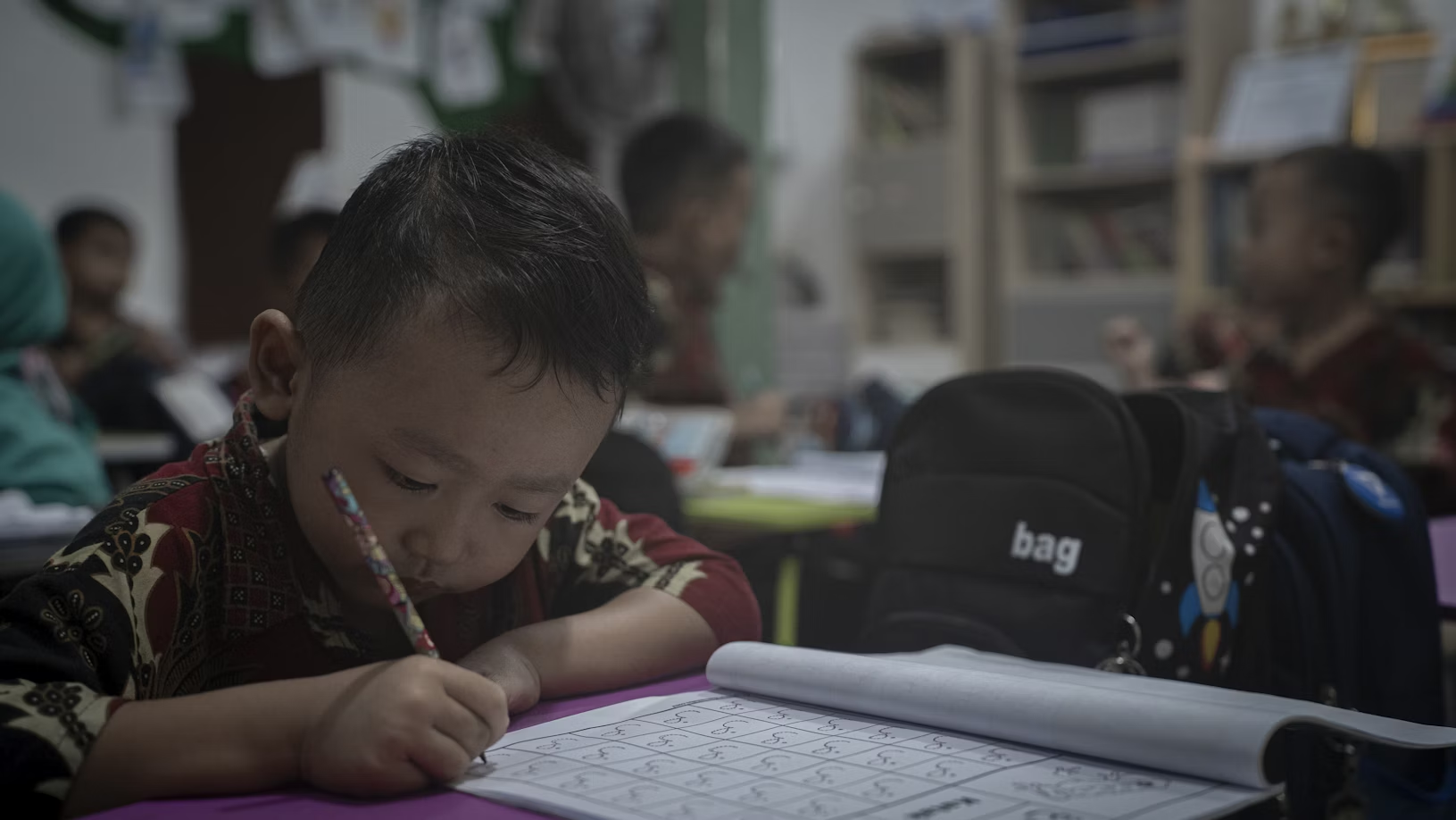
Young child focused on writing in a classroom setting
Image Source: Unsplash

The preschool years are bursting with discoveries—tying shoes, sharing toys, asking a million “why’s.” Underneath those visible milestones, language is the real powerhouse, wiring a child’s brain for everything from emotional self-control to early math.

During the ages of three to five, neural connections fire at lightning speed; every conversation, story time, or grocery-aisle chat lays down pathways they’ll use for reading, problem-solving, and friendship.

A typical five-year-old recognizes roughly 10,000 words, yet a handful function like VIP passes: they open the doors to sequencing, emotional literacy, and social ease.

Below are 10 everyday words that children should understand by the age of 5—and why each one matters for confidence and connection.

Think of this list as the starter kit for confident communication. Mastery doesn’t require flashcards—just mindful, everyday talk from caregivers and teachers.

WordWhy It Matters
BeforeTeaches sequencing: “Wash hands before dinner.” Mastering order helps with routines and later reading comprehension.
BecauseConnects cause and effect: “I’m sad because my tower fell.” Builds reasoning and empathy.
AfterIntroduces future thinking and delayed gratification: “After school we’ll visit the park.”
HappyFoundational feeling word; naming emotions reduces meltdowns and boosts emotional intelligence.
SameEarly concept of equality and basic math (“same amount”); fosters fairness.
DifferentEncourages curiosity about diversity—eye color, lunch choices, cultures.
InsideSpatial cue vital for safety and independence (“Snacks are inside your bag”).
StopBoundary word that promotes impulse control—and can literally keep kids safe.
WaitBuilds patience and self‑regulation: “Wait for the light to turn green.”
FunnyRecognizing humor strengthens peer bonds and supports pre‑reading rhyming skills.
Scrabble tiles spelling 'SMILE' with googly eyes on blue background
Image Source: Unsplash

How to Weave These Words Into Daily Life

  • Narrate routines: “Before we go outside, coats on; after we play, shoes off.”
  • Model feelings: “I feel happy because you shared.”
  • Transform playtime: Sort blocks into “same” and “different” piles, hide treasures inside boxes, shout “stop” then “go.”
  • Pause for practice: When you say “wait,” count slowly together to reinforce the pause, then cheer their success.
  • Fuel laughter: Make up tongue twisters or silly rhymes—anything that tickles their “funny” bone reinforces the concept.

Remember, learning these words isn’t a quiz—it unfolds through everyday chatter, stories, and games. Each term strengthens a bridge to clearer communication, sturdier self-control, and richer relationships.

Quick Word Check and When to Seek Extra Support

Worried your child might be missing a few of these key terms? Try this simple, no-pressure check:

  1. Play “Show Me”: Hold up a favorite toy and say, “Hide it inside the box—then grab it after I count to three.”
  2. Feelings Flashcards: Show a happy face and ask, “What’s this feeling? When do you feel happy?”
  3. Story Sequencing: Ask your child to retell a short picture book. Listen for before, because, and after clues.
  4. Red Light/Green Light Remix: Add “stop,” “wait,” and “go” commands to see how quickly they connect words with actions.

If your preschooler regularly:

  • Replaces these words with vague fillers (“thingy,” “that one”),
  • Avoids cause-and-effect phrases (“because”) by age five,
  • Struggles to follow simple sequencing directions

Consider a chat with their teacher or a pediatric speech-language pathologist. Early intervention can turn small gaps into big gains—giving your child the confidence to tackle kindergarten with a robust word bank and the social skills to match.

Join the Conversation

Which of these words sparked the biggest “aha!” moment for your child? Tell us in the comments—your tip could help another parent today.

Read More

  • Here’s How to Send Your Children to Private School
  • Your Child’s Manners Are Why No One Is Inviting You Over (You Can Change This)
Samantha Warren
Samantha

Samantha Warren is a holistic marketing strategist with 8+ years of experience partnering with startups, Fortune 500 companies, and everything in between. With an entrepreneurial mindset, she excels at shaping brand narratives through data-driven, creative content. When she’s not working, Samantha loves to travel and draws inspiration from her trips to Thailand, Spain, Costa Rica, and beyond.

Filed Under: Parenting Tagged With: child communication | Parenting, child development, early childhood development, kids vocabulary, parenting tips, preschool learning, speech milestones

Is Parenting Today Way Too Soft? Here’s Why It Might Be Hurting Your Kids

April 24, 2025 | Leave a Comment

Mother and daughter lying on bed, smiling at each other
Image Source: Unsplash

The instinct to shield children from stress or hardship is natural—especially in an unpredictable world. Yet when protection turns into soft parenting that removes every obstacle, kids can miss out on crucial emotional tools. Below, we explore how overly gentle approaches can backfire and what balanced alternatives—like “lighthouse parenting”—offer instead.

What is Soft Parenting?

Soft parenting—often called gentle or respectful parenting—is an approach that puts connection before correction. Instead of relying on threats, bribes, or harsh punishments, caregivers lead with empathy, collaboration, and steady boundaries.

The goal is not permissiveness; it is to teach self‑discipline through modeling and problem solving rather than fear. A soft parent begins by validating feelings (“You feel angry your tower broke”) and then guides behavior (“Let’s breathe, then rebuild”).

Core pillars include emotional attunement, age‑appropriate choices, and natural consequences. For example, rather than yelling about a skipped chore, a parent might calmly explain why the task matters and invite the child to help set a reminder system.

Discipline focuses on repairing, not shaming: apologize if you overreact, brainstorm solutions together, and reinforce the idea that mistakes are learning chances.

Soft Parenting Can Undermine Resilience

Shielding children from failure or disappointment robs them of practice in problem‑solving. Studies highlight that over‑involvement lowers self‑esteem and leaves kids anxious about trying new things without immediate help.

Emotional Health May Be at Risk

Counter‑intuitively, removing all hurdles doesn’t guarantee happiness. Research links overprotective parenting to higher rates of anxiety and depression because kids never build the coping muscles everyday struggles provide.

Soft Does Not Always Mean Effective

A Pew survey reports 45% of parents lean overprotective. Excessive softness—fixing every issue, avoiding discipline—can stunt independence and stall skills such as decision‑making and persistence.

Two kids at a kitchen sink, one wearing a colander as a hat
Image Source: Unsplash

Behavior Problems May Follow

Permissive households often see more defiance, aggression, or trouble respecting authority. Consistent, supportive boundaries teach kids limits while still making them feel safe.

A Balanced Path: Lighthouse Parenting

Lighthouse parents offer steady guidance and clear expectations while allowing kids to navigate manageable challenges—a middle ground between helicopter (over‑involved) and free‑range (hands‑off) styles.

What You Can Do Today

  • Set firm, consistent rules—and explain the why. Kids are more likely to respect boundaries when they understand the reason behind them. Instead of “Because I said so,” try: “We turn tablets off at 7 p.m. so your mind can slow down and you can fall asleep faster.” Deliver rules in the same tone every time, and follow through on consequences you’ve agreed upon. Predictability helps children feel safe, which in turn makes cooperation easier.
  • Let children face age‑appropriate challenges before stepping in. Soft parenting isn’t swooping in at every wobble; it’s offering a safety net, not a helicopter. If your five‑year‑old struggles to zip a jacket, resist the urge to fix it immediately. Offer encouragement—“I see you working hard; try guiding the zipper with your thumbs”—and step back. Mastering small frustrations now builds resilience for bigger hurdles later.
  • Model calm problem‑solving: talk through setbacks instead of erasing them. When setbacks happen—spilled juice, lost homework—narrate your thought process: “I feel disappointed, but let’s figure out a solution. First, we’ll grab paper towels; then we’ll pour a new drink.” Speaking your steps aloud shows kids how to move from emotion to action. It also normalizes mistakes as learning moments, not crises that require rescue.
  • Praise effort over outcomes to build grit. Swap “You’re so smart” with “I noticed how patiently you sounded out every word.” Highlighting persistence teaches children that growth comes from practice, not innate talent. When a project fails, celebrate the experiment: “It didn’t work this time, but you tested a brave idea—what will you try next?” Over time, kids internalize that setbacks are stepping stones, not dead ends.

Parenting With Heart and Backbone

Soft parenting becomes harmful when it erases struggle altogether. By combining warmth with structure—walking beside rather than clearing the path—you empower kids to handle life’s hard parts with confidence.

Have you noticed softness slipping into your own style? Share how you balance love and limits in the comments below.

Read More

  • 12 Parenting Mistakes You’re Making Right Now: Learn How to Save Your Child’s Happiness Before It’s Too Late
  • Guiding The Future: 12 Crucial Conversations With Your Son on His Road to Manhood
Samantha Warren
Samantha

Samantha Warren is a holistic marketing strategist with 8+ years of experience partnering with startups, Fortune 500 companies, and everything in between. With an entrepreneurial mindset, she excels at shaping brand narratives through data-driven, creative content. When she’s not working, Samantha loves to travel and draws inspiration from her trips to Thailand, Spain, Costa Rica, and beyond.

Filed Under: Parenting Tagged With: child communication | Parenting, child development, early childhood development, kids vocabulary, parenting tips, preschool learning, speech milestones

Blended Families: 10 Ways to Blend Your Family Without Chaos

April 23, 2025 | Leave a Comment

Blended family sharing a meal and bonding outdoors
Image Source: Unsplash

Blending a family sounds sweet in theory—two loving homes becoming one—yet in practice it’s often more like stitching a patchwork quilt than snapping puzzle pieces together.

Step‑siblings share space, parenting styles collide, and emotional baggage gets unpacked (sometimes loudly). The good news: with empathy, patience, and smart structure, blended families can thrive without endless drama.

About 16 percent of U.S. children now live in stepfamilies, so millions are navigating this journey. Whether you’re newly merged or years in, these 10 strategies can ease tension and spark connection.

1. Trade Fairy‑Tale Expectations for Realistic Ones

Hoping everyone will love each other overnight sets you up for disappointment. Instead of picturing instant harmony, picture a slow simmer:

  • Name the goal out loud—“We’re aiming for mutual respect, not instant best‑friend energy.”
  • Celebrate micro‑wins: a shared joke at dinner, a sibling agreeing to share Wi‑Fi, a toddler calling the stepparent to tuck them in.
  • Normalize mixed feelings by reminding kids (and yourself) that discomfort doesn’t mean failure—it means growth in progress.

Think crock‑pot, not microwave, and you’ll notice the flavors of connection deepen over time rather than burn on high heat.

2. Protect Couple Time

Your relationship is the cornerstone of household stability. Schedule small, kid‑free moments—walks, late‑night tea, even a quick check‑in text during the workday—to keep communication strong.

Research summarized by Verywell Family notes that stepfamilies with intentional couple time report fewer conflicts. Guard that bond with intentional rituals:

  • De‑briefs after kid conflicts: process what happened, then brainstorm a united response.
  • Micro‑dates: a ten‑minute morning coffee on the porch before kids wake up.
  • Weekly “state‑of‑us” check‑ins—text threads, voice memos, or calendar invites to air concerns before they snowball.

3. Co‑Create Household Rules

Kids buy into rules they help write. Call a family meeting (pizza bribes welcomed) to decide:

  • Chores—who empties the dishwasher, who walks the dog.
  • Screen‑time limits—what’s fair on school nights vs. weekends.
  • Privacy guidelines—knock before entering bedrooms, ask before borrowing clothes.

Post the agreed list on the fridge and revisit monthly. When a rule gets broken, ask, “Do we need to tweak this?” rather than dictating consequences unilaterally.

4. Honor, Don’t Erase, the Past

A blended family isn’t a reboot; it’s a sequel with beloved backstory. Validate each child’s history by:

  • Displaying keepsakes: photos from the “old” house, trophies, stuffed animals.
  • Inviting storytelling—bedtime memories, holidays at Grandma’s, funny vacations with the other parent.
  • Respecting loyalty binds: remind kids that loving a stepparent doesn’t weaken love for their biological parent.

Acknowledging their roots helps kids graft onto the new family tree without feeling forced to lop off branches.

5. Keep Communication Open—and Age‑Appropriate

Big family meetings can overwhelm shy teens; toddlers can’t unpack feelings on command. Instead, deploy “drive‑time therapy” (chats while eyes face the windshield), bedtime whispers, or dog‑walk downloads. Aim for:

  • Consistency—check‑ins at predictable moments.
  • Curiosity—ask open‑ended questions like, “What felt tricky today?”
  • Listening over lecturing—mirror their words before offering advice.

Short, safe spaces build trust faster than marathon heart‑to‑hearts under a spotlight.

Parent and kids preparing breakfast together in the kitchen
Image Source: Unsplash

6. Create New Traditions Together

Shared rituals weave new memories:

  • Saturday pancake bar with toppings chosen by a different “chef” each week.
  • Movie‑night hosts—rotate who picks the film and snack theme.
  • Blended family birthdays—celebrate “Family Day,” the anniversary of moving in together.

The goal: invent experiences that belong solely to this household, so every member feels ownership of the story you’re writing now.

7. Don’t Rush Sibling Relationships

You can’t schedule chemistry. Encourage kindness and shared activities (board‑game battles, TikTok dance‑offs) but ditch the “best‑friends‑forever” script. When conflict erupts:

  • Coach fair fighting—no insults, take turns, use “I” statements.
  • Separate, then circle back for joint problem‑solving once tempers cool.
  • Model patience—note aloud that closeness often blooms slowly, and that’s okay.

Like plants, sibling bonds flourish on their own timetable—sometimes months, sometimes years.

8. Schedule Individual Time With Each Child

Amid the bustle, personal attention says, “I see you.” Try:

  • 15‑minute “spotlight” slots—read, build LEGO, play a quick video‑game level.
  • Errand buddies—bring one child on the grocery run for spontaneous conversation and treat selection.
  • Rotating dinner sous‑chefs—invite each kid to help prep a favorite recipe.

These pockets of connection reduce jealousy and reinforce that every voice matters.

9. Stay United (Yet Flexible) With Co‑Parents

Kids benefit when adults across households coordinate schedules and discipline. If disagreements flare, model calm problem‑solving rather than tug‑of‑war arguments.

Here are a few strategies:

  • Shared calendar apps for practices, doctor appointments, and holidays.
  • Neutral drop‑off zones (school parking lot, community center) to minimize tension.
  • Conflict scripts—if disagreement flares, state, “Let’s table this until we can talk privately,” then model calm follow‑through.

Remember, “same‑page” doesn’t mean “same‑paragraph.” Flexibility shows children that respectful compromise is possible.

10. Treat Patience as Your Superpower

It can take years for blended families to feel fully cohesive. That sounds daunting—unless you track the tiny victories:

  • A sibling joke that makes everyone laugh.
  • A stepparent invited to the school recital.
  • Kids voluntarily sharing a TikTok video at dinner.

Celebrate milestones, no matter how small, and trust the process. Consistency beats speed every time.

Blending Love, Not Just Logistics

There’s no perfect formula—only real people doing their best. What counts is the willingness to listen, adapt, and nurture relationships over time. With grace and a dash of humor, your patchwork quilt can become a warm, resilient family blanket.

How has your blended family found connection? Share your stories in the comments—your insight could help another parent today.

Read More

  • A Frugal Life: How to Drastically Cut Expenses and Improve Your Finances
  • Can Yelling Ever Be “Justified” Parenting—or Is It Always Damage?
Samantha Warren
Samantha

Samantha Warren is a holistic marketing strategist with 8+ years of experience partnering with startups, Fortune 500 companies, and everything in between. With an entrepreneurial mindset, she excels at shaping brand narratives through data-driven, creative content. When she’s not working, Samantha loves to travel and draws inspiration from her trips to Thailand, Spain, Costa Rica, and beyond.

Filed Under: Parenting Tagged With: blended families, child adjustment, co‑parenting, family bonding | Parenting, family dynamics, new family routines, parenting tips, relationships, step‑parenting, stepchildren

Does Your Child Know Your Phone Number and Full Name? Here’s Why They Should

April 23, 2025 | Leave a Comment

Child on a phone, underscoring the importance of knowing contact details.
Image Source: Unsplash

In a world where technology makes communication effortless, it’s easy to assume our kids will never struggle to reach us. But what happens in an emergency, when they need help and don’t have access to a device? Teaching children their parents’ phone numbers and full names isn’t just a useful skill—it’s a potentially life-saving one. Here’s why making this information second nature can empower them in crucial moments. That’s why children memorizing phone numbers—along with their parents’ full names—matters more than ever.

1. It’s Essential for Safety and Security

Kids can wander off at a park or get separated in a store faster than you can say “ice cream line.” If your child can calmly state, “My dad is Marc Rivera and his number is 555‑678‑1234,” staff or first responders can act within seconds instead of minutes. Fast reunification:

  • Speeds response. Security teams can verify identity, page you by name, and bypass jammed public address systems or spotty cell reception.
  • Minimizes fear. Children spend less time feeling lost and panicked.
  • Reduces risk. The shorter a child is unaccounted for, the lower the chance of harm.

2. It Enhances Communication and Confidence

Mastering a phone number isn’t just rote memory; it’s an early lesson in self‑advocacy. When kids can give clear, complete contact details, they:

  • Feel capable. Success in one “grown‑up” skill encourages them to tackle others—ordering food, asking for directions, or introducing themselves to new teachers.
  • Speak up under pressure. Sharing information confidently with store clerks or police officers becomes a doable task rather than a terrifying hurdle.
  • Practice social skills. Eye contact, enunciation, and polite greetings all come with repeating a phone number to adults.

3. It Fosters Independence and Responsibility

Memorizing “grown‑up” details signals trust. Children think, If Mom believes I can handle this, maybe I can handle other things too. Over time that pride spills into:

  • Personal accountability. Recognizing they have an active role in their own well‑being.
  • School habits. Remembering homework due dates or lunch money.
  • Daily logistics. Learning the family address, important birthdays, or sibling allergies.

4. It Supports Cognitive and Memory Development

Teaching a phone number involves patterns, rhythm, and repetition—all great brain workouts. Experts explain that this kind of memorization sharpens short‑term memory, making it easier for kids to retain new facts in the classroom.

5. It Prepares Kids for Emergencies

If normal systems fail—phones die, contact lists disappear—verbal recall can be a lifesaver. Schools and camps often rely on children to provide accurate information if digital records aren’t accessible.

Simple Ways to Teach and Reinforce It

  • Turn it into a song or rhyme. Catchy rhythms stick.
  • Post it where they’ll see it. Fridge notes, bedroom doors, and bathroom mirrors keep the numbers top of mind.
  • Make a craft. A beaded bracelet or keychain with number beads turns learning into play.
  • Quiz casually. Ask during car rides or while setting the table. Short, relaxed practice sessions keep stress low and memory high.

Why Full Names Matter Too

Authorities can’t page “Mom” or “Dad” over a loudspeaker. Teaching your child both your full name and theirs streamlines identification and speeds reunions. Role‑play scenarios where they practice saying: “My name is Maya Johnson. My mom is Alicia Johnson, and her phone number is …”

Child on a swing, supported by an adult, symbolizing empowerment.
Image Source: Unsplash

Helping Kids Feel Empowered, Not Scared

Frame the lesson alongside everyday safety habits—like seatbelts or crossing the street—so it feels normal, not frightening. Emphasize that knowing this info is what “smart, prepared kids” do, and reassure them that most outings are perfectly safe.

Give Them Tools They’ll Use for Life

From quick reunions in a mall to confident conversations with teachers, memorizing a phone number and full name sets your child up for safety, independence, and clear communication. Five minutes of practice today can deliver peace of mind for years.

Have you taught your child your phone number yet? Share your best tips in the comments!

Read More

  • The ‘Stranger Danger’ Myth: Teaching Kids About Real Safety Risks
  • 7 Ways to Teach Kids to Trust Their Instincts About Safety
Samantha Warren
Samantha

Samantha Warren is a holistic marketing strategist with 8+ years of experience partnering with startups, Fortune 500 companies, and everything in between. With an entrepreneurial mindset, she excels at shaping brand narratives through data-driven, creative content. When she’s not working, Samantha loves to travel and draws inspiration from her trips to Thailand, Spain, Costa Rica, and beyond.

Filed Under: Parenting Tagged With: child safety, children's communication skills, emergency preparedness, memorizing phone number, parenting tips, phone number lessons for kids | Parenting

No Spanking Necessary: 8 Ways to Handle Your Unruly Child

April 23, 2025 | Leave a Comment

Young child standing quietly by a metal fence
Image Source: Unsplash

Parenting can be deeply rewarding—yet wildly exhausting. When you’ve whispered “Why won’t you just listen?” through clenched teeth, remember there are effective tools that guide behavior without physical punishment. These eight strategies nurture respect and self‑control while keeping family bonds strong.

1. Praise the Good More Than You React to the Bad

Kids crave connection even more than candy. Every time you catch them sharing toys, waiting patiently, or speaking kindly, label the behavior and the feeling behind it: “I noticed you waited for your turn on the slide—that was thoughtful and patient.” Specific praise tells children exactly what to repeat, reinforces their internal sense of competence, and builds neural pathways for positive behavior. Aim for a 5:1 ratio of positive comments to corrections throughout the day. You’ll often see misbehavior fade simply because the “spotlight” has shifted to what’s working.

2. Set the Stage for Success

Many blow-ups aren’t defiance at all—they’re biology. Hungry tummies, overtired brains, bright lights, or crowded spaces can flip even the calmest child into meltdown mode. Anticipate triggers:

  • Offer noise-canceling headphones or a fidget toy in busy stores.
  • Keep a high-protein snack and water bottle in your bag.
  • Schedule errands right after naps rather than before.

By meeting sensory and basic needs first, you’re not “spoiling” your child—you’re giving their nervous system the best chance to cooperate.

3. Use Logical Consequences, Not Angry Reactions

A consequence teaches; a punishment hurts. Link outcomes directly to choices so the lesson is crystal clear. Throw blocks at a sibling? Blocks go in time-out while you help make amends. Forget homework? You sign an apology note to the teacher and use free time to finish. Stay calm, keep your words few, and let the consequence—not your anger—do the talking. Over time, kids internalize cause and effect instead of fear and avoid.

4. Make Time‑Out a Reset

A well-run time-out is more like pressing “pause” than banishment. Choose a safe, boring corner or chair—no toys, no screens—and set a timer for one minute per year of age. Explain: “You need a quiet break to reset. When the timer beeps, we’ll try again.” If your child bolts, gently guide them back without lectures. The goal is self-regulation; when they emerge, acknowledge: “Thank you for calming your body. Ready to rejoin?” Used this way, time-outs teach self-control instead of shame.

5. Speak Calmly and Empathetically

Children mirror the emotional pitch they hear. Lower your voice, soften your eyes, and describe what you see: “You wanted the blue cup, and that felt unfair when it wasn’t available.” Naming emotions activates the prefrontal cortex, making problem-solving possible.

Then add a clear boundary: “It’s okay to feel upset; it’s not okay to throw.” When empathy and limits travel together, kids learn both self-expression and self-restraint.

6. Offer Choices to Curb Power Struggles

Humans of every age want control. Give it in bite-size pieces: “Red toothbrush or green?” “Walk to the car or hop like a kangaroo?” Choices redirect stubborn energy into cooperation and hone critical-thinking skills. Keep options limited and both acceptable to you.

If a child refuses both, stay calm and restate the boundary: “Looks like you need help deciding. I’ll choose the red toothbrush so we can start brushing.” The power struggle ends before it begins.

7. Stay Consistent

The best rule is the one you’ll enforce tomorrow. Inconsistent limits teach kids to gamble: “Maybe this time I can push it.” Write down family rules, display them on the fridge, and review them before high-risk moments like bedtime or grocery runs.When slip-ups happen (and they will), respond the same way each time. Predictability feels safe to children, and safety breeds cooperation.

8. Model the Behavior You Want

Your child’s most influential teacher stares back at you in the mirror. When you handle frustration by taking a breath, negotiate disagreements respectfully, and apologize when you’re wrong, you set a living curriculum. Narrate your process: “I’m disappointed the picnic got rained out, so I’m going to take three deep breaths and think of a new plan.” Seeing adults self-correct shows kids mistakes are part of growth, not a cause for fear.

Two people playing a thumb war, hands in focus
Image Source: Unsplash

Raising With Respect Works Better—and Feels Better

Spanking may halt behavior in the moment, but it doesn’t teach better choices for tomorrow. Compassionate, consistent discipline builds empathy, self‑control, and trust—skills your child will carry for life. Strong guidance never requires harshness; it requires connection. What non‑violent strategies work in your home? Share your tips in the comments—we’re learning together.

Read More

  • Should There Be a Legal Limit on How Many Kids One Family Can Have?
  • 7 Secrets to Stopping Toddler Tantrums—And It’s Not What You Think
Samantha Warren
Samantha

Samantha Warren is a holistic marketing strategist with 8+ years of experience partnering with startups, Fortune 500 companies, and everything in between. With an entrepreneurial mindset, she excels at shaping brand narratives through data-driven, creative content. When she’s not working, Samantha loves to travel and draws inspiration from her trips to Thailand, Spain, Costa Rica, and beyond.
Filed Under: Parenting Tagged With: alternative discipline, child behavior, gentle parenting | Parenting, no spanking, parenting tips, positive discipline

« Previous Page
Next Page »
  • Facebook
  • Pinterest
  • RSS
  • Twitter

Basic Principles Of Good Parenting

Here some basic principles for good parenting:

  1. What You Do Matters: Your kids are watching you. So, be purposeful about what you want to accomplish.
  2. You Can’t be Too Loving: Don’t replace love with material possessions, lowered expectations or leniency.
  3. Be Involved Your Kids Life: Arrange your priorities to focus on what your kid’s needs. Be there mentally and physically.
  4. Adapt Your Parenting: Children grow quickly, so keep pace with your child’s development.
  5. Establish and Set Rules: The rules you set for children will establish the rules they set for themselves later.  Avoid harsh discipline and be consistent.
  6. Explain Your Decisions: What is obvious to you may not be evident to your child. They don’t have the experience you do.
  7. Be Respectful To Your Child: How you treat your child is how they will treat others.  Be polite, respectful and make an effort to pay attention.
Best Parenting Blogs

Most Popular

Baby

9 Baby Names That Sound Rare Without Being Hard to Spell

Evan Morgan
Baby

9 Unusual Baby Names That Sound Like They Belong to Future CEOs

Evan Morgan
Target Store

Choking Incident Prompts Recall of 49,000 Target Gigglescape “Under the Sea” Popping Toys

Evan Morgan
Frustrated Girl

Why Some Students on the Spectrum Are Labeled With ODD

Evan Morgan
Coke Bottles

12 Things Kids Took to School in the ’70s That Would Never Be Allowed Today

Evan Morgan

All content on Kids Ain’t Cheap is for entertainment purposes only. By reading this blog, you agree that Kids Ain’t Cheap is not responsible for any actions taken after reading this blog. For the full disclaimer, see our privacy policy.

Please note that Kids Ain’t Cheap has financial relationships with some of the merchants mentioned here. Kids Ain’t Cheap is funded by banner advertising, commission sales and search optimization consulting.

Copyright © 2006–2026 | District Media | All Rights Reserved | Privacy Policy

Copyright © 2026 Runway Pro Theme by Viva la Violette