• Home
  • About Us
  • Toolkit
  • Archives
  • Advertise
  • Privacy Policy

Kids Ain't Cheap

But They Sure Are Worth It

  • Parenting
    • Baby Stuff
    • Books and Reading
      • Aesops Fables
      • Comic Books
    • Education
    • Family Time
    • Green Living
    • Growing Up
    • Healthy Living & Eating
    • Holidays
    • Parenting
    • Random Musings
    • Shopping
    • Stuff to Do
  • Money
  • Product Reviews
    • Books and Magazines
    • Discount Sites
    • Furniture
    • House Keeping
    • Reviews News
    • Toys and Games
  • Contact Us
  • Our Editorial Commitment
  • Search

Consumer Watchdogs Warn: 6 Kids’ Apps Draining $50+ Monthly Without Parent Permission

February 21, 2026 | Leave a Comment

Kids' Apps
Image source: Pexels.com

You probably think that a massive increase in state spending would lead to better care for New York’s aging population. However, the opposite is currently happening in hallways across the state. New York’s Medicaid spending has surged, with total expenditures expected to reach $123.8 billion for fiscal year 2026. Yet, many retirees find that getting an actual appointment or a nursing home bed is harder than ever. Honestly, the system is drowning in its own overhead while the people on the front lines suffer. Here is the reveal of where that money is really going and why your access to care is shrinking.

The Roblox Currency Loop

The most popular platform for children, Roblox, uses a virtual currency called Robux that can obscure real-world costs. While the game is free to download, it encourages players to buy recurring Robux subscriptions or expensive limited-edition items. Surprisingly, a child can easily navigate through confirmation screens designed to look like gameplay rewards. Consequently, parents often find hundreds of dollars in charges before they realize their credit card is linked to a child’s profile.

The Genshin Impact Loot Boxes

Genshin Impact has faced significant scrutiny from the FTC for marketing to children without adequate age gates. The game utilizes “loot boxes”—a randomized reward system that feels like digital gambling. Many young players spend fifty dollars or more trying to unlock specific “Heroes” or “Cute Force” characters. This predatory cycle relies on the psychological thrill of the “win” to keep children clicking.

The Sendit Anonymous Subscription

The anonymous messaging app Sendit was recently flagged by regulators for deceiving users about memberships. The app often pushes high-priced “pro” subscriptions that offer hints about who sent an anonymous message. Furthermore, these memberships are notoriously difficult to cancel and frequently convert from free trials to automatic monthly drains. It is a quiet tax on your child’s social curiosity.

The Reading Eggs Data Trade

Even educational tools are not immune to predatory behavior. Reading Eggs has been highlighted as a significant privacy offender that collects audio and photo data for advertising. Beyond data privacy, many parents report being enrolled in expensive monthly literacy packages after a “free” assessment. These charges can blend into your bank statement as a legitimate school expense while siphoning forty to fifty dollars a month.

The TikTok Viral Trend Upsell

While TikTok is known for short videos, it has increasingly integrated in-app shopping and “coins” used to tip creators. Children often buy these coins to support their favorite influencers, not realizing the actual dollar amount being charged to the parent’s App Store account. The platform’s “one-tap” purchase feature makes it far too easy for a child to drain a bank account during a single live stream.

The Duolingo Premium Push

Even the most well-meaning apps like Duolingo have moved toward aggressive monetization of children’s data and premium memberships. Many families find themselves locked into family plans they didn’t explicitly authorize after a child tries to “unfreeze” a lesson streak. Consequently, a harmless language lesson can turn into a recurring financial commitment that requires multiple steps to terminate.

Reclaiming Your Financial Peace

Predatory app developers rely on your exhaustion and your child’s curiosity to make a profit. By identifying the apps that drain your budget, you take back control of your household spending. You have worked too hard for your money to let it disappear into a void of virtual sparkles and empty promises. Stay vigilant, audit your statements, and talk to your kids about the real value of those digital gems. Your wallet deserves as much protection as your child’s screen time. You have the power to stop the drain tonight.

Have you discovered any unexpected charges from your child’s favorite apps lately? Leave a comment below and warn other parents about the apps they should avoid.

What to Read Next…

  • Why Teaching Kids to Use Coupons and Apps During December Sets Them Up for Life
  • 8 Children’s Apps That Are Secretly Tracking More Than Location
  • 7 Children’s Shows That Experts Say Spike Anxiety Levels
Latrice Perez

Latrice is a dedicated professional with a rich background in social work, complemented by an Associate Degree in the field. Her journey has been uniquely shaped by the rewarding experience of being a stay-at-home mom to her two children, aged 13 and 5. This role has not only been a testament to her commitment to family but has also provided her with invaluable life lessons and insights.  As a mother, Latrice has embraced the opportunity to educate her children on essential life skills, with a special focus on financial literacy.


Filed Under: Parenting Tagged With: App Store, Consumer Watchdog, financial traps, hidden fees, kids apps, Online Safety, parenting tips

Teachers Say These 5 Dress Code Items Are Causing Students to Be Sent Home in 2026

February 20, 2026 | Leave a Comment

Dress code
Image source: Pexels.com

You spent Sunday night ensuring your child’s outfit was perfect for the school week ahead. However, a quiet wave of strict enforcement is sweeping through hallways, and your morning efforts might end with a phone call from the front office. It is frustrating to realize that the rules have shifted while your back was turned. Honestly, the system often prioritizes rigid aesthetics over actual learning, leaving you to deal with the logistical mess. Here is the truth about the dress code items that are triggering removals in 2026 and how you can avoid the mid-day pickup trap.

The Blanket and Hooded Sweatshirt Ban

As classroom temperatures fluctuate, many students have turned to carrying small blankets or wearing oversized hoodies to stay comfortable. Surprisingly, administrators in 2026 are cracking down on these as major safety and identification hazards. Teachers report that blankets are being confiscated because they can hide prohibited items or cause a tripping hazard during transitions. Furthermore, hooded sweatshirts are under fire not just for the hood, but for the large front pockets. The logic is that these garments make it harder for staff to identify students on security cameras, leading to immediate change or go home orders.

Visible Skin in Ripped Denim

Distressed jeans have been a fashion staple for years, but the tolerance for them has officially hit a breaking point this year. Many districts now enforce a [zero-skin policy](https://www.youthrights.org/issues/student-rights/dress-codes-and-uniforms/) for any rips or frays located above the knee. Even if you bought the jeans with the holes pre-made, teachers are required to send students to the office if skin is visible. On the other hand, some schools allow the style only if leggings or patches are worn underneath. If your child’s favorite pair has a hole higher than a few inches above the kneecap, they are essentially walking in a target for a violation.

The Pajama and Loungewear Crackdown

The comfort-first trend of the last few years has finally met its match in the 2026 academic standards. Pajama pants and bedroom slippers are being treated as disruptive to the educational environment in a way we haven’t seen in a decade. Administrators argue that sleepwear creates a psychological relaxation mode that hinders productivity. While your child might argue that flannel pants are just comfortable, teachers are being told to enforce a professional baseline. Sending a student home to change out of pajamas is becoming the standard response to what schools call a lack of neatness and modesty.

Head Coverings and Identity Concealment

Hats, beanies, and especially ski-mask style balaclavas are top of the list for immediate removal. In an era where campus security is the highest priority, anything that obscures a student’s face is a non-negotiable violation. While exceptions are made for religious head wraps, the generic beanie or baseball cap is no longer tolerated inside the building. Teachers are often caught in the middle, forced to take up hats that students wear to hide a bad hair day. If it covers the ears and forehead, it is likely going to cause a trip to the principal’s office.

Leggings and the Midthigh Rule

Leggings and yoga pants remain one of the most contentious items in the student handbook. In 2026, the old fingertip rule has evolved into a strict midthigh requirement for any top worn over spandex. If your child’s shirt does not completely cover their bottom and reach down to the midthigh, they are being flagged for immodest attire. This rule often disproportionately targets female students, creating a relatable frustration for parents. It is not your fault that the fashion industry produces shorter tops, but the school system expects you to bridge that gap.

Protect Your Child’s Seat in the Classroom

Dress code enforcement is a machine that often ignores the personal style and comfort of the student. By understanding these specific triggers, you can ensure your child stays in their seat instead of in the principal’s office. You have enough on your plate without adding a mid-morning clothing crisis to the list. Stay one step ahead of the handbook and keep those risky items for the weekend. Your student’s education is too important to be sidelined by a pair of ripped jeans.

Has your child ever been sent home for a dress code violation that felt totally unfair? Leave a comment below and share your story so other parents know what to watch out for.

What to Read Next…

  • The 5 Educational Apps That Teachers Say Are Actually Hurting Grades
  • 8 Budget Cuts in Education That Directly Impact Your Kids
  • The Teacher Shortage Crisis: How Its Affecting Your Childs Education
Latrice Perez

Latrice is a dedicated professional with a rich background in social work, complemented by an Associate Degree in the field. Her journey has been uniquely shaped by the rewarding experience of being a stay-at-home mom to her two children, aged 13 and 5. This role has not only been a testament to her commitment to family but has also provided her with invaluable life lessons and insights.  As a mother, Latrice has embraced the opportunity to educate her children on essential life skills, with a special focus on financial literacy.

Filed Under: Education Tagged With: 2026 School Rules, Back to School, Dress Code Violations, Education News, parenting struggles, parenting tips, school dress code

6 Lunchbox Items Teachers End Up Throwing Away That Parents Paid For

February 18, 2026 | Leave a Comment

Lunchbox Items
Image source: shutterstock.com

You spend Sunday nights meal prepping and hunting for organic snacks to fuel your child’s brain. However, a quiet reality happens in school cafeterias that most parents never see. Thousands of dollars in groceries end up in the trash bin before first recess even begins. Honestly, it is not your fault that marketing convinced you these items were essential. Here is the truth about the lunchbox items that teachers consistently toss and why your money is being wasted.

The Illusion of Yogurt Tubes

Yogurt tubes are marketed as the ultimate mess-free convenience for busy families. In reality, these items are often impossible for small hands to open without scissors. Teachers in a room of thirty students simply do not have time to provide surgical assistance for every snack. By the time a child gets help, the yogurt has usually reached an unappealing temperature. Surprisingly, most of these end up half-squeezed and discarded to avoid a sticky explosion in the classroom.

Pre-Packaged Dipping Kits

Those colorful boxes containing crackers and cheese feel like a balanced win for parents. On the other hand, the high sodium content of these kits often leads to a quick sugar crash. Most children eat the crackers and leave the rubbery meat and cheese untouched. You are essentially paying a 400 percent markup for plastic packaging that ends up in a landfill. Teachers often watch kids pick out the fun part and slide the rest into the bin.

The Deceptive Nature of Fruit Pouches

Fruit pouches feel like a victory for nutrition, but they are often the first thing to be abandoned. Because they are consumed so quickly, they do not provide the satiety that comes from chewing actual fruit. Many children treat these like a drink rather than a meal component. Once the cap is off, they become a tipping hazard that teachers dread. If a child does not finish one in the first two minutes, it is gone.

Why Juice Boxes Fail

Juice boxes are a staple of the American lunchbox, yet they are a primary source of waste and sticky floors. The tiny plastic straws are a nightmare for fine motor skills. Once punctured, the box cannot be resealed. If a child takes two sips and is finished, the rest of that liquid goes straight into the trash. Furthermore, the sugar spike from juice often leads to behavioral issues in the afternoon.

Bulk Snacks in Flimsy Bags

Buying in bulk is a smart financial move, but how you pack those snacks matters. Flimsy sandwich bags often get crushed at the bottom of a backpack, turning expensive crackers into dust. Children will rarely eat a snack that has been pulverized into crumbs. You might think you are saving money, but if the food is inedible by noon, the savings disappear. Investing in a sturdy container ensures that what you pay for actually makes it into your child’s stomach.

Reclaiming Your Grocery Budget

The school lunch system is a hidden cycle of waste that drains your wallet one snack at a time. By focusing on whole foods and durable packaging, you can ensure your child is actually nourished. Stop paying for the convenience of marketing and focus on what kids actually eat. You have worked too hard for your money to let it sit at the bottom of a trash can. Make the shift today and watch your grocery bill and your frustration drop significantly.

Have you noticed your child coming home with a full lunchbox or empty wrappers? Leave a comment below and let us know which items your kids actually finish.

What to Read Next…

  • Virginia Baby Food Ban: 5 Specific Brands Just Prohibited Under New Safety Laws
  • 6 Kid-Friendly Foods That Were Quietly Recalled This Month
  • Why Your Family Could Be Spending More on Food This December — and What to Do
Latrice Perez

Latrice is a dedicated professional with a rich background in social work, complemented by an Associate Degree in the field. Her journey has been uniquely shaped by the rewarding experience of being a stay-at-home mom to her two children, aged 13 and 5. This role has not only been a testament to her commitment to family but has also provided her with invaluable life lessons and insights.  As a mother, Latrice has embraced the opportunity to educate her children on essential life skills, with a special focus on financial literacy.

Filed Under: Parenting Tagged With: education, food waste, grocery budget, healthy kids, Money Saving, parenting tips, school lunch

Therapists Warn: The 5 Conversation Mistakes Making Your Child Withdraw

February 16, 2026 | Leave a Comment

How to talk to your child
Image source: shutterstock.com

Seeing your child slowly drift away into a world of silence is a haunting experience for any parent. You ask how their day was and get a one-word answer before they disappear behind a bedroom door. It is not your fault that you feel disconnected; the modern world is designed to pull families apart through digital distractions. However, there is often a hidden system of communication at play in your home that might be making the problem worse. Honestly, the way you speak to your child can either build a bridge or a wall. Let us expose the common errors that cause children to shut down and how you can reopen those lines of communication today.

1. The Interrogation Style of Questioning

Asking too many direct questions as soon as they walk through the door can feel like a high-pressure interview. When a child is tired from a long day, being forced to recount every detail feels like a chore. Therapists Warn that this rapid-fire approach often triggers a defensive withdrawal. Surprisingly, your curiosity can be interpreted as a lack of trust or a demand for performance. On the other hand, allowing for a period of comfortable silence gives the child space to process their day. Try sharing a small detail of your own day first to model open communication without the pressure.

2. Jumping Straight to Problem Solving

When your child shares a struggle, your first instinct is to fix it because you want to protect them. However, giving immediate advice can make a child feel like their feelings are not being validated. They are looking for empathy and a safe place to vent, not a lecture on how they should have handled a peer conflict. Therapists Warn that this mistake shuts down the conversation because the child feels unheard. You are essentially telling them that they are not capable of finding their own solutions. Instead, ask if they want you to listen or if they want your help with a solution.

3. The Comparison Trap of Personal Anecdotes

It is tempting to say I went through the same thing when I was your age to show you understand. While you mean well, this often shifts the focus of the conversation back to you. The child may feel that their unique experience is being dismissed as just a phase you already finished. Therapists Warn that this habit can make a child feel that their big emotions are being minimized by your history. Their world is fundamentally different from the one you grew up in due to social media and modern pressures. Validate their current reality before you share your own stories. This keeps the focus on their needs.

4. Listening with a Pre-Planned Response

Most parents are already thinking of what to say next while their child is still talking. This lack of active listening is a hidden barrier that children can sense immediately. They feel that you are just waiting for your turn to speak rather than truly absorbing their words. Therapists Warn that this mistake prevents deep emotional connection and leads to surface-level interactions. You might miss the subtle non-verbal cues that reveal how they are actually feeling. Practice reflective listening by repeating back what you heard to ensure you understood correctly. It is a simple tool that builds immense trust.

5. Using Guilt as a Conversational Tool

Phrases like I just want what is best for you or after all I have done can be incredibly damaging to a child’s openness. This type of language uses emotional weight to force a specific response or behavior. Therapists Warn that children who feel guilted into talking will eventually hide their true thoughts to avoid the pressure. It creates a system of conditional communication where the child only shares what they think you want to hear. Honestly, your relationship should be a safe harbor where they can be messy and honest without fear of shame. Moving away from guilt-based talk allows for a more authentic and lasting bond. You are building a relationship for the long term.

Building a Bridge of Emotional Safety

The goal of communication is to ensure your child feels safe enough to be vulnerable with you. By avoiding these five common mistakes, you reclaim your role as a trusted confidant rather than an authority figure. You have the power to change the atmosphere of your home by simply shifting your approach to listening. It is an empowering move to admit when you have made a mistake and to try a new way of connecting. Your child wants to be seen and heard by you more than anyone else in the world. Validating their experience is the most important gift you can give them. Stay patient and stay present during the quiet moments.

Have you noticed your child withdrawing recently, and have any of these tips helped you reconnect? Leave a comment below and share your story!

What to Read Next…

  • Encouraging Open Communication with Adolescents
  • 7 Parenting Expenses That Quietly Drain Budgets After the Holidays
  • Pediatricians Say Parents Are Overbuying These 4 Baby Items (And Skipping What Matters)
Latrice Perez

Latrice is a dedicated professional with a rich background in social work, complemented by an Associate Degree in the field. Her journey has been uniquely shaped by the rewarding experience of being a stay-at-home mom to her two children, aged 13 and 5. This role has not only been a testament to her commitment to family but has also provided her with invaluable life lessons and insights.  As a mother, Latrice has embraced the opportunity to educate her children on essential life skills, with a special focus on financial literacy.

Filed Under: Parenting Tagged With: active listening, child development, Child Psychology, family therapy, Open Communication, parenting tips, Raising Children

This Seemingly Smart Allowance Trend Is Leaving Teens Financially Unprepared

February 14, 2026 | Leave a Comment

This Seemingly Smart Allowance Trend Is Leaving Teens Financially Unprepared
Image Source: Shutterstock.com

Just like everything else in the world, it seems that allowances have changed. What once felt like a straightforward weekly cash handout has transformed into something far more “strategic” and tech-driven, and parents everywhere think they’re giving teens a head start.

This trend that looks smart on paper is quietly setting teens up to make some serious money mistakes later. Teens are learning to swipe, spend, and save in very specific ways—but not necessarily in ways that prepare them for real financial independence. The modern allowance might feel like a clever hack, but it’s failing in one critical area: teaching teens how to manage real, messy, adult money.

The Gamified Allowance: Fun Now, Trouble Later

Some parents have embraced a “gamified” allowance system, linking payments to apps, chores, or even performance-based goals. On the surface, it sounds brilliant: teens learn responsibility, earn rewards, and can see their progress in flashy graphics.

But gamification often creates a transactional mindset instead of a strategic one. Teens start thinking, “If I don’t do exactly this, I won’t get that,” rather than learning the intrinsic value of budgeting or long-term planning. They might master short-term wins, but when faced with real-world bills, credit cards, or unexpected expenses, they often freeze or make hasty decisions because they’ve never navigated unstructured financial situations. Gamification teaches the rules of the game, not the rules of life, and that gap can lead to financial mistakes that compound fast.

Digital Allowances and the Disconnection From Cash

Apps and prepaid debit cards have revolutionized how teens handle money, letting them transfer funds, pay online, and track spending in real-time. Parents love the convenience and security, and teens enjoy the instant access.

But digital money feels abstract. Swipe after swipe, tap after tap, and teens rarely internalize the value of what they’re spending. When dollars appear as numbers on a screen rather than bills in a wallet, overspending becomes easier, saving feels optional, and the tactile experience of money—which is crucial for financial intuition—gets lost. Teens may appear financially savvy online, but they can struggle with real-world scenarios like paying rent, managing cash flow, or even understanding interest on a credit card.

Tying Allowance to Chores: Motivation or Manipulation?

Linking allowance to household chores seems fair, right? It teaches work ethic and accountability, after all. But studies and financial experts increasingly warn that this model can backfire if it becomes the primary way teens earn money. When teens associate all money with immediate labor, they may never explore other critical money lessons, like delayed gratification, investing, or budgeting beyond short-term goals. They start calculating the exact payoff for every minor effort instead of understanding intrinsic value or long-term benefits.

Allowances should teach teens to make money decisions, not just trade time for cash. Otherwise, they risk developing a mindset where financial independence only exists within strict, transactional boundaries.

This Seemingly Smart Allowance Trend Is Leaving Teens Financially Unprepared
Image Source: Shutterstock.com

Saving Without Strategy Leaves Teens Vulnerable

Even when teens are encouraged to save, the methods often lack sophistication. Many are told to put a portion of their allowance into a savings app or digital wallet, but few get lessons in setting goals, tracking interest, or distinguishing between emergency funds and long-term savings. Saving in a vacuum feels good, but it doesn’t teach teens how to prioritize expenses or make tough choices between wants and needs.

Without a structured approach, teens can become frustrated with saving, withdraw prematurely, or misallocate funds, which becomes a hard habit to break once adult responsibilities like rent, utilities, and student loans arrive. Teaching smart, strategic saving—beyond the instant gratification of “I saved this week”—is essential for building lasting financial resilience.

Credit Simulations Can Backfire

Some programs offer teens “credit cards” or borrowing simulations to teach financial responsibility. While the idea has merit, many teens treat it like a game rather than a serious financial tool. They experiment with limits, max out balances, and rarely feel the real consequences of overspending.

Lacking proper guidance, simulated credit experiences can normalize risky financial behavior instead of preventing it. When teens graduate to real credit cards, the transition can feel abrupt, and they may find themselves juggling interest, late fees, and debt accumulation they weren’t prepared for. Real-life financial literacy requires hands-on experience combined with careful guidance—not just a risk-free sandbox.

The Allure of “Smart Money Apps”

Modern money apps promise to teach teens budgeting, investing, and financial independence. They sound amazing—and some deliver—but relying solely on apps can backfire. Apps provide structure, but they often remove the messy, human side of money: decision fatigue, emotional spending, and prioritizing conflicting goals.

Teens need to wrestle with real trade-offs and face consequences without an algorithm always stepping in to nudge or correct. Otherwise, they may develop a false sense of financial security, assuming that as long as an app says their balance is healthy, they’re prepared for the real world. Real financial maturity develops in the friction, the mistakes, and the problem-solving moments that technology often shields them from.

How to Reframe Teen Allowances for Lifelong Financial Success

Parents can pivot from transactional or app-heavy allowances to approaches that teach resilience, flexibility, and long-term thinking. Encourage teens to divide their money into categories: spending, saving, investing, and giving. Introduce goal-setting, reward delayed gratification, and have open conversations about mistakes, risks, and consequences.

You should also try to encourage real-world experiences like budgeting for a weekend trip, paying for a subscription, or contributing to group gifts. Even small doses of real responsibility, paired with reflection, can teach teens more about money than any app, chore, or game ever could.

Setting Up Teens to Thrive, Not Just Survive

Allowance trends will continue to evolve, promising convenience, motivation, and engagement. But without critical guidance, they risk leaving teens unprepared for the unpredictability of real financial life. Teens need structured freedom, real-world experimentation, and conversations about money that don’t shy away from complexity. They benefit most when parents focus less on clever systems and more on developing intuition, judgment, and confidence.

Setting teens up for financial literacy isn’t glamorous or flashy—it’s consistent, reflective, and sometimes messy work—but the payoff is lifelong readiness and empowerment.

How are you preparing teens to handle money beyond allowances? Make sure you share all of your tips in our helpful comments section.

You May Also Like…

Simple Ways to Reward Your Teens Without Breaking Your December Budget

Why Borrowing Grandparents’ Rules Could Backfire on Raising Teens

The Real Talk: 6 Hard Conversations Parents Need To Have With Their Teens

9 Traditional Family Routines That Help Kids Feel Secure

7 Boomer-Era Family Traditions That Lower Household Stress

Brandon Marcus
Brandon Marcus
Brandon Marcus is a writer who has been sharing the written word since a very young age. His interests include sports, history, pop culture, and so much more. When he isn’t writing, he spends his time jogging, drinking coffee, or attempting to read a long book he may never complete.

Filed Under: Money and Finances Tagged With: allowance trends, Financial Education, financial literacy, money habits, money mistakes, parenting tips, personal finance, smart spending, teen budgeting, teen finance, teen independence

Pediatricians Say Parents Are Overbuying These 4 Baby Items (And Skipping What Matters)

February 10, 2026 | Leave a Comment

Pediatricians Say Parents Are Overbuying These 4 Baby Items (And Skipping What Matters)
Image Source: Shutterstock.com

Preparing for a new baby can turn even the calmest adults into full‑blown researchers, scrolling through endless lists of “must‑haves” that somehow stretch into the triple digits. It’s exciting, overwhelming, and—if we’re being honest—a little bit expensive.

But according to pediatricians, many parents are stocking up on items that look impressive in a nursery photo but don’t actually contribute much to a baby’s health, safety, or development. Meanwhile, the things that do matter often get overlooked in the chaos of shopping carts and registry checklists.

1. Fancy Bedding Sets: Beautiful, But Not Baby‑Approved

Walk into any baby store and you’ll see bedding sets that look like they belong in a magazine spread—pillows, quilts, bumpers, and decorative blankets all perfectly coordinated. They’re adorable, but pediatricians consistently warn that these items are unnecessary and, in some cases, unsafe. Soft bedding increases the risk of suffocation and is not recommended for infants. Babies don’t need pillows or quilts, and crib bumpers—whether padded or mesh—are discouraged by major health organizations.

What babies do need is a firm mattress with a fitted sheet. That’s it. It may not look as glamorous, but it’s the safest sleep environment. If you want to add personality to the nursery, focus on wall art or décor that doesn’t interfere with safe sleep guidelines. Your baby won’t care about the theme, but they will benefit from a safe, simple sleep setup.

2. High‑Tech Gadgets That Promise Peace of Mind (But Don’t Deliver)

The baby‑tech market is booming, offering everything from smart socks to wearable monitors to devices that track every breath and wiggle. While these gadgets can feel reassuring, pediatricians emphasize that they’re not medical devices and shouldn’t be relied on to detect or prevent health issues. Many parents end up spending hundreds of dollars on monitors that create more anxiety than they relieve, especially when false alarms occur.

Instead of investing in high‑tech gear, pediatricians recommend focusing on safe sleep practices and regular checkups. A basic audio or video monitor is more than enough for most families. If you’re concerned about your baby’s breathing or health, your pediatrician—not a gadget—should be your guide. Peace of mind comes from knowledge and support, not necessarily from the latest device.

3. Too Many Toys for a Baby Who Can’t Even Sit Up Yet

It’s easy to get swept up in the excitement of buying toys, especially when they promise to boost development or keep your baby entertained for hours. But pediatricians point out that newborns and young infants don’t need a mountain of toys. In fact, too many options can be overstimulating. Babies learn best through simple, repetitive interactions—faces, voices, gentle movement, and a few well‑chosen toys that encourage exploration.

A small collection of age‑appropriate items, like soft rattles, high‑contrast books, or textured toys, is more than enough in the early months. As your baby grows, you can add toys that support new skills, but there’s no need to stockpile. What matters most is interaction: talking, singing, reading, and playing with your baby. Those moments do far more for development than any toy aisle ever could.

4. Baby Shoes for Babies Who Aren’t Walking

Tiny baby shoes are undeniably cute, and it’s tempting to buy a pair for every outfit. But pediatricians remind parents that babies who aren’t walking don’t need shoes at all. In fact, going barefoot helps babies develop balance, coordination, and strength. Shoes can restrict natural movement, and they’re often uncomfortable for infants who spend most of their time being carried or lying down.

When your baby does start taking those first steps, flexible, lightweight shoes are the best choice. Until then, soft socks or booties are all you need to keep little feet warm. Save the adorable mini‑sneakers for later—they’ll appreciate them more when they’re actually using them.

Pediatricians Say Parents Are Overbuying These 4 Baby Items (And Skipping What Matters)
Image Source: Shutterstock.com

What Pediatricians Say Parents Should Focus On Instead

If parents are overbuying certain items, what are they missing? Pediatricians consistently highlight a few essentials that support safety, development, and overall well‑being. A properly installed car seat is at the top of the list, along with safe sleep practices and regular tummy time.

Simple, developmentally appropriate toys and books also make a meaningful difference. And perhaps most importantly, parents should prioritize routines, bonding, and responsive caregiving—things that don’t come in a box but matter more than any product ever could.

How to Build a Baby Registry That Actually Makes Sense

Creating a baby registry can feel like assembling a survival kit for a tiny human, but it doesn’t have to be overwhelming. Start with the basics: feeding supplies, diapers, a safe sleep space, and a car seat. Add a few items that support your lifestyle, like a baby carrier or stroller. Then sprinkle in a handful of toys and books that encourage early learning.

Resist the urge to fill every category just because it exists. A thoughtful, streamlined registry not only saves money but also reduces clutter and stress once the baby arrives.

Babies Need Less Stuff and More Connection

Pediatricians agree on one thing: babies don’t need a mountain of gear to thrive. They need responsive caregivers, safe environments, and opportunities to explore the world at their own pace. When parents focus on connection rather than consumption, everyone benefits. The early months are full of learning, bonding, and discovery—and none of that depends on having the trendiest products. By skipping the unnecessary items and investing in what truly matters, you create a calmer, more meaningful start for your baby and yourself.

What baby item do you think parents tend to overbuy the most? If you have parenting tales that will help people with their newborns, share them in the comments below.

You May Also Like…

5 Cold Weather Baby Gear Items That Are Unsafe for Car Seats

Baby Danger: 10 Household Items That Hurt Babies You Own

10 Forgotten Baby Items That Are Still Lurking in Your House

Unsafe Products: 8 Everyday Items Dangerous for Babies

6 Baby Name Trends Making a Comeback From the 1970s

Brandon Marcus
Brandon Marcus
Brandon Marcus is a writer who has been sharing the written word since a very young age. His interests include sports, history, pop culture, and so much more. When he isn’t writing, he spends his time jogging, drinking coffee, or attempting to read a long book he may never complete.

Filed Under: healthcare Tagged With: Baby Gear, baby products, baby safety, child development, family life, infant care, new parents, newborn essentials, Parenting, parenting tips, pediatrician advice

Teachers Share the 5 Valentine’s Gifts That End Up in the Trash Immediately

February 6, 2026 | Leave a Comment

Teachers Share the 5 Valentine’s Gifts That End Up in the Trash Immediately
Image Source: Shutterstock.com

Every February, classrooms across the country transform into a sea of pink construction paper, glitter explosions, and tiny folded cards that smell faintly of fruit punch. Kids love it, teachers embrace it, and parents do their best to keep up with whatever the classroom newsletter demands.

But behind the scenes, teachers say there are a few Valentine’s gifts that don’t just miss the mark—they go straight into the trash before the final bell rings. Not because teachers are ungrateful, but because some items simply can’t be reused, stored, or safely kept in a classroom full of energetic children.

1. The Glitter Bomb Creations That Shed for Eternity

Teachers love creativity, but glitter is their sworn enemy. When a child hands over a Valentine coated in loose glitter, teachers know exactly what’s coming: a week of sparkling floors, shimmering desks, and students who look like they’ve been dipped in fairy dust. Glitter doesn’t stay put, no matter how much glue was used or how carefully the card was crafted. It transfers to clothing, carpets, and even the teacher’s lunch.

Many teachers say these cards are admired briefly and then tossed because they simply can’t risk the glitter spreading any further. If your child loves sparkle, consider glitter stickers or metallic paper instead. They offer the shine without the classroom chaos.

2. Oversized Stuffed Animals That Have Nowhere to Live

Kids adore stuffed animals, but teachers have no place to store them—and no way to manage the drama that follows when one child gets a giant plush bear and another gets a paper card. Oversized stuffed animals take up valuable classroom space, collect dust, and often become distractions during lessons. Teachers say they usually end up quietly discarding them because they can’t send them home on the bus, can’t keep them in the classroom, and can’t donate them without permission.

If your child wants to give something soft and cute, try small Valentine‑themed erasers or stickers. They’re adorable, affordable, and won’t require a storage plan.

Teachers Share the 5 Valentine’s Gifts That End Up in the Trash Immediately
Image Source: Shutterstock.com

3. Homemade Baked Goods That Can’t Be Shared

Teachers appreciate the effort behind homemade treats, but most schools have strict rules about food safety and allergies. That means cupcakes, cookies, and chocolate‑covered anything—no matter how delicious—usually can’t be distributed. Teachers often have to throw them away immediately, even if they feel guilty doing it. They simply can’t risk serving food without ingredient labels or allergen information.

If you want to send something edible, stick to prepackaged items with clear labeling. It keeps everyone safe and ensures your thoughtful gesture doesn’t end up in the trash.

4. Scented Lotions and Bath Products That Trigger Allergies

Scented gifts may seem like a sweet idea, but teachers say they’re one of the most commonly discarded Valentine’s items. Many classrooms have students with fragrance sensitivities, asthma, or skin allergies, which means teachers can’t keep or use heavily scented lotions, sprays, or bath products. Even mild scents can cause headaches or reactions in a closed classroom environment.

Teachers often toss these items immediately to avoid any issues. If you want to give a small self‑care gift, consider unscented hand wipes or a simple handwritten note of appreciation. It’s thoughtful without being risky.

5. Tiny Plastic Toys That Break Before Lunch

Teachers say the number one Valentine’s gift that ends up in the trash is tiny plastic toys—think mini slinkies, plastic rings, tiny figurines, or novelty gadgets. These items break easily, become choking hazards, or get lost within minutes. They clutter desks, distract students, and often cause arguments when one child’s toy breaks and another’s doesn’t.

Teachers usually sweep them into the trash during cleanup because they can’t store them, fix them, or send them home safely. If you want to give something fun, try small activity sheets, bookmarks, or stickers. They’re still exciting for kids but far more classroom‑friendly.

Teachers Aren’t Ungrateful—They’re Just Trying to Survive the Day

It’s important to remember that teachers genuinely appreciate the thought behind every Valentine’s gift, even the ones they can’t keep. Their goal isn’t to discourage generosity but to help families choose items that are safe, practical, and classroom‑appropriate. When you pick gifts that won’t shed glitter, trigger allergies, or break instantly, you’re making the day easier for everyone—especially the teacher who has to manage 20 or more excited kids on a sugar‑fueled holiday. A simple card, a small treat, or a heartfelt note can mean far more than any elaborate gift.

What about you—have you ever sent a Valentine’s gift only to realize later it probably didn’t survive the school day? Tell us about it in the comments below.

You May Also Like…

The 5 “Educational” Apps That Teachers Say Are Actually Hurting Grades

6 Valentine’s Cards That Parents Regret Sending for Years

6 After-School Activities Parents Regret Paying For (Because the “Benefits” Don’t Show Up)

Nutritionists Warn: 6 “Healthy” Lunchbox Staples That Spike Sugar Crashes at School

8 Parent-Teacher Conversations That Can Hurt a Child’s Mental Health

Brandon Marcus
Brandon Marcus
Brandon Marcus is a writer who has been sharing the written word since a very young age. His interests include sports, history, pop culture, and so much more. When he isn’t writing, he spends his time jogging, drinking coffee, or attempting to read a long book he may never complete.

Filed Under: Education Tagged With: 2026 holidays, classroom gifts, classroom parties, family life, holiday trends, kids activities, parenting tips, school events, teacher advice, teacher insights, Valentines Day

The 3 Most Expensive Mistakes Parents Make When Saving for College

February 5, 2026 | Leave a Comment

These Are The 3 Most Expensive Mistakes Parents Make When Saving for College
Image Source: Shutterstock.com

There’s a moment every parent has: you’re sipping coffee, minding your business, and suddenly the thought hits you like a rogue soccer ball—college is going to cost WHAT by the time my kid gets there?

The number feels imaginary, like something from a dystopian novel, but the reality is that higher education isn’t getting cheaper. And while most parents genuinely want to prepare, many unintentionally make money‑draining mistakes that cost them thousands over the years.

1. Waiting Too Long to Start Saving 

One of the most expensive mistakes parents make is waiting until their child is older before they begin saving. It’s understandable—babies come with their own financial whirlwind, and college feels light‑years away. But compound growth doesn’t care about your to‑do list; it only cares about time.

The earlier you start, even with small amounts, the more your money can grow. Waiting until middle school or high school means you’re relying almost entirely on your own contributions instead of letting time do some of the heavy lifting. Many parents assume they need to save huge amounts to make a difference, but even modest monthly contributions can grow significantly over 18 years. Starting early isn’t about perfection—it’s about giving your future self a break.

2. Using the Wrong Savings Tools 

Another costly mistake is saving in accounts that don’t offer the benefits designed specifically for education. Many parents default to regular savings accounts because they’re familiar, but these accounts typically earn very little interest. Meanwhile, helpful options like 529 plans offer tax advantages that can make a meaningful difference over time. These plans allow money to grow tax‑deferred and be withdrawn tax‑free for qualified education expenses.

Some states even offer tax deductions or credits for contributions. Parents who skip these tools often miss out on growth potential and tax savings that could have stretched their dollars much further. It’s not about choosing the “perfect” plan—it’s about choosing a tool that works smarter, not harder.

3. Saving Without a Strategy 

The third major mistake is saving without understanding how different accounts affect financial aid. Many parents don’t realize that where money is saved—not just how much—is part of the equation. For example, money saved in a parent‑owned 529 plan is treated differently in financial aid calculations than money saved in a child’s name. Savings held directly under a child’s ownership can have a larger impact on aid eligibility.

This doesn’t mean you should avoid saving; it simply means understanding how different accounts are viewed can help you make informed decisions. A thoughtful strategy ensures you’re saving effectively without unintentionally reducing future aid opportunities.

These Are The 3 Most Expensive Mistakes Parents Make When Saving for College
Image Source: Shutterstock.com

Why These Mistakes Are So Common (And Why You’re Not Alone)

College planning feels overwhelming for a reason: it’s a long‑term goal with moving parts, unpredictable costs, and emotional weight. Parents often feel pressure to “get it right,” which can lead to hesitation or avoidance. Add in the fact that financial tools and rules can be confusing, and it’s easy to see why so many families fall into the same traps.

The important thing to remember is that you don’t need to be a financial expert to make smart choices. You just need clarity, consistency, and a willingness to start—even if it’s imperfect. Every step you take now is a gift to your future self and your child.

Small Adjustments That Make a Big Difference

The beauty of avoiding these mistakes is that the solutions are simple and accessible. Starting early doesn’t require large contributions; even small, regular deposits can grow over time. Choosing the right savings tool doesn’t require deep financial knowledge—just a willingness to explore options designed for education.

And creating a strategy doesn’t mean predicting the future; it simply means understanding how different choices affect long‑term outcomes. These small adjustments can transform your college‑savings journey from stressful to empowering. You’re not just saving money—you’re building a foundation for your child’s future opportunities.

Consistency Beats Perfection Every Time

Parents often worry about whether they’re saving “enough,” but the truth is that consistency matters far more than hitting a specific number. Regular contributions, even modest ones, build momentum. Choosing tools that support growth and tax advantages amplifies your efforts.

And understanding how savings interact with financial aid helps you avoid surprises down the road. You don’t need to have everything figured out today. You just need to take the next step, and then the next one after that.

Your Future Self Will Thank You for Starting Now

Saving for college doesn’t have to feel like climbing a mountain. By avoiding the three biggest mistakes—waiting too long, using the wrong tools, and saving without a strategy—you set yourself up for success. You’re not just preparing for tuition bills; you’re creating options, reducing stress, and giving your child a strong start. You can begin today, even with small steps. Your future self—and your future graduate—will be grateful for the choices you make now.

What’s the biggest challenge you’ve faced when trying to save for college? Talk about your experience in the comments.

You May Also Like…

7 “College Assets” That Are Actually Disqualifying Your Child from Financial Aid

10 Everyday Purchases That Slowly Drain College Savings

How One Baby Name Choice Could Affect College Admissions

College Fund Erased: 6 Financial Traps Erasing Your Child’s College Fund

How to Use Kids’ Holiday Gift Money to Start a Savings Habit Before They Spend

Brandon Marcus
Brandon Marcus
Brandon Marcus is a writer who has been sharing the written word since a very young age. His interests include sports, history, pop culture, and so much more. When he isn’t writing, he spends his time jogging, drinking coffee, or attempting to read a long book he may never complete.

Filed Under: savings Tagged With: 529 plans, budgeting, college savings, education costs, Family Finance, financial planning, future planning, money mistakes, parenting tips, saving for college, student loans

Speech Therapists Beg: Throw Away These 5 “Talking” Toys (They Kill Conversation)

February 5, 2026 | Leave a Comment

Speech Therapists Beg: Throw Away These 5 “Talking” Toys (They Kill Conversation)
Image Source: Shutterstock.com

There’s a scary and unique panic that hits when you realize your child’s favorite toy might be doing the exact opposite of what you hoped. You bought it because it “teaches numbers,” “builds vocabulary,” or “encourages learning,” but instead it’s shouting pre‑recorded phrases louder than a carnival barker.

Meanwhile, your child is quietly pressing buttons, mesmerized, not saying a word. Speech therapists across the country have been sounding the alarm for years: many “talking” toys don’t actually help kids talk—they replace the very interactions children need to build real language skills.

The Button‑Pressing Trap: When Toys Talk At Kids Instead of With Them

Speech therapists often explain that language develops through back‑and‑forth interaction—what experts call “serve and return.” Kids say something, you respond, they respond back, and the cycle continues.

Talking toys break that cycle by dominating the conversation. They light up, sing, count, and narrate without leaving space for a child to participate. A toddler presses a button, the toy performs, and the child becomes a passive audience member instead of an active communicator. This pattern can reduce opportunities for kids to practice words, gestures, and social cues. It’s not that these toys are harmful; they simply don’t support the kind of rich, responsive interaction that builds strong language foundations.

1. The Overstimulating “Learning Tablet” That Does All the Talking

Many parents buy toy tablets thinking they’ll introduce letters, numbers, and early vocabulary. But speech therapists consistently point out that these toys often overwhelm kids with flashing lights, rapid‑fire songs, and nonstop chatter. When a toy cycles through the alphabet in three seconds flat, there’s no room for a child to imitate sounds or explore words at their own pace. Kids may tap the screen repeatedly just to trigger the next sound, turning learning into a passive, button‑mashing game.

Real language development thrives on slower, more meaningful interaction—something these toys rarely provide. If you want to support early literacy, simple board books and real conversations do far more than any talking tablet ever could.

2. The Singing Stuffed Animal That Leaves No Space for Conversation

Stuffed animals are usually great for pretend play, but the talking versions often hijack the experience. Instead of encouraging kids to create stories, ask questions, or narrate play, these toys launch into long songs or scripted phrases. A child hugs the toy, and suddenly it’s singing a full verse while the child just listens.

Speech therapists note that this reduces opportunities for imaginative language, which is crucial for vocabulary growth and storytelling skills. Kids learn far more from giving their stuffed animals voices, acting out scenarios, and inventing dialogue than from listening to a plush toy recite pre‑programmed lines.

3. The “Smart” Shape Sorter That Names Every Shape Before Your Child Can Try

Shape sorters are fantastic for problem‑solving and early language—until they start announcing every shape the moment a child touches it. When a toy says “Triangle! Triangle! Triangle!” before a child has a chance to explore, guess, or ask for help, it removes the opportunity for natural learning.

Speech therapists emphasize that kids benefit from trial and error, descriptive language, and gentle guidance from adults. A talking shape sorter often rushes the process, turning a thoughtful activity into a noisy guessing game. A silent shape sorter paired with your own narration supports far more meaningful language development.

Speech Therapists Beg: Throw Away These 5 “Talking” Toys (They Kill Conversation)
Image Source: Shutterstock.com

4. The Musical Activity Table That Turns Playtime Into a Concert

Activity tables are popular because they keep toddlers busy, but the talking, singing versions can dominate the entire room. These toys often blast songs, count numbers, and shout colors nonstop, leaving little room for a child to experiment with sounds or initiate communication. Speech therapists explain that when a toy fills every quiet moment with noise, kids don’t get the chance to practice babbling, labeling objects, or asking for help.

Quiet play is incredibly valuable for language development, and musical tables often drown out those opportunities. A simple table with blocks, cups, or stacking toys encourages far more interaction and creativity.

5. The Talking Cars and Trucks That Replace Imagination With Scripts

Vehicle toys are usually fantastic for pretend play, but the talking versions often limit creativity. Instead of encouraging kids to make engine noises, narrate adventures, or invent characters, these toys repeat the same phrases over and over. A child pushes the truck, and it shouts, “Let’s go to the construction site!”—leaving little room for the child to decide where the truck should go or what it should do.

Speech therapists love vehicle play because it naturally invites storytelling, sound imitation, and role‑playing. Talking vehicles, however, tend to shut down those opportunities by providing ready‑made scripts that kids simply listen to instead of creating their own.

What Speech Therapists Recommend Instead (It’s Surprisingly Simple)

The best toys for language development are often the quietest ones. Blocks, dolls, pretend food, cars, puppets, and simple puzzles encourage kids to talk, imagine, and problem‑solve. These toys leave space for conversation, which is the heart of language learning. Speech therapists also recommend narrating your child’s play, asking open‑ended questions, and modeling new words.

You don’t need expensive educational gadgets—just time, interaction, and toys that invite creativity. Even everyday household items like cups, spoons, cardboard boxes, and laundry baskets can spark rich language experiences.

Kids Learn to Talk From People, Not Toys

Talking toys aren’t villains—they’re just not teachers. Kids learn language through connection, imitation, and shared experiences. When toys take over the talking, kids lose opportunities to practice the skills that matter most. By choosing toys that encourage interaction and imagination, you give your child the best possible foundation for strong communication.

What talking toy drives you the craziest—or surprised you the most? Share your story for other parents in our comments section.

You May Also Like…

6 Innocent Parenting Habits That Lead to Big Therapy Bills Later

How To Use Governmental Resources for Inexpensive Speech Therapy for Kids

8 Must-Have Baby Gadgets That Pediatricians Say Delay Development

How Much Are You Really Paying for Developmental Toys?

Beyond The Toys: 8 Hidden Dangers In Your Child’s Toys

Brandon Marcus
Brandon Marcus
Brandon Marcus is a writer who has been sharing the written word since a very young age. His interests include sports, history, pop culture, and so much more. When he isn’t writing, he spends his time jogging, drinking coffee, or attempting to read a long book he may never complete.

Filed Under: Toys and Games Tagged With: child development, communication development, early childhood, educational toys, Language Skills, parenting advice, parenting tips, playtime tips, speech therapy, talking toys, toddler toys

8 Must-Have Baby Gadgets That Pediatricians Say Delay Development

February 2, 2026 | Leave a Comment

These Are 8 Must-Have Baby Gadgets That Pediatricians Say Delay Development
Image Source: Shutterstock.com

Walk into any baby store or scroll social media for five minutes, and you’ll feel like you’re one gadget away from being the “perfect” parent. Every product promises smarter babies, calmer nights, faster milestones, and easier parenting.

The problem is that not all convenience equals healthy development, and some popular baby gadgets can actually interfere with natural learning and growth. Pediatricians and child development specialists often emphasize that babies develop best through movement, human interaction, and real-world sensory experiences, not constant assistance from devices.

1. Baby Walkers That Create The Illusion Of Early Walking

Baby walkers look like confidence boosters, but pediatricians have warned for years that they can interfere with natural motor development. Babies in walkers learn to move without using the muscles and balance systems needed for real walking. This can delay crawling, pulling up, and independent standing because core strength and coordination develop differently.

Doctors have consistently advised against their use, citing safety risks like falls and injuries. Babies need floor time, not wheeled shortcuts, to build strength and spatial awareness. A simple play mat and supervised tummy time support far healthier physical development than any walker ever could.

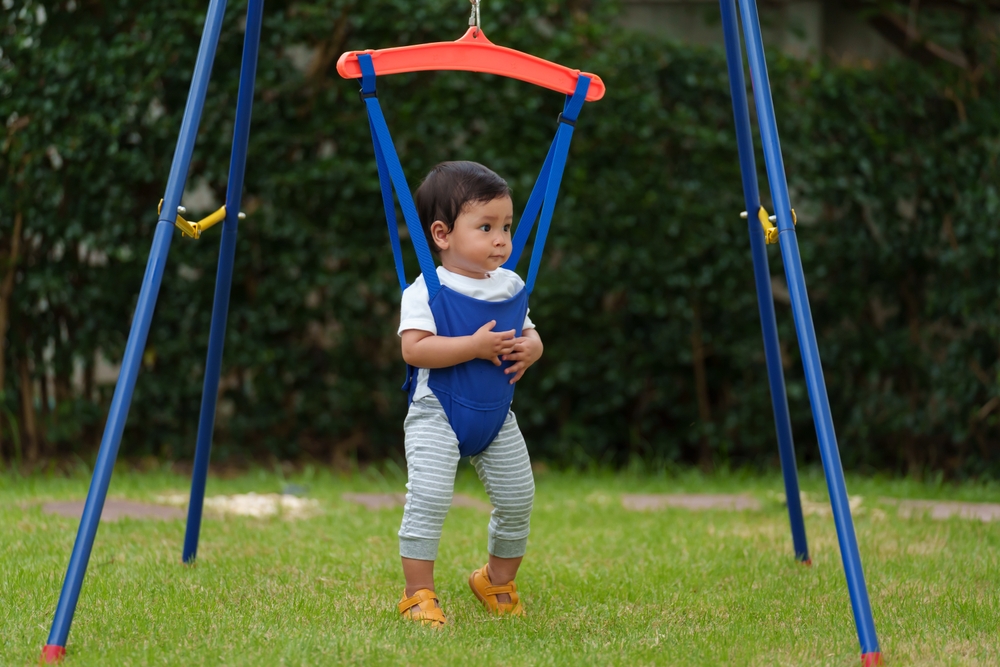
2. Jumpers That Replace Natural Muscle Development

Those doorway jumpers and bouncing activity centers look like harmless fun, but pediatricians often caution against frequent use. Jumpers encourage unnatural movement patterns that don’t match how babies actually learn to walk or balance. They can place stress on hips, spine, and developing joints when used too often or too early. Babies also miss out on crawling, rolling, and floor-based exploration that builds coordination and strength.

Short, supervised use may not cause harm, but relying on jumpers as daily entertainment can delay key motor milestones, according to many doctors. Floor play, crawling space, and climbing-safe environments offer better long-term benefits.

3. Electronic Learning Toys That Replace Human Interaction

Talking toys, light-up tablets, and “educational” screens promise early learning, but pediatricians consistently stress that real learning comes from human interaction. Babies learn language through face-to-face conversation, tone, expression, and response, not recorded voices and flashing buttons. Passive stimulation does not build communication skills the same way real engagement does.

These Are 8 Must-Have Baby Gadgets That Pediatricians Say Delay Development
Image Source: Shutterstock.com

4. Infant Positioning Seats That Limit Movement

Those molded infant seats that prop babies upright look helpful and adorable, but they limit natural movement. Pediatricians often caution that babies need freedom to move, twist, roll, and shift their bodies naturally. Being placed in fixed positions for long periods can slow muscle development and body awareness. Babies learn balance by falling, adjusting, and trying again, not by being held in perfect posture.

These seats may be useful briefly for feeding or supervision, but they should not replace floor time. Open space, soft mats, and safe play areas give babies the movement they need to develop properly.

5. Overused Swings And Motion Devices

Swings and automated rockers can be lifesavers for exhausted parents, but overuse can create developmental tradeoffs. Babies benefit from being soothed by human touch, voice, and movement, not just mechanical motion. Excessive reliance on swings reduces floor time, which is essential for strength, coordination, and exploration.

Pediatricians and experts emphasize balance, not elimination, when it comes to these devices. They work best as short-term soothing tools, not long-term substitutes for interaction. Holding, carrying, and engaging your baby builds emotional security and physical development simultaneously.

6. Baby Containers That Limit Exploration

The term “container baby syndrome” is used by therapists to describe overuse of devices that restrict movement, like bouncers, seats, loungers, and carriers. Babies need freedom to explore their environment to develop motor skills, problem-solving, and body awareness. Too much time in containers limits rolling, crawling, scooting, and reaching behaviors.

Pediatricians emphasize that development happens through movement, not containment. Convenience devices should support parenting, not replace movement. Rotating free play, tummy time, and open-floor exploration makes a real developmental difference.

7. White Noise And Sleep Machines Used Constantly

White noise machines can help babies sleep, but constant use can reduce exposure to natural sounds and voices. Pediatricians note that babies learn language patterns from hearing real speech, not continuous background noise. Overuse can also make babies dependent on artificial sound environments for sleep.

Moderation matters more than elimination here. Use sound machines when needed, but allow quiet, natural sound spaces during waking hours. Real-world sounds help babies build auditory processing and language skills.

8. Over-Structured Activity Centers

Multi-feature activity centers look stimulating, but they often overwhelm babies with lights, sounds, and limited movement options. Babies benefit more from simple toys that encourage exploration, grasping, and movement.

When everything lights up and responds automatically, babies don’t learn cause-and-effect the same way. Open-ended toys like blocks, balls, and soft books promote deeper learning. Simpler environments often produce stronger developmental outcomes.

Real Growth Happens In Real Life, Not Gadgets

The most powerful developmental tools aren’t sold in boxes or marketed online. They look like floor time, eye contact, conversation, messy play, movement, and human connection. Gadgets may offer convenience, but they should never replace interaction, exploration, and freedom of movement.

If you looked around your home right now, which of these gadgets does your baby spend the most time in—and what would change if you replaced just one of them with more real-world play? Give your parenting insights in the comments below.

You May Also Like…

Listening In: 7 Kid Gadgets That Listen to Your Family

9 Traditional Family Routines That Help Kids Feel Secure

Why Pediatricians are Quietly Flagging These 5 Household Items as Toxic

7 Boomer-Era Family Traditions That Lower Household Stress

6 Toy Store Layout Tricks That Manipulate Your Wallet

Brandon Marcus
Brandon Marcus
Brandon Marcus is a writer who has been sharing the written word since a very young age. His interests include sports, history, pop culture, and so much more. When he isn’t writing, he spends his time jogging, drinking coffee, or attempting to read a long book he may never complete.

Filed Under: Baby Stuff Tagged With: baby development, baby gadgets, Baby Gear, baby safety, child development, early learning, infant growth, modern parenting, Parenting, parenting tips, pediatrician advice

Nutritionists Warn: 6 “Healthy” Lunchbox Staples That Spike Sugar Crashes at School

February 2, 2026 | Leave a Comment

Nutritionists Warn: 6 “Healthy” Lunchbox Staples That Spike Sugar Crashes at School
Image Source: Shutterstock.com

Every parent knows the lunchbox pressure. You want foods that look healthy, sound healthy, and won’t come home untouched at the end of the day. Grocery aisles don’t make it easier, with labels shouting “natural,” “whole grain,” and “low fat” like nutritional confetti.

But here’s the truth nutritionists keep repeating: some of the most common “healthy” lunchbox staples cause massive blood sugar spikes followed by energy crashes, mood swings, and afternoon brain fog in kids. That post-lunch slump, crankiness, and total loss of focus in class often have less to do with sleep and more to do with what’s in the lunchbox.

1. Flavored Yogurt Cups That Act Like Dessert In Disguise

Flavored yogurt sounds like a nutrition win until you read the sugar label. Many popular kids’ yogurts contain as much added sugar as a small candy bar, even when they’re marketed as “low fat” or “made with real fruit.” The sugar spikes blood glucose quickly, especially when there’s not enough fiber or protein to slow digestion. That rush of energy feels great for about 30 minutes, then crashes hard into fatigue and irritability.

Nutritionists recommend switching to plain Greek yogurt and adding fresh fruit or a drizzle of honey, so you control the sugar instead of letting the packaging decide. Protein-rich yogurt paired with real fiber helps stabilize energy instead of turning lunch into a sugar roller coaster.

2. Granola Bars That Behave Like Candy Bars

Granola bars live in lunchboxes like royalty because they’re easy, portable, and labeled “whole grain.” The problem is that many of them are loaded with syrups, refined sugars, and processed carbs that digest fast and spike blood sugar quickly. Kids get a burst of energy followed by a steep crash that hits right in the middle of afternoon classes. Even bars with oats and seeds often contain more sugar than protein, which flips their nutrition profile upside down.

Nutritionists suggest choosing bars with visible nuts, seeds, and at least 6–8 grams of protein, or swapping them for a trail mix made with nuts and low-sugar dried fruit. Real fats and protein slow digestion and keep energy steady instead of spiky.

3. Fruit Snacks And Fruit Leathers That Aren’t Really Fruit

Fruit snacks look wholesome, especially when they say “made with real fruit” or show pictures of strawberries and apples on the package. In reality, most fruit snacks are concentrated sugar sources with very little fiber, which is what actually makes fruit filling and stabilizing. Without fiber, sugar hits the bloodstream fast and burns out just as quickly. Kids often feel hungry again shortly after eating them, which leads to more snacking and more sugar swings.

Experts recommend whole fruit instead, because fiber, water, and natural sugars work together to regulate digestion and energy. Pairing fruit with nuts or cheese adds protein and fat that prevent energy crashes.

4. White Bread Sandwiches Masquerading As Balanced Meals

A sandwich feels like a complete lunch, but white bread breaks down into glucose almost as fast as straight sugar. Even with turkey or peanut butter inside, refined bread creates a quick blood sugar spike followed by a drop that affects focus and mood. Kids may feel sleepy, foggy, or irritable long before the school day ends. Whole-grain labels don’t always mean whole-grain nutrition, especially when refined flours still dominate the ingredient list.

Try truly whole-grain bread with visible grains or use wraps made from high-fiber grains. Adding healthy fats like avocado or hummus also slows digestion and stabilizes energy levels.

5. Juice Boxes That Pretend To Be Hydration

Juice feels like a healthier option than soda, but nutritionally, it behaves very similarly. Most juice boxes lack fiber and deliver concentrated sugar straight into the bloodstream. This creates fast energy spikes followed by fast crashes, especially in kids who are already sensitive to blood sugar swings. Even 100% juice can cause these effects when it’s not balanced with protein or fat.

It’s better to use water as the primary drink and whole fruit instead of juice for sweetness. If juice is included, pairing it with protein and fiber can reduce the crash effect.

Nutritionists Warn: 6 “Healthy” Lunchbox Staples That Spike Sugar Crashes at School
Image Source: Shutterstock.com

6. Low-Fat Crackers That Spike Hunger Instead Of Solving It

Low-fat crackers often look like a smart lunchbox filler, but removing fat usually means adding refined carbs. These crackers digest quickly, spike blood sugar, and fail to keep kids full for long. Hunger returns fast, energy drops, and concentration follows. Many kids end up snacking constantly through the afternoon because their lunch didn’t actually stabilize their blood sugar.

Choose to pack crackers with whole grains, seeds, and healthy fats, or replace them with nuts, cheese, or hummus and veggies. Balanced snacks create lasting energy instead of short-lived fullness.

Lunchbox Energy Starts With Balance, Not Buzzwords

Real energy doesn’t come from labels, packaging, or clever marketing language. It comes from balanced meals that combine protein, fiber, and healthy fats to slow digestion and stabilize blood sugar. When lunchboxes rely too heavily on refined carbs and hidden sugars, kids pay the price with crashes, mood swings, and poor focus.

Small swaps create massive changes in energy, behavior, and learning. Better lunchboxes don’t need perfection, just a smarter balance.

What “healthy” lunchbox food shocked you the most on this list, and what are you going to swap it for first? Share your stories in the comments.

You May Also Like…

Virginia Baby Food Ban: 5 Specific Brands Just Prohibited Under New Safety Laws

7 Signs Your Child Has a Healthy Friendship—and 3 Red Flags to Watch

Food Hacks to Turn Leftovers Into Kids’ Lunches That Beat Store Prices

7 Lunch Foods That Make Kids a Target for Teasing

Teachers Beg Parents: Stop Buying These 7 Expensive School Supplies

Brandon Marcus
Brandon Marcus
Brandon Marcus is a writer who has been sharing the written word since a very young age. His interests include sports, history, pop culture, and so much more. When he isn’t writing, he spends his time jogging, drinking coffee, or attempting to read a long book he may never complete.

Filed Under: Family Tagged With: balanced meals, blood sugar crashes, child focus, healthy kids, healthy lunchbox, kids nutrition, nutrition education, parenting tips, school energy, school lunches, sugar spikes

The 5 “Educational” Apps That Teachers Say Are Actually Hurting Grades

February 1, 2026 | Leave a Comment

The 5
Image Source: Shutterstock.com

Parents download them with the best intentions, kids love them instantly, and the marketing promises smarter, faster, better learning. The problem? Teachers across classrooms are noticing a growing disconnect between what these “educational” apps promise and what students actually bring into school.

Many of these platforms look productive on the surface, but they quietly train habits that work against real learning—short attention spans, shallow thinking, and dependence on instant feedback. Grades don’t drop overnight, but teachers say the long-term effects show up in focus, effort, and resilience.

1. Gamified Learning Apps That Reward Speed Over Thinking

Gamified learning apps turn education into points, badges, streaks, and dopamine loops, which sounds great until students stop caring about understanding. Teachers say kids often rush through questions just to keep their streaks alive, clicking answers instead of thinking critically.

Over time, students associate learning with speed, not depth, and accuracy becomes secondary to rewards. This creates classroom habits where students expect constant stimulation and instant validation. When real schoolwork requires patience, revision, and struggle, frustration kicks in fast. A healthier approach is using these apps as occasional practice tools, not daily learning replacements, and pairing them with slower, deeper offline learning.

2. Video-Based Learning Platforms That Encourage Passive Watching

Video learning platforms feel productive because students are “watching lessons,” but teachers report a growing problem with passive consumption. Kids often let videos play without processing, pausing, or applying the information.

Learning turns into background noise instead of active engagement. Teachers notice that students who rely heavily on video apps struggle with recall, problem-solving, and independent thinking. Real learning requires interaction, not just exposure to information. Parents can help by encouraging note-taking, discussion, and application after videos instead of treating watching as learning.

3. Homework Helper Apps That Do Too Much Of The Work

Some apps promise help with homework but end up doing the thinking for the student. Teachers see assignments completed correctly but with no understanding behind the answers. This creates a dangerous illusion of learning where grades may look fine temporarily, but skills collapse during tests and in-class work.

Students lose problem-solving confidence because they rely on tools instead of their own thinking. Over time, academic independence disappears. If kids use help apps, they should explain the reasoning out loud or write out the steps, turning help into learning instead of shortcuts.

4. Study Apps Built On Constant Notifications And Alerts

Many “productivity” and study apps flood students with reminders, streak alerts, and achievement pop-ups. Teachers say this trains kids to depend on external prompts instead of building internal discipline. Focus becomes fragmented because students constantly switch attention between tasks and notifications.

This weakens sustained concentration, which is critical for reading, writing, and complex problem-solving. In class, this shows up as restlessness, distraction, and low mental stamina. Turning off notifications and setting specific app usage times helps rebuild attention control.

The 5
Image Source: Shutterstock.com

5. Educational Games That Blur Learning With Entertainment

Some apps blend games and learning so closely that kids engage more with the entertainment than the education. Teachers report students who love the games but can’t explain what they learned. The brain remembers rewards, characters, and animations, not concepts. This creates surface-level familiarity without deep understanding.

When tested on real material, performance drops because the learning never fully formed. Parents can balance this by pairing educational games with real-world application, like discussing concepts or practicing skills offline.

The Real Issue Isn’t Technology—It’s How It Trains The Brain

Teachers don’t hate educational apps, and most don’t want screens banned from learning. The real issue is how certain apps train attention, motivation, and thinking patterns that clash with how real learning works. Apps that reward speed, shortcuts, and constant stimulation make classrooms harder for students to navigate. Learning requires patience, effort, boredom tolerance, and focus—skills that many apps quietly weaken.

Which app does your child love that you’re now questioning—and what changes are you willing to make to protect their focus and learning long-term? Let’s hear about it below.

You May Also Like…

8 Children’s Apps That Are Secretly Tracking More Than Location

5 Ways Bullying Apps Are Operating Without School Oversight

Should Parents Be Tracking Their Teens with AI-Powered Apps?

How Your Child’s Cell Phone Could Now Ruin Them In School

Should You Let Your Child Keep Their Smartphone Overnight?

Brandon Marcus
Brandon Marcus
Brandon Marcus is a writer who has been sharing the written word since a very young age. His interests include sports, history, pop culture, and so much more. When he isn’t writing, he spends his time jogging, drinking coffee, or attempting to read a long book he may never complete.

Filed Under: Education Tagged With: classroom behavior, digital learning, education apps, homework habits, kids and tech, learning technology, parenting tips, school success, Screen Time, student focus, student performance

« Previous Page
Next Page »
  • Facebook
  • Pinterest
  • RSS
  • Twitter

Basic Principles Of Good Parenting

Here some basic principles for good parenting:

  1. What You Do Matters: Your kids are watching you. So, be purposeful about what you want to accomplish.
  2. You Can’t be Too Loving: Don’t replace love with material possessions, lowered expectations or leniency.
  3. Be Involved Your Kids Life: Arrange your priorities to focus on what your kid’s needs. Be there mentally and physically.
  4. Adapt Your Parenting: Children grow quickly, so keep pace with your child’s development.
  5. Establish and Set Rules: The rules you set for children will establish the rules they set for themselves later.  Avoid harsh discipline and be consistent.
  6. Explain Your Decisions: What is obvious to you may not be evident to your child. They don’t have the experience you do.
  7. Be Respectful To Your Child: How you treat your child is how they will treat others.  Be polite, respectful and make an effort to pay attention.
Best Parenting Blogs

Most Popular

Baby

9 Unusual Baby Names That Sound Like They Belong to Future CEOs

Evan Morgan
Baby

10 Baby Names That Were Once Considered “Grandparent Names” but Feel Cool Again

Evan Morgan
Target Store

Choking Incident Prompts Recall of 49,000 Target Gigglescape “Under the Sea” Popping Toys

Evan Morgan
Frustrated Girl

Why Some Students on the Spectrum Are Labeled With ODD

Evan Morgan
Coke Bottles

12 Things Kids Took to School in the ’70s That Would Never Be Allowed Today

Evan Morgan

All content on Kids Ain’t Cheap is for entertainment purposes only. By reading this blog, you agree that Kids Ain’t Cheap is not responsible for any actions taken after reading this blog. For the full disclaimer, see our privacy policy.

Please note that Kids Ain’t Cheap has financial relationships with some of the merchants mentioned here. Kids Ain’t Cheap is funded by banner advertising, commission sales and search optimization consulting.

Copyright © 2006–2026 | District Media | All Rights Reserved | Privacy Policy

Copyright © 2026 Runway Pro Theme by Viva la Violette